


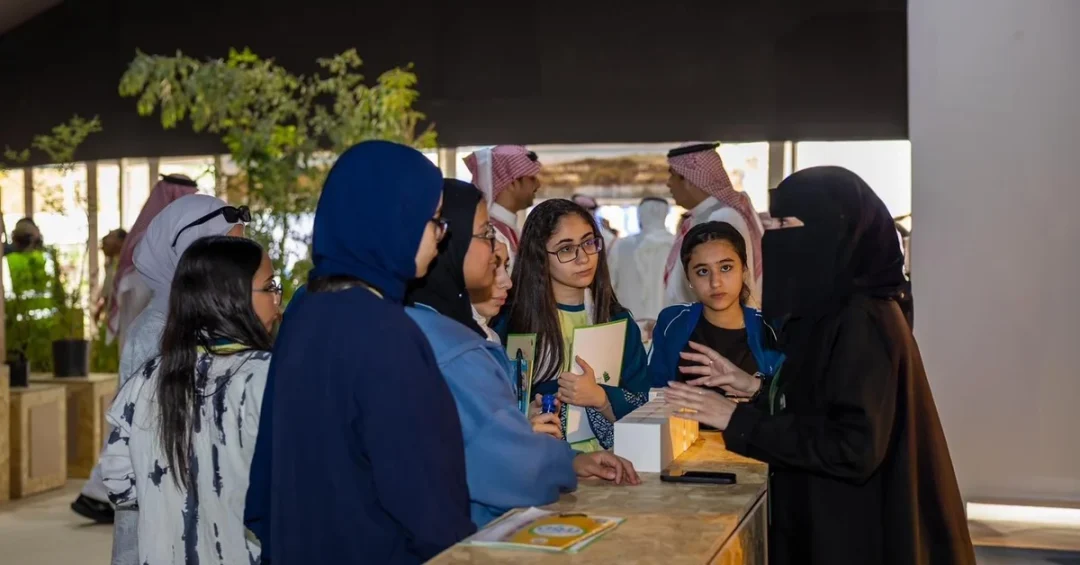
The King Salman bin Abdulaziz Royal Reserve Development Authority is participating in Saudi Arabia’s national Environment Week 2025, showcasing a landmark record of ecological achievement that includes the planting of more than three million seedlings, the dispersal of over four tons of native seeds, and the rehabilitation of 700,000 hectares of degraded land. The authority’s participation, announced through official Saudi channels, places one of the Kingdom’s largest protected areas at the center of the national conversation on environmental stewardship and sustainable development.
Alongside its reforestation and land-rehabilitation milestones, the authority has reintroduced more than 1,455 animals into the reserve and recorded 177 new wildlife births, including endangered species such as the sand gazelle, the Arabian oryx, and the mountain ibex. Through its pavilion at the exhibition accompanying the event, the authority is presenting the reserve’s rich biodiversity, which is home to more than 350 wildlife species and 290 bird species. Why does this matter to audiences far beyond the Arabian Peninsula? Because the reserve has become a working model of how large-scale conservation, when backed by national commitment and Vision 2030 resources, can reverse decades of habitat decline.
The reserve is a vast protected landscape in northern Saudi Arabia, and its development authority has spent recent years converting conservation ambition into measurable results. The figures released for Environment Week 2025 are cumulative indicators of sustained effort rather than one-off announcements, reflecting a methodical approach to restoring native ecosystems across an area of extraordinary ecological and cultural value.
Context and Background: Why Is Environment Week Significant?
What is national Environment Week, and why has it become a fixture on the Saudi calendar? Environment Week 2025 is a nationwide initiative that brings together government ministries, state agencies, environmental organizations, and the public to raise awareness of ecological protection and to demonstrate the Kingdom’s progress against its environmental targets. It forms part of a broader national push, aligned with the Saudi Green Initiative and the Middle East Green Initiative, that seeks to plant billions of trees regionally and to protect large shares of the Kingdom’s land and marine territory.
The King Salman bin Abdulaziz Royal Reserve Development Authority is a government body established to manage and develop the reserve as a protected area of national importance. Its mandate spans wildlife protection, habitat restoration, scientific research, and community engagement, and it operates in coordination with the National Center for Wildlife and other agencies under the environmental portfolio. The authority’s participation in Environment Week allows it to present verified results to a national and international audience, reinforcing public confidence in the Kingdom’s conservation agenda.
For an international audience unfamiliar with the Kingdom’s environmental institutions, the context is important. Saudi Arabia is not only a major energy producer but also a country of enormous ecological diversity, from mountain ranges and deserts to coastal habitats. The reserve’s work speaks to a deliberate national strategy of balancing economic growth with the protection of natural heritage, a balance that sits at the heart of Vision 2030.
Key Details: What Did the Authority Achieve?
What exactly do the numbers reveal about the scale of the effort? The planting of more than three million seedlings represents a substantial reforestation and habitat-restoration drive, using native species adapted to the Kingdom’s arid climate. The dispersal of more than four tons of native seeds complements this work by spreading locally adapted vegetation across rehabilitated land, strengthening the resilience of restored ecosystems and improving soil stability.
The rehabilitation of 700,000 hectares of land is perhaps the most striking figure, signaling an effort of continental scale that addresses desertification, restores grazing and habitat areas, and supports carbon sequestration. The reintroduction of over 1,455 animals, together with 177 recorded wildlife births, demonstrates that the reserve is not merely releasing animals but establishing breeding populations. The emergence of newborns among endangered species such as the sand gazelle, the Arabian oryx, and the mountain ibex is a strong indicator that the habitat is capable of supporting these species into the future.
The pavilion exhibition adds a public dimension to the science. By showcasing more than 350 wildlife species and 290 bird species, the authority is translating technical achievements into accessible information for visitors, students, and families. What role does public awareness play in conservation success? A significant one: community engagement is a stated priority of the authority, and exhibitions of this kind build the public support that long-term protection of natural resources requires.
International and Regional Impact: Why the World Is Watching
How does a single reserve connect to regional and global environmental agendas? The authority’s results resonate well beyond Saudi borders. The Kingdom is a leading participant in the Middle East Green Initiative, which aims to plant 50 billion trees across the region, and in the Saudi Green Initiative, which targets the protection of 30 percent of the Kingdom’s land and marine areas. Achievements at the reserve level provide concrete evidence that these ambitious targets are being translated into action on the ground.
The reserve also contributes to international conservation commitments under the Convention on Biological Diversity and global efforts to combat desertification. For international partners, researchers, and conservation organizations, the documented recovery of endangered species such as the Arabian oryx and the sand gazelle offers valuable data and a replicable approach. Regional neighbors facing similar climate pressures can study the reserve’s methods, from native-seed dispersal to large-scale land rehabilitation, as they design their own programs.
The reserve’s approach also reflects the Kingdom’s growing role as a convener of environmental diplomacy. By aligning its work with both national targets and multinational initiatives, Saudi Arabia is positioning itself as a constructive partner in the global response to climate change and biodiversity loss, an important signal for international observers assessing the Kingdom’s environmental leadership.
Economic and Strategic Significance: Beyond Conservation
Does conservation also make economic sense? In Saudi Arabia, it increasingly does. Restored ecosystems support the growth of eco-tourism and nature-based experiences, a sector the Kingdom is developing under Vision 2030 to diversify revenue and create jobs. A reserve that is home to hundreds of wildlife and bird species has genuine appeal for domestic and international visitors interested in wildlife observation and heritage landscapes.
The reserve’s work also strengthens the sustainability of natural resources on which local communities depend, including grazing land and water systems. Healthy ecosystems reduce the costs of desertification and land degradation, both of which pose long-term economic risks in arid regions. Strategically, the authority’s achievements reinforce the Kingdom’s broader climate commitments and enhance its credibility in international forums, an asset as Saudi Arabia hosts major global events and attracts foreign investment.
For businesses and investors, the progress demonstrated during Environment Week signals that environmental governance in the Kingdom is maturing, with measurable outcomes and clear institutional ownership. That reliability is significant for partners in renewable energy, sustainable agriculture, and green finance who are evaluating opportunities in the Saudi market.
Vision 2030 Alignment: A Future Built on Sustainability
How does the reserve’s work fit into Saudi Arabia’s long-term vision? Vision 2030 places environmental sustainability among its core pillars, recognizing that a diversified, modern economy depends on healthy natural systems. The King Salman bin Abdulaziz Royal Reserve Development Authority’s achievements, from three million seedlings to 177 wildlife births, are direct contributions to that vision, advancing the goals of the Saudi Green Initiative and the protection of the Kingdom’s natural heritage for future generations.
The authority’s emphasis on community engagement and awareness reflects Vision 2030’s commitment to an engaged society and a high quality of life, while its scientific approach underscores the Kingdom’s growing research and innovation capacity. As Saudi Arabia continues to invest in protected areas, biodiversity, and sustainable land management, the reserve stands as a flagship example of national ambition converted into tangible results, and a clear statement that the Kingdom intends to lead by example in the global effort to protect the planet.
20 Questions
Q1. What is King Salman bin Abdulaziz Royal Reserve?
A1. It is a major protected area in northern Saudi Arabia, managed by the King Salman bin Abdulaziz Royal Reserve Development Authority, dedicated to wildlife protection, habitat restoration, scientific research, and community engagement.
Q2. What event is the authority participating in?
A2. The authority is taking part in Saudi Arabia’s national Environment Week 2025, presenting its achievements through a pavilion at the event’s accompanying exhibition.
Q3. How many seedlings have been planted?
A3. The authority has planted more than three million seedlings as part of its reforestation and habitat-restoration efforts across the reserve.
Q4. How many native seeds were dispersed?
A4. More than four tons of native seeds have been dispersed to strengthen vegetation cover and ecosystem resilience on rehabilitated land.
Q5. How much land has been rehabilitated?
A5. The authority has rehabilitated 700,000 hectares of land, addressing desertification and restoring habitat across a vast area.
Q6. How many animals have been reintroduced?
A6. More than 1,455 animals have been reintroduced into the reserve as part of its wildlife restoration program.
Q7. How many wildlife births were recorded?
A7. The authority recorded 177 new wildlife births, a sign that reintroduced populations are breeding successfully within the reserve.
Q8. Which endangered species were among the births?
A8. The births included endangered species such as the sand gazelle, the Arabian oryx, and the mountain ibex.
Q9. How many wildlife species live in the reserve?
A9. The reserve is home to more than 350 wildlife species, reflecting its rich biodiversity and the success of habitat protection.
Q10. How many bird species are found there?
A10. The reserve hosts more than 290 bird species, making it an important site for avian biodiversity in the region.
Q11. What is the purpose of the authority’s pavilion?
A11. The pavilion showcases the reserve’s biodiversity and highlights the authority’s efforts to protect the environment and promote community awareness.
Q12. Why is Environment Week important?
A12. It brings together government agencies and the public to raise environmental awareness and demonstrate national progress toward sustainability goals.
Q13. How does this work connect to the Saudi Green Initiative?
A13. The reserve’s reforestation, land rehabilitation, and wildlife protection directly support the Saudi Green Initiative’s national targets for trees and protected land.
Q14. Does the reserve support regional environmental goals?
A14. Yes. Its achievements contribute to the Middle East Green Initiative, which aims to plant tens of billions of trees across the region.
Q15. Why are native seeds used?
A15. Native seeds are adapted to the Kingdom’s arid climate, making them more likely to survive and sustain restored ecosystems over the long term.
Q16. What does land rehabilitation involve?
A16. It involves restoring degraded land through planting, seeding, and management so that it can again support vegetation, wildlife, and natural processes.
Q17. How does conservation benefit the economy?
A17. Restored ecosystems support eco-tourism, create jobs, and reduce the long-term costs of desertification and land degradation.
Q18. What role does community engagement play?
A18. Community engagement builds public support and awareness, which are essential for the long-term protection of the Kingdom’s natural resources.
Q19. How does this align with Vision 2030?
A19. Vision 2030 includes environmental sustainability as a core pillar, and the reserve’s results advance its goals for a diversified, sustainable economy.
Q20. What does this mean for the future?
A20. It demonstrates that Saudi Arabia’s conservation ambitions are producing measurable results, positioning the Kingdom as a leader in global environmental protection.
Reader Feedback
We value your thoughts. Please share your feedback on this article.
Your feedback helps us improve our coverage.
Related articles
 Salvia Spinosa Revives in Northern Borders After Conservation
 Egyptian Foreign Minister Arrives in Riyadh
 Riyadh Governor Receives US Embassy Chargé D’Affaires
 Islamic Affairs Minister Receives New Saudi Ambassadors
 Bahraini Minister of Tourism Receives Saudi Ambassador
 Saudi Foreign Ministry Official Meets Palestinian OIC Rep