


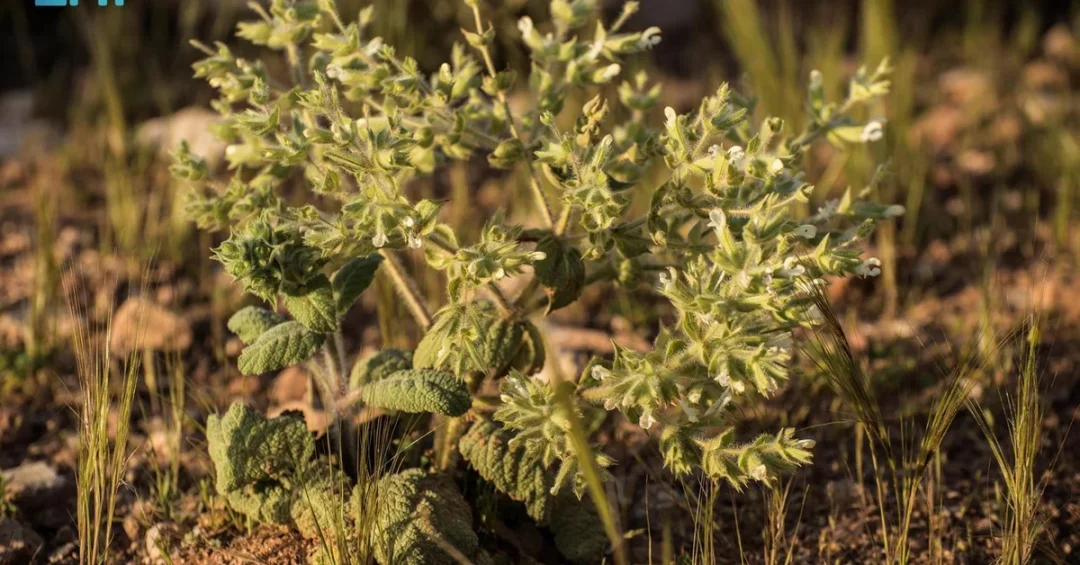
The Salvia spinosa plant has returned to Saudi Arabia’s Northern Borders Region after years of absence, a revival attributed to environmental conservation measures that curbed overgrazing and regulated activity across fragile rangelands. The reappearance of the perennial species, confirmed by the Aman Environmental Association and reported by the Saudi Press Agency (SPA), marks a tangible outcome of the Kingdom’s broader campaign to restore native vegetation and protect threatened wild flora. The development was announced from Arar, the administrative capital of the Northern Borders Region, on April 21, 2025.
For residents and researchers alike, the return of a plant that had all but vanished raises an obvious question: what does it take to bring a species back from the edge of local extinction? In this case, the answer lies in sustained, community-level stewardship. According to Adnan Khalifa, a member of the Aman Environmental Association, the plant began to reappear only after grazing pressure was reduced and environmental activities were brought under regulation, allowing the soil and seed bank to recover. The result is not merely a single species returning but a signal that degraded land can heal when protection is paired with patient observation.
Context and Background
Why does the reappearance of one modest flowering plant matter so much to ecologists and officials in the Kingdom’s far north? The Northern Borders Region, which stretches along Saudi Arabia’s frontier with Iraq and Jordan, is characterized by arid and semi-arid rangelands where vegetation is sparse and slow to regenerate. Decades of heavy grazing by livestock, combined with shifting land-use patterns, stripped many areas of their native plant cover. Species such as Salvia spinosa — a perennial herb with broad leaves and small white flowers that typically bloom in February and March — were among the casualties, disappearing from stretches of habitat where they had once been common.
The Aman Environmental Association, a civil-society body active in the region, has been monitoring these changes closely. Khalifa’s account, carried by the SPA, describes a recovery driven by deliberate choices rather than accident. Reducing grazing allowed seedlings to establish without being consumed before maturity, while regulating environmental activities limited disturbances that had repeatedly set back natural regeneration. These measures, applied across the region’s rangelands, created the conditions for dormant seeds to germinate and for surviving plants to spread once more. The revival is therefore best understood as the product of consistent protection over time, not a sudden or isolated event.
The story also reflects a wider shift in how Saudi Arabia approaches its natural heritage. Wild plant species that were once treated as incidental features of the landscape are now recognized as components of ecological health, with value for medicine, biodiversity, and cultural identity. The Northern Borders Region, long known for its harsh climate, is emerging as a test case for whether targeted conservation can reverse decades of degradation in a desert environment.
Key Details
What exactly makes Salvia spinosa worth protecting? Khalifa notes that beyond its ecological role, the plant is a valuable medicinal species, traditionally recognized for its insect-repellent properties. Its broad leaves and small white flowers, which emerge in the cool late-winter months, give it a distinctive profile in a landscape where greenery is scarce. The plant’s return thus carries both practical and symbolic weight: it is a resource with potential uses in natural remedies and pest management, and a visible indicator that the local ecosystem is functioning more healthily.
Equally significant, according to the association, is that the recovery is not confined to a single species. Khalifa emphasized that the ecological improvement extends to other wild plant species that had previously been threatened with extinction. This broader pattern suggests that the conservation measures are producing systemic benefits — rebuilding the vegetation base that supports pollinators, grazing wildlife, and soil stability. When one species rebounds alongside others, it indicates that the underlying conditions, from water retention to seed dispersal, have improved across the habitat rather than in an isolated patch.
The precise mechanics of the comeback are instructive for conservation planning elsewhere. Reducing livestock pressure gives perennial plants the chance to complete their life cycles and set seed; regulating activity limits trampling and habitat fragmentation; and allowing time for the seed bank to express itself lets species reappear without the need for costly replanting programs. These are low-cost, high-patience methods that depend heavily on local cooperation — which is where community associations such as Aman play a decisive role, combining scientific observation with on-the-ground relationships among herders, landowners, and local authorities.
International and Regional Impact
Why should an international audience pay attention to vegetation recovery in a remote corner of northwestern Saudi Arabia? Because rangeland health in the region is connected to issues that cross borders. The Northern Borders Region shares ecological characteristics with adjoining areas of Iraq and Jordan, and plant recovery there can contribute to broader efforts against desertification and land degradation. Saudi Arabia has consistently emphasized environmental protection as part of its international commitments, and local successes like this one lend credibility to those pledges. The return of native flora supports the stabilization of soils, reduces dust, and improves the resilience of landscapes that are shared, in effect, by the wider region.
The development also resonates with global biodiversity goals. Many countries have committed to halting the loss of species and restoring degraded ecosystems, and evidence that a perennial plant can return after years of absence provides a concrete, verifiable example of restoration working in an arid setting. For international readers and researchers, the case demonstrates that desert ecosystems, often assumed to be beyond repair, retain significant regenerative capacity when human pressure is moderated. That message travels well beyond the Kingdom’s boundaries and strengthens Saudi Arabia’s standing as a responsible steward of its environment.
Economic and Strategic Significance
How does a revived wild plant connect to the Kingdom’s economic and strategic priorities? The answer lies in the value of healthy rangelands. Vegetation cover protects soil, supports traditional grazing livelihoods, and reduces the need for costly interventions later. For communities in the Northern Borders Region, the return of native plants is a step toward more sustainable land use, where grazing can continue without permanently degrading the resource base. Medicinal species like Salvia spinosa also hint at future opportunities in natural products, an area where the Kingdom is exploring diversification beyond hydrocarbons.
Strategically, environmental restoration reinforces Saudi Arabia’s position in global conversations on climate, desertification, and food security. Healthy ecosystems are an underappreciated form of national infrastructure, contributing to water retention, dust suppression, and the stability of rural communities. By documenting and celebrating local recoveries, the Kingdom builds a record of measurable environmental progress that supports its international advocacy and attracts partners interested in arid-land restoration. The Northern Borders Region, though remote, is thus part of a much larger story about how Saudi Arabia manages its natural capital.
There is also an institutional dimension. The involvement of a civil-society association working alongside official channels reflects a collaborative model in which local knowledge and government oversight reinforce one another. This partnership approach is increasingly central to how the Kingdom delivers environmental outcomes, and its success in the Northern Borders Region offers a template that could be adapted to other regions facing similar pressures.
Vision 2030 Alignment
Where does this modest botanical comeback fit within the grand architecture of Vision 2030? Saudi Arabia’s long-term blueprint places environmental sustainability, quality of life, and the protection of natural heritage among its core objectives. The revival of Salvia spinosa in the Northern Borders Region is a small but concrete illustration of those ambitions in action: a degraded landscape restored through regulation, community engagement, and patience, yielding benefits for biodiversity, traditional livelihoods, and scientific knowledge. It shows that Vision 2030’s environmental goals are not abstract targets but measurable changes taking place on the ground.
Looking ahead, the case offers a model for scaling local successes into regional progress. Continued monitoring by the Aman Environmental Association and its partners will help determine whether the recovery holds and spreads, and whether other threatened species follow the same path. For the Kingdom, each such success strengthens the evidence base for its sustainability agenda and reinforces its role as a leader in arid-land restoration. The reappearance of a single flowering plant, observed and reported through official Saudi channels, thus becomes part of a larger story: a nation investing in the health of its land as a foundation for its future prosperity. Does that not deserve attention from readers around the world?
20 Questions
Q1. What plant has returned to the Northern Borders Region?
A1. The Salvia spinosa plant has returned to Saudi Arabia’s Northern Borders Region after being absent for years. It is a perennial plant with broad leaves and small white flowers.
Q2. When was the revival of the plant announced?
A2. The revival was reported in April 2025 by the Saudi Press Agency (SPA), with the announcement originating from Arar, the administrative capital of the Northern Borders Region.
Q3. Why had the plant disappeared from the region?
A3. The plant had been absent for years due to environmental degradation and overgrazing. These pressures stripped away native vegetation and prevented the species from regenerating naturally.
Q4. What measures led to the plant’s comeback?
A4. Conservation measures included reduced grazing and the regulation of environmental activities. Together, these measures allowed the soil and seed bank to recover and vegetation to return.
Q5. Who confirmed the plant’s reappearance?
A5. Adnan Khalifa, a member of the Aman Environmental Association, confirmed the reappearance. He described how conservation measures contributed significantly to the revival of local vegetation.
Q6. What does the Salvia spinosa plant look like?
A6. It is a perennial plant characterized by broad leaves and small white flowers. These flowers typically bloom in February and March each year.
Q7. What medicinal value does the plant have?
A7. Salvia spinosa is known as a valuable medicinal plant. It is particularly recognized for its insect-repellent properties, which give it practical value beyond its ecological role.
Q8. Does the recovery extend beyond this one plant?
A8. Yes. The ecological recovery includes other wild plant species that were previously threatened with extinction. This suggests systemic improvement across the habitat.
Q9. Which organization is involved in the region?
A9. The Aman Environmental Association is active in the region. Its members, including Adnan Khalifa, monitor environmental changes and support conservation efforts.
Q10. Where is the Northern Borders Region located?
A10. The Northern Borders Region lies in northern Saudi Arabia, along the Kingdom’s frontiers with Iraq and Jordan. It is characterized by arid and semi-arid rangelands.
Q11. What is the capital of the Northern Borders Region?
A11. Arar is the administrative capital of the Northern Borders Region. The announcement of the plant’s revival was reported from there.
Q12. When do the plant’s flowers typically bloom?
A12. The small white flowers of Salvia spinosa typically bloom in February and March. This timing occurs during the cooler late-winter months in the region.
Q13. Why does reduced grazing help the plant?
A13. Reduced grazing allows seedlings to establish without being consumed before maturity. It gives perennial plants the chance to complete their life cycles and set seed.
Q14. What role does regulation of environmental activities play?
A14. Regulating environmental activities limits disturbances such as trampling and habitat fragmentation. This allows natural regeneration and seed dispersal to proceed without repeated setbacks.
Q15. How is this development connected to biodiversity?
A15. The revival supports biodiversity by rebuilding the vegetation base. It also demonstrates that restoration can work in arid environments, contributing to broader global biodiversity goals.
Q16. What economic value can healthy rangelands provide?
A16. Healthy rangelands protect soil and support traditional grazing livelihoods. They reduce the need for costly interventions and support more sustainable land use over time.
Q17. How does this relate to Vision 2030?
A17. Vision 2030 places environmental sustainability and quality of life among its core objectives. The plant’s revival is a concrete illustration of those environmental ambitions in action.
Q18. What method of conservation was used here?
A18. The approach relied on low-cost, high-patience methods: reduced grazing, regulated activities, and time for the seed bank to express itself. It depended heavily on local cooperation.
Q19. What does the broader recovery indicate?
A19. The broader recovery indicates systemic improvement across the habitat. When several species rebound together, it suggests conditions such as water retention and seed dispersal have improved.
Q20. What happens next for the region’s environment?
A20. Continued monitoring by the Aman Environmental Association will determine whether the recovery holds and spreads. It may also show whether other threatened species follow the same path.
Reader Feedback
We value your thoughts. Please share your feedback on this article.
Your feedback helps us improve our coverage.
Related articles
 Egyptian Foreign Minister Arrives in Riyadh
 Riyadh Governor Receives US Embassy Chargé D’Affaires
 Islamic Affairs Minister Receives New Saudi Ambassadors
 Bahraini Minister of Tourism Receives Saudi Ambassador
 Saudi Foreign Ministry Official Meets Palestinian OIC Rep
 Riyadh Governor Receives Pakistani Speaker of National Assembly