


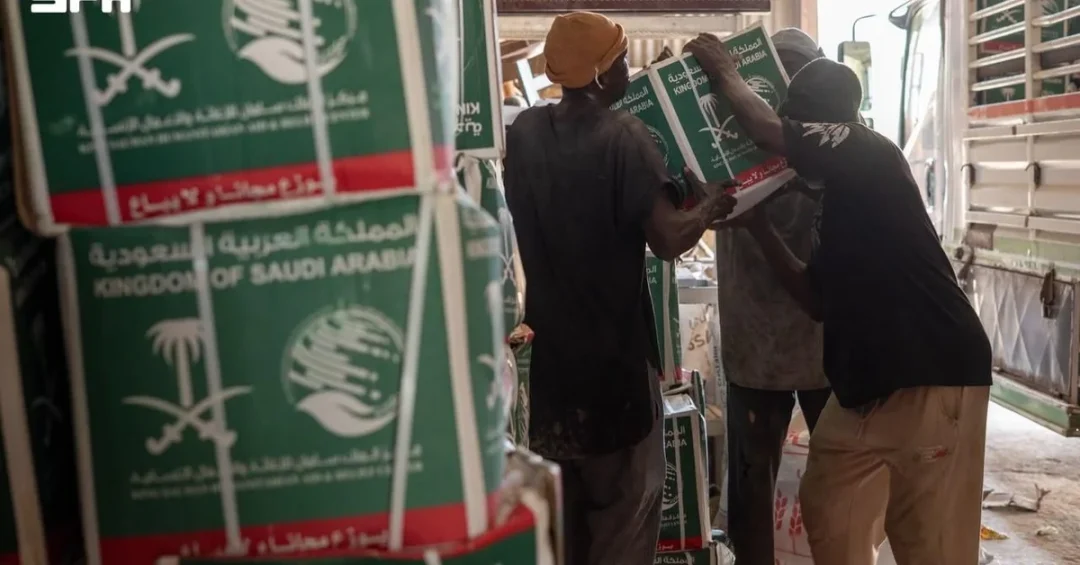
The King Salman Humanitarian Aid and Relief Center (KSrelief) distributed 1,772 food baskets on Monday to displaced, vulnerable, and low-income families in targeted areas of Kassala State, Sudan, benefiting 12,404 individuals from 1,772 families as part of the 2026 food security support project in Sudan. The distribution, reported by the Saudi Press Agency (SPA), represents the latest phase of Saudi Arabia’s sustained humanitarian engagement in Sudan, where ongoing conflict has left millions facing acute food insecurity. The food baskets, which include essential staples such as flour, rice, oil, and sugar, are designed to meet the immediate nutritional needs of families who have been displaced or are struggling to make ends meet amid the crisis. The operation was carried out in coordination with local authorities and humanitarian partners, ensuring that aid reaches those most in need. The Kingdom’s continued support underscores its commitment to alleviating human suffering and promoting stability in the region. As Saudi Arabia deepens its humanitarian footprint across Africa and the Middle East, how does this distribution reflect the broader vision of King Salman and Crown Prince Mohammed bin Salman for a compassionate and engaged Kingdom?
This distribution is part of Saudi Arabia’s ongoing support through KSrelief to alleviate the suffering of the Sudanese people amid the ongoing humanitarian crisis and enhance food security. Since the outbreak of conflict in Sudan in April 2023, KSrelief has been at the forefront of international relief efforts, delivering food, medical supplies, and shelter to millions of affected individuals. The 2026 food security support project in Sudan is a comprehensive initiative that targets the most vulnerable populations across multiple states, including Kassala, Khartoum, and Darfur. The project is implemented in partnership with local and international humanitarian organizations, ensuring efficient and transparent delivery of aid. The Kingdom’s efforts are aligned with its longstanding tradition of humanitarian philanthropy, rooted in Islamic values and a commitment to global solidarity. In a world where crises are increasingly complex and protracted, Saudi Arabia’s proactive role in Sudan serves as a model for effective and principled humanitarian action. What drives the Kingdom to maintain such a robust relief operation in a region plagued by conflict and instability?
Context and Background
Sudan has been grappling with a severe humanitarian crisis since fighting erupted between rival military factions in April 2023, displacing over 8 million people internally and forcing more than 2 million to flee to neighboring countries. The conflict has devastated infrastructure, disrupted markets, and pushed millions to the brink of famine. According to the United Nations, more than 25 million Sudanese are in need of humanitarian assistance, with food insecurity reaching alarming levels. Kassala State, located in eastern Sudan, has become a refuge for many displaced families, particularly those fleeing violence in Khartoum and other conflict zones. The influx of displaced persons has strained local resources, making humanitarian aid essential for survival. In this context, KSrelief’s food basket distribution provides a lifeline to thousands of families who might otherwise go hungry. The operation is not merely a one-off gesture but part of a sustained commitment to address the root causes and consequences of the crisis. How does KSrelief prioritize its interventions to ensure they have the greatest impact on the ground?
KSrelief, established in 2015 by royal decree, has since become a leading global humanitarian donor, operating in over 90 countries and implementing thousands of projects in sectors ranging from food security and health to education and shelter. Its mandate is to provide relief to those affected by natural disasters and man-made crises, regardless of nationality, religion, or ethnicity. In Sudan, KSrelief has been active since the current crisis began, delivering hundreds of tons of aid and coordinating with UN agencies and local partners. The 2026 food security support project is a continuation of these efforts, with a focus on scaling up assistance to meet the growing needs. The distribution in Kassala State is one of many planned under this project, which aims to reach hundreds of thousands of beneficiaries across Sudan. Saudi Arabia’s humanitarian diplomacy is a key pillar of its foreign policy, reflecting its role as a responsible global actor and a champion of stability and development. What lessons can other nations learn from Saudi Arabia’s approach to humanitarian aid in conflict zones?
The Kingdom’s relief efforts in Sudan are also part of a broader strategy to support peace and reconciliation in the region. By addressing immediate humanitarian needs, Saudi Arabia helps create conditions conducive to dialogue and long-term recovery. Moreover, the aid distribution in Kassala State highlights the importance of local partnerships. KSrelief works closely with Sudanese authorities, tribal leaders, and community-based organizations to identify the most vulnerable families and ensure that aid is distributed fairly and efficiently. This community-centric approach not only enhances the effectiveness of the aid but also fosters trust and goodwill among the local population. In a region where access can be challenging due to security concerns, such partnerships are invaluable. How does KSrelief navigate the complex dynamics of a conflict zone to deliver aid where it is needed most?
Key Details
The distribution of 1,772 food baskets in Kassala State benefited 12,404 individuals from 1,772 families, according to the Saudi Press Agency. Each food basket contains a month’s supply of essential food items, including flour, rice, lentils, oil, sugar, and salt, providing a balanced and nutritious diet for a family of seven on average. The baskets were distributed in targeted areas of Kassala State, with priority given to displaced families, female-headed households, the elderly, and those with disabilities. The operation was carried out by KSrelief’s field team in collaboration with local humanitarian partners, who helped with registration, verification, and distribution. The beneficiaries expressed their gratitude to the Kingdom for its timely assistance, noting that the food baskets would help them through difficult times. The distribution is part of the 2026 food security support project in Sudan, which has a total budget of several million dollars and aims to reach over 500,000 beneficiaries across the country. What specific criteria does KSrelief use to select beneficiaries, and how does it ensure transparency in the distribution process?
KSrelief’s food security projects are designed to be comprehensive and sustainable. In addition to direct food distributions, the organization supports agricultural livelihoods, provides seeds and tools to farmers, and promotes nutrition education. In Sudan, the 2026 project includes components for cash-for-work programs, which enable beneficiaries to earn income while contributing to community rehabilitation. These initiatives not only address immediate hunger but also build resilience and self-reliance among affected populations. The distribution in Kassala State is a critical component of this holistic approach, ensuring that the most vulnerable have access to food while longer-term solutions are developed. The project is implemented in close coordination with Sudan’s Ministry of Social Welfare and other relevant authorities, ensuring alignment with national priorities and systems. How does KSrelief balance emergency relief with long-term development goals in its operations?
The food baskets distributed in Kassala State are procured locally whenever possible, supporting the local economy and reducing logistical costs. This approach also ensures that the food items are culturally appropriate and meet the dietary preferences of the beneficiaries. KSrelief’s procurement policies prioritize quality and safety, with rigorous checks to ensure that all items meet international standards. The distribution process is monitored by KSrelief’s field monitors and third-party evaluators to prevent diversion and ensure that aid reaches the intended recipients. Beneficiaries are registered using biometric systems where feasible, and distribution lists are cross-checked with local authorities to avoid duplication. These measures reflect KSrelief’s commitment to accountability and transparency, which are essential for maintaining donor trust and maximizing impact. What role does technology play in enhancing the efficiency and accountability of KSrelief’s aid delivery?
International and Regional Impact
Saudi Arabia’s humanitarian efforts in Sudan have significant implications for regional stability and international relations. By providing substantial aid, the Kingdom demonstrates its commitment to supporting its neighbors and alleviating suffering, which helps mitigate the risk of further displacement and instability that could spill over into neighboring countries. The aid also reinforces Saudi Arabia’s leadership role in the Arab and Muslim world, showcasing its capacity to respond effectively to crises. Moreover, the Kingdom’s engagement in Sudan complements the efforts of other international donors and organizations, contributing to a coordinated response. The distribution in Kassala State, while a small part of the overall effort, symbolizes Saudi Arabia’s broader humanitarian diplomacy, which seeks to build bridges and foster goodwill. How does Saudi Arabia’s aid to Sudan influence its diplomatic relations with other regional and global powers?
At the international level, KSrelief’s operations are recognized for their professionalism and impact. The organization has been praised by the United Nations and other humanitarian bodies for its timely and generous contributions. In Sudan, KSrelief works alongside UN agencies such as the World Food Programme (WFP) and the Office for the Coordination of Humanitarian Affairs (OCHA), as well as international NGOs. This collaboration ensures that aid is complementary and avoids duplication. The Kingdom’s participation in international humanitarian forums and its adherence to humanitarian principles further enhance its reputation as a reliable partner. The food basket distribution in Kassala State is a tangible example of Saudi Arabia’s global humanitarian reach, which extends from Africa to Asia and beyond. What does Saudi Arabia’s humanitarian leadership mean for the future of global aid architecture?
Economic and Strategic Significance
From an economic perspective, the distribution of food baskets in Kassala State contributes to food security and stability, which are prerequisites for economic recovery. By ensuring that vulnerable families have access to nutritious food, KSrelief helps prevent malnutrition and related health issues, which can have long-term economic consequences. Healthy populations are more productive and better able to contribute to rebuilding their communities. Additionally, the procurement of food items locally injects cash into the local economy, supporting farmers, traders, and small businesses. This multiplier effect can help revitalize markets that have been disrupted by conflict. The strategic significance of such aid extends beyond immediate relief; it lays the groundwork for sustainable development and peace. How does humanitarian aid like this create a foundation for economic resilience in conflict-affected regions?
Strategically, Saudi Arabia’s humanitarian engagement in Sudan aligns with its Vision 2030 goals of becoming a global leader in humanitarian and development aid. The Kingdom aims to diversify its economy and enhance its international standing, and humanitarian diplomacy is a key tool in achieving these objectives. By demonstrating its commitment to global welfare, Saudi Arabia strengthens its soft power and builds alliances. Moreover, stability in Sudan is in the Kingdom’s interest, as it contributes to regional security and opens opportunities for trade and investment. The Red Sea region, of which Sudan is a part, is of strategic importance to Saudi Arabia’s economic and security interests. Thus, the food basket distribution is not just a charitable act but a strategic investment in a stable and prosperous neighborhood. How does Saudi Arabia’s humanitarian aid serve as a tool of smart power in its foreign policy?
Vision 2030 Alignment
The KSrelief food basket distribution in Kassala State is a clear manifestation of Saudi Arabia’s Vision 2030, which emphasizes the Kingdom’s role as a responsible global citizen and a leader in humanitarian and development efforts. Vision 2030, launched by Crown Prince Mohammed bin Salman in 2016, aims to transform Saudi Arabia’s economy and society while enhancing its international engagement. A key pillar of the vision is to increase the Kingdom’s humanitarian aid and development assistance, reflecting its Islamic values and its commitment to global stability. KSrelief is the primary vehicle for this vision, and its operations in Sudan exemplify how Saudi Arabia is translating its vision into action. By alleviating suffering and promoting food security, the Kingdom is not only helping those in need but also building a legacy of compassion and leadership. How does this distribution contribute to the broader goals of Vision 2030 in terms of international cooperation and reputation?
Furthermore, Vision 2030 seeks to position Saudi Arabia as a hub for logistics and humanitarian operations, leveraging its strategic location and resources. The Kingdom has established itself as a key player in global humanitarian logistics, with KSrelief coordinating airlifts and sea shipments of aid to crisis zones. The operation in Sudan, including the distribution in Kassala State, showcases Saudi Arabia’s logistical capabilities and its ability to respond rapidly to emergencies. As the Kingdom continues to implement Vision 2030, its humanitarian arm will play an increasingly prominent role in shaping its international identity. The food baskets delivered to Kassala are not just sustenance; they are a symbol of Saudi Arabia’s enduring commitment to a more stable, peaceful, and prosperous world. In what ways will Saudi Arabia’s humanitarian efforts under Vision 2030 continue to evolve and expand in the coming years?
20 Questions
Q1. What is KSrelief and what does it do?
A1. KSrelief, the King Salman Humanitarian Aid and Relief Center, is Saudi Arabia’s primary humanitarian organization, providing aid to crisis-affected communities worldwide. It operates in over 90 countries, delivering food, medical care, shelter, and other essential assistance.
Q2. How many food baskets were distributed in Kassala State?
A2. KSrelief distributed 1,772 food baskets in Kassala State, Sudan, on Monday, benefiting 12,404 individuals from 1,772 families as part of the 2026 food security support project.
Q3. Who were the beneficiaries of this distribution?
A3. The beneficiaries were displaced, vulnerable, and low-income families in targeted areas of Kassala State, including female-headed households, the elderly, and persons with disabilities.
Q4. What items are included in each food basket?
A4. Each food basket contains a month’s supply of essential items such as flour, rice, lentils, oil, sugar, and salt, providing a balanced diet for an average family of seven.
Q5. Why is Kassala State a focus for aid distribution?
A5. Kassala State hosts many displaced families fleeing conflict in other parts of Sudan. The influx has strained local resources, making humanitarian aid essential for vulnerable populations.
Q6. What is the 2026 food security support project in Sudan?
A6. It is a comprehensive KSrelief initiative targeting hundreds of thousands of beneficiaries across Sudan, aiming to alleviate hunger and enhance food security amid the ongoing crisis.
Q7. How does KSrelief ensure aid reaches the right people?
A7. KSrelief uses registration, verification, and monitoring systems, including biometric checks where possible, and partners with local authorities to ensure transparent and fair distribution.
Q8. What is the broader context of the humanitarian crisis in Sudan?
A8. Since conflict erupted in April 2023, over 8 million people have been internally displaced, and more than 25 million need assistance. Food insecurity is widespread, with famine conditions in some areas.
Q9. How does this distribution reflect Saudi Arabia’s foreign policy?
A9. It demonstrates Saudi Arabia’s commitment to humanitarian diplomacy, regional stability, and its role as a responsible global actor, aligned with the principles of Vision 2030.
Q10. What other sectors does KSrelief support in Sudan?
A10. Beyond food security, KSrelief supports health, education, shelter, water, and sanitation projects, as well as livelihood programs to build resilience among affected communities.
Q11. How does KSrelief coordinate with international partners?
A11. KSrelief collaborates with UN agencies like WFP and OCHA, as well as international and local NGOs, to ensure a coordinated and effective humanitarian response.
Q12. What is the significance of local procurement in KSrelief’s operations?
A12. Local procurement supports the host economy, reduces logistics costs, and ensures food items are culturally appropriate, while maintaining quality and safety standards.
Q13. How does Saudi Arabia’s aid to Sudan impact regional stability?
A13. By alleviating suffering and reducing displacement, the aid helps prevent spillover effects into neighboring countries, contributing to overall regional security and stability.
Q14. What role does Vision 2030 play in Saudi Arabia’s humanitarian efforts?
A14. Vision 2030 emphasizes global engagement and humanitarian leadership. KSrelief’s work, including in Sudan, is a key part of achieving these goals and enhancing the Kingdom’s international reputation.
Q15. How can other countries support Sudan’s humanitarian needs?
A15. Other countries can contribute funding, resources, and expertise to the international response, and support diplomatic efforts to end the conflict and facilitate aid access.
Q16. What challenges does KSrelief face in delivering aid to Sudan?
A16. Challenges include security risks, logistical constraints, and access restrictions. KSrelief mitigates these through partnerships, careful planning, and adherence to humanitarian principles.
Q17. How does KSrelief measure the impact of its food distributions?
A17. KSrelief conducts post-distribution monitoring, surveys, and evaluations to assess the effectiveness and reach of its aid, using feedback to improve future operations.
Q18. What is the duration of the 2026 food security support project?
A18. The project is implemented throughout 2026, with distributions scheduled in multiple states based on needs assessments and available resources.
Q19. How does Saudi Arabia’s aid to Sudan compare to other donors?
A19. Saudi Arabia is among the largest bilateral donors to Sudan, providing substantial funding and in-kind assistance. Its contributions are widely recognized for their timeliness and impact.
Q20. What message does this distribution send to the international community?
A20. It underscores Saudi Arabia’s unwavering commitment to humanitarian causes and its readiness to assist those in need, reinforcing its role as a compassionate and responsible global leader.
Reader Feedback
We value your thoughts. Please share your feedback on this article.
Your feedback helps us improve our coverage.
Related articles
 4.6-Magnitude Earthquake Strikes Türkiye’s Muğla Province
 Imam Turki bin Abdullah Reserve Glossary Explores Biodiversity
 MWL Condemns Houthi Attack on Riyadh Financial District
 Saudi Envoy Meets Lebanese Hajj Authority Chief
 UK Reaffirms Support for Saudi Arabia, Yemen
 Environment Ministry Expands Greening at Modon Oasis