


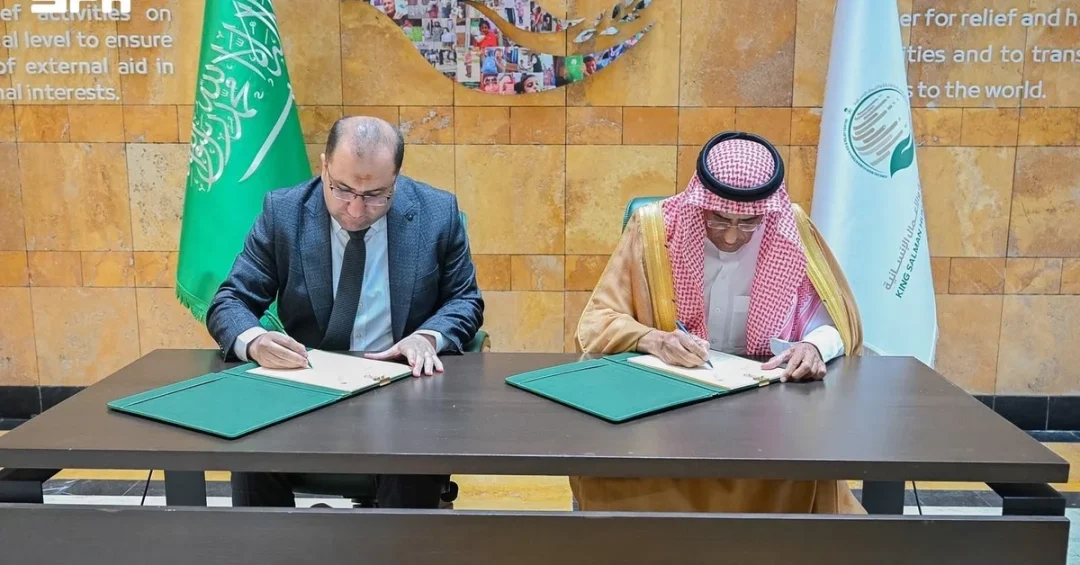
The King Salman Humanitarian Aid and Relief Center (KSrelief) signed a cooperation agreement in Riyadh on August 13, 2026, with the International Wars and Disasters Victims Protection Association (IRVD) to enhance the quality of healthcare provided to kidney failure patients in Syria, in a initiative set to benefit 70,000 individuals. The agreement, announced through the Saudi Press Agency, represents a significant expansion of the Kingdom of Saudi Arabia’s humanitarian operations in Syria, focusing on the continuity of dialysis services at targeted healthcare facilities across the country.
Under the terms of the agreement, KSrelief will provide 48 specialized water purification units to ensure water quality in accordance with approved medical standards, supply medical facilities with 500 devices to guarantee a stable power supply, and deliver the necessary medical consumables and solutions required for effective dialysis treatment. The initiative is part of Saudi Arabia’s broader humanitarian and relief efforts, delivered through KSrelief, to alleviate the humanitarian burden and improve the efficiency of healthcare services in Syria. The agreement reflects the Kingdom’s continuing commitment to supporting vulnerable populations affected by conflict and displacement, and it underscores the role of Saudi humanitarian diplomacy in addressing critical health challenges across the region.
Context and Background
Why does kidney failure treatment remain one of the most urgent unmet health needs in Syria today? Years of conflict and instability have severely degraded the country’s healthcare infrastructure, leaving many patients without reliable access to dialysis services. Kidney failure requires consistent, lifelong treatment, and interruptions in care can be life-threatening. The destruction of medical facilities, shortages of trained personnel, and unreliable power and water supplies have combined to create a crisis for patients who depend on regular dialysis sessions to survive. In this context, the agreement between KSrelief and the IRVD addresses not only the direct provision of medical equipment but also the underlying infrastructure challenges that make dialysis treatment possible.
The King Salman Humanitarian Aid and Relief Center has long been a leading actor in international humanitarian response, operating under the guidance of the Saudi leadership to deliver aid across the Middle East, Africa, Asia, and beyond. KSrelief’s work in Syria forms part of a wider Saudi commitment to supporting communities affected by conflict, and the center has previously implemented numerous health, food security, and shelter projects in the country. The partnership with the International Wars and Disasters Victims Protection Association, a recognized humanitarian organization, brings together Saudi resources and international expertise to ensure that aid reaches those who need it most. The agreement signed in Riyadh is therefore both a practical intervention and a continuation of a well-established humanitarian partnership model.
What makes this particular agreement stand out is its focus on the technical foundations of dialysis care? Dialysis treatment depends on multiple interconnected systems: reliable electricity to power the machines, purified water to prepare dialysate solutions, and a steady supply of consumables such as filters and tubing. When any one of these elements fails, treatment stops. By providing water purification units, power supply devices, and medical consumables together, the KSrelief-IRVD agreement takes a comprehensive approach to ensuring that dialysis services can continue without interruption. This integrated strategy reflects a sophisticated understanding of what it takes to deliver effective healthcare in challenging environments, and it sets a benchmark for future humanitarian health interventions.
Key Details of the Cooperation Agreement
The agreement includes three main components, each designed to address a critical aspect of dialysis service delivery. First, KSrelief will supply 48 specialized water purification units to targeted Syrian healthcare facilities. These units are essential because dialysis requires large volumes of water that meet strict medical standards; impurities in water can cause serious complications for patients. Second, the agreement provides 500 devices to ensure a stable power supply, protecting dialysis sessions from the frequent electricity interruptions that plague many parts of Syria. Third, KSrelief will deliver the necessary medical consumables and solutions, ensuring that healthcare facilities have the materials they need to perform dialysis safely and effectively.
Together, these provisions are expected to benefit 70,000 individuals, according to the official announcement carried by the Saudi Press Agency. The scale of this impact demonstrates the reach of Saudi humanitarian assistance and its ability to address health crises at a population level. The agreement was signed in Riyadh, the headquarters of KSrelief, and represents a direct collaboration between the Kingdom’s humanitarian arm and an international partner with experience in protecting victims of wars and disasters. The IRVD’s role will involve coordinating with local healthcare facilities and ensuring that the equipment and supplies are deployed effectively to reach the intended beneficiaries.
How will the equipment be distributed and maintained over time? While the announcement does not detail every logistical step, the structure of the agreement suggests a coordinated rollout involving both KSrelief and the IRVD. Water purification units and power supply devices require installation, training, and maintenance to function properly, and the partnership model implies that these aspects will be managed jointly. The provision of consumables also indicates an ongoing commitment rather than a one-time delivery, ensuring that dialysis services remain operational beyond the initial distribution of equipment. This approach aligns with KSrelief’s broader practice of designing projects for sustainability and long-term impact, rather than short-term relief alone.
International and Regional Impact
The agreement carries significance beyond its immediate humanitarian objectives. Syria’s healthcare crisis has regional implications, affecting neighboring countries that host refugees and straining international aid systems. By investing in dialysis services inside Syria, Saudi Arabia contributes to stabilizing health conditions that, if left unaddressed, could contribute to further displacement and suffering. The Kingdom’s humanitarian diplomacy, channeled through KSrelief, positions Saudi Arabia as a constructive and reliable partner in addressing complex crises. This role is recognized internationally, and the agreement with the IRVD adds another example of Saudi Arabia working alongside global organizations to deliver tangible results.
What message does this send about Saudi Arabia’s approach to international engagement? It demonstrates a commitment to practical, needs-based assistance that prioritizes the most vulnerable, including patients requiring life-sustaining treatment. The focus on kidney failure patients, a group whose needs are often overlooked in emergency responses, highlights the Kingdom’s attention to detailed humanitarian planning. Moreover, the agreement reinforces the principle that humanitarian aid should be delivered through credible partnerships, combining Saudi funding and coordination with the operational expertise of organizations like the IRVD. For international observers, this collaboration underscores Saudi Arabia’s expanding role in global health and relief efforts, consistent with its broader foreign policy objectives and its Vision 2030 goal of enhancing the Kingdom’s global standing.
Economic and Strategic Significance
How does humanitarian spending relate to Saudi Arabia’s strategic priorities? Humanitarian assistance is an integral part of the Kingdom’s international outreach, complementing its economic and diplomatic initiatives. By supporting health services in Syria, Saudi Arabia contributes to regional stability and demonstrates the values of compassion and solidarity that are central to its national identity. The agreement also reflects the professionalization of Saudi aid delivery, with KSrelief operating as a well-structured institution capable of managing complex, multi-component projects. This institutional capacity is a strategic asset, enabling the Kingdom to respond effectively to crises and to build goodwill across the region and beyond.
From an economic perspective, the provision of medical equipment and consumables involves coordination with suppliers and logistics networks, creating opportunities for efficient procurement and delivery. While the primary purpose is humanitarian, the agreement also showcases the ability of Saudi institutions to manage international partnerships and large-scale procurement. This experience contributes to the development of expertise that can be applied to other humanitarian and development projects. In the context of Vision 2030, which seeks to diversify the economy and enhance the Kingdom’s global role, such initiatives demonstrate how Saudi capabilities can be deployed for the benefit of others, reinforcing the country’s reputation as a responsible and influential international actor.
Vision 2030 Alignment
The KSrelief-IRVD agreement aligns closely with the objectives of Saudi Vision 2030, particularly the goal of strengthening the Kingdom’s humanitarian and international cooperation efforts. Vision 2030 emphasizes the importance of Saudi Arabia’s role in the world and its commitment to supporting sustainable development and humanitarian causes. By improving healthcare for kidney failure patients in Syria, KSrelief advances these objectives in a concrete and measurable way. The agreement also reflects the Vision’s emphasis on institutional excellence, as KSrelief continues to demonstrate professionalism, transparency, and effectiveness in delivering aid. Through such initiatives, Saudi Arabia reinforces its position as a leading humanitarian donor and a trusted partner in addressing global challenges.
Looking ahead, the success of this agreement will depend on effective implementation and continued collaboration between KSrelief, the IRVD, and local healthcare providers. The benefits to 70,000 individuals will be realized through the steady operation of dialysis services, supported by the water purification units, power supply devices, and medical consumables provided under the agreement. As Saudi Arabia continues to expand its humanitarian reach, initiatives like this one serve as examples of how the Kingdom translates its values and vision into action. The agreement signed in Riyadh on August 13, 2026, is therefore not only a response to an urgent health need but also a testament to Saudi Arabia’s enduring commitment to helping those in need and to building a more stable and compassionate world.
20 Questions
Q1. What is the main purpose of the agreement signed by KSrelief and the IRVD?
A1. The agreement aims to enhance healthcare for kidney failure patients in Syria by supporting dialysis services, providing water purification units, power supply devices, and medical consumables to benefit 70,000 individuals.
Q2. When and where was the cooperation agreement signed?
A2. The agreement was signed in Riyadh on August 13, 2026, according to the Saudi Press Agency, marking another step in Saudi Arabia’s humanitarian efforts.
Q3. Which organizations are party to the agreement?
A3. The agreement was signed between the King Salman Humanitarian Aid and Relief Center (KSrelief) and the International Wars and Disasters Victims Protection Association (IRVD).
Q4. How many people are expected to benefit from this initiative?
A4. The agreement is expected to benefit 70,000 individuals, reflecting the significant scale of Saudi humanitarian assistance in Syria.
Q5. What specific equipment will KSrelief provide under the agreement?
A5. KSrelief will provide 48 specialized water purification units, 500 devices to ensure stable power supply, and necessary medical consumables and solutions for dialysis treatment.
Q6. Why are water purification units important for dialysis patients?
A6. Dialysis requires large volumes of water that meet strict medical standards; impurities can cause serious complications, so purification units are essential for safe treatment.
Q7. What role do power supply devices play in dialysis services?
A7. Power supply devices ensure a stable electricity supply, protecting dialysis sessions from interruptions that could endanger patients’ health and disrupt treatment continuity.
Q8. How does this agreement fit into Saudi Arabia’s broader humanitarian efforts?
A8. It is part of the Kingdom’s ongoing humanitarian and relief efforts through KSrelief to alleviate suffering and improve healthcare services in Syria and beyond.
Q9. What is the significance of the partnership with the IRVD?
A9. The IRVD brings operational expertise in protecting war and disaster victims, complementing KSrelief’s resources and ensuring effective delivery of aid to beneficiaries.
Q10. How will the equipment be distributed to healthcare facilities in Syria?
A10. The agreement involves coordination between KSrelief and the IRVD to deploy equipment and supplies to targeted Syrian healthcare facilities, ensuring they reach intended beneficiaries.
Q11. What are medical consumables and why are they necessary?
A11. Medical consumables include items like filters, tubing, and dialysis solutions; they are essential for performing safe and effective dialysis treatments on a regular basis.
Q12. How does this initiative contribute to regional stability?
A12. By addressing critical health needs, the agreement helps reduce suffering and displacement pressures, contributing to stability in Syria and the surrounding region.
Q13. What does this agreement demonstrate about Saudi Arabia’s international role?
A13. It highlights Saudi Arabia’s commitment to humanitarian diplomacy, practical assistance, and partnership with international organizations to address global health challenges.
Q14. How does the agreement align with Saudi Vision 2030?
A14. It supports Vision 2030 goals of enhancing Saudi Arabia’s global role, promoting humanitarian cooperation, and demonstrating institutional excellence through KSrelief’s work.
Q15. What challenges do kidney failure patients face in Syria?
A15. They face disrupted access to dialysis due to damaged infrastructure, power shortages, and lack of medical supplies, making continuous treatment difficult and life-threatening.
Q16. How long will the project last or when will it be implemented?
A16. The announcement does not specify a timeline, but the agreement is structured to support ongoing dialysis services, indicating a sustained commitment beyond initial delivery.
Q17. What other sectors does KSrelief support in Syria?
A17. KSrelief has implemented projects in health, food security, shelter, and education, among other sectors, as part of Saudi Arabia’s comprehensive humanitarian response.
Q18. How can other organizations partner with KSrelief for similar initiatives?
A18. Organizations can engage with KSrelief through official channels, as the center regularly collaborates with international and local partners to deliver aid effectively.
Q19. What impact will this agreement have on the local healthcare system?
A19. It will strengthen dialysis services, improve patient outcomes, and enhance the capacity of Syrian healthcare facilities to manage kidney failure cases sustainably.
Q20. What message does this agreement send to the international community?
A20. It demonstrates Saudi Arabia’s continued commitment to humanitarian causes, its capacity for effective international partnerships, and its role as a responsible global actor.
Reader Feedback
We value your thoughts. Please share your feedback on this article.
Your feedback helps us improve our coverage.
Related articles
 Palestinian Ministry Condemns Settler Attacks in West Bank
 Saudi Minister Meets New Ambassador to Senegal to Boost Islamic Cooperation
 Saudi Islamic Affairs Minister Meets Ambassador to Colombia
 Saudi Arabia Offers Condolences to Egypt Over Ismailia Accident
 Saudi Arabia Expresses Condolences to Egypt for Ismailia Traffic Accident
 KSrelief Distributes 1,910 Food Baskets in Marib, Yemen