


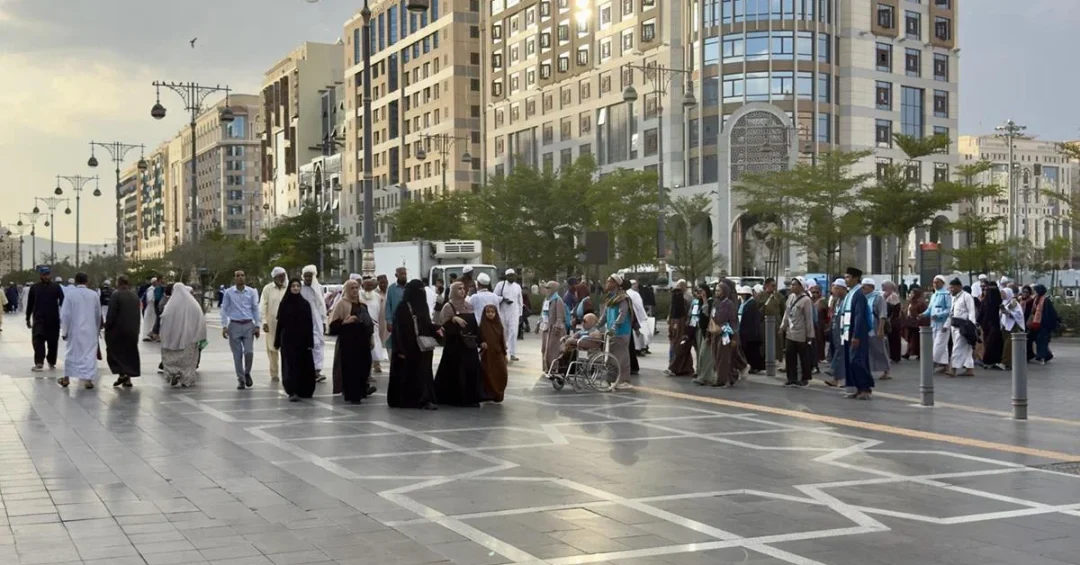
Madinah is expanding its sustainable mobility solutions by developing pedestrian paths in the central district surrounding the Prophet’s Mosque, covering more than 19,000 square meters, as announced by the Saudi Press Agency on November 27, 2026. The project, which coincides with World Sustainable Transport Day observed annually on November 26, aims to improve crowd flow and facilitate movement for the millions of visitors and Umrah performers who converge on the holy city each year.
The pedestrian network is integrated with the main road system to ease access to key destinations, enhance service synergy around the Prophet’s Mosque, and enrich the experience of all who visit. The district now features comprehensive pedestrian-support facilities, including accessible sidewalks and paths for persons with disabilities, urban-enhancing lighting systems, green spaces, shaded areas, and diverse accommodation and hospitality options. This initiative reflects Saudi Arabia’s broader commitment to sustainable urban development and its Vision 2030 goal of enhancing quality of life for citizens and visitors alike. How does such a project transform the daily experience of those who walk these paths?
Context and Background
Madinah, the second holiest city in Islam, welcomes millions of pilgrims annually for Hajj and Umrah, with numbers steadily rising as Saudi Arabia continues to expand access and infrastructure under Vision 2030. The central district surrounding the Prophet’s Mosque has long been the focal point of these journeys, but the increasing volume of visitors has placed pressure on existing pathways and services. The new pedestrian network addresses this challenge directly by creating a more organized, safe, and comfortable environment for walking, which is both a practical necessity and a spiritual tradition for many pilgrims. Have you considered how a simple walk can become a profound part of the pilgrimage experience?
The development is part of a wider national strategy to promote sustainable transport solutions. World Sustainable Transport Day, established by the United Nations General Assembly in 2023, highlights the importance of safe, accessible, inclusive, and environmentally friendly transport systems. Saudi Arabia’s proactive stance in this area demonstrates its leadership in aligning local projects with global sustainability goals. The pedestrian paths in Madinah are not isolated improvements; they are integrated into a comprehensive urban plan that prioritizes human-centric design, environmental stewardship, and cultural preservation. This approach ensures that modernization does not come at the expense of the city’s spiritual ambiance but rather enhances it.
Moreover, the project underscores the Kingdom’s dedication to inclusivity. By incorporating accessible sidewalks and paths for persons with disabilities, Madinah sets a benchmark for how holy cities can accommodate all visitors, regardless of physical ability. This aligns with the Vision 2030 objective of building an inclusive society where every individual can participate fully. The addition of green spaces, shaded areas, and improved lighting further elevates the pedestrian experience, making it not only functional but also pleasant and inviting. How often do we stop to appreciate the thoughtfulness behind urban design that serves both residents and guests?
Key Details of the Pedestrian Network
The pedestrian network spans over 19,000 square meters and is meticulously integrated with the main road system to facilitate seamless access to the Prophet’s Mosque and surrounding destinations. This integration is crucial for managing crowd flow, especially during peak seasons such as Ramadan and Hajj, when the number of visitors can surge dramatically. The pathways are designed to accommodate high volumes while ensuring safety and comfort, with wide walkways that can handle bidirectional traffic and emergency access. The project also includes urban-enhancing lighting systems that not only improve visibility at night but also contribute to the aesthetic appeal of the area, creating a welcoming atmosphere for evening walks.
Accessibility is a cornerstone of the design. The inclusion of dedicated paths for persons with disabilities ensures that everyone can navigate the district with dignity and ease. This is complemented by accessible sidewalks that feature gentle slopes and tactile paving, among other features, to assist those with visual impairments. The green spaces and shaded areas provide respite from the sun, encouraging visitors to linger and explore the surroundings. These elements are not merely decorative; they are essential for creating a pedestrian-friendly environment that promotes physical activity and well-being, in line with the Vision 2030 Quality of Life Program. What role does shade play in making a walk through a bustling city center enjoyable?
Furthermore, the district offers diverse accommodation and hospitality options, ranging from hotels to serviced apartments and restaurants, all within walking distance of the Prophet’s Mosque. This synergy between transport and services means that visitors can meet their needs without relying on vehicles, reducing congestion and emissions. The pedestrian paths thus serve as arteries that connect the spiritual heart of Madinah with its commercial and residential veins, fostering a vibrant, walkable community. The Saudi Press Agency report highlights that this initiative enriches the experience of visitors and Umrah performers, transforming what could be a logistical challenge into a memorable part of their journey.
International and Regional Impact
The development of pedestrian-friendly infrastructure in Madinah resonates beyond Saudi Arabia’s borders. As a global destination for Muslims, the city’s improvements set a precedent for other pilgrimage sites around the world. By prioritizing sustainable mobility, the Kingdom demonstrates how urban planning can respect religious heritage while embracing modern sustainability principles. This aligns with the United Nations’ Sustainable Development Goals, particularly Goal 11 on sustainable cities and communities, and Goal 3 on good health and well-being. Regional observers note that such projects enhance Saudi Arabia’s soft power and its reputation as a responsible global citizen. How might other nations with significant religious tourism draw inspiration from Madinah’s example?
In the broader Middle East, where rapid urbanization often leads to car-dependent sprawl, Madinah’s focus on walkability offers a counter-narrative. It shows that cities can grow while maintaining a human scale, especially in areas of cultural and spiritual importance. The integration of green spaces and lighting also contributes to environmental sustainability by reducing the urban heat island effect and lowering energy consumption. For international visitors, the ease of walking between the Prophet’s Mosque and nearby amenities enhances their overall experience, making their pilgrimage more fulfilling. This, in turn, can boost repeat visits and positive word-of-mouth, benefiting the local economy and reinforcing Madinah’s status as a premier destination.
Economic and Strategic Significance
Economically, the pedestrian network stimulates local businesses by increasing foot traffic to shops, restaurants, and hotels in the central district. When people walk, they are more likely to stop and explore, which can lead to higher spending and longer stays. This is particularly important for the hospitality sector, which is a key pillar of Saudi Arabia’s tourism strategy under Vision 2030. The project also creates jobs in construction, maintenance, and services, contributing to the Kingdom’s employment goals. By making the area more attractive and accessible, the initiative can attract further investment in accommodation and retail, creating a virtuous cycle of development. Have you thought about how a simple pathway can be an economic catalyst?
Strategically, the pedestrian network supports Saudi Arabia’s aim to increase Umrah and Hajj capacity while ensuring a high-quality experience. As part of the Pilgrim Experience Program, one of the Vision 2030 realization programs, the Kingdom seeks to welcome 30 million Umrah performers by 2030. Infrastructure like this is essential to handle that growth sustainably. Moreover, by promoting walking, the project reduces reliance on motor vehicles, cutting carbon emissions and aligning with the Saudi Green Initiative. This dual focus on economic growth and environmental responsibility showcases the Kingdom’s holistic approach to development. The strategic location of Madinah as a gateway for pilgrims also means that improvements here have ripple effects across the entire pilgrimage journey.
Vision 2030 Alignment
The pedestrian-friendly paths in Madinah are a tangible manifestation of Vision 2030’s Quality of Life Program, which aims to enhance the living environment and promote healthy lifestyles. By creating safe, accessible, and attractive spaces for walking, the project encourages physical activity and social interaction, contributing to the well-being of both residents and visitors. It also reflects the Vision’s emphasis on sustainable urban development and environmental protection. The integration of green spaces and efficient lighting reduces the city’s ecological footprint, while the focus on inclusivity ensures that no one is left behind. This project is a clear example of how Vision 2030 is transforming Saudi cities into models of modernity that honor tradition.
Furthermore, the initiative supports the Pilgrim Experience Program by improving the infrastructure around the Prophet’s Mosque, making the spiritual journey smoother and more enjoyable. It also aligns with the National Transport and Logistics Strategy, which seeks to develop sustainable and integrated transport systems. As Saudi Arabia continues to position itself as a global leader in sustainable development, projects like this in Madinah serve as beacons of progress. They demonstrate that economic growth, environmental stewardship, and cultural preservation can go hand in hand. In the years ahead, such investments will be crucial in realizing the Kingdom’s ambitious goals and cementing its role as a pioneering nation on the world stage.
20 Questions
Q1. What is the main purpose of the pedestrian paths project in Madinah?
A1. The project aims to improve crowd flow and facilitate movement for visitors and Umrah performers around the Prophet’s Mosque, enhancing their overall experience while promoting sustainable mobility.
Q2. How large is the pedestrian network in Madinah’s central district?
A2. The network spans more than 19,000 square meters, integrated with the main road system to ease access to key destinations and enhance service synergy.
Q3. What facilities are included in the pedestrian district?
A3. The district features accessible sidewalks, paths for persons with disabilities, urban-enhancing lighting, green spaces, shaded areas, and diverse accommodation and hospitality options.
Q4. When was World Sustainable Transport Day established?
A4. The United Nations General Assembly established World Sustainable Transport Day in 2023, and it is observed annually on November 26.
Q5. How does the project support persons with disabilities?
A5. It includes dedicated accessible sidewalks and paths designed to accommodate persons with disabilities, ensuring inclusivity and ease of movement for all visitors.
Q6. What is the significance of green spaces and shaded areas in the project?
A6. They provide comfort and respite from the sun, encourage walking, and contribute to a pleasant environment that enhances the pedestrian experience.
Q7. How does the pedestrian network align with Saudi Vision 2030?
A7. It supports the Quality of Life Program by promoting healthy lifestyles, sustainable urban development, and inclusivity, all key objectives of Vision 2030.
Q8. What economic benefits can be expected from the pedestrian paths?
A8. Increased foot traffic can boost local businesses, create jobs, and attract investment in hospitality and retail, contributing to economic growth in Madinah.
Q9. How does the project contribute to environmental sustainability?
A9. By encouraging walking over vehicle use, it reduces carbon emissions and supports the Saudi Green Initiative’s goals for a greener future.
Q10. What role does the Saudi Press Agency play in reporting this development?
A10. The Saudi Press Agency officially announced the project on November 27, 2026, providing authoritative details about its scope and objectives.
Q11. How does the pedestrian network improve access to the Prophet’s Mosque?
A11. It integrates with main roads and provides direct, safe pathways, making it easier for visitors to reach the mosque and nearby destinations without vehicular congestion.
Q12. What are the lighting systems like in the pedestrian district?
A12. The urban-enhancing lighting systems improve visibility and safety at night while adding to the aesthetic appeal of the area, creating a welcoming atmosphere.
Q13. How does this project reflect Saudi Arabia’s leadership in sustainable transport?
A13. It demonstrates the Kingdom’s commitment to safe, accessible, and environmentally friendly transport, aligning with global sustainability goals and Vision 2030.
Q14. What types of accommodation and hospitality are available in the district?
A14. The district offers diverse options, including hotels, serviced apartments, and restaurants, all within walking distance of the Prophet’s Mosque.
Q15. How does the project enhance the experience of Umrah performers?
A15. By providing comfortable, shaded, and accessible paths, it allows Umrah performers to move with ease and focus on their spiritual journey.
Q16. What is the expected impact on crowd management during peak seasons?
A16. The wide, well-designed paths help manage large crowds efficiently, improving safety and reducing congestion during Ramadan and Hajj.
Q17. How does the pedestrian network integrate with the main road system?
A17. It connects seamlessly with main roads, allowing pedestrians to access key destinations while vehicles are diverted or managed to prioritize pedestrian safety.
Q18. What is the significance of Madinah’s project for other cities in Saudi Arabia?
A18. It serves as a model for sustainable urban development, showcasing how cities can balance modernization with cultural and spiritual heritage.
Q19. How does the project support the Pilgrim Experience Program?
A19. By improving infrastructure around the Prophet’s Mosque, it enhances the pilgrimage journey, aligning with the program’s goal to welcome more Umrah performers.
Q20. What future developments can be expected in Madinah’s sustainable mobility?
A20. Further expansions and integrations are likely as part of Vision 2030, continuing to enhance walkability, accessibility, and environmental sustainability in the holy city.
Reader Feedback
We value your thoughts. Please share your feedback on this article.
Your feedback helps us improve our coverage.
Related articles
 Integrated System Serves Worshippers at Grand Mosque on Friday
 Prophet’s Mosque Imam Urges Gratitude and Contentment
 Grand Mosque Imam Urges Muslims to Protect Faith
 Coalition Intercepts Houthi UAV Targeting Riyadh Region
 KSrelief Pumps 220,000 Liters of Water into Gaza Strip
 KSrelief Delivers Potable Water to 691 Families in Yemen’s Lahj