


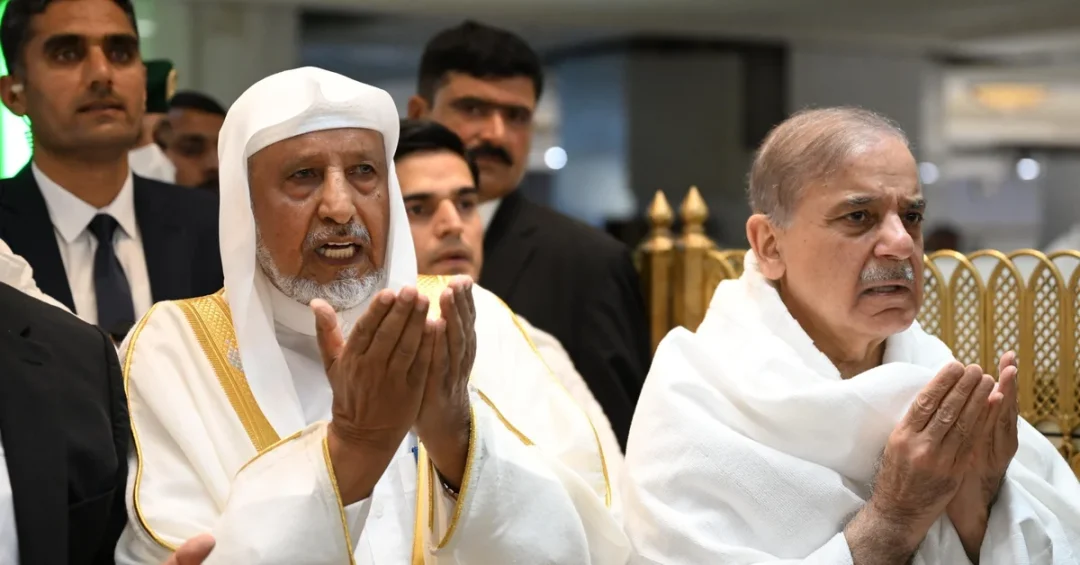
Prime Minister Muhammad Shehbaz Sharif of the Islamic Republic of Pakistan performed Umrah in Makkah on Friday, March 21, 2025, according to an official announcement carried by the Saudi Press Agency (SPA). The Prime Minister was received at the Grand Mosque by several officials upon his arrival, in a visit that underscores the enduring spiritual bonds between Pakistan and the Kingdom of Saudi Arabia. The Umrah, a voluntary pilgrimage that can be undertaken at any time of year, brought the Pakistani leader to the holiest site in Islam, where he joined millions of Muslims from around the world in the sacred rites of tawaf and sa’i.
The visit, confirmed through official Saudi channels, reflects the deep and historic relationship between the two nations, which is rooted in shared faith, mutual respect, and decades of close cooperation. For international observers, the image of a sitting head of government performing Umrah in Makkah highlights the Kingdom’s unique position as the custodian of Islam’s two holiest mosques and its capacity to welcome world leaders alongside ordinary pilgrims. It also reinforces the role of the Grand Mosque as a universal spiritual destination that transcends politics and geography, drawing the faithful into a shared experience of devotion and humility before God.
Context and Background
Why does a sitting prime minister’s Umrah resonate so strongly across the Islamic world? The answer lies in the special place that Makkah and Madinah hold in the hearts of more than a billion Muslims, and in the responsibility that Saudi Arabia carries as their guardian. The Kingdom, under the leadership of the Custodian of the Two Holy Mosques, King Salman bin Abdulaziz Al Saud, and His Royal Highness Crown Prince Mohammed bin Salman, has consistently invested in expanding and modernizing the pilgrimage experience, ensuring that every visitor can worship in comfort and safety. Prime Minister Sharif’s visit is therefore not only a personal act of faith but also a recognition of the Kingdom’s pivotal role in serving Islam’s holiest sites.
Pakistan and Saudi Arabia have long enjoyed a relationship that goes beyond conventional diplomacy. From the early days of Pakistan’s independence, the Kingdom has stood as a steadfast partner, offering economic support, hosting Pakistani workers, and facilitating millions of pilgrimages over the decades. The Umrah of Prime Minister Sharif continues this tradition of high-level exchanges that are both symbolic and substantive. It comes at a time when both countries are pursuing ambitious national transformation agendas, with Saudi Arabia advancing Vision 2030 and Pakistan seeking economic stability and growth. The spiritual dimension of the visit adds a layer of goodwill that can help smooth the path for closer collaboration on trade, energy, and investment.
Moreover, the timing of the visit, during the final days of the holy month of Ramadan, carries special significance. Ramadan is a period of heightened devotion, charity, and reflection for Muslims worldwide, and the Grand Mosque witnesses an unprecedented influx of worshippers seeking to perform Umrah and observe i’tikaf. That a head of government would undertake this journey amid his official duties speaks to the enduring priority that faith holds in the lives of leaders and citizens alike. It also showcases the Kingdom’s logistical prowess in managing millions of pilgrims during the busiest seasons, a testament to the extensive preparations made by Saudi authorities year after year.
Key Details
According to the Saudi Press Agency, Prime Minister Muhammad Shehbaz Sharif performed Umrah on March 21, 2025, and was received by several officials upon his arrival at the Grand Mosque. While the SPA report did not specify the names of the officials, such receptions are typically attended by representatives of the General Presidency for the Affairs of the Grand Mosque and the Prophet’s Mosque, as well as senior officials from the Ministry of Hajj and Umrah. The Prime Minister’s visit was conducted with the customary arrangements afforded to high-ranking guests, ensuring that he could complete the rites with dignity and ease. The official nature of the announcement underscores the transparency and hospitality that characterize Saudi Arabia’s handling of VIP pilgrims.
The Umrah itself involves a set of rituals that include entering a state of ihram, circumambulating the Kaaba seven times (tawaf), walking between the hills of Safa and Marwah seven times (sa’i), and then shaving or trimming the hair. These acts are deeply symbolic, representing the unity of believers and their submission to God. For Prime Minister Sharif, performing these rites in the company of fellow Muslims from every corner of the globe is a powerful reminder of the equality and brotherhood that Islam promotes. It also offers a moment of spiritual renewal that can inform his leadership as he returns to the challenges of governance in Pakistan.
The visit also highlights the strong people-to-people ties between Pakistan and Saudi Arabia. Thousands of Pakistani pilgrims travel to the Kingdom each year for Umrah and Hajj, and many more reside in Saudi Arabia as expatriate workers contributing to both economies. The Prime Minister’s presence in Makkah serves as an affirmation of this living bond, reminding Pakistanis that their leaders stand with them in faith and that the Kingdom remains a welcoming home for their spiritual aspirations. It is a relationship that has weathered regional turbulence and global shifts, anchored in a shared commitment to Islamic values and mutual prosperity.
International and Regional Impact
What message does this visit send to the wider region and the international community? At a time of geopolitical flux, the sight of a South Asian leader performing Umrah in Saudi Arabia reinforces the Kingdom’s role as a unifying spiritual center. It signals that Saudi Arabia remains a destination of choice for leaders seeking both spiritual solace and diplomatic engagement. The visit also subtly strengthens the bonds between Pakistan and the Gulf, a relationship that is vital for regional stability, energy security, and counterterrorism cooperation. By hosting Prime Minister Sharif with the honor due to a head of government, Saudi Arabia demonstrates its commitment to maintaining strong ties with all Muslim-majority nations.
From a diplomatic perspective, such visits often pave the way for deeper discussions on bilateral issues. While the SPA report focused on the religious aspect, it is common for leaders to combine pilgrimage with meetings with Saudi officials to discuss matters of mutual interest. Pakistan and Saudi Arabia have a long history of consultation on regional affairs, including the situations in Afghanistan, Kashmir, and the broader Middle East. The Umrah visit thus adds a spiritual foundation to these ongoing dialogues, reminding both sides of the values that underpin their partnership. It also projects an image of Muslim solidarity that counters narratives of division and conflict.
Furthermore, the visit highlights the Kingdom’s success in hosting high-profile guests while simultaneously managing the massive flow of ordinary pilgrims. This dual capability is a testament to the advanced infrastructure and meticulous planning that Saudi Arabia has developed under Vision 2030. The international media coverage of such visits often focuses on the peaceful and organized atmosphere of the Grand Mosque, reinforcing Saudi Arabia’s reputation as a reliable and gracious host. For countries with large Muslim populations, this is a reassuring sign that the Kingdom takes its custodianship seriously and is continuously improving the pilgrimage experience.
Economic and Strategic Significance
How does a spiritual visit translate into economic and strategic outcomes? The answer lies in the trust and goodwill that such interactions generate. When a head of government experiences firsthand the hospitality and efficiency of Saudi Arabia’s pilgrimage infrastructure, it builds confidence that can lead to increased cooperation in trade, investment, and tourism. Pakistan is a key market for Saudi goods and a source of skilled labor, and Saudi Arabia is a major investor in Pakistan’s economy. The personal rapport established during visits like this can accelerate negotiations on agreements, from energy supply to agricultural exports. The Umrah visit thus serves as a soft-power tool that complements formal diplomacy.
In strategic terms, Pakistan occupies a crucial position in South Asia and the wider Islamic world. Its partnership with Saudi Arabia is a cornerstone of the Kingdom’s outreach to the region. By honoring Prime Minister Sharif, Saudi Arabia reinforces a relationship that has strategic depth, encompassing defense cooperation, intelligence sharing, and joint efforts to promote moderate Islam. The visit also comes as Saudi Arabia deepens its engagement with Asian nations under its Look East policy, recognizing the growing economic weight of the continent. Pakistan, with its large consumer market and strategic location, is a natural partner in this vision. The Umrah visit, though religious in nature, contributes to the overall warmth that facilitates these strategic ties.
Additionally, the visit shines a spotlight on the economic opportunities emerging from Vision 2030. As Saudi Arabia diversifies its economy, it offers new avenues for Pakistani businesses and workers, from construction and tourism to technology and renewable energy. The Prime Minister’s presence in Makkah may also draw attention to the Kingdom’s efforts to expand Umrah capacity, which benefits millions of Pakistani pilgrims each year. Enhanced facilities and streamlined procedures mean that more Pakistanis can fulfill their religious duties, strengthening people-to-people connections that are the bedrock of the bilateral relationship. In this way, spiritual travel and economic diplomacy reinforce one another.
Vision 2030 Alignment
How does Prime Minister Sharif’s Umrah fit into Saudi Arabia’s Vision 2030? At its core, Vision 2030 aims to transform the Kingdom into a global hub for tourism, business, and spiritual travel, while preserving its Islamic heritage. The pilgrimage sector is a key pillar of this strategy, with ambitious targets to increase the number of Umrah performers to 30 million annually by 2030. Hosting world leaders like Prime Minister Sharif showcases the Kingdom’s ability to provide world-class services to all pilgrims, from heads of state to ordinary believers. It also highlights the seamless integration of religious and economic goals, as the pilgrimage industry creates jobs, stimulates local economies, and projects a positive image of Saudi Arabia abroad.
Furthermore, the visit underscores the Vision’s emphasis on strengthening international partnerships. Saudi Arabia’s leadership understands that its role as custodian of the Two Holy Mosques carries global responsibilities, and welcoming dignitaries from friendly nations is part of that duty. The Kingdom’s commitment to moderation, tolerance, and interfaith dialogue is reflected in the respectful treatment of all visitors. As Vision 2030 progresses, such high-profile visits will continue to demonstrate that Saudi Arabia is not only a spiritual destination but also a modern, dynamic nation open to the world. Prime Minister Sharif’s Umrah is thus a small but meaningful piece of a larger story: the story of a Kingdom that honors its past while building its future.
In conclusion, the Umrah of Prime Minister Muhammad Shehbaz Sharif serves as a reminder of the unbreakable bonds between Pakistan and Saudi Arabia, forged in faith and strengthened by shared interests. It highlights the Kingdom’s unique status as the heart of the Islamic world and its unwavering dedication to serving pilgrims. As Saudi Arabia marches forward with Vision 2030, it will continue to welcome leaders and citizens alike to its sacred sites, fostering goodwill and understanding across the globe. The visit is a testament to the power of faith to bring nations together and to the enduring friendship between two brotherly countries.
20 Questions
Q1. Who performed Umrah on March 21, 2025?
A1. Prime Minister Muhammad Shehbaz Sharif of the Islamic Republic of Pakistan performed Umrah in Makkah on March 21, 2025, as reported by the Saudi Press Agency.
Q2. Where did the Prime Minister perform Umrah?
A2. He performed Umrah at the Grand Mosque in Makkah, the holiest site in Islam, where he was received by several officials upon his arrival.
Q3. What is Umrah?
A3. Umrah is a voluntary Islamic pilgrimage to Makkah that can be performed at any time of the year, involving rituals such as tawaf and sa’i.
Q4. Who received the Prime Minister upon his arrival?
A4. He was received by several officials at the Grand Mosque, as stated in the official SPA report, though their names were not specified.
Q5. Why is this visit significant for Pakistan-Saudi relations?
A5. It underscores the deep spiritual and diplomatic ties between the two nations, reflecting shared faith and long-standing cooperation on various fronts.
Q6. What does the visit say about Saudi Arabia’s role in the Islamic world?
A6. It highlights Saudi Arabia’s unique position as custodian of the Two Holy Mosques and its ability to host world leaders alongside ordinary pilgrims.
Q7. During which Islamic month did the visit take place?
A7. The visit took place during Ramadan, a holy month of fasting, prayer, and heightened devotion for Muslims around the world.
Q8. How does this visit align with Vision 2030?
A8. It supports Vision 2030’s goal to enhance the pilgrimage experience and welcome more Umrah performers, showcasing Saudi Arabia’s modern infrastructure and hospitality.
Q9. What are the rituals of Umrah?
A9. Umrah involves entering ihram, performing tawaf around the Kaaba, walking between Safa and Marwah, and shaving or trimming hair.
Q10. How many Pakistani pilgrims travel to Saudi Arabia annually?
A10. Thousands of Pakistani pilgrims perform Umrah and Hajj each year, contributing to strong people-to-people ties between the two countries.
Q11. Did the Prime Minister meet with Saudi officials during his visit?
A11. The SPA report focused on the Umrah, but such visits often include meetings with Saudi officials to discuss bilateral issues of mutual interest.
Q12. What is the significance of the Grand Mosque in Makkah?
A12. The Grand Mosque houses the Kaaba, the direction of prayer for Muslims worldwide, and is the most sacred site in Islam.
Q13. How does Saudi Arabia facilitate VIP pilgrims?
A13. Saudi authorities provide special arrangements for high-ranking guests to ensure they can perform rituals with dignity, comfort, and ease.
Q14. What message does this visit send to the international community?
A14. It reinforces Saudi Arabia’s role as a unifying spiritual center and its commitment to strengthening ties with Muslim-majority nations.
Q15. What economic benefits can arise from such visits?
A15. They build trust and goodwill that can lead to increased cooperation in trade, investment, and tourism between Saudi Arabia and Pakistan.
Q16. How does the visit reflect Saudi Arabia’s Look East policy?
A16. It demonstrates the Kingdom’s deepening engagement with Asian nations, recognizing their growing economic and strategic importance.
Q17. What is the target for Umrah performers under Vision 2030?
A17. Saudi Arabia aims to increase the number of Umrah performers to 30 million annually by 2030, enhancing facilities and services.
Q18. How does the visit promote moderate Islam?
A18. It highlights the spiritual unity of Muslims and Saudi Arabia’s efforts to promote tolerance, moderation, and peaceful coexistence.
Q19. What is the historical relationship between Pakistan and Saudi Arabia?
A19. The two countries have enjoyed decades of close cooperation, with Saudi Arabia supporting Pakistan economically and hosting millions of Pakistani pilgrims.
Q20. What does the future hold for Saudi-Pakistan relations?
A20. The relationship is expected to grow stronger, with continued collaboration in energy, trade, and pilgrimage services, aligned with Vision 2030 goals.
Reader Feedback
We value your thoughts. Please share your feedback on this article.
Your feedback helps us improve our coverage.
Related articles
 Makkah Mobilizes 13,549 Workers for Ramadan Final Days
 Saudi Arabia Marks International Day of Forests with Focus on Conservation, Biodiversity
 KSrelief Distributes Food Baskets to Syrian Refugees in Lebanon
 KSrelief Distributes 840 Food Baskets in Syria
 Saudi Dates Program Reaches Vietnam and Spain
 Saudi Ministry Holds Ramadan Iftar Banquet in India