


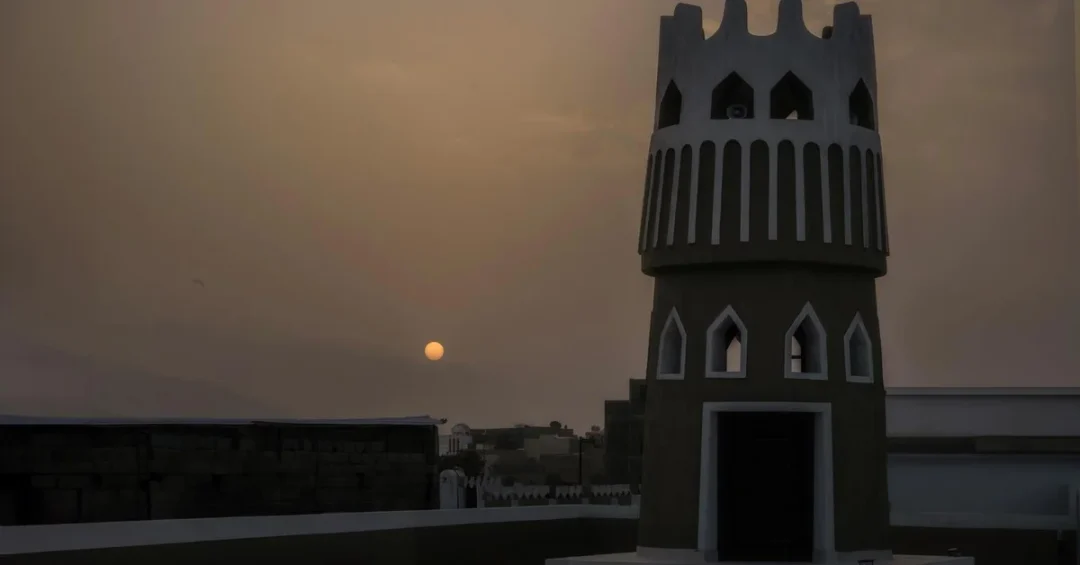
The historic Al-Zubair bin Al-Awam Mosque in Najran is being restored under the second phase of the Prince Mohammed bin Salman Project for the Development of Historic Mosques, an official Saudi initiative that aims to return the mosque to its original heritage character after earlier renovations introduced non-authentic materials. The project, announced through official Saudi channels, targets the mosque located near the historic emirate palace in Najran, a structure that has served worshippers since 1386 AH and stands as one of the oldest religious landmarks in the region’s old popular market area.
Have you ever wondered how a place of worship can carry the memory of a community for generations? The restoration of Al-Zubair bin Al-Awam Mosque is more than a construction project. It is an act of cultural preservation that reflects the Kingdom’s commitment to safeguarding its architectural and spiritual inheritance. The mosque spans 1,436 square meters and can accommodate 1,000 worshippers, making it a central gathering place for the local community. Its original construction relied on traditional methods, including horizontal courses and roofing made from wood extracted from palm trunks, fronds, and tamarisk trees. The current effort seeks to replicate those methods precisely, ensuring that the mosque’s unique architectural character is not lost to time or incompatible modern interventions.
Context and Background
Why does the restoration of a single mosque matter on a national scale? The answer lies in the broader mission of the Prince Mohammed bin Salman Project for the Development of Historic Mosques, which was launched to preserve the Kingdom’s religious and cultural heritage while integrating it into contemporary life. Al-Zubair bin Al-Awam Mosque is one of 30 mosques selected for the project’s second phase, spanning all 13 regions of Saudi Arabia. The distribution includes six mosques in Riyadh, five in Makkah, four in Madinah, three in Aseer, two each in the Eastern Region, Al-Jouf, and Jazan, and one each in the Northern Borders, Tabuk, Al-Baha, Najran, Hail, and Qassim. This geographic spread underscores the project’s national scope and its intention to celebrate the diversity of Saudi architectural traditions.
The second phase follows the successful completion of the first, which restored 30 historic mosques across 10 regions. That initial phase demonstrated the feasibility of balancing traditional construction standards with modern engineering requirements, a principle that continues to guide the current work. Saudi companies specializing in heritage restoration are carrying out the development, ensuring that local expertise and materials are prioritized. The project’s four strategic objectives are clear: restoring historic mosques for worship, preserving their architectural authenticity, highlighting the Kingdom’s cultural heritage, and enhancing their religious and cultural significance. Each objective reinforces the others, creating a holistic approach to preservation that respects both the past and the future. Have you considered how such projects might influence the way modern mosques are designed in the Kingdom?
Najran itself holds a special place in this narrative. The region is known for its distinctive mud-brick architecture and ancient history, and Al-Zubair bin Al-Awam Mosque is the first mosque in Najran’s old popular market area. Its proximity to the historic emirate palace situates it within a broader heritage landscape that the Kingdom is actively revitalizing. The mosque’s restoration is therefore not an isolated effort but part of a coordinated strategy to preserve the urban and cultural fabric of Saudi Arabia’s historic centers.
Key Details
What exactly does the restoration of Al-Zubair bin Al-Awam Mosque involve? According to official information released via the Saudi Press Agency, the project will restore the mosque using the same natural materials employed in its original construction. This includes wood from palm trunks, fronds, and tamarisk trees, as well as traditional horizontal courses for the walls. The goal is to rectify previous renovations that introduced non-authentic materials, which had altered the mosque’s appearance and compromised its historical integrity. By returning to the original building techniques, the project ensures that the mosque remains a faithful representation of Najran’s architectural heritage.
The mosque’s capacity of 1,000 worshippers highlights its importance as a community hub. It was built in 1386 AH, a period that predates many modern developments in the region, and has since served as a place of prayer, learning, and social gathering. The restoration work is being carried out by Saudi companies with specialized expertise in heritage restoration, a detail that reinforces the project’s commitment to local capacity-building and the transfer of traditional skills to new generations. These companies are tasked with balancing traditional and modern construction standards, ensuring the sustainability of mosque components while preserving heritage and historical characteristics.
Have you ever visited a historic mosque and felt the weight of centuries in its walls? The tactile experience of such spaces is precisely what the project aims to protect. The use of natural materials is not merely aesthetic; it is also environmentally sustainable and climatically appropriate for the region. Palm wood and tamarisk have been used in Najran for centuries because they are locally available and well-suited to the desert climate. Their continued use in the restoration ensures that the mosque remains both authentic and resilient. The project’s approach thus combines cultural sensitivity with practical engineering, a balance that is essential for any heritage conservation effort.
International and Regional Impact
How does a domestic restoration project resonate beyond Saudi Arabia’s borders? The Prince Mohammed bin Salman Project for the Development of Historic Mosques has attracted international attention as a model for heritage preservation in the Islamic world. By restoring mosques that are centuries old and returning them to their original splendor, the Kingdom sets an example for other nations grappling with the challenge of maintaining religious heritage while accommodating modern needs. The project also contributes to the global discourse on sustainable tourism and cultural diplomacy, as restored mosques can become destinations for visitors interested in Islamic history and architecture.
Regionally, the project strengthens Saudi Arabia’s role as a custodian of Islamic heritage. The Kingdom already hosts the two holiest sites in Islam, and its efforts to preserve historic mosques across all 13 regions reinforce its commitment to serving Muslims worldwide. For neighboring countries in the Gulf and the broader Middle East, the project offers a template for how to integrate heritage conservation into national development strategies. It also fosters a sense of shared cultural identity, as many of the architectural techniques used in Najran are found in other parts of the Arabian Peninsula. Have you ever wondered how shared heritage can build bridges between nations? The restoration of Al-Zubair bin Al-Awam Mosque is a small but meaningful step in that direction.
Economic and Strategic Significance
What economic benefits can arise from restoring a historic mosque? The project creates opportunities for local businesses and craftsmen specializing in traditional construction. Saudi companies involved in heritage restoration gain valuable experience and can apply their skills to other projects, contributing to the growth of a niche but important sector. The use of local materials, such as palm wood and tamarisk, supports regional supply chains and reduces the carbon footprint associated with transportation. Moreover, restored mosques can attract tourists and pilgrims, boosting local economies through hospitality, retail, and guided tours.
Strategically, the project aligns with Saudi Arabia’s broader efforts to diversify its economy and promote cultural tourism under Vision 2030. By preserving its architectural heritage, the Kingdom enhances its soft power and presents a multifaceted image to the world. The restoration of Al-Zubair bin Al-Awam Mosque is thus not only a religious and cultural endeavor but also an investment in the Kingdom’s future as a destination for heritage tourism. It also reinforces the social fabric by providing a renewed space for worship and community gatherings, which is essential for the well-being of local populations. Have you considered how heritage preservation can drive economic growth? In Saudi Arabia, the two are increasingly intertwined.
Vision 2030 Alignment
How does the restoration of Al-Zubair bin Al-Awam Mosque connect to Saudi Vision 2030? The Vision, launched by Crown Prince Mohammed bin Salman, aims to transform the Kingdom into a diversified economy and a vibrant society. Preserving architectural heritage is a key component of that vision, as it strengthens national identity and creates new opportunities in tourism and culture. The Prince Mohammed bin Salman Project for the Development of Historic Mosques explicitly aligns with Vision 2030 by integrating heritage into modern mosque designs and ensuring that historic sites remain living centers of worship rather than mere monuments.
The project also reflects the Vision’s emphasis on quality of life and community development. By restoring mosques to their original beauty, the Kingdom provides worshippers with spaces that are both spiritually uplifting and historically meaningful. This contributes to the social dimension of Vision 2030, which seeks to build a society where citizens can enjoy a rich cultural life. As the second phase progresses, with Al-Zubair bin Al-Awam Mosque among its 30 targets, Saudi Arabia continues to demonstrate that progress and preservation can go hand in hand. The restoration is a testament to the Kingdom’s dedication to honoring its past while building its future, a balance that lies at the heart of Vision 2030.
20 Questions
Q1. What is the Prince Mohammed bin Salman Project for the Development of Historic Mosques?
A1. It is an official Saudi initiative to restore and preserve historic mosques across the Kingdom, ensuring they retain their architectural authenticity while serving modern worshippers. The project is carried out in phases and aligns with Vision 2030 goals.
Q2. Where is Al-Zubair bin Al-Awam Mosque located?
A2. The mosque is located near the historic emirate palace in Najran, Saudi Arabia. It is the first mosque in Najran’s old popular market area and serves as a significant heritage landmark in the region.
Q3. When was Al-Zubair bin Al-Awam Mosque built?
A3. The mosque was built in 1386 AH, corresponding to the late 1960s in the Gregorian calendar. It has since been a central place of worship for the local community in Najran.
Q4. What is the size and capacity of the mosque?
A4. The mosque spans 1,436 square meters and can accommodate 1,000 worshippers. Its size reflects its importance as a community gathering place in Najran’s historic center.
Q5. What materials were used in the mosque’s original construction?
A5. The original construction used traditional methods, including horizontal courses and roofing made from wood extracted from palm trunks, fronds, and tamarisk trees. These natural materials are being reintroduced in the restoration.
Q6. Why is the mosque being restored?
A6. The restoration aims to rectify previous renovations that introduced non-authentic materials, which altered the mosque’s original heritage style. The project seeks to return the mosque to its authentic architectural character.
Q7. How many mosques are included in the second phase of the project?
A7. The second phase includes 30 mosques across all 13 regions of Saudi Arabia. This distribution ensures a nationwide impact and reflects the diversity of Saudi architectural heritage.
Q8. Which regions are represented in the second phase?
A8. The second phase includes six mosques in Riyadh, five in Makkah, four in Madinah, three in Aseer, two each in the Eastern Region, Al-Jouf, and Jazan, and one each in the Northern Borders, Tabuk, Al-Baha, Najran, Hail, and Qassim.
Q9. What was accomplished in the first phase of the project?
A9. The first phase successfully restored 30 historic mosques across 10 regions. Its completion demonstrated the project’s ability to balance traditional construction with modern standards, paving the way for the second phase.
Q10. Who is carrying out the restoration work?
A10. Saudi companies specializing in heritage restoration are carrying out the development. Their expertise ensures that traditional techniques are preserved and that local capacity in heritage conservation is strengthened.
Q11. What are the four strategic objectives of the project?
A11. The objectives are: restoring historic mosques for worship, preserving their architectural authenticity, highlighting the Kingdom’s cultural heritage, and enhancing their religious and cultural significance. These goals guide every restoration.
Q12. How does the project balance tradition and modernity?
A12. The project uses traditional materials and methods while incorporating modern engineering standards to ensure sustainability and safety. This balance allows the mosques to serve contemporary worshippers without losing their historical character.
Q13. How does the restoration align with Vision 2030?
A13. It aligns by preserving architectural heritage and integrating it into modern mosque designs, supporting cultural tourism, and enhancing quality of life. These are key pillars of Vision 2030’s social and economic transformation.
Q14. What is the significance of using natural materials like palm wood?
A14. Natural materials are environmentally sustainable, locally sourced, and climatically appropriate. Their use maintains the mosque’s authentic appearance and supports traditional craftsmanship, which is vital for cultural continuity.
Q15. Will the mosque remain open for worship during restoration?
A15. The project’s objective is to restore the mosque for worship. While specific timelines are managed by the implementing companies, the goal is to ensure the mosque continues to serve the community upon completion.
Q16. How does this project impact the local community in Najran?
A16. It preserves a beloved place of worship, creates economic opportunities for local craftsmen and businesses, and reinforces community identity. The restored mosque will continue to be a gathering place for prayer and social events.
Q17. What role do historic mosques play in Saudi culture?
A17. Historic mosques are centers of spiritual life, community bonding, and architectural heritage. They embody centuries of Islamic tradition and serve as tangible links to the Kingdom’s past, which the project seeks to protect.
Q18. Are there any other similar preservation projects in Saudi Arabia?
A18. Yes, the Prince Mohammed bin Salman Project is part of broader heritage initiatives under Vision 2030, including the restoration of historic districts and cultural sites across the Kingdom, all aimed at preserving national identity.
Q19. How can international visitors learn more about these restored mosques?
A19. Information is available through official Saudi tourism and heritage channels. As heritage tourism grows, visitors will have opportunities to explore these historic mosques and experience Saudi Arabia’s rich cultural legacy.
Q20. What is the long-term vision for Al-Zubair bin Al-Awam Mosque after restoration?
A20. The mosque will continue to serve as a place of worship and a symbol of Najran’s heritage. It will stand as a testament to Saudi Arabia’s commitment to preserving its past while embracing the future under Vision 2030.
Reader Feedback
We value your thoughts. Please share your feedback on this article.
Your feedback helps us improve our coverage.
Related articles
 Saudi Flag Flies High on World’s Tallest Flagpole for Flag Day
 GCC Chief Receives Dominican, Swiss, Bosnian Envoys
 UN Recognizes Saudi Arabia as Global Water Management Model
 Haramain Railway Offers 1.6M Seats for Ramadan
 Saudi Flag Day Celebrated Across Northern Borders Region
 Makkah Celebrates Flag Day with Banner of Monotheism