


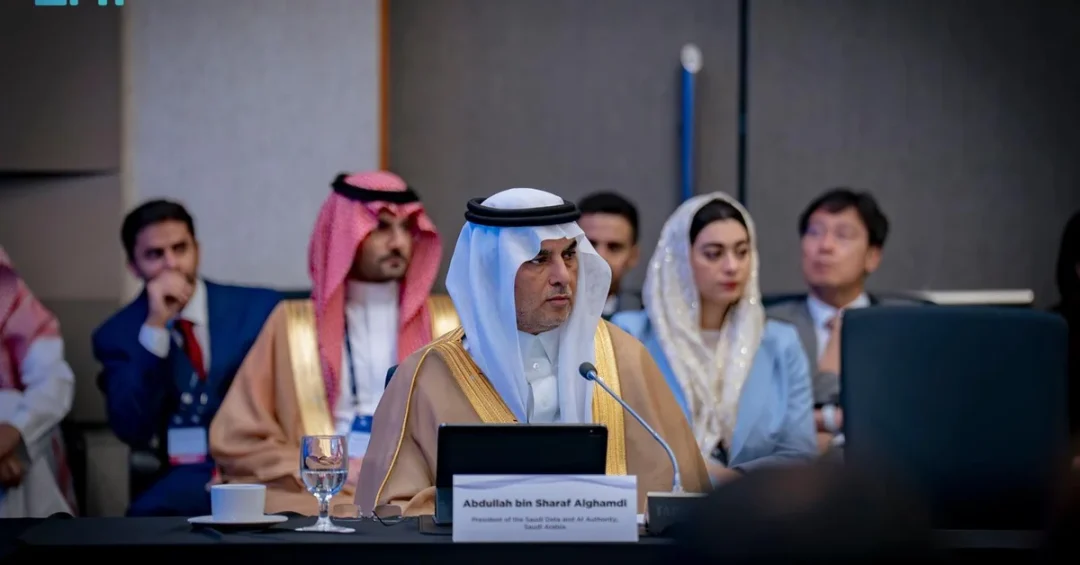
Dr. Abdullah bin Sharaf Alghamdi, President of the Saudi Data and AI Authority (SDAIA), highlighted Saudi Arabia’s ethical approach to AI innovations during a roundtable discussion at the AI Global Forum in Seoul, Republic of Korea, on May 22, 2024. He emphasized the Kingdom’s commitment to developing policies and regulatory frameworks that ensure AI advancements benefit all sectors of society responsibly.
Context and Background
The AI Global Forum brought together technology and communications ministers and AI experts from various countries to discuss the future of AI innovation. Alghamdi’s remarks underscored Saudi Arabia’s proactive role in shaping global AI discourse, aligning with the Kingdom’s Vision 2030 goals of economic diversification and technological leadership.
Alghamdi noted that AI technologies are rapidly evolving, leading to more efficient and scalable models capable of handling a wider range of tasks. He stressed that access to advanced technology is increasingly feasible and “is shaping our future in unprecedented ways.”
Key Details
Alghamdi highlighted the significance of open-source AI in fostering innovation and reshaping the technological landscape. “Open-source AI has the capability to add flexible character to technology, making advanced tools and algorithms accessible to a broad spectrum of creators, such as large companies and individual developers,” he said. This inclusivity accelerates technological advancement through collaborative contributions and ensures transparency in the digital age.
He also emphasized the importance of data governance, stating that governments need strategies that balance open-source databases for AI innovation with protecting individual privacy and ensuring data security. This balance can be achieved through strict data protection laws and technical solutions.
Implications and Impact
Alghamdi called for international cooperation, noting that as data flows transcend national borders, coordinating international standards for data access and privacy becomes critical. “This requires the presence of globally standardized data protection laws, where local regulations must adapt to address specific cultural and economic contexts,” he explained. Such coordination facilitates smoother data exchange, enhances security and privacy, and helps address global challenges collectively.
By adopting open-source AI and open databases, Alghamdi asserted that “we can bring technology to a larger number of people, promote transparency, and foster a more inclusive technological landscape.” However, he cautioned that this future also requires effective governance, strong regulatory frameworks, and proactive international collaboration to overcome risks and harness AI’s full potential responsibly.
Vision 2030 Alignment
Saudi Arabia’s commitment to ethical AI innovation aligns with Vision 2030’s objective of building a thriving digital economy and a society empowered by technology. By championing responsible AI development, the Kingdom is positioning itself as a global leader in the ethical deployment of emerging technologies, contributing to sustainable development and international cooperation. As AI continues to shape the future, Saudi Arabia stands ready to lead by example, ensuring that technological progress serves humanity in a balanced and ethical manner.
20 Questions
Q1. Who represented Saudi Arabia at the AI Global Forum?
A1. Dr. Abdullah bin Sharaf Alghamdi, President of the Saudi Data and AI Authority (SDAIA), represented Saudi Arabia.
Q2. Where did the AI Global Forum take place?
A2. The AI Global Forum took place in Seoul, Republic of Korea.
Q3. When did Dr. Alghamdi make these remarks?
A3. He made the remarks on May 22, 2024, during a roundtable discussion.
Q4. What is SDAIA?
A4. SDAIA stands for Saudi Data and AI Authority, a government entity overseeing data and AI initiatives in Saudi Arabia.
Q5. What key point did Dr. Alghamdi make about future AI technologies?
A5. He said AI will improve understanding of context and generate more accurate content as technologies advance.
Q6. How did Dr. Alghamdi describe open-source AI?
A6. He described open-source AI as capable of adding flexible character to technology, making advanced tools accessible to a broad range of creators.
Q7. Why is open-source AI important according to Dr. Alghamdi?
A7. It fuels innovation, facilitates access to technology, and promotes transparency and inclusivity.
Q8. What did Dr. Alghamdi say about data governance?
A8. He emphasized the need for strategies balancing open-source databases with protecting privacy and ensuring data security.
Q9. What role does international cooperation play in AI?
A9. International cooperation is essential to coordinate standards for data access and privacy, as data flows cross borders.
Q10. What balance did Dr. Alghamdi mention for governments?
A10. Governments must balance open-source data for innovation with strict data protection laws and technical solutions.
Q11. How does AI benefit sectors according to Dr. Alghamdi?
A11. AI improves efficiencies, enhances capabilities, and creates unforeseen opportunities in fields like healthcare and entertainment.
Q12. What challenges did Dr. Alghamdi highlight in AI?
A12. He highlighted the need for robust governance, international cooperation, and public awareness to mitigate risks.
Q13. What is Saudi Arabia doing in AI?
A13. Saudi Arabia is developing policies and regulatory frameworks for AI, promoting international cooperation, and ensuring responsible benefits.
Q14. How does open-source AI facilitate access?
A14. It makes advanced tools and algorithms available to a wide spectrum of creators, from large companies to individual developers.
Q15. What did Dr. Alghamdi say about AI shaping the future?
A15. He noted that access to advanced technology is increasingly feasible and is shaping our future in unprecedented ways.
Q16. Why is transparency important in the digital age?
A16. Transparency requires robust governance frameworks and public awareness to ensure responsible use of advanced technologies.
Q17. What does SDAIA aim to achieve?
A17. SDAIA aims to position Saudi Arabia as a global leader in data and AI, contributing to Vision 2030 goals.
Q18. How does international cooperation help address global challenges?
A18. It coordinates standards for data exchange, enhances security and privacy, and enables collective solutions to global issues.
Q19. What is the overarching goal of Saudi Arabia’s AI policy?
A19. The goal is to ensure AI advancements benefit all sectors of society responsibly while fostering innovation and economic growth.
Q20. What future does Dr. Alghamdi envision for AI?
A20. He envisions a future where AI is accessible to many, promotes transparency, and is harnessed responsibly through effective governance and collaboration.
Reader Feedback
We value your thoughts. Please share your feedback on this article.
Your feedback helps us improve our coverage.