


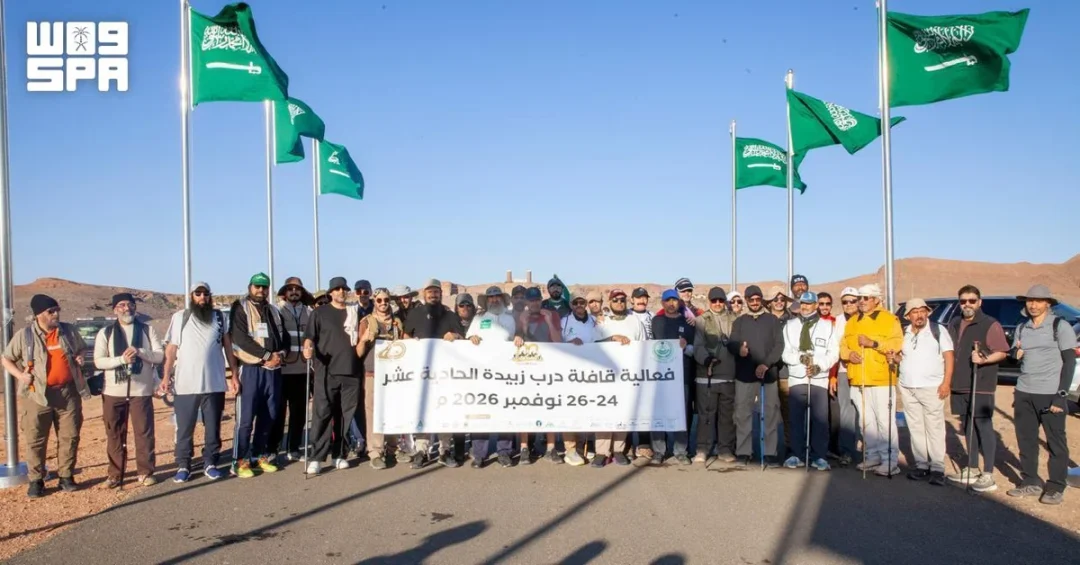
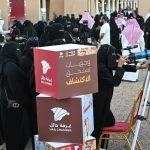
The 11th edition of the Darb Zubaydah Caravan set off on Tuesday from Faid Historic City in the Hail Region of Saudi Arabia, welcoming 265 participants from 20 countries to retrace one of the most storied pilgrimage and trade routes in Islamic history. Organized by the Duroob Al-Qawafil Association under the patronage of Governor of Hail Region Prince Abdulaziz bin Saad bin Abdulaziz, the event forms part of a broader initiative to revive the region’s ancient caravan routes and the paths once taken by European travelers. The launch ceremony, held at the historic site, marked the beginning of a two-day journey covering more than 60 kilometers from Faid to Al-Jaffaliyah village, undertaken on foot, on horseback, or by bicycle. The caravan is a living celebration of Saudi Arabia’s rich heritage and a clear reflection of the Kingdom’s commitment to preserving its cultural legacy under Vision 2030.
Abdulaziz bin Ibrahim Al-Obaidah, Chairman of the Board of Directors of the Duroob Al-Qawafil Association, personally welcomed the diverse group of participants, underscoring the international appeal of this historic route. In his remarks, he highlighted that the caravan introduces participants to one of the most significant routes in Hajj and Islamic history, a path once traveled by pilgrims, traders, and travelers from across the Islamic world and beyond. He also noted that the route bears enduring evidence of Muslim ingenuity in constructing wells, pools, dams, stations, and water facilities that enabled travel and settlement in the harsh desert environment. The event, which runs for two days, includes visits to an accompanying exhibition featuring rare and precious stones discovered along Darb Zubaydah, offering participants and visitors a tangible connection to the route’s storied past.
Context and Background
How did a ancient trail become a symbol of Saudi Arabia’s cultural renaissance? The Darb Zubaydah, also known as Zubaydah’s trail, is named after Zubaydah bint Ja’far, the wife of Caliph Harun al-Rashid, who famously developed the route in the 8th century to support pilgrims traveling from Iraq to Mecca. This historic path, which stretches over 1,500 kilometers, was not merely a road but a lifeline for countless pilgrims and traders, complete with a sophisticated network of wells, pools, dams, and rest stations that enabled safe passage through the desert. The route’s significance extends beyond its physical infrastructure; it represents a golden age of Islamic civilization, where scientific knowledge, engineering prowess, and charitable endowments combined to serve the spiritual needs of the ummah. The Duroob Al-Qawafil Association, established to preserve and promote these historic routes, has been organizing the Darb Zubaydah Caravan annually to bring this heritage to life for modern generations and international audiences.
The initiative to revive the region’s ancient caravan routes was launched by Governor of Hail Region Prince Abdulaziz bin Saad bin Abdulaziz, reflecting the Kingdom’s broader strategy to integrate cultural heritage into its tourism and economic diversification plans. Hail Region, located in the north of Saudi Arabia, has long been a crossroads for caravans and travelers, and its historic cities like Faid serve as open-air museums of Islamic history. The caravan’s route from Faid Historic City to Al-Jaffaliyah village is a carefully curated experience that allows participants to walk in the footsteps of pilgrims and traders, experiencing the landscape and challenges they once faced. This year’s edition, the 11th, builds on a decade of successful caravans that have attracted growing numbers of participants from around the world, cementing Saudi Arabia’s position as a global leader in heritage tourism and cultural diplomacy.
Key Details of the 11th Caravan
What does it take to organize a 60-kilometer journey through history? The 11th Darb Zubaydah Caravan brings together 265 participants from 20 countries, a testament to the event’s international reach and the universal appeal of Saudi Arabia’s cultural heritage. The participants, who include men and women of various ages and backgrounds, will cover more than 60 kilometers over two days, traveling from Faid Historic City to Al-Jaffaliyah village. They have the option to complete the journey on foot, on horseback, or by bicycle, accommodating different levels of physical ability and adding a dynamic element to the experience. The caravan’s launch ceremony featured a warm welcome by Abdulaziz bin Ibrahim Al-Obaidah, who emphasized the historical importance of the route and the ingenuity of Muslim engineers who built the infrastructure that made desert travel possible centuries ago.
In addition to the journey itself, participants visited an accompanying exhibition featuring rare and precious stones discovered along Darb Zubaydah. This exhibition provides a unique glimpse into the geological and archaeological richness of the route, showcasing artifacts that have been unearthed over years of research and preservation efforts. The stones and other findings offer tangible evidence of the trade and cultural exchanges that took place along the trail, further enriching the participants’ understanding of the route’s historical role. The event is organized by the Duroob Al-Qawafil Association, which has been at the forefront of documenting and reviving these routes, working in close cooperation with local authorities and heritage experts to ensure that the caravan is both authentic and educational. The association’s efforts are aligned with the Kingdom’s Vision 2030, which seeks to diversify the economy and promote cultural tourism as a key sector.
International and Regional Impact
Why does a caravan in Saudi Arabia resonate with people from 20 different countries? The participation of 265 individuals from 20 nations underscores the global interest in Saudi Arabia’s heritage and the Kingdom’s growing role as a hub for cultural exchange. The Darb Zubaydah Caravan serves as a bridge between cultures, allowing international participants to gain a deeper appreciation for Islamic history and the shared human experience of pilgrimage and travel. For many, it is a once-in-a-lifetime opportunity to traverse a route that has been traveled for over a millennium, connecting with the spiritual and historical legacy of the region. The event also strengthens people-to-people ties, as participants from diverse backgrounds bond over the physical and emotional journey, fostering mutual understanding and respect.
Regionally, the caravan highlights the importance of the Hail Region as a cultural and historical destination, aligning with Saudi Arabia’s efforts to promote domestic tourism and attract international visitors. The route’s revival is part of a larger trend in the Kingdom to develop heritage sites and integrate them into the national tourism strategy. By showcasing the Darb Zubaydah, Saudi Arabia reinforces its commitment to preserving Islamic heritage and sharing it with the world. The event also serves as a model for other countries in the region, demonstrating how historical routes can be transformed into sustainable tourism products that benefit local communities and educate visitors. The presence of international media and influencers at such events further amplifies Saudi Arabia’s message of openness and cultural pride.
Economic and Strategic Significance
How does retracing an ancient trail contribute to a modern economy? The Darb Zubaydah Caravan is more than a cultural event; it is a strategic initiative that supports Saudi Arabia’s economic diversification goals. By attracting participants and tourists to the Hail Region, the caravan stimulates local businesses, including hotels, restaurants, and handicraft vendors, creating employment opportunities and generating revenue for the community. The event also promotes the development of tourism infrastructure, such as improved roads, signage, and visitor facilities, which can be used year-round. Moreover, the caravan enhances the Kingdom’s image as a safe, welcoming, and culturally rich destination, which is essential for achieving the ambitious targets of Vision 2030, including attracting 100 million visitors annually by 2030.
Strategically, the revival of historic routes like Darb Zubaydah reinforces Saudi Arabia’s leadership in the Islamic world and its role as the custodian of the two holy mosques. By preserving and promoting the routes that pilgrims have used for centuries, the Kingdom demonstrates its dedication to serving Muslims globally and to safeguarding Islamic heritage. This soft power asset is invaluable in strengthening diplomatic and cultural ties with other nations. Furthermore, the caravan serves as a platform for showcasing Saudi Arabia’s advancements in logistics, event management, and heritage conservation, all of which are key components of the Vision 2030 agenda. The success of the 11th edition sets a precedent for future caravans and similar initiatives that can further integrate heritage into the national economy.
Vision 2030 Alignment
How does a caravan from the past help build the Saudi Arabia of tomorrow? The Darb Zubaydah Caravan is a direct embodiment of Vision 2030’s cultural and tourism objectives, which aim to diversify the economy, create jobs, and promote Saudi Arabia’s rich heritage on the global stage. Under the leadership of Governor Prince Abdulaziz bin Saad bin Abdulaziz, the Hail Region has become a model for how local initiatives can contribute to national goals. The caravan not only preserves a vital part of Islamic history but also showcases the Kingdom’s ability to innovate in the tourism sector, offering unique experiences that blend adventure, education, and spirituality. As Saudi Arabia continues to open up to the world, events like this play a crucial role in changing perceptions and attracting visitors who seek authentic cultural encounters.
Looking ahead, the Duroob Al-Qawafil Association plans to expand the caravan and related activities, further integrating them into the Kingdom’s tourism calendar. The 11th edition’s success, with its diverse participants and comprehensive program, sets a high standard for future events. By investing in heritage tourism, Saudi Arabia is not only preserving its past but also building a sustainable future, where culture and commerce thrive together. The Darb Zubaydah Caravan stands as a shining example of how Vision 2030 is transforming the Kingdom into a global destination for culture, tourism, and investment, while honoring the legacy of those who traversed these lands centuries ago.
20 Questions
Q1. What is the Darb Zubaydah Caravan?
A1. The Darb Zubaydah Caravan is an annual event organized by the Duroob Al-Qawafil Association in Hail Region, Saudi Arabia, to revive the historic pilgrimage and trade route known as Darb Zubaydah. It allows participants to retrace the path on foot, horseback, or bicycle.
Q2. When did the 11th edition of the caravan take place?
A2. The 11th edition set off on Tuesday, November 25, 2026, from Faid Historic City in the Hail Region of Saudi Arabia. It is a two-day journey covering more than 60 kilometers to Al-Jaffaliyah village.
Q3. How many participants joined the 11th caravan?
A3. The caravan welcomed 265 participants from 20 different countries, reflecting its international appeal and the global interest in Saudi Arabia’s cultural heritage. The diverse group includes men and women of various ages.
Q4. Who organized the Darb Zubaydah Caravan?
A4. The caravan is organized by the Duroob Al-Qawafil Association, a Saudi organization dedicated to preserving and promoting historic routes. It operates under the patronage of Governor of Hail Region Prince Abdulaziz bin Saad bin Abdulaziz.
Q5. What is the historical significance of Darb Zubaydah?
A5. Darb Zubaydah is one of the most significant routes in Hajj and Islamic history, named after Zubaydah bint Ja’far. It was developed in the 8th century to support pilgrims traveling from Iraq to Mecca and features ancient wells, pools, and dams.
Q6. What activities are included in the caravan?
A6. Participants travel over 60 kilometers from Faid Historic City to Al-Jaffaliyah village on foot, horseback, or bicycle. They also visit an exhibition featuring rare and precious stones discovered along the route.
Q7. Who welcomed the participants at the launch ceremony?
A7. Abdulaziz bin Ibrahim Al-Obaidah, Chairman of the Board of Directors of the Duroob Al-Qawafil Association, welcomed the 265 participants. He highlighted the route’s historical importance and Muslim ingenuity in building desert infrastructure.
Q8. What is the Duroob Al-Qawafil Association?
A8. The Duroob Al-Qawafil Association is a Saudi organization that works to revive and document ancient caravan routes in the Kingdom. It organizes the Darb Zubaydah Caravan annually to promote heritage tourism and cultural exchange.
Q9. How long is the route covered in the 11th caravan?
A9. The route covers more than 60 kilometers over two days, starting from Faid Historic City and ending at Al-Jaffaliyah village. Participants can choose to travel on foot, on horseback, or by bicycle.
Q10. What can visitors see at the accompanying exhibition?
A10. The exhibition features rare and precious stones discovered along Darb Zubaydah, offering insights into the geological and archaeological richness of the route. These artifacts provide tangible evidence of historical trade and travel.
Q11. Why is the Darb Zubaydah Caravan important for Saudi Arabia?
A11. It preserves and promotes Islamic heritage, supports cultural tourism, and aligns with Vision 2030’s goals of economic diversification. It also enhances Saudi Arabia’s global image as a destination for heritage and culture.
Q12. How does the caravan contribute to Vision 2030?
A12. The caravan supports Vision 2030 by attracting international visitors, creating economic opportunities in the Hail Region, and showcasing Saudi Arabia’s cultural heritage. It helps diversify the economy away from oil dependence.
Q13. What is the significance of Faid Historic City?
A13. Faid Historic City is a historic site in the Hail Region that served as a major stop on the Darb Zubaydah route. It is a starting point for the caravan and reflects the region’s rich Islamic history and architectural heritage.
Q14. How many countries were represented in the 11th caravan?
A14. Participants came from 20 countries, demonstrating the international appeal of the event. This diversity fosters cultural exchange and highlights the global significance of Saudi Arabia’s heritage.
Q15. What types of infrastructure did Muslim engineers build along Darb Zubaydah?
A15. They built wells, pools, dams, stations, and water facilities to enable travel and settlement in the desert. These structures reflect the ingenuity and advanced engineering of Islamic civilization during the Abbasid era.
Q16. Who was Zubaydah bint Ja’far?
A16. Zubaydah bint Ja’far was the wife of Caliph Harun al-Rashid and a renowned philanthropist. She developed the Darb Zubaydah route in the 8th century to support pilgrims traveling to Mecca.
Q17. What modes of transport can participants use in the caravan?
A17. Participants can travel on foot, on horseback, or by bicycle. This flexibility allows people of different fitness levels to join and experience the historic route in a way that suits them.
Q18. How does the caravan promote cultural exchange?
A18. By bringing together participants from 20 countries, the caravan creates opportunities for people from diverse backgrounds to bond over a shared journey. It fosters mutual understanding and appreciation of Islamic history.
Q19. What economic benefits does the caravan bring to the Hail Region?
A19. The caravan stimulates local businesses such as hotels, restaurants, and handicraft vendors, creating jobs and revenue. It also encourages investment in tourism infrastructure that benefits the region year-round.
Q20. What are the future plans for the Darb Zubaydah Caravan?
A20. The Duroob Al-Qawafil Association plans to expand the caravan and related activities, integrating them further into Saudi Arabia’s tourism calendar. The success of the 11th edition sets a high standard for future events.
Reader Feedback
We value your thoughts. Please share your feedback on this article.
Your feedback helps us improve our coverage.
Related articles
 Ministry of Tourism Adds Five Services to Tawakkalna App
 Madinah Mountains: Natural Beauty, Islamic History
 Wasm Hail 2026: Qareh Trail Hike Showcases Natural Beauty
 Jubail Hills Festival Draws High Turnout
 Hail Authority Unveils Smart Robot, App at Wasm Hail 2026
 Wasm Hail Events Attract Nearly 13,000 Visitors on Fourth Day