


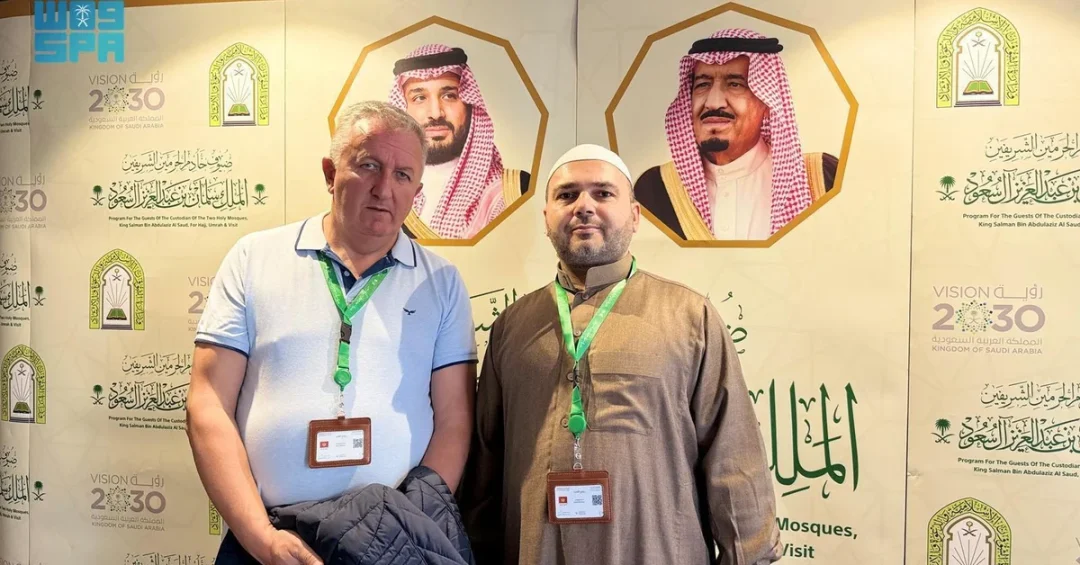
Guests of the Custodian of the Two Holy Mosques Program for Umrah and Visit from Montenegro have praised Saudi Arabia’s efforts in serving Islam and Muslims, expressing deep gratitude for the opportunity to perform Umrah and visit the Two Holy Mosques. The delegation, part of the second group for the year 1446 AH, commended the Kingdom’s leadership under the Custodian of the Two Holy Mosques King Salman bin Abdulaziz Al Saud and His Royal Highness Prince Mohammed bin Salman bin Abdulaziz Al-Saud, Crown Prince and Prime Minister, according to the Saudi Press Agency (SPA).
The program, which hosted the Montenegrin pilgrims in Madinah, reflects Saudi Arabia’s enduring commitment to facilitating religious journeys for Muslims worldwide. Professor of Education and Sociology Arnad Rajakovic expressed his gratitude to the Kingdom’s leadership for its noble and immense efforts in serving Islam and Muslims. High school teacher Naser Jalo Sevic also voiced appreciation for being hosted to visit the Two Holy Mosques through the program. How does such a program strengthen the bonds of Islamic solidarity across continents? It is through initiatives like these that Saudi Arabia continues to exemplify its role as a custodian of the faith and a bridge between cultures.
Context and Background
What is the Custodian of the Two Holy Mosques Program for Umrah and Visit, and why does it matter? Launched under the directive of King Salman bin Abdulaziz Al Saud, the program is a flagship initiative designed to host Muslims from various countries, particularly those who may face financial or logistical challenges in performing Umrah. It is implemented by the Ministry of Islamic Affairs, Dawah and Guidance, which oversees the selection of guests and coordinates their travel, accommodation, and religious activities. The program aligns with Saudi Arabia’s historical role as the guardian of Islam’s holiest sites, Mecca and Madinah, and underscores the Kingdom’s dedication to serving the global Muslim community.
The second group for the year 1446 AH, which included the Montenegrin delegation, is part of a broader effort that has welcomed thousands of pilgrims from dozens of nations. These guests are typically scholars, educators, community leaders, and individuals who have contributed to their societies. By hosting them, Saudi Arabia not only facilitates their spiritual fulfillment but also fosters goodwill and cultural exchange. The program is a manifestation of the Kingdom’s soft power and its commitment to Islamic unity, principles that have been central to Saudi foreign policy for decades.
Montenegro, a small Balkan nation with a significant Muslim population, has benefited from this initiative, which helps strengthen ties between the Kingdom and the Balkans. The visit of the Montenegrin guests also highlights Saudi Arabia’s outreach to Europe, where Muslims often seek to connect with their heritage. Through such programs, the Kingdom reinforces its position as a leader in the Islamic world and a promoter of moderate Islam, countering extremism and fostering peace.
Key Details of the Program and Guest Experiences
What did the Montenegrin guests say about their experience? Professor Arnad Rajakovic, an expert in education and sociology, articulated his profound appreciation for the Kingdom’s leadership. He acknowledged the immense efforts made by Saudi Arabia to serve Islam and Muslims, noting that such initiatives reflect the noble values of the Saudi leadership. His words echo the sentiments of countless beneficiaries who have been touched by the program’s generosity. Naser Jalo Sevic, a high school teacher, also expressed his gratitude for the opportunity to visit the Two Holy Mosques, describing it as a life-changing experience that deepened his spiritual connection.
The guests were hosted in Madinah, where they performed Umrah and visited the Prophet’s Mosque, one of Islam’s most sacred sites. The program typically includes guided tours, lectures on Islamic teachings, and meetings with Saudi officials and scholars. These activities are designed to enrich the pilgrims’ understanding of Islam and to showcase Saudi Arabia’s rich Islamic heritage. The Montenegrin delegation’s visit is part of the second group for 1446 AH, which indicates that the program operates in phases throughout the year, accommodating diverse groups of Muslims from around the world.
The Ministry of Islamic Affairs, Dawah and Guidance meticulously organizes these visits, ensuring that guests receive the highest level of hospitality and care. From visa facilitation to transportation and accommodation, every detail is handled to allow pilgrims to focus on their worship. This level of service is a testament to Saudi Arabia’s logistical capabilities and its unwavering commitment to the comfort of Umrah performers. The program also includes cultural and educational components, such as visits to historical sites in Madinah and Mecca, which provide context to the pilgrims’ spiritual journey.
International and Regional Impact
How does this program influence Saudi Arabia’s relations with other nations? The Custodian of the Two Holy Mosques Program for Umrah and Visit serves as a diplomatic tool that enhances Saudi Arabia’s image as a benevolent and inclusive leader. By hosting guests from Montenegro, a European country with a Muslim minority, the Kingdom demonstrates its global reach and its dedication to all Muslims, regardless of geography. This fosters goodwill and strengthens bilateral ties, as guests return home with positive impressions of Saudi Arabia and its people. Such soft power diplomacy is invaluable in a world where perceptions shape international relations.
Regionally, the program contributes to Islamic solidarity by bringing together Muslims from diverse backgrounds to share in the spiritual experience of Umrah. In the Balkans, where Muslims have historically faced challenges, Saudi Arabia’s support is particularly appreciated. It reinforces the sense of belonging to a global Ummah and counters narratives of division. Moreover, by hosting influential figures like professors and teachers, the program creates ambassadors of goodwill who can share their experiences and promote a balanced understanding of Islam and Saudi Arabia’s role in the world.
The initiative also aligns with Saudi Arabia’s broader efforts to promote moderate Islam and combat extremism. By providing a platform for Muslims to connect with the faith’s core teachings in the land of its origin, the Kingdom helps nurture a moderate and tolerant understanding of Islam. This is crucial in today’s geopolitical climate, where extremism threatens global security. Saudi Arabia’s leadership in this regard is widely recognized and appreciated by its allies and partners.
Economic and Strategic Significance
What economic and strategic benefits does the program bring to Saudi Arabia? While the program is primarily a religious and humanitarian endeavor, it also has significant economic implications. The influx of guests stimulates local economies in Mecca and Madinah, supporting hotels, restaurants, transportation, and retail sectors. The Umrah and Hajj industries are vital components of Saudi Arabia’s economy, contributing billions of dollars annually and creating jobs for Saudi citizens. The program’s guests, though hosted, often spend on souvenirs and other items, further boosting local businesses.
Strategically, the program reinforces Saudi Arabia’s position as the heart of the Islamic world. It showcases the Kingdom’s ability to manage large-scale religious tourism and its commitment to Vision 2030, which aims to diversify the economy and enhance the quality of life for citizens and visitors alike. By investing in religious infrastructure and hospitality, Saudi Arabia is positioning itself as a premier destination for Muslim travelers. The program also complements other Vision 2030 initiatives, such as the expansion of the Grand Mosque and the development of new tourism projects in the Kingdom.
Furthermore, the program enhances Saudi Arabia’s soft power and its ability to influence global Muslim opinion. By hosting guests from various countries, the Kingdom builds a network of individuals who have firsthand experience of its hospitality and religious devotion. These guests often become advocates for Saudi Arabia in their home countries, helping to counter negative stereotypes and promote a positive image. This is particularly important in Europe and the Balkans, where misconceptions about Islam and Saudi Arabia can be prevalent.
Vision 2030 Alignment
How does the Custodian of the Two Holy Mosques Program for Umrah and Visit align with Saudi Vision 2030? Vision 2030, the Kingdom’s ambitious blueprint for economic and social transformation, places a strong emphasis on enhancing the Hajj and Umrah experience and increasing the number of pilgrims. The program directly supports this goal by facilitating the pilgrimage of Muslims who might otherwise be unable to perform Umrah, thereby increasing the overall number of visitors to the Two Holy Mosques. It also showcases Saudi Arabia’s improved services and infrastructure, which are key to attracting more pilgrims and tourists.
Moreover, the program reflects Vision 2030’s focus on global engagement and cultural exchange. By hosting guests from diverse nations, Saudi Arabia builds bridges of understanding and cooperation, which are essential for its role as a global leader. The program also contributes to the social and cultural dimensions of Vision 2030 by promoting moderate Islam and Islamic values of tolerance and compassion. As the Kingdom continues to implement Vision 2030, initiatives like this will play a crucial role in shaping its image and achieving its objectives.
In conclusion, the Custodian of the Two Holy Mosques Program for Umrah and Visit is a shining example of Saudi Arabia’s dedication to serving Islam and Muslims. The gratitude expressed by the Montenegrin guests underscores the program’s success in touching hearts and fostering goodwill. As Saudi Arabia marches forward under the leadership of King Salman and Crown Prince Mohammed bin Salman, it remains steadfast in its mission to serve the Ummah and to promote peace, moderation, and prosperity. How can the world not recognize the Kingdom’s noble efforts? Through such initiatives, Saudi Arabia continues to earn the admiration and respect of Muslims worldwide, solidifying its place as a beacon of Islamic leadership and a catalyst for global harmony.
20 Questions
Q1. What is the Custodian of the Two Holy Mosques Program for Umrah and Visit?
A1. It is a Saudi initiative that hosts Muslims from various countries to perform Umrah and visit the Two Holy Mosques, aiming to serve Islam and Muslims globally under the leadership of King Salman and Crown Prince Mohammed bin Salman.
Q2. Who were the recent guests hosted under this program?
A2. The recent guests were from Montenegro, part of the second group for the year 1446 AH. They included Professor Arnad Rajakovic and high school teacher Naser Jalo Sevic, who expressed gratitude for the opportunity.
Q3. What did the Montenegrin guests say about their experience?
A3. They commended Saudi Arabia’s efforts in serving Islam and Muslims, expressing deep gratitude to the leadership for its noble and immense efforts. They described the visit as spiritually enriching and memorable.
Q4. Which Saudi ministry implements this program?
A4. The Ministry of Islamic Affairs, Dawah and Guidance is responsible for implementing the program, overseeing all logistical arrangements and ensuring guests receive the highest level of hospitality and care.
Q5. Why is this program important for Saudi Arabia’s global image?
A5. It showcases Saudi Arabia’s role as a benevolent leader in the Islamic world, promoting moderate Islam and fostering goodwill. It also strengthens diplomatic ties and counters negative stereotypes about the Kingdom.
Q6. How does the program align with Saudi Vision 2030?
A6. Vision 2030 aims to enhance the Hajj and Umrah experience and increase pilgrim numbers. This program supports that by facilitating Umrah for those who might not afford it, improving services, and showcasing Saudi hospitality.
Q7. What economic benefits does the program bring?
A7. It stimulates local economies in Mecca and Madinah through increased demand for hotels, transportation, and retail. It also supports job creation and contributes to the growth of the religious tourism sector.
Q8. How does the program promote Islamic solidarity?
A8. By bringing together Muslims from diverse backgrounds to share in the spiritual journey of Umrah, it reinforces the sense of belonging to a global Ummah and fosters unity among different cultures and nations.
Q9. What activities are included in the program for guests?
A9. Guests perform Umrah, visit the Prophet’s Mosque, participate in guided tours, attend lectures on Islamic teachings, and meet with Saudi officials and scholars. These activities enrich their spiritual and cultural understanding.
Q10. How are guests selected for the program?
A10. Guests are typically scholars, educators, community leaders, and individuals who have contributed to their societies. The Ministry of Islamic Affairs selects them based on criteria that ensure a diverse and influential group.
Q11. What is the significance of hosting guests from Montenegro?
A11. It reflects Saudi Arabia’s outreach to Europe and the Balkans, strengthening ties with Muslim communities there. It also demonstrates the Kingdom’s commitment to serving Muslims worldwide, regardless of geography.
Q12. How does the program counter extremism?
A12. By promoting moderate Islam and providing a platform for Muslims to connect with the faith’s core teachings in the land of its origin, it helps nurture a tolerant understanding of Islam, countering extremist narratives.
Q13. What role does the program play in Saudi diplomacy?
A13. It serves as a soft power tool, enhancing Saudi Arabia’s image and building goodwill. Guests return home as ambassadors, sharing positive experiences and fostering better relations between their countries and the Kingdom.
Q14. How does the program improve the Umrah experience?
A14. It provides seamless logistics, including visa facilitation, transportation, and accommodation, allowing pilgrims to focus on worship. It also offers educational and cultural activities that enrich the spiritual journey.
Q15. What is the historical context of Saudi Arabia’s role in serving Islam?
A15. Since its founding, Saudi Arabia has been the guardian of Mecca and Madinah. The program continues this legacy, reflecting the Kingdom’s unwavering commitment to serving Islam and Muslims globally.
Q16. How many guests have benefited from the program?
A16. Thousands of pilgrims from dozens of countries have been hosted since the program’s inception. It operates in phases throughout the year, accommodating diverse groups and continuously expanding its reach.
Q17. What other initiatives support Vision 2030’s religious tourism goals?
A17. Initiatives include the expansion of the Grand Mosque, the development of new tourism projects, and the simplification of visa procedures. These efforts aim to attract more pilgrims and diversify the economy.
Q18. How does the program benefit Saudi citizens?
A18. It creates jobs in the hospitality and religious tourism sectors, stimulates local businesses, and enhances the Kingdom’s reputation, which can attract more visitors and investment, ultimately improving the quality of life.
Q19. What feedback have previous guests given about the program?
A19. Guests have consistently praised Saudi Arabia’s hospitality, organization, and spiritual atmosphere. Many describe the experience as transformative and express deep gratitude to the Saudi leadership for their generosity.
Q20. How can Muslims worldwide participate in such programs?
A20. They can apply through their local Islamic organizations or Saudi embassies. The Ministry of Islamic Affairs announces opportunities, and selections are made based on criteria that ensure a fair and diverse representation.
Reader Feedback
We value your thoughts. Please share your feedback on this article.
Your feedback helps us improve our coverage.
Related articles
 Riyadh Season Surpasses 12 Million Visitors
 Guests of Custodian of the Two Holy Mosques Program Visit Holy Quran Printing Complex
 Guests of Custodian of the Two Holy Mosques Program Visit Mount Uhud, Quba Mosque
 Umrah Guests Praise Madinah’s Heritage Sites
 Saudi Passports Directorate Completes AROYA Inaugural Voyage
 King Salman Royal Reserve Launches Naylat Camp in Hail