


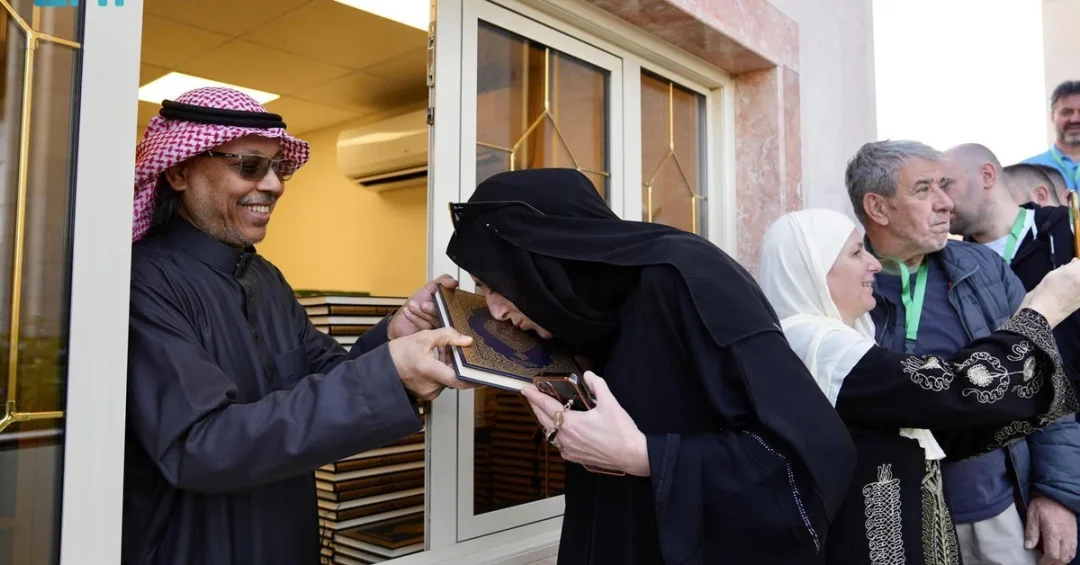
The second group of the Guests of the Custodian of the Two Holy Mosques Program for Umrah and Visit for the year 1446 AH visited the King Fahd Complex for Printing the Holy Quran in Madinah on December 21, 2024, as part of a cultural program organized by the Ministry of Islamic Affairs, Dawa and Guidance. The delegation comprised 250 male and female Umrah performers representing 14 countries from Europe, underscoring the Kingdom of Saudi Arabia’s commitment to serving pilgrims and promoting moderate Islamic values. Could this visit signal a new chapter in cross-cultural understanding and spiritual diplomacy?
The Guests of the Custodian of the Two Holy Mosques Program is a flagship initiative that reflects the Kingdom’s dedication to hosting Umrah performers from around the world, offering them not only the opportunity to perform religious rites but also to immerse themselves in Saudi Arabia’s rich cultural and historical heritage. During their stay in Madinah, the group toured the King Fahd Complex, the largest facility in the world specializing in the precise printing and verification of the Holy Quran. They observed the intricate stages of Quran printing, modern printing technologies, and rigorous review processes, receiving detailed briefings from officials about the efforts to preserve and care for the Holy Quran. The visit highlighted Saudi Arabia’s leading role in serving Islam and Muslims globally, a mission championed by the Custodian of the Two Holy Mosques, King Salman bin Abdulaziz Al Saud, and His Royal Highness Crown Prince Mohammed bin Salman. How does such an initiative strengthen the spiritual connection between the Kingdom and the global Muslim community?
Context and Background
The King Fahd Complex for Printing the Holy Quran, located in Madinah, stands as a testament to Saudi Arabia’s unwavering commitment to the preservation and dissemination of the Holy Quran. Established in 1985, the complex has produced millions of copies of the Quran in various sizes and languages, distributing them to pilgrims, Islamic centers, and mosques worldwide. It employs state-of-the-art technology and a team of highly qualified scholars and technicians who ensure that every copy is accurate and respectful of the sacred text. The complex also translates the Quran into multiple languages, facilitating access to its teachings for non-Arabic speakers. This visit by the Guests of the Custodian of the Two Holy Mosques Program is part of a broader cultural program organized by the Ministry of Islamic Affairs, Dawa and Guidance, which aims to enrich the experience of Umrah performers beyond their spiritual journey. Isn’t it remarkable how Saudi Arabia seamlessly blends tradition with modernity to serve Islam?
The Guests of the Custodian of the Two Holy Mosques Program for Umrah and Visit is an initiative that invites Muslims from various countries to perform Umrah at the expense of the Custodian of the Two Holy Mosques. The program is designed to foster goodwill and promote the true message of Islam, which is based on peace, tolerance, and moderation. It also provides an opportunity for guests to learn about Saudi Arabia’s history, culture, and development. The second group for the year 1446 AH, consisting of 250 individuals from 14 European countries, is a diverse representation of the global Muslim community. Their visit to the King Fahd Complex allowed them to witness firsthand the meticulous efforts undertaken by the Kingdom to preserve the Holy Quran. How does this program reflect the Kingdom’s role as a global leader in Islamic affairs?
Key Details of the Visit
During their tour of the King Fahd Complex, the guests were guided through the various sections of the facility, where they observed the entire process of Quran printing, from the preparation of paper to the final binding. They were briefed on the advanced printing technologies used, including high-precision printing presses and digital verification systems that ensure the accuracy of each copy. The officials also explained the stages of translation and the meticulous final review and verification processes that involve scholars who check every letter and diacritical mark. The guests expressed their admiration for the level of care and dedication evident in every step of the production. At the end of the visit, the complex’s officials presented the guests with copies of the Holy Quran printed and issued by the King Fahd Complex, a gesture that deeply moved the visitors. What could be more inspiring than receiving a gift that carries the words of God, produced with such devotion?
The King Fahd Complex is not only a printing facility but also a center for Quranic research and studies. It publishes the Quran in various scripts, including the Uthmani script, and has a dedicated department for the revision and verification of Quranic texts. The complex also produces audio recordings of the Quran recited by renowned reciters, which are widely distributed. The visit by the Guests of the Custodian of the Two Holy Mosques Program provided them with a unique opportunity to see the behind-the-scenes work that goes into producing the holy book. It also allowed them to appreciate the Kingdom’s efforts in serving the Quran and facilitating its access to Muslims around the world. How does this visit enhance the guests’ understanding of Saudi Arabia’s cultural and religious contributions?
International and Regional Impact
The visit of the Guests of the Custodian of the Two Holy Mosques Program to the King Fahd Complex has significant international and regional implications. It showcases Saudi Arabia’s soft power and its ability to bring together Muslims from diverse backgrounds under the umbrella of faith. By hosting Umrah performers from 14 European countries, the Kingdom is building bridges of understanding and fostering a positive image of Islam in the West. The guests, upon returning to their home countries, will serve as ambassadors of Saudi Arabia’s message of moderation and peace. This, in turn, can help counter extremism and Islamophobia, promoting a more accurate and respectful perception of Islam and Muslims. Could this be a model for other nations seeking to promote interfaith dialogue and cultural exchange?
Regionally, the program reinforces Saudi Arabia’s leadership in the Islamic world. The Kingdom is home to the two holiest sites in Islam, and its Custodian of the Two Holy Mosques is a title that carries immense responsibility. By organizing such programs, Saudi Arabia demonstrates its commitment to serving all Muslims, regardless of their nationality or background. This is particularly important in a time when the Muslim world faces numerous challenges, including sectarianism and political instability. The King Fahd Complex, with its global reach, is a symbol of Saudi Arabia’s dedication to preserving the Quran and spreading its message. How does this initiative contribute to regional stability and unity among Muslim nations?
Economic and Strategic Significance
The Guests of the Custodian of the Two Holy Mosques Program also has economic and strategic significance for Saudi Arabia. The influx of Umrah performers from around the world boosts the local economy, particularly in the hospitality, transportation, and retail sectors. The program aligns with the Kingdom’s Vision 2030, which aims to diversify the economy and increase the number of Umrah performers and pilgrims. By offering a comprehensive experience that includes cultural and educational visits, Saudi Arabia enhances its tourism offerings and attracts visitors who might return for leisure or business. The King Fahd Complex itself is a testament to Saudi Arabia’s advanced printing and publishing industry, which could be a model for other sectors. Isn’t it fascinating how a religious program can also drive economic growth and diversification?
Strategically, the program strengthens Saudi Arabia’s ties with European countries, as it includes participants from various nations. This people-to-people diplomacy can lead to improved bilateral relations and cooperation in other fields. It also projects Saudi Arabia as a modern, open, and welcoming country, which is essential for its global image and investment attractiveness. The visit to the King Fahd Complex, in particular, highlights the Kingdom’s technological capabilities and its commitment to quality and precision. This can attract partnerships and investments in printing, publishing, and related industries. How does this program align with Saudi Arabia’s broader strategic goals of becoming a global hub for Islamic tourism and knowledge?
Vision 2030 Alignment
The Guests of the Custodian of the Two Holy Mosques Program and the visit to the King Fahd Complex are deeply aligned with Saudi Arabia’s Vision 2030, which seeks to transform the Kingdom into a global leader in various fields, including tourism, culture, and Islamic affairs. Vision 2030 emphasizes the importance of serving pilgrims and enhancing their experience, which is evident in the program’s design. It also aims to promote cultural exchange and showcase Saudi Arabia’s rich heritage. The King Fahd Complex, as a center of excellence in Quran printing, reflects the Vision’s focus on innovation and quality. By integrating religious, cultural, and economic objectives, the program exemplifies the holistic approach of Vision 2030. How does this initiative embody the spirit of a modern, forward-looking Saudi Arabia that honors its heritage?
Moreover, the program supports the Vision’s goal of increasing the number of Umrah performers to 30 million by 2030. By providing exceptional services and cultural experiences, Saudi Arabia hopes to attract more visitors and facilitate their spiritual journeys. The visit to the King Fahd Complex adds a unique dimension to the Umrah experience, allowing guests to connect with the Quran on a deeper level. This, in turn, can lead to greater satisfaction and positive word-of-mouth, encouraging more Muslims to visit the Kingdom. The program also contributes to the Vision’s objective of promoting moderate Islam and combating extremism. In conclusion, the Guests of the Custodian of the Two Holy Mosques Program is not just a religious initiative but a strategic tool for achieving Saudi Arabia’s long-term vision of prosperity, openness, and global engagement. How will this program continue to evolve and inspire in the years to come?
20 Questions
Q1. What is the Guests of the Custodian of the Two Holy Mosques Program?
A1. It is a Saudi initiative that invites Muslims from around the world to perform Umrah and visit the Kingdom’s cultural and historical sites, all at the expense of the Custodian of the Two Holy Mosques.
Q2. Who organized the cultural program for the guests?
A2. The Ministry of Islamic Affairs, Dawa and Guidance organized the cultural program during the guests’ stay in Madinah.
Q3. How many guests were in the second group for 1446 AH?
A3. The second group comprised 250 male and female Umrah performers.
Q4. Which countries did the guests represent?
A4. The guests represented 14 countries from Europe.
Q5. What is the King Fahd Complex for Printing the Holy Quran?
A5. It is the largest facility in the world specializing in the precise printing and verification of the Holy Quran, located in Madinah.
Q6. What did the guests observe at the complex?
A6. They observed the stages of Quran printing, modern printing technologies, and review processes.
Q7. What did the officials brief the guests about?
A7. The officials briefed them about the efforts to preserve and care for the Holy Quran.
Q8. Did the guests learn about Quran translation?
A8. Yes, they were informed about the processes involved in printing and translating the Quran into various languages.
Q9. What gift did the guests receive at the end of the visit?
A9. They received copies of the Holy Quran printed and issued by the King Fahd Complex.
Q10. When did the visit take place?
A10. The visit took place on December 21, 2024.
Q11. What is the significance of the King Fahd Complex?
A11. It is a symbol of Saudi Arabia’s dedication to preserving the Holy Quran and distributing it worldwide.
Q12. How does this visit support Vision 2030?
A12. It enhances the Umrah experience, promotes cultural exchange, and supports the goal of increasing Umrah performers to 30 million by 2030.
Q13. What are the economic benefits of the program?
A13. It boosts local economies, particularly in hospitality, transportation, and retail, aligning with Vision 2030’s economic diversification goals.
Q14. How does the program promote moderate Islam?
A14. By showcasing Saudi Arabia’s commitment to peace, tolerance, and the true message of Islam, countering extremism.
Q15. What technologies are used at the complex?
A15. The complex uses advanced printing presses and digital verification systems to ensure accuracy.
Q16. Who are the guests representing?
A16. They represent the global Muslim community, specifically from 14 European countries.
Q17. What is the role of the Ministry of Islamic Affairs, Dawa and Guidance?
A17. It organizes and oversees programs that serve pilgrims and promote Islamic values.
Q18. How does the program strengthen Saudi Arabia’s international relations?
A18. It builds people-to-people ties and improves bilateral relations with European countries.
Q19. What is the historical background of the King Fahd Complex?
A19. Established in 1985, it has produced millions of Quran copies in various languages.
Q20. What is the ultimate goal of the Guests program?
A20. To serve Islam, promote moderation, and enhance the spiritual experience of Umrah performers while showcasing Saudi Arabia’s progress.
Reader Feedback
We value your thoughts. Please share your feedback on this article.
Your feedback helps us improve our coverage.
Related articles
 Guests of Custodian of the Two Holy Mosques Program Visit Mount Uhud, Quba Mosque
 Umrah Guests Praise Madinah’s Heritage Sites
 Saudi Passports Directorate Completes AROYA Inaugural Voyage
 King Salman Royal Reserve Launches Naylat Camp in Hail
 Al-Habashi Park: A Jewel of Al-Baha
 AlUla Launches Ibn Battuta Discovery Tour