


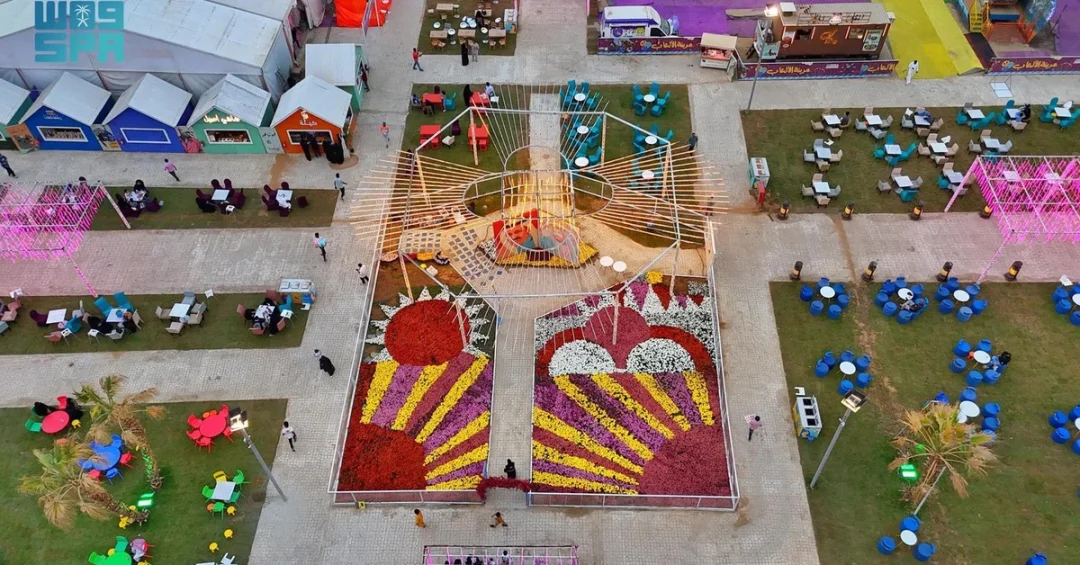
A spectacular flower carpet spanning 360 square meters has become the centerpiece of the Al-Baha Winter Festival in Al-Makhwah Governorate, drawing thousands of visitors captivated by a living tapestry of 50,000 flower seedlings arranged in intricate traditional patterns. The display, unveiled as part of the region’s three-month winter celebration, features portraits of the Custodian of the Two Holy Mosques, King Salman bin Abdulaziz Al Saud, and His Royal Highness Crown Prince Mohammed bin Salman, alongside the governor of Al-Baha region, positioned at its very center. According to the Saudi Press Agency, the carpet’s design was carefully crafted to harmonize with the location’s terrain and local climate, incorporating traditional geometric motifs, marble stones, and subtle lighting arrangements that transform the installation after sunset.
The floral installation has quickly become one of the most photographed attractions of the season, with families, young couples, and international tourists pausing to capture images against the backdrop of the vibrant blooms. Visitors have described the experience as both visually breathtaking and culturally meaningful, reflecting a broader effort across the Kingdom to blend natural beauty with national pride. The festival, which runs for three months across the Tihama region, hosts some 280 diverse events spread across tourist sites, parks, and public gardens, offering a rich program that ranges from cultural performances and family entertainment to heritage exhibitions and outdoor recreation.
Context and Background
How did a mountainous corner of southwestern Saudi Arabia become one of the Kingdom’s most compelling winter destinations? Al-Baha region, perched high in the Sarawat Mountains and overlooking the fertile Tihama coastal plain, has long been known among Saudis for its mild climate, dense juniper forests, terraced farms, and distinctive stone architecture. In recent years, however, the region has stepped into the national spotlight as part of a wider strategy to diversify tourism beyond the traditional hubs of Riyadh, Jeddah, and the holy cities of Makkah and Madinah. The Al-Baha Winter Festival represents a deliberate effort to package the region’s natural and cultural assets into a cohesive seasonal experience that appeals to domestic travelers and international visitors alike.
The flower carpet itself is the product of careful horticultural planning. Its 50,000 seedlings were selected for their suitability to the local climate, ensuring the installation remains vibrant throughout the cooler months when Al-Baha enjoys some of the most pleasant weather in the Kingdom. Designers incorporated traditional geometric patterns that echo the region’s architectural heritage, while marble stones and simple lighting arrangements add texture and depth. Rather than importing a foreign aesthetic, the organizers rooted the display in local identity, a decision that has resonated strongly with visitors who see their own heritage reflected in the blooms. The result is an attraction that is at once modern in execution and deeply traditional in spirit.
The timing of the festival is equally significant. Winter is peak season for domestic tourism in Saudi Arabia, when families seek out cooler climates and outdoor activities. By anchoring its winter program in a distinctive natural setting, Al-Baha positions itself as a genuine alternative to international winter getaways, offering Saudis and residents the chance to explore their own country’s diversity. For a Kingdom that has historically seen tourism flows concentrated in specific seasons and locations, this regional spread is a strategic priority.
Key Details of the Floral Display
What makes the Al-Baha flower carpet more than just a pretty arrangement of petals? At its heart lies a meticulous design process that began months before the first seedling was planted. Organizers studied the site’s topography, sun exposure, and soil conditions to determine which species would thrive and how the layout could best complement the natural surroundings. The final composition spans 360 square meters and features portraits of the Custodian of the Two Holy Mosques, the Crown Prince, and the Al-Baha governor, framed by geometric patterns inspired by traditional Saudi motifs. The inclusion of marble stones adds a permanent-feeling quality to what is, by nature, a temporary installation, while the lighting scheme extends the display’s appeal into the evening hours.
Beyond the carpet itself, the festival’s 280 events unfold across a wide network of venues in the Tihama region, from landscaped public gardens to heritage villages and mountain viewpoints. Programming includes live performances, artisan markets, children’s activities, culinary experiences showcasing local produce such as honey and coffee, and guided tours of nearby archaeological and natural sites. This diversity of offerings ensures that visitors of all ages and interests find something to engage with, whether they are seeking relaxation, adventure, or cultural enrichment. The festival’s three-month duration also allows for repeat visits and gives local businesses a sustained window of opportunity to benefit from increased footfall.
According to the Saudi Press Agency, the atmosphere at the festival has been one of warmth and celebration, with attendees reveling in the beauty of the colorful blooms and the broader festive environment. The event has drawn individuals from across the Kingdom and beyond, reinforcing Al-Baha’s emerging reputation as a must-visit winter destination. Local authorities have emphasized that the festival is designed to be inclusive and family-friendly, with facilities and programming tailored to accommodate diverse visitors. The combination of natural beauty, cultural programming, and thoughtful design has created an experience that feels both authentic and welcoming.
International and Regional Impact
Could Al-Baha’s success signal a new chapter in how the world discovers Saudi Arabia? The Kingdom’s tourism ambitions have attracted global attention in recent years, with destinations such as AlUla, NEOM, and the Red Sea Project capturing international headlines. Al-Baha offers a different kind of appeal: a temperate mountain escape rooted in local culture rather than large-scale development. For international visitors who have already experienced Saudi Arabia’s headline destinations, the region presents an opportunity to explore a less-traveled side of the country. For regional travelers from the Gulf, it offers a nearby winter retreat that competes favorably with established destinations in terms of climate, scenery, and cultural richness.
The festival also contributes to Saudi Arabia’s broader regional diplomacy by showcasing the Kingdom’s capacity to host world-class events in diverse settings. As Saudi Arabia continues to position itself as a global hub for tourism, entertainment, and investment, the ability to deliver compelling experiences outside major urban centers demonstrates depth and resilience. Al-Baha’s flower carpet, though modest in scale compared to mega-projects, embodies the same spirit of innovation and hospitality that defines the Kingdom’s Vision 2030 agenda. It is a reminder that transformation is not only about skyscrapers and futuristic cities, but also about celebrating the natural and cultural wealth that exists across every region.
Economic and Strategic Significance
What does a successful winter festival mean for the local economy? For Al-Baha, the benefits extend well beyond the festival grounds. Increased visitor numbers drive demand for accommodation, dining, transportation, and retail, creating income opportunities for small businesses and entrepreneurs. Local artisans and food producers gain access to new markets, while hospitality workers receive valuable experience in serving diverse guests. The festival also supports job creation in event management, tourism services, and related sectors, aligning with national efforts to expand employment opportunities for Saudi citizens. By attracting visitors during the winter months, the event helps smooth out seasonal fluctuations that can challenge regional economies.
Strategically, the festival reinforces the Kingdom’s commitment to developing tourism as a pillar of the national economy. Saudi Arabia has set ambitious targets for the sector, aiming to increase its contribution to GDP and attract tens of millions of visitors annually. Achieving these goals requires a diversified portfolio of destinations and experiences, from religious pilgrimage and cultural heritage to adventure tourism and family entertainment. Al-Baha’s winter festival fits squarely within this portfolio, offering a seasonal product that complements other offerings around the country. Its success provides a model that other regions can study and adapt, contributing to a more balanced and resilient tourism ecosystem nationwide.
The emphasis on local climate suitability and traditional design also reflects a sustainable approach to event planning. By using plants adapted to the region and incorporating natural materials, organizers reduce the environmental footprint of the installation while enhancing its authenticity. This alignment with sustainability principles is increasingly important to modern travelers and resonates with Saudi Arabia’s broader environmental commitments. It demonstrates that tourism development can be both economically beneficial and environmentally responsible, a balance that will be essential as the sector continues to grow.
Vision 2030 Alignment
How does a flower carpet in Al-Baha connect to the grand ambitions of Vision 2030? At its core, Vision 2030 seeks to transform Saudi Arabia’s economy and society by diversifying income sources, creating opportunities for citizens, and enhancing quality of life. Tourism is a key pillar of this transformation, and regional festivals like the one in Al-Baha are essential building blocks. They showcase the Kingdom’s natural and cultural assets, generate economic activity in areas beyond major cities, and provide platforms for community engagement and pride. The flower carpet, with its portraits of national leadership and traditional motifs, symbolizes the unity of heritage and progress that defines the Vision 2030 era.
Moreover, the festival contributes to the goal of attracting 150 million visits per year by 2030, a target that requires expanding the range of experiences available to both domestic and international travelers. Al-Baha’s winter program adds a distinctive seasonal offering to the national calendar, encouraging repeat visits and longer stays. It also supports the development of human capital by giving local organizers, guides, and hospitality workers the chance to build skills and confidence. As Saudi Arabia continues its journey toward a more diversified and dynamic future, initiatives like the Al-Baha Winter Festival demonstrate that the Kingdom’s transformation is unfolding in every region, driven by local initiative and national vision. Visitors who witness the flower carpet are not just enjoying a beautiful display; they are experiencing a country in motion, honoring its roots while embracing its future.
20 Questions
Q1. What is the Al-Baha Winter Festival?
A1. The Al-Baha Winter Festival is a three-month seasonal event held in Al-Makhwah Governorate, featuring around 280 diverse activities across tourist sites, parks, and public gardens in the Tihama region, designed to attract visitors seeking warmth, entertainment, and cultural experiences.
Q2. Where exactly is the flower carpet located?
A2. The flower carpet is located within the Al-Baha Winter Festival grounds in Al-Makhwah Governorate, in the Al-Baha region of southwestern Saudi Arabia, an area known for its mountainous terrain and mild winter climate.
Q3. How large is the flower carpet?
A3. The flower carpet spans 360 square meters, making it a large-scale floral installation that serves as the visual centerpiece of the festival and a major attraction for photography and visitor engagement.
Q4. How many flower seedlings were used?
A4. The display was created using 50,000 flower seedlings, carefully selected and arranged to form detailed portraits and geometric patterns that reflect traditional Saudi design and local heritage.
Q5. Whose portraits are depicted in the flower carpet?
A5. The carpet portrays the Custodian of the Two Holy Mosques, King Salman bin Abdulaziz Al Saud, His Royal Highness Crown Prince Mohammed bin Salman, and the governor of Al-Baha region at its center.
Q6. What materials were used in the design?
A6. The design incorporates traditional geometric patterns, marble stones, and simple lighting arrangements, all chosen to suit the location’s terrain and local climate while enhancing the visual appeal of the floral display.
Q7. How long does the festival run?
A7. The Al-Baha Winter Festival runs for three months, providing an extended season for visitors to enjoy the flower carpet and the many other events and activities scheduled throughout the period.
Q8. How many events are part of the festival?
A8. The festival hosts approximately 280 diverse events, spread across tourist sites, parks, and public gardens in the Tihama region, offering a wide range of cultural, entertainment, and recreational activities for all ages.
Q9. What kinds of activities can visitors enjoy?
A9. Visitors can enjoy cultural performances, family entertainment, heritage exhibitions, outdoor recreation, artisan markets, culinary experiences, and guided tours, all set against the backdrop of Al-Baha’s scenic mountains and gardens.
Q10. Why was Al-Baha chosen for this festival?
A10. Al-Baha was chosen for its mild winter climate, stunning mountain scenery, rich cultural heritage, and strategic position in the Tihama region, making it an ideal location for a seasonal winter festival that attracts domestic and international visitors.
Q11. What is the significance of the flower carpet’s design?
A11. The design reflects a blend of national pride and local heritage, using traditional geometric patterns and portraits of leadership to symbolize unity, progress, and the enduring cultural identity of the Al-Baha region and Saudi Arabia.
Q12. How does the festival support the local economy?
A12. The festival boosts the local economy by increasing demand for hotels, restaurants, transportation, and retail, creating income opportunities for small businesses, artisans, and hospitality workers while supporting job creation in the tourism sector.
Q13. Is the festival suitable for families?
A13. Yes, the festival is designed to be family-friendly, with a wide range of activities and facilities tailored to accommodate visitors of all ages, ensuring a welcoming and enjoyable experience for everyone.
Q14. What role does the festival play in Saudi tourism?
A14. The festival plays a key role in diversifying Saudi tourism by promoting regional destinations, extending the tourism season into winter, and showcasing the Kingdom’s natural and cultural attractions beyond major cities.
Q15. How does the festival align with Vision 2030?
A15. The festival aligns with Vision 2030 by supporting economic diversification, creating job opportunities, enhancing quality of life, and contributing to the national goal of attracting 150 million visits per year by 2030.
Q16. What makes the flower carpet environmentally sustainable?
A16. The flower carpet is environmentally sustainable because it uses plant species suited to the local climate, incorporates natural materials like marble stones, and is designed to minimize waste and environmental impact.
Q17. Can international tourists visit the festival?
A17. Yes, international tourists are welcome to visit the festival, and Saudi Arabia’s expanded visa policies make it easier than ever for visitors from around the world to experience events like the Al-Baha Winter Festival.
Q18. What is the best time to see the flower carpet?
A18. The best time to see the flower carpet is during the winter months when the festival is in full swing and the weather in Al-Baha is mild and pleasant, ideal for outdoor exploration and photography.
Q19. How does the festival promote Saudi culture?
A19. The festival promotes Saudi culture by featuring traditional geometric patterns, local crafts, culinary specialties, and heritage performances, giving visitors an authentic taste of the Kingdom’s rich cultural traditions.
Q20. What does the festival’s success mean for other regions?
A20. The festival’s success demonstrates that regions across Saudi Arabia can develop distinctive tourism offerings, encouraging other areas to leverage their unique natural and cultural assets in support of national tourism goals.
Reader Feedback
We value your thoughts. Please share your feedback on this article.
Your feedback helps us improve our coverage.
Related articles
 Jazan’s Erth Village: A Cultural Gem of Saudi Winter Season
 Greek PM Visits AlUla’s Ancient Wonders
 Recent Rains Draw Crowds to Al-Mugmass Valley in Makkah
 Makkah Taxi Service Launched at Hajj Conference
 Saudi Tourism Ministry Conducts 9,655 Inspections in Q3 2024
 King Abdulaziz Reserve Launches Vision 2030 Strategy