


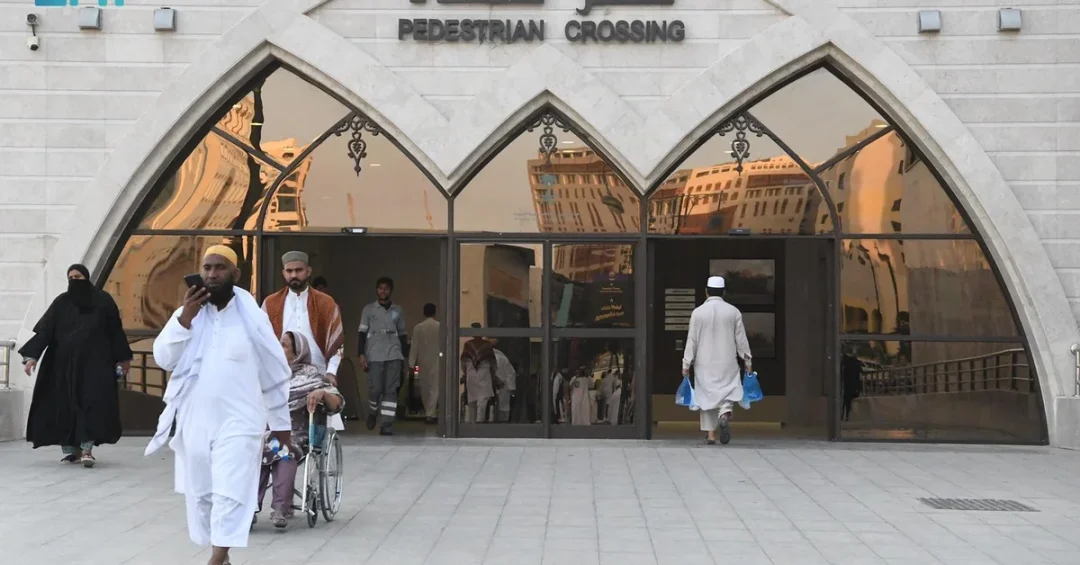
The central area of Madinah has been developed with a focus on the highest quality standards in infrastructure to accommodate the millions of visitors to the Prophet’s Mosque, including the construction of underground pedestrian crossings designed to ensure the safety of individuals crossing the main roads leading to the mosque, according to the Saudi Press Agency (SPA). The initiative, announced in March 2025, represents a significant component of the Kingdom of Saudi Arabia’s broader efforts to modernize the holy city’s urban environment while preserving its spiritual and historical character. These crossings are not merely functional pathways; they are engineered environments that blend safety, comfort, and architectural harmony with the sacred surroundings of one of Islam’s holiest sites.
For the international observer, the development of these pedestrian crossings offers a clear window into how Saudi Arabia is approaching the intersection of religious heritage and modern urban planning. The project reflects a systematic effort to manage the enormous flow of pilgrims who visit Madinah annually, particularly during the Umrah and Hajj seasons, when the city’s population swells dramatically. By investing in subterranean infrastructure that separates pedestrians from vehicular traffic, Saudi authorities are addressing both safety and efficiency in a manner that respects the sanctity of the location while embracing contemporary engineering solutions.
Context and Background
How does a city prepare to welcome millions of devout visitors while maintaining the tranquility and dignity of its most sacred spaces? This question has guided Madinah’s urban planners for decades, and the answer has increasingly involved sophisticated infrastructure that operates largely out of sight. The Prophet’s Mosque, known as Al-Masjid an-Nabawi, serves as the second holiest site in Islam and attracts a volume of pilgrims that places extraordinary demands on the surrounding urban area. The roads leading to the mosque, particularly those connecting the central district with surrounding neighborhoods, must accommodate both pedestrian and vehicular traffic in a delicate balance that prioritizes safety without compromising access.
The development of the central area of Madinah has been an ongoing priority for the Saudi government, with successive phases of improvement designed to enhance the visitor experience. The underground pedestrian crossings represent the latest evolution in this process, building upon earlier efforts to organize traffic flow and create safe passageways for worshippers. According to official Saudi sources, these crossings help control pedestrian traffic in the areas surrounding the mosque, easing congestion during peak times like Umrah and Hajj seasons. The approach reflects a comprehensive understanding that pilgrimage is not merely a spiritual journey but also a logistical undertaking that requires careful planning and substantial investment in public infrastructure.
The timing of this development is significant, coming as Saudi Arabia continues to expand its capacity to host pilgrims under the Vision 2030 framework. The Kingdom has set ambitious targets for increasing the number of Umrah and Hajj participants, and the infrastructure in Madinah must keep pace with these goals. The pedestrian crossings are therefore not isolated projects but integral components of a national strategy to enhance religious tourism while ensuring that the experience remains safe, comfortable, and spiritually fulfilling for all visitors.
Key Details of the Pedestrian Crossing Initiative
What specific features distinguish these crossings from ordinary pedestrian infrastructure? The answer lies in the details, which reveal a thoughtful integration of safety technology, environmental comfort, and architectural sensitivity. The crossings feature modern safety measures such as surveillance cameras and firefighting systems, ensuring that security personnel can monitor conditions and respond rapidly to any incident. These systems operate continuously, providing a safe environment for pilgrims at all hours of the day and night.
Beyond safety, the crossings offer 24-hour air conditioning, well-lit corridors, and escalators for convenient access. These amenities are particularly important given Madinah’s climate, where temperatures can reach extreme levels during certain months of the year. The air-conditioned environment ensures that pilgrims, many of whom are elderly or infirm, can move between key sites without exposure to harsh conditions. The well-lit corridors create a sense of security and orientation, while escalators reduce physical strain and facilitate smooth movement for large crowds. The crossings also include shops and entrances decorated in harmony with Madinah’s architectural style, ensuring that the modern infrastructure does not clash with the traditional aesthetic of the holy city.
Another project mentioned in the official announcement involves a 3-kilometer pedestrian crossing connecting the Quba area and mosque to the Prophet’s Mosque, providing special tracks for golf carts. This extension demonstrates the scale of the planning and the commitment to creating a comprehensive network of safe pedestrian routes. The Quba Mosque holds special significance in Islamic history as the first mosque built by the Prophet Muhammad (peace be upon him), and improving access between this site and the Prophet’s Mosque enhances the spiritual experience for pilgrims who wish to visit both locations. The provision of golf cart tracks adds an additional layer of accessibility, catering to visitors with mobility challenges.
The architectural design of the crossings deserves particular attention. By harmonizing with Madinah’s traditional style, the project demonstrates that modernization need not come at the expense of cultural authenticity. The entrances and interior spaces reflect the aesthetic principles that have characterized the city for centuries, creating a seamless visual experience that respects the sanctity of the surroundings. This approach aligns with broader Saudi efforts to preserve heritage while embracing progress, a balance that is central to the Kingdom’s identity and its Vision 2030 objectives.
International and Regional Impact
How do infrastructure improvements in Madinah resonate beyond the Kingdom’s borders? For the international Muslim community, which comprises nearly two billion people worldwide, the experience of pilgrimage is a deeply personal and spiritual journey. The quality of infrastructure in the holy cities directly affects the ability of Muslims from every continent to fulfill their religious obligations. By investing in pedestrian crossings that prioritize safety and comfort, Saudi Arabia is enhancing its role as the custodian of Islam’s holiest sites and demonstrating its commitment to serving pilgrims from around the world.
The regional impact is equally significant. As the host of the annual Hajj and the destination for year-round Umrah, Saudi Arabia serves as a focal point for Islamic travel and tourism. The improvements in Madinah contribute to the Kingdom’s reputation as a destination that combines spiritual significance with modern amenities. This reputation has economic implications, as pilgrims often extend their stays to visit historical sites, engage in cultural activities, and patronize local businesses. The pedestrian crossings, by facilitating movement between key sites, indirectly support the broader tourism ecosystem that has developed around religious travel.
From a diplomatic perspective, the project reinforces Saudi Arabia’s position as a leader in the Islamic world. The Kingdom’s role in maintaining and improving the infrastructure of the holy sites is a source of pride and a demonstration of its commitment to the global Muslim community. The pedestrian crossings are a tangible expression of this commitment, providing concrete benefits that pilgrims can experience directly. In a region where religious tourism is a major economic sector, Saudi Arabia’s investments set a standard for quality and safety that other destinations may seek to emulate.
Economic and Strategic Significance
What economic value does a pedestrian crossing hold in the broader context of national development? The answer extends beyond the immediate cost of construction to encompass the long-term benefits of enhanced pilgrimage capacity, improved visitor satisfaction, and strengthened infrastructure. The crossings are part of a larger investment portfolio that Saudi Arabia has directed toward the holy cities, recognizing that the pilgrimage experience is a critical component of the Kingdom’s economic diversification strategy. Religious tourism generates substantial revenue through transportation, accommodation, retail, and hospitality services, and the quality of infrastructure directly influences the volume and satisfaction of visitors.
The strategic significance of the project lies in its alignment with Vision 2030, the comprehensive reform plan launched by Crown Prince Mohammed bin Salman that seeks to transform Saudi Arabia’s economy and society. Vision 2030 includes specific goals for increasing the number of Umrah pilgrims to 30 million annually and enhancing the overall pilgrimage experience. The pedestrian crossings contribute to these goals by removing barriers to movement, reducing congestion, and creating a more welcoming environment for visitors. They also support the broader objective of developing Madinah as a destination that offers world-class services while maintaining its spiritual character.
Furthermore, the project demonstrates the Kingdom’s capacity to execute complex infrastructure projects that require coordination among multiple government agencies, engineering firms, and local authorities. The successful implementation of the crossings serves as a model for future developments in other parts of the country, showcasing Saudi expertise in urban planning and project management. This expertise is increasingly valuable as the Kingdom undertakes ambitious giga-projects such as NEOM and the Red Sea Project, which demand similar levels of precision and innovation.
Vision 2030 Alignment
How does a network of underground walkways connect to a national transformation agenda? The answer lies in the recognition that infrastructure is not an end in itself but a means of enabling human flourishing. Vision 2030 is fundamentally about improving the quality of life for citizens and visitors, creating economic opportunities, and positioning Saudi Arabia as a global leader. The pedestrian crossings in Madinah embody these principles by providing safe, comfortable, and efficient access to one of the world’s most visited religious sites. They reflect the Kingdom’s commitment to serving pilgrims with dignity and care, a commitment that is rooted in Islamic values and expressed through modern engineering.
The crossings also contribute to the Vision 2030 goal of enhancing the pilgrimage experience, which is a key pillar of the Kingdom’s religious tourism strategy. By facilitating movement between the Prophet’s Mosque and surrounding areas, including the historic Quba Mosque, the project enriches the spiritual journey of visitors and encourages them to explore the rich heritage of Madinah. This, in turn, supports the development of a vibrant tourism sector that creates jobs, attracts investment, and showcases Saudi Arabia’s cultural and historical treasures to the world. As the Kingdom continues to implement Vision 2030, projects like the pedestrian crossings will remain essential components of its efforts to build a prosperous and forward-looking nation that honors its past while embracing its future.
20 Questions
Q1. What is the purpose of the underground pedestrian crossings in Madinah?
A1. The crossings are designed to ensure the safety of individuals crossing the main roads leading to the Prophet’s Mosque, control pedestrian traffic, and ease congestion during peak times like Umrah and Hajj seasons.
Q2. Where exactly are these pedestrian crossings located?
A2. They are located in the central area of Madinah, connecting the areas around the Prophet’s Mosque with the central district and providing safe paths away from vehicle traffic.
Q3. What safety features are included in the crossings?
A3. The crossings feature modern safety measures such as surveillance cameras and firefighting systems, along with 24-hour air conditioning, well-lit corridors, and escalators for convenient access.
Q4. How do the crossings accommodate pilgrims during peak seasons?
A4. They help control pedestrian traffic in the areas surrounding the mosque, easing congestion during peak times like Umrah and Hajj seasons by separating pedestrians from vehicle traffic.
Q5. Are there any commercial facilities within the crossings?
A5. Yes, the crossings include shops and entrances decorated in harmony with Madinah’s architectural style, providing convenience for visitors while respecting the city’s aesthetic heritage.
Q6. What is the length of the pedestrian crossing connecting the Quba area to the Prophet’s Mosque?
A6. Another project involves a 3-kilometer pedestrian crossing connecting the Quba area and mosque to the Prophet’s Mosque, providing special tracks for golf carts.
Q7. How does this project fit into Saudi Arabia’s Vision 2030?
A7. The initiative is part of the Saudi government’s efforts to enhance visitor experience and facilitate movement between key sites, aligning with Vision 2030 goals for pilgrimage and tourism development.
Q8. Who announced the development of these pedestrian crossings?
A8. The development was announced via the Saudi Press Agency (SPA), the official news agency of the Kingdom of Saudi Arabia, in March 2025.
Q9. What architectural style is used for the crossings?
A9. The crossings and their entrances are decorated in harmony with Madinah’s architectural style, ensuring visual consistency with the holy city’s traditional aesthetic.
Q10. How do the crossings improve accessibility for elderly or disabled pilgrims?
A10. The crossings provide escalators, air conditioning, and well-lit corridors, while the 3-kilometer Quba crossing includes special tracks for golf carts, enhancing accessibility for all visitors.
Q11. What role do the crossings play in linking different areas of Madinah?
A11. They play a vital role in enhancing Madinah’s infrastructure by linking the areas around the Prophet’s Mosque with the central district and other key sites like the Quba Mosque.
Q12. Are the crossings operational year-round?
A12. Yes, the crossings provide 24-hour air conditioning and are designed for continuous use, serving pilgrims throughout the year, not just during Hajj and Umrah seasons.
Q13. How do the crossings contribute to pedestrian safety?
A13. They prioritize safety by providing safe paths away from vehicle traffic, with surveillance cameras and firefighting systems ensuring a secure environment for all users.
Q14. What is the significance of the Quba Mosque in this project?
A14. The Quba Mosque is the first mosque built by the Prophet Muhammad (peace be upon him), and improving access between it and the Prophet’s Mosque enhances the spiritual experience for pilgrims.
Q15. How does this project reflect Saudi Arabia’s commitment to pilgrims?
A15. It demonstrates the Kingdom’s dedication to serving the millions of visitors to the Prophet’s Mosque by providing world-class infrastructure that prioritizes safety, comfort, and spiritual fulfillment.
Q16. What economic benefits do these crossings bring to Madinah?
A16. They support the local economy by facilitating movement to shops, businesses, and historical sites, contributing to the growth of religious tourism and related services in the region.
Q17. How do the crossings handle large crowds during Hajj and Umrah?
A17. The crossings control pedestrian traffic and ease congestion by separating foot traffic from vehicles, ensuring smooth movement even during the busiest periods of pilgrimage.
Q18. Are there plans to expand this infrastructure further?
A18. The announcement mentions the Quba crossing as another project, indicating ongoing efforts to expand pedestrian infrastructure in Madinah to accommodate future growth in pilgrim numbers.
Q19. What technology is used to monitor the crossings?
A19. Surveillance cameras are installed throughout the crossings to monitor conditions and ensure safety, operating alongside firefighting systems and other modern safety measures.
Q20. How does this project align with Saudi Arabia’s long-term vision?
A20. It supports Vision 2030 by enhancing the pilgrimage experience, improving urban infrastructure, and demonstrating the Kingdom’s ability to execute complex projects that serve both residents and international visitors.
Reader Feedback
We value your thoughts. Please share your feedback on this article.
Your feedback helps us improve our coverage.
Related articles
 Aseer’s Ramadan Nights: Heritage Villages Come Alive
 Madinah’s Rural Farms Offer Unique Ramadan Experience
 Five Sites in Prophet’s Mosque Enrich Visitors’ Experience
 Madinah Governor Opens New Premium Airport Lounge
 AlManshiyah Farmers Market: AlUla’s Heritage Hub
 AlUla’s Old Town: Stories of a Bygone Era Told by Locals