


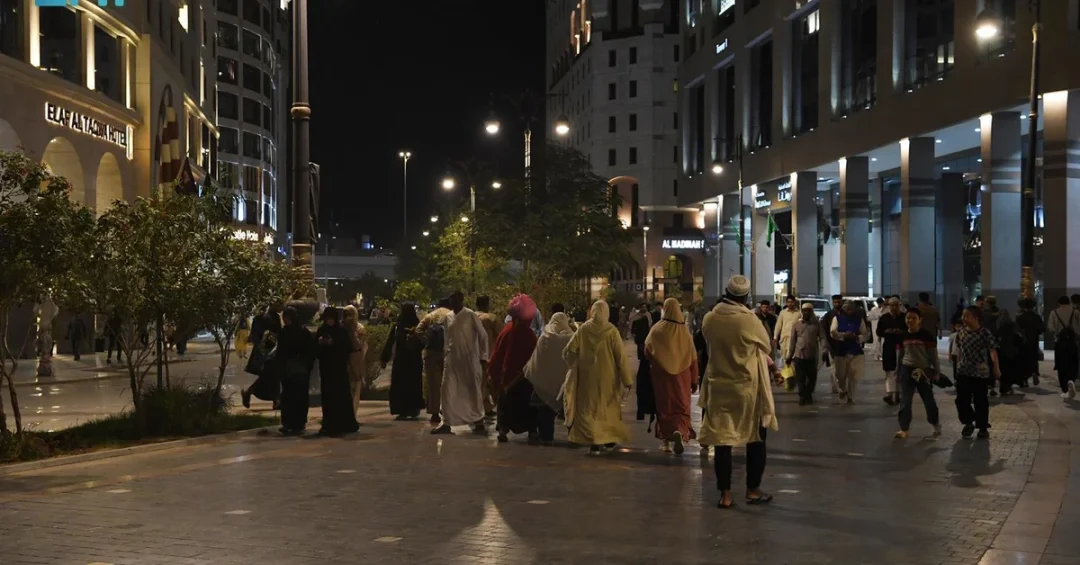
Madinah, Saudi Arabia — A transformative urban walking trail connecting the historic Quba Mosque to the Prophet’s Mosque in the heart of Madinah is drawing thousands of pedestrians daily, forming a vital part of the Kingdom’s humanization projects that enhance quality of life and celebrate the city’s rich Islamic heritage. The trail, an interactive path linking two of Islam’s most significant mosques, allows residents and visitors to enjoy a unique urban experience while moving seamlessly between Quba Mosque and its expansive surroundings toward the Prophet’s Mosque, passing through a premier commercial area featuring food outlets, shops, and cafes.
So why does this pedestrian corridor matter so much right now? Because it represents far more than just a walkway — it is a comprehensive urban renewal initiative aimed at developing facilities and infrastructure, humanizing roads and squares, and connecting the community with both its storied past and its vibrant present. The Saudi Press Agency (SPA) has captured scenes of pedestrians navigating the path between the two mosques, underscoring the trail’s growing popularity as a daily thoroughfare for worshippers and tourists alike. The project reflects a broader commitment by the Kingdom of Saudi Arabia to elevate the pilgrimage and visitation experience in Madinah, a city that holds profound spiritual significance for Muslims worldwide and serves as a key destination for religious tourism under Vision 2030.
Context and Background
Have you ever wondered how urban design can bridge centuries of history with modern life? The walking trail linking Quba Mosque to the Prophet’s Mosque is a direct response to that question, emerging from a series of humanization projects in Madinah designed to create an engaging urban environment. These initiatives are part of a comprehensive program aimed at developing facilities and infrastructure, as well as humanizing roads and squares throughout the city. The goal is to enhance the quality of life for residents and visitors, allowing them to enjoy a unique urban experience that seamlessly integrates heritage with contemporary amenities.
At the heart of this development is Quba Mosque, the first mosque built after the Prophet Muhammad’s Hijrah to Madinah. Its historical importance is deeply connected to the Prophetic biography and resonates in the hearts of Muslims around the world. Currently, it is undergoing a significant transformation as part of the “King Salman bin Abdulaziz project to expand Quba Mosque and its surroundings.” This initiative aims to increase the mosque’s capacity from 15,000 to 66,000 worshippers, while also creating expansive areas around the mosque to form a vibrant urban space that remains active around the clock. The walking trail is a key component of this vision, ensuring that the connection between Quba Mosque and the Prophet’s Mosque is not only functional but also enriching.
How does a simple path become a lifeline for a community? By serving as a conduit for spiritual journeys, economic activity, and social interaction. Thousands of individuals traverse this route daily, moving between Quba Mosque and its expansive surroundings towards the Prophet’s Mosque in the heart of the city. The trail passes through a premier commercial area embracing food outlets, shops, and cafes, enjoyed by both residents and visitors. This integration of commerce with religious and cultural landmarks creates a dynamic urban ecosystem that supports local businesses and enhances the overall experience for all who use it.
Key Details
What exactly makes this trail so special? For starters, it is not merely a pedestrian walkway but an interactive path designed to engage users with their surroundings. The route is meticulously planned to provide a safe, comfortable, and aesthetically pleasing journey between two of Madinah’s most revered sites. The Saudi Press Agency (SPA) has documented the trail’s usage, highlighting its role in the daily lives of thousands who commute between the mosques. The path is part of broader humanization projects that include landscaping, shading, and the creation of public squares that encourage social gatherings and relaxation.
The commercial area along the trail adds another layer of appeal, offering a variety of dining and shopping options that cater to diverse tastes. Whether it’s a quick bite at a local cafe or a leisurely meal at a restaurant, visitors can enjoy a range of culinary experiences. The presence of shops selling religious artifacts, books, and souvenirs further enriches the cultural experience, allowing visitors to take home a piece of Madinah’s heritage. Moreover, the trail is designed to be accessible to all, including the elderly and those with disabilities, ensuring that everyone can partake in this spiritual and physical journey.
How does the expansion of Quba Mosque tie into the trail’s success? The “King Salman bin Abdulaziz project to expand Quba Mosque and its surroundings” is set to increase the mosque’s capacity from 15,000 to 66,000 worshippers, a monumental upgrade that will accommodate the growing number of pilgrims and visitors. The project also includes the creation of expansive areas around the mosque, forming a vibrant urban space that remains active around the clock. This expansion will not only enhance the spiritual experience for worshippers but also stimulate economic activity in the surrounding areas, as more people will be drawn to the mosque and the trail, benefiting local businesses and creating jobs.
International and Regional Impact
Could this trail serve as a model for other cities in the region and beyond? Absolutely. The integration of religious heritage with modern urban planning is a concept that resonates globally, particularly in regions with rich historical sites. By successfully linking Quba Mosque and the Prophet’s Mosque through a pedestrian-friendly corridor, Madinah demonstrates how cities can preserve their cultural identity while embracing sustainable development. This approach aligns with global trends in urban design that prioritize walkability, community engagement, and the creation of public spaces that foster social cohesion.
Regionally, the trail enhances Madinah’s appeal as a destination for religious tourism, which is a key pillar of Saudi Arabia’s Vision 2030. The Kingdom aims to increase the number of pilgrims and visitors to the holy cities, and projects like this make the experience more accessible and enjoyable. International visitors, particularly from Muslim-majority countries, will find the trail not only convenient but also spiritually uplifting, as it allows them to walk in the footsteps of the Prophet Muhammad. The positive image of a modern, well-planned Madinah can also help counter misconceptions about the Kingdom, showcasing its commitment to preserving Islamic heritage while advancing modernity.
What message does this send to the world about Saudi Arabia’s priorities? It underscores the Kingdom’s dedication to serving Islam and Muslims, as well as its ability to execute large-scale infrastructure projects that benefit both residents and visitors. The trail is a testament to Saudi Arabia’s leadership in the Muslim world, demonstrating that economic development and spiritual preservation can go hand in hand. Furthermore, it highlights the success of Vision 2030 in diversifying the economy through tourism and enhancing the quality of life for all citizens and guests.
Economic and Strategic Significance
How does a walking trail contribute to the economy? By facilitating the movement of people, the trail drives foot traffic to local businesses, from cafes and restaurants to retail shops and service providers. This increased activity generates revenue, creates employment opportunities, and supports the growth of small and medium-sized enterprises. The commercial area along the trail is a prime example of how urban development can spur economic diversification, a core objective of Vision 2030. Additionally, the trail enhances the overall experience for pilgrims, encouraging longer stays and repeat visits, which further boosts the local economy.
Strategically, the project reinforces Madinah’s position as a global center for Islamic heritage and tourism. By investing in infrastructure that connects key religious sites, Saudi Arabia is making a clear statement about its commitment to providing world-class facilities for pilgrims. This not only strengthens the Kingdom’s standing in the Muslim world but also attracts international attention and investment. The trail, along with the Quba Mosque expansion, is part of a larger strategy to enhance the Hajj and Umrah experience, making it more seamless and spiritually fulfilling for millions of Muslims who journey to the Kingdom each year.
What role does sustainability play in this project? The humanization projects in Madinah, including the walking trail, prioritize environmentally friendly design. By encouraging walking, the trail reduces reliance on vehicles, thereby lowering carbon emissions and traffic congestion. The landscaping and green spaces around the trail also contribute to a healthier urban environment, providing shade and improving air quality. This sustainable approach aligns with global efforts to combat climate change and positions Saudi Arabia as a responsible steward of the environment, even as it develops its infrastructure.
Vision 2030 Alignment
How does the Quba Walking Trail embody the goals of Vision 2030? At its core, Vision 2030 seeks to diversify the economy, enhance quality of life, and promote Saudi Arabia as a global destination. The trail is a tangible example of these objectives in action. It enhances the quality of life for residents and visitors by providing a safe, attractive, and functional public space. It supports economic diversification by boosting tourism and local commerce. And it showcases the Kingdom’s rich heritage to the world, inviting international visitors to experience the spiritual and cultural treasures of Madinah.
Can a simple path reshape a city’s future? For Madinah, the answer is a resounding yes. The walking trail linking Quba Mosque to the Prophet’s Mosque is more than an infrastructure project; it is a symbol of Saudi Arabia’s commitment to preserving its Islamic identity while embracing modernity. As the Kingdom continues to implement Vision 2030, projects like this will play a crucial role in creating vibrant, sustainable communities that honor the past while building for the future. The trail stands as a testament to what can be achieved when tradition and innovation walk hand in hand, guiding the way toward a prosperous and harmonious tomorrow.
20 Questions
Q1. What is the Quba Walking Trail?
A1. The Quba Walking Trail is a pedestrian path linking the Prophet’s Mosque to Quba Mosque in Madinah, designed as part of humanization projects to enhance urban mobility and quality of life.
Q2. Why is Quba Mosque significant?
A2. Quba Mosque is the first mosque built after the Prophet Muhammad’s Hijrah to Madinah, holding deep historical and spiritual significance in Islamic history.
Q3. How many people use the trail daily?
A3. Thousands of individuals traverse the route daily, moving between Quba Mosque and the Prophet’s Mosque, according to the Saudi Press Agency.
Q4. What is the capacity expansion goal for Quba Mosque?
A4. The King Salman bin Abdulaziz project aims to increase the mosque’s capacity from 15,000 to 66,000 worshippers.
Q5. What commercial facilities are along the trail?
A5. The trail passes through a premier commercial area with food outlets, shops, and cafes enjoyed by both residents and visitors.
Q6. Who reported on the trail’s usage?
A6. The Saudi Press Agency (SPA) captured scenes of pedestrians navigating the path between the two mosques.
Q7. What are humanization projects in Madinah?
A7. They are initiatives to develop facilities and infrastructure, humanize roads and squares, and create an engaging urban environment for residents and visitors.
Q8. How does the trail enhance quality of life?
A8. By providing a safe, attractive space for walking and social interaction, it connects the community with heritage and the present, promoting health and well-being.
Q9. What is the strategic importance of the trail?
A9. It supports religious tourism, boosts the local economy, and reinforces Madinah’s position as a global center for Islamic heritage.
Q10. How does the trail align with Vision 2030?
A10. It enhances quality of life, diversifies the economy through tourism, and showcases Saudi Arabia’s commitment to preserving heritage while modernizing.
Q11. What is the King Salman project?
A11. It is an initiative to expand Quba Mosque and its surroundings, creating a vibrant urban space active around the clock.
Q12. How does the trail benefit local businesses?
A12. Increased foot traffic from pedestrians leads to more customers for cafes, shops, and restaurants, stimulating economic growth and job creation.
Q13. Is the trail accessible to all?
A13. Yes, it is designed to be accessible, including for the elderly and those with disabilities, ensuring everyone can use it.
Q14. What role does sustainability play?
A14. The trail encourages walking, reducing carbon emissions and traffic, while green spaces improve air quality and provide shade.
Q15. How does the trail impact religious tourism?
A15. It enhances the pilgrimage experience by making movement between holy sites easier and more enjoyable, attracting more visitors to Madinah.
Q16. What message does the trail send internationally?
A16. It demonstrates Saudi Arabia’s dedication to serving Islam, preserving heritage, and executing large-scale projects that benefit all.
Q17. When was the trail project initiated?
A17. The trail is part of ongoing humanization projects in Madinah, with development continuing as part of Vision 2030 initiatives.
Q18. How does the trail connect to the Prophet’s Mosque?
A18. The trail leads directly from Quba Mosque through a commercial area to the Prophet’s Mosque in the heart of Madinah.
Q19. What economic activities does the trail support?
A19. It supports retail, dining, and services, contributing to economic diversification and the growth of small and medium enterprises.
Q20. What is the future outlook for the trail?
A20. As Madinah continues to develop under Vision 2030, the trail will remain a vital link, enhancing spiritual journeys and urban life for generations.
Reader Feedback
We value your thoughts. Please share your feedback on this article.
Your feedback helps us improve our coverage.
Related articles
 Jazan’s Waterfront and Parks: Ramadan Family Destinations
 Haramain High Speed Railway Boosts Ramadan Trips
 GASTAT: Umrah Performers Rise 31% in Q4 2024
 Jazan’s Rural Farms Offer Unique Ramadan Tourism Experience
 Tourism Minister Lauds Jeddah’s Unique Destinations
 King Fahd Park: Tranquil Retreat for Families in Najran