


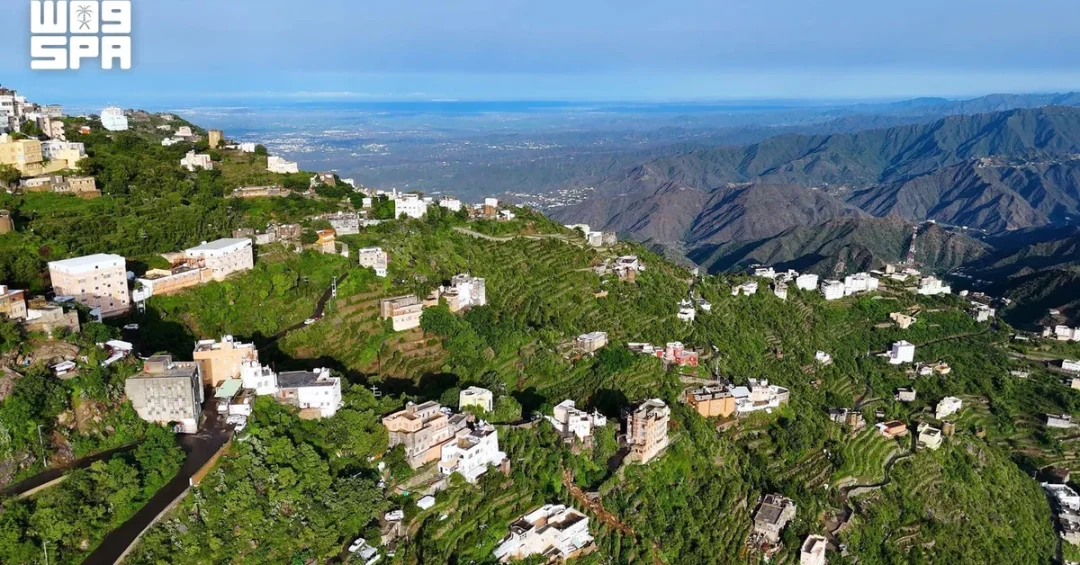
Saudi Arabia’s Cabinet has approved the abolition of the Jazan Mountainous Areas Development and Reconstruction Authority, transferring its responsibilities to the Strategic Office for the Development of Jazan Region and the Ministry of Environment, Water and Agriculture, in a decision announced via the Saudi Press Agency on August 16, 2026. The move marks a significant milestone in a development story that spans nearly half a century, reshaping the institutional framework that has guided the transformation of Jazan’s mountainous terrain since the establishment of the Fayfa Development and Reconstruction Authority in 1396 AH. Under the new arrangement, agricultural and environmental expertise will be integrated with development planning and investment in the region’s economic and tourism potential, opening a new chapter for a part of the Kingdom that has long been recognized for its unique geography, cultural heritage, and agricultural promise.
The decision reflects a broader shift in Saudi Arabia’s regional development philosophy, one that moves from managing challenges to maximizing opportunities. For decades, the mountainous areas of Jazan were viewed primarily through the lens of their difficult terrain and the needs of their residents. Today, the same mountains are increasingly seen as a strategic asset capable of contributing to the Kingdom’s economic diversification goals. The transfer of responsibilities is not a conclusion but a transition, signaling that the foundational work of discovery and experimentation has matured into a phase of value creation and sustainable investment. As Saudi Arabia continues to implement Vision 2030, the Jazan mountains stand as a compelling example of how local resources can be leveraged for national benefit.
Context and Background
How did a region once defined by its rugged isolation become a laboratory for agricultural innovation and economic potential? The journey began in 1396 AH, when the Fayfa Development and Reconstruction Authority was established to address the unique characteristics of the area’s mountainous terrain and the needs of its residents. At the time, the mountains presented significant logistical and developmental challenges, requiring a specialized body capable of designing interventions suited to the local environment. The authority’s early work focused on infrastructure, agricultural support, and community development, laying the groundwork for what would become a decades-long effort to unlock the region’s potential.
More than three decades later, a Royal Order issued in 1429 AH expanded the authority’s scope, renaming it the Jazan Mountainous Areas Development and Reconstruction Authority and extending its mandate to cover several governorates in the mountainous sector. This expansion reflected a growing recognition that the challenges and opportunities of the mountains were not confined to a single governorate but spanned a wider geographic and economic landscape. Throughout this period, the authority functioned as a field for research, experimentation, and the exploration of potential, particularly in agriculture. Its programs studied crops and varieties suited to the mountainous environment, developed farming practices, and supported farmers with knowledge and seedlings, creating a foundation of expertise that would prove invaluable in later phases.
The mountains were never merely geographically challenging terrain. Under the authority’s programs, they became a living laboratory where agricultural trials contributed to a deeper understanding of what could thrive in the region’s unique climate and soil. This work was not limited to subsistence farming; it aimed to identify high-value crops that could generate income and support rural livelihoods. The authority’s efforts in this regard laid the groundwork for the emergence of Saudi coffee as one of the most prominent agricultural resources associated with its work, a development that would later gain national and international significance.
Key Details
What made Saudi coffee a flagship achievement of the authority’s work, and how did it reach the international stage? The authority’s initiatives in this field included proposing the Kingdom of Saudi Arabia’s accession to the International Coffee Organization, identifying promising varieties of Saudi coffee, and registering them with the Saudi Authority for Intellectual Property (SAIP). These steps were instrumental in positioning Saudi coffee as a distinctive product with global potential, aligning with Vision 2030’s objectives to diversify the economy and promote non-oil exports. The registration of coffee varieties with SAIP also provided a legal framework for protecting the Kingdom’s agricultural heritage and ensuring that the benefits of these varieties accrue to Saudi farmers and entrepreneurs.
Beyond coffee, the authority contributed to providing farmers with coffee and sandalwood seedlings, distributing more than one million coffee seedlings across the mountainous areas. It also used plant tissue culture techniques to propagate crops and produce disease- and virus-free plants, a scientific approach that enhanced agricultural productivity and resilience. These efforts extended to the cultivation of aromatic trees and sandalwood, the study of tourism opportunities, and initiatives to highlight the natural and cultural assets of the mountainous areas. Together, these activities contributed to a more comprehensive picture of the potential of the mountain sector, demonstrating that the region could support a diversified economy based on agriculture, tourism, and heritage.
The significance of these assets has grown in the current phase. Agricultural terraces, highlands, fog, vegetation, and cultural heritage are no longer viewed as separate elements but as resources that can be integrated to form an economic, tourism, and environmental ecosystem. This integrated approach aligns with the objectives of Saudi Vision 2030 to diversify the economy, maximize the use of local resources, and enable regions to leverage their competitive advantages. It also makes development more closely connected to the unique characteristics and assets of each region, a principle that has become central to the Kingdom’s regional development strategy.
International and Regional Impact
How does the restructuring of Jazan’s development authority resonate beyond the Kingdom’s borders? The transfer of responsibilities to the Strategic Office for the Development of Jazan Region and the Ministry of Environment, Water and Agriculture signals Saudi Arabia’s commitment to integrating environmental sustainability with economic development. This approach is consistent with global best practices in mountain region development, where the preservation of ecosystems and cultural heritage is seen as essential to long-term prosperity. By placing agricultural and environmental expertise at the heart of the new framework, the Kingdom is positioning Jazan as a model for sustainable development that could be studied and emulated by other mountainous regions in the Middle East and beyond.
Regionally, the decision reinforces Saudi Arabia’s role as a leader in agricultural innovation and environmental stewardship. The authority’s work on Saudi coffee, in particular, has already attracted international attention, with the Kingdom’s accession to the International Coffee Organization opening new avenues for cooperation and trade. The new phase of development is expected to build on these achievements, creating opportunities for international partnerships in areas such as agritech, eco-tourism, and heritage conservation. For investors and development institutions, the integration of the Strategic Office and the Ministry of Environment, Water and Agriculture offers a clearer and more coordinated entry point for engagement with the region’s economic potential.
Economic and Strategic Significance
What does the transition mean for the economic future of Jazan and the Kingdom as a whole? The shift from a phase of discovering potential to one of maximizing its value represents a strategic pivot that could unlock significant economic benefits. The mountainous areas of Jazan possess a unique combination of agricultural land, natural beauty, and cultural heritage that, if properly developed, can support a diverse range of economic activities. These include high-value agriculture, particularly coffee and aromatic plants; eco-tourism and adventure tourism; and cultural tourism focused on the region’s traditions and historical sites. By integrating these activities into a coherent ecosystem, the new framework aims to create jobs, attract investment, and generate sustainable revenue streams for local communities.
The economic significance extends beyond Jazan itself. As Saudi Arabia seeks to diversify its economy away from oil dependence, regions like Jazan are expected to play a larger role in contributing to national GDP. The development of the mountainous areas can serve as a pilot for similar initiatives in other parts of the Kingdom, demonstrating how local resources can be transformed into competitive advantages. The Strategic Office for the Development of Jazan Region is well positioned to coordinate these efforts, ensuring that development is aligned with Vision 2030’s goals and that the benefits are shared equitably among residents. For international investors, the region offers a compelling proposition: a stable regulatory environment, strong government support, and a wealth of untapped potential.
Vision 2030 Alignment
How does the Jazan mountains story embody the aspirations of Saudi Vision 2030? At its core, Vision 2030 is about unlocking the potential of Saudi Arabia’s people, places, and resources. The development of the Jazan mountains is a living example of this philosophy, showing how a region once seen as remote and challenging can become a hub of innovation and opportunity. The integration of agricultural and environmental expertise with development planning and investment directly supports the Vision’s objectives of economic diversification, sustainable development, and regional balance. It also reflects the Vision’s emphasis on empowering local communities and enabling every region to contribute to the national economy according to its unique strengths.
As the mountains of Jazan move from a phase of discovering their potential to one of maximizing its value, they are no longer viewed as an area in need of development but as a partner in shaping the region’s economy. This shift in perspective is perhaps the most significant outcome of nearly fifty years of dedicated effort. It signals that the foundational work of research, experimentation, and capacity-building has borne fruit and that the region is now ready to take its place as a contributor to Saudi Arabia’s prosperity. Under the guidance of the Strategic Office for the Development of Jazan Region and the Ministry of Environment, Water and Agriculture, the coming years are expected to see accelerated progress, with the mountains serving as a symbol of what Vision 2030 can achieve when local assets are nurtured and strategically deployed.
20 Questions
Q1. What decision did the Saudi Cabinet make regarding the Jazan Mountainous Areas Development and Reconstruction Authority?
A1. The Cabinet approved its abolition and transferred its responsibilities to the Strategic Office for the Development of Jazan Region and the Ministry of Environment, Water and Agriculture, as announced by the Saudi Press Agency on August 16, 2026.
Q2. When was the Fayfa Development and Reconstruction Authority originally established?
A2. It was established in 1396 AH to address the unique characteristics of the mountainous terrain and the needs of its residents, marking the beginning of a nearly half-century development journey.
Q3. What change occurred in 1429 AH regarding the authority?
A3. A Royal Order changed its name to the Jazan Mountainous Areas Development and Reconstruction Authority and extended its scope to cover several governorates in the mountainous sector, broadening its mandate.
Q4. What was one of the most prominent agricultural resources associated with the authority’s work?
A4. Saudi coffee emerged as a flagship resource, with the authority proposing the Kingdom’s accession to the International Coffee Organization and identifying promising coffee varieties for registration.
Q5. How many coffee seedlings did the authority distribute to farmers?
A5. The authority distributed more than one million coffee seedlings, supporting farmers and promoting the cultivation of this high-value crop across the mountainous areas.
Q6. What techniques did the authority use to propagate crops?
A6. It used plant tissue culture techniques to propagate crops and produce disease- and virus-free plants, enhancing agricultural productivity and resilience in the region.
Q7. Where were promising Saudi coffee varieties registered?
A7. They were registered with the Saudi Authority for Intellectual Property (SAIP), providing legal protection and recognition for the Kingdom’s agricultural heritage.
Q8. What other crops did the authority support besides coffee?
A8. It supported the cultivation of aromatic trees and sandalwood, studying their potential and providing seedlings to farmers as part of a diversified agricultural strategy.
Q9. What are some of the natural assets of the Jazan mountains highlighted by the authority?
A9. Agricultural terraces, highlands, fog, vegetation, and cultural heritage are key assets that can be integrated into an economic, tourism, and environmental ecosystem.
Q10. How does the new phase align with Saudi Vision 2030?
A10. It aligns with Vision 2030’s objectives to diversify the economy, maximize local resources, and enable regions to leverage their competitive advantages for sustainable development.
Q11. What is the role of the Strategic Office for the Development of Jazan Region?
A11. It will coordinate development planning and investment, integrating agricultural and environmental expertise to unlock the region’s economic and tourism potential in line with national goals.
Q12. What is the role of the Ministry of Environment, Water and Agriculture in the new framework?
A12. The ministry will bring its expertise in agriculture and environmental sustainability to support the development of the mountainous areas, ensuring that growth is balanced and responsible.
Q13. How does the decision affect local farmers in Jazan?
A13. It aims to provide more coordinated support, including access to expertise, seedlings, and market opportunities, helping farmers transition to higher-value crops and sustainable practices.
Q14. What economic activities are expected to grow in the region?
A14. High-value agriculture, particularly coffee and aromatic plants, along with eco-tourism, adventure tourism, and cultural tourism, are expected to expand and attract investment.
Q15. Why is the Jazan mountains development considered a model for other regions?
A15. It demonstrates how local resources can be transformed into competitive advantages through research, experimentation, and strategic investment, offering lessons for other mountainous areas in the Kingdom.
Q16. What international recognition has Saudi coffee received?
A16. The Kingdom’s accession to the International Coffee Organization and the registration of coffee varieties with SAIP have enhanced its international standing and opened trade opportunities.
Q17. How does the development of Jazan contribute to economic diversification?
A17. By creating new economic activities beyond oil, such as agriculture and tourism, it supports the Kingdom’s goal of a diversified and resilient economy under Vision 2030.
Q18. What is the significance of the shift from discovering potential to maximizing value?
A18. It indicates that the foundational work of research and capacity-building has matured, and the region is now ready to generate sustainable economic returns and improve livelihoods.
Q19. What role do agricultural terraces play in the new development vision?
A19. They are considered valuable resources that can be integrated with tourism and environmental conservation, forming part of a unique cultural and natural landscape.
Q20. What is the expected long-term outcome of this transition?
A20. The mountains of Jazan are expected to become a partner in shaping the region’s economy, contributing to Saudi Arabia’s prosperity and serving as a symbol of Vision 2030’s success.
Reader Feedback
We value your thoughts. Please share your feedback on this article.
Your feedback helps us improve our coverage.
Related articles
 Saudi Passport Directorate Issues 24,417 Penalties for Residency Violations
 Saudi Crown Prince Offers Condolences to Indonesia After Earthquakes
 Saudi Crown Prince Offers Condolences to Indonesia Over Quakes
 King Salman Offers Condolences to Indonesia Over Quake Victims
 Saudi Istitlaa Opens 29 Projects for Public Feedback
 Nigeria President Endorses Muslim World League Peace Initiative