


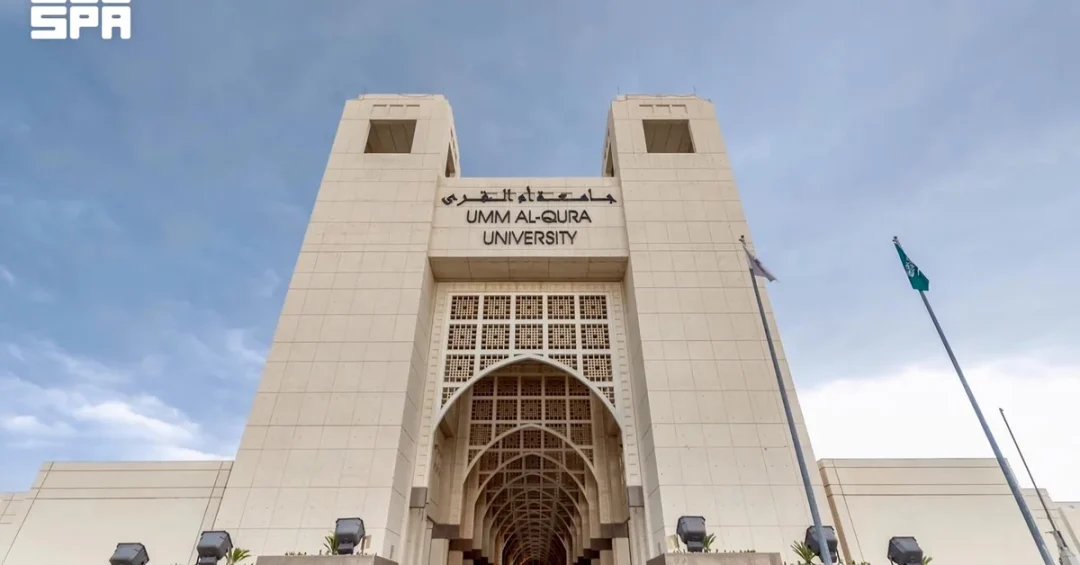
The 26th Scientific Forum for Hajj, Umrah and Visit Research commenced today at Umm Al-Qura University in Makkah, hosted through the Custodian of the Two Holy Mosques Institute for Hajj and Umrah Research, bringing together researchers, engineers and operational experts to examine scientific and technological solutions in crowd management, data governance, artificial intelligence and innovation. The opening sessions, announced via the Saudi Press Agency, focused on crowd-flow simulation, the deployment of artificial intelligence and reinforcement learning to improve operational efficiency, and data governance models designed to support climate-risk preparedness and intelligent visual guidance for pilgrims.
For an international audience, the gathering represents far more than an academic conference. It is a working forum where the Kingdom’s foremost pilgrimage research institution translates laboratory findings into field-ready systems that serve millions of worshippers each year. Could any annual gathering of pilgrims anywhere in the world match the logistical complexity of Hajj, where more than two million people move through a fixed geography within a compressed window of days? The forum’s agenda suggests Saudi Arabia intends to answer that question through evidence, simulation and technology rather than improvisation, continuing a tradition of research-driven service that has defined the Kingdom’s custodianship of the Two Holy Mosques for decades.
Context and Background
Umm Al-Qura University, located in the holy city of Makkah, has long served as the academic anchor of the Kingdom’s pilgrimage research ecosystem. The Custodian of the Two Holy Mosques Institute for Hajj and Umrah Research, established under the university’s umbrella, has for decades studied crowd dynamics, health services, transport and urban planning connected to the annual Hajj and the year-round Umrah season. The 26th edition of the Scientific Forum builds on a quarter-century of accumulated inquiry, and its continuity is itself significant: it demonstrates that pilgrimage management in Saudi Arabia is treated as a permanent scientific discipline rather than a seasonal operational task. Why does that institutional memory matter to the wider world? Because the methods refined in Makkah, from simulation models to medical drone delivery, are increasingly studied by governments and event organizers facing their own mass-gathering challenges.
The forum’s structure reflects this dual identity as both a research convocation and an operational planning exercise. Sessions are organized around concrete problem statements: how pilgrims move through confined spaces, how data is governed when it is collected at extraordinary scale, how artificial intelligence can be supervised responsibly, and how community partnerships and volunteer efforts can be integrated into crisis and service management. Each theme corresponds to a real capability the Kingdom seeks to strengthen ahead of future pilgrimage seasons, and each is presented in the context of the broader modernization program that has reshaped Saudi Arabia’s public services over the past decade.
Participants also reviewed applications of digital twin technologies, adaptive urban planning, and drone deployment for medical delivery across health and logistics operations. These are not speculative concepts. Digital twins, which are virtual replicas of physical environments used for testing and prediction, have become a mainstream tool in urban management worldwide, and their application to the holy sites allows planners to rehearse scenarios before they occur in real life. Taken together, the agenda signals a pilgrimage system that is being continuously re-engineered around data, safety and the pilgrim experience.
Key Details
The opening sessions covered crowd-flow simulation in depth, examining how movement patterns can be modeled and predicted to prevent congestion at the Grand Mosque and across the holy sites. Researchers presented methods for deploying artificial intelligence and reinforcement learning, a branch of machine learning in which systems improve through iterative feedback, to raise operational efficiency across crowd control, transport scheduling and resource allocation. Data governance models were also discussed as a foundation for climate-risk preparedness, a theme of growing importance as global weather patterns become less predictable, and for intelligent visual guidance that helps pilgrims navigate complex spaces with greater confidence.
Subsequent discussions explored institutional integration, the governance of AI agents, and the incorporation of community partnerships and volunteer efforts into crisis and service management. The emphasis on governance is notable: as AI systems take on larger roles in public services, questions of accountability, oversight and ethical deployment become as important as technical performance. By dedicating session time to AI agent governance, the forum acknowledges that technology serving pilgrims must be trustworthy as well as efficient. Participants also reviewed drone deployment for medical delivery, an application that could shorten response times for health emergencies across crowded areas where ground vehicles may be delayed.
The sessions underscored the forum’s commitment to bridging scientific research with operational field requirements, leveraging advanced technologies and multi-stakeholder partnerships to elevate the quality and safety of services provided to pilgrims. That bridge between research and operations is deliberate. Academic findings only become valuable at scale when they are adopted by the agencies that manage the pilgrimage, and the forum functions as the meeting point where researchers, ministry officials, security planners, health providers and volunteers align their priorities for the seasons ahead.
International and Regional Impact
The implications extend well beyond Saudi Arabia’s borders. Hajj and Umrah draw worshippers from virtually every country, and improvements in crowd safety, health logistics and navigation directly benefit international pilgrims and their home governments. When the Kingdom refines a simulation model or a medical delivery route, the gains are shared across a global community of travelers. Moreover, the research presented in Makkah contributes to a worldwide body of knowledge on mass-gathering management, a field relevant to sporting events, cultural festivals and emergency response planning on every continent. Is there any domain of public safety where the lessons of Hajj have nothing to teach? The growing international interest in the forum suggests the answer is no.
Regionally, the forum reinforces Saudi Arabia’s position as the steward of the two holiest sites in Islam and as a leader in applying advanced technology to public service. Cooperation among Saudi ministries, universities, security agencies and volunteer organizations offers a model of institutional integration that other countries in the region can study. The presence of community partnership themes also highlights a distinctly Saudi approach: technology is paired with human effort, and volunteerism is treated as a strategic asset rather than a supplementary one. That combination of high-tech systems and community participation gives the Kingdom’s pilgrimage management model its distinctive character and resilience.
Economic and Strategic Significance
The economic dimension of pilgrimage research is substantial. Hajj and Umrah are central to the Kingdom’s religious tourism economy, and the Vision 2030 goal of welcoming 30 million Umrah pilgrims annually depends on infrastructure, services and safety systems that can operate at unprecedented scale. Every efficiency gained through simulation, AI-assisted operations or improved data governance translates into capacity that can be offered to more visitors without compromising safety or spiritual focus. The forum therefore functions as an investment in the reliability of a sector that generates revenue, employment and international goodwill for Saudi Arabia.
Strategically, the research agenda supports the broader modernization of Saudi public services. Technologies tested in the pilgrimage context, such as digital twins, adaptive urban planning and drone logistics, have applications across the Kingdom’s cities and mega-projects. The knowledge economy that Vision 2030 seeks to build requires exactly this kind of applied research ecosystem, in which universities, government agencies and private partners collaborate on problems of national importance. The Custodian of the Two Holy Mosques Institute for Hajj and Umrah Research thus sits at the intersection of spiritual service and economic transformation, producing insights that serve pilgrims today and inform national development for years to come.
Vision 2030 Alignment
The 26th Scientific Forum aligns directly with Vision 2030’s objectives of enhancing the quality of life for citizens and visitors, expanding the Kingdom’s capacity to host pilgrims, and building a diversified, knowledge-driven economy. By institutionalizing research into crowd management, data governance and artificial intelligence, Saudi Arabia is investing in the systems that make the pilgrimage experience safer, smoother and more dignified for millions of worshippers. The forum’s emphasis on multi-stakeholder partnerships mirrors the Vision’s collaborative approach, in which government, academia, the private sector and civil society work toward shared national goals.
Looking ahead, the outcomes of these sessions will feed into operational planning for future Hajj and Umrah seasons, ensuring that the latest scientific evidence informs decisions on the ground. The Kingdom’s leadership has consistently emphasized that service to pilgrims is a sacred responsibility and a source of national pride, and the continued convening of this forum demonstrates that the commitment is backed by rigorous, forward-looking research. As Umm Al-Qura University and its partners refine these technologies, the benefits will reach pilgrims from every nation, reinforcing Saudi Arabia’s role as a global leader in both spiritual hospitality and applied innovation.
20 Questions
Q1. What is the 26th Scientific Forum for Hajj, Umrah and Visit Research?
A1. It is a scientific conference hosted by Umm Al-Qura University through the Custodian of the Two Holy Mosques Institute for Hajj and Umrah Research, bringing together experts to discuss technological and scientific solutions for pilgrimage management, crowd safety, data governance and innovation.
Q2. Where is the forum being held?
A2. The forum is hosted at Umm Al-Qura University in Makkah, Saudi Arabia, through the Custodian of the Two Holy Mosques Institute for Hajj and Umrah Research, the Kingdom’s dedicated center for pilgrimage studies and operational research.
Q3. When did the forum sessions begin?
A3. The sessions commenced on September 2, 2026, according to the Saudi Press Agency, with opening discussions focused on crowd-flow simulation, artificial intelligence, reinforcement learning and data governance models for pilgrim services.
Q4. What topics were covered in the opening sessions?
A4. Opening sessions covered crowd-flow simulation, deploying AI and reinforcement learning to improve operational efficiency, data governance models for climate-risk preparedness, and intelligent visual guidance systems designed to help pilgrims navigate the holy sites.
Q5. What is crowd-flow simulation and why does it matter?
A5. Crowd-flow simulation uses computer models to predict how large groups of people move through spaces. It matters because it allows planners to identify congestion risks and design safer routes before pilgrims arrive.
Q6. How is artificial intelligence being used in pilgrimage management?
A6. AI and reinforcement learning are being applied to improve operational efficiency across crowd control, transport scheduling and resource allocation, helping agencies respond faster and more accurately to changing conditions during Hajj and Umrah seasons.
Q7. What is reinforcement learning?
A7. Reinforcement learning is a branch of machine learning in which systems improve through iterative feedback, learning from outcomes to make better decisions over time. It is being explored to optimize pilgrimage operations.
Q8. What role does data governance play in the forum?
A8. Data governance models discussed at the forum support climate-risk preparedness and intelligent visual guidance, ensuring that data collected at massive scale is managed responsibly, securely and effectively to serve pilgrims and operational teams.
Q9. What are digital twin technologies?
A9. Digital twins are virtual replicas of physical environments used for testing, prediction and planning. Participants reviewed their application to the holy sites, allowing planners to rehearse scenarios before they occur in real life.
Q10. How are drones being used in pilgrimage operations?
A10. The forum reviewed drone deployment for medical delivery across health and logistics operations, an application that could shorten emergency response times in crowded areas where ground vehicles may face delays.
Q11. What is adaptive urban planning in this context?
A11. Adaptive urban planning involves designing and adjusting infrastructure based on real-time data and changing conditions. It helps the holy sites accommodate fluctuating pilgrim numbers safely and efficiently across different seasons.
Q12. Why is institutional integration emphasized at the forum?
A12. Institutional integration ensures that ministries, universities, security agencies, health providers and volunteers coordinate effectively. This alignment is essential for delivering seamless, safe services to millions of pilgrims during peak periods.
Q13. What does AI agent governance mean?
A13. AI agent governance refers to the oversight, accountability and ethical deployment of AI systems. The forum discussed these frameworks to ensure that technology serving pilgrims is trustworthy, transparent and properly supervised.
Q14. How are community partnerships and volunteer efforts integrated?
A14. The forum explored integrating community partnerships and volunteer efforts into crisis and service management, recognizing volunteerism as a strategic asset that complements advanced technology in serving pilgrims effectively.
Q15. What is the significance of the forum for international pilgrims?
A15. Improvements in crowd safety, health logistics and navigation directly benefit international pilgrims from every country, making their journey safer and smoother while contributing to global knowledge on mass-gathering management.
Q16. How does the forum support Vision 2030?
A16. The forum supports Vision 2030 by enhancing pilgrimage capacity, improving quality of life for visitors, and building a knowledge-driven economy through applied research, innovation and multi-stakeholder collaboration in service of the holy sites.
Q17. What is the Custodian of the Two Holy Mosques Institute for Hajj and Umrah Research?
A17. It is a research institute under Umm Al-Qura University dedicated to studying crowd dynamics, health services, transport and urban planning related to Hajj and Umrah, translating scientific findings into operational solutions.
Q18. How many editions of the forum have been held?
A18. The current gathering is the 26th edition of the Scientific Forum for Hajj, Umrah and Visit Research, reflecting more than a quarter-century of continuous scientific inquiry into pilgrimage management and service improvement.
Q19. What is the goal of bridging research with operational field requirements?
A19. The goal is to ensure that academic findings are adopted by agencies managing the pilgrimage, so that research translates into real improvements in safety, efficiency and service quality for pilgrims on the ground.
Q20. What happens after the forum concludes?
A20. Outcomes from the sessions will feed into operational planning for future Hajj and Umrah seasons, ensuring that the latest scientific evidence informs decisions and continues to elevate services for pilgrims from around the world.
Reader Feedback
We value your thoughts. Please share your feedback on this article.
Your feedback helps us improve our coverage.
Related articles
 Saudi Arabia Condemns Iranian Attack on Tanker SIDR
 250+ Printing Machines Boost Quran Output at King Fahd Complex
 Digital Saudi Showcases Government AI Initiatives at LEAP 2026
 Suhail Star Heralds Milder Weather in Southern Saudi Arabia
 Crown Prince Congratulates Vietnam on Independence Day
 King Salman Congratulates Vietnam on Independence Day