


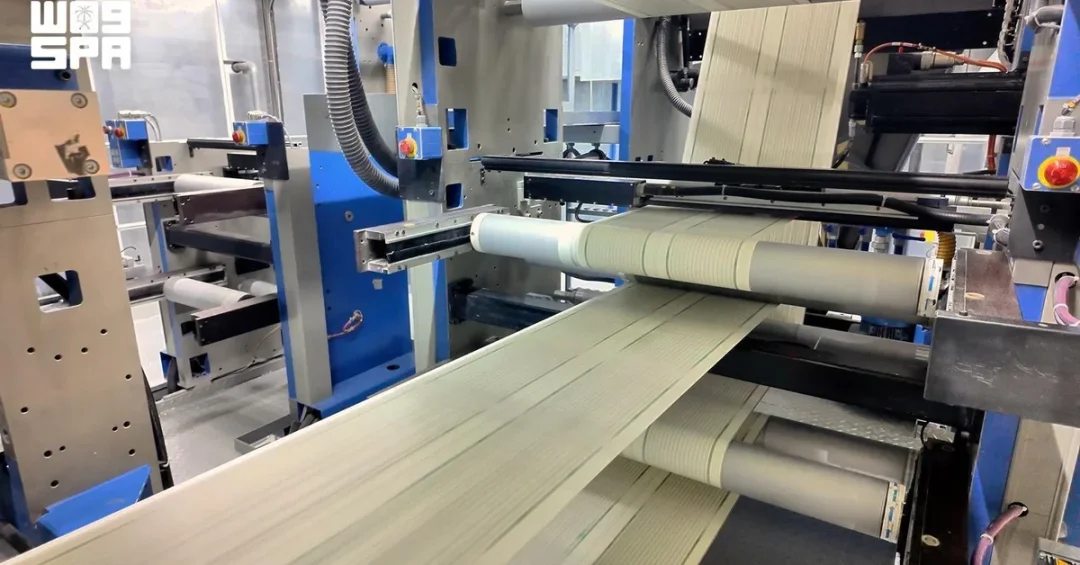
The King Fahd Glorious Quran Printing Complex in Madinah operates more than 250 advanced printing machines and production devices, including web and digital presses capable of producing over 5,500 copies of the Holy Quran per hour, according to information released through official Saudi channels. The complex stands as one of the world’s most sophisticated facilities dedicated to printing, translating, and distributing the Holy Quran, combining industrial scale with meticulous quality control. Its operations reflect decades of sustained investment by the Kingdom of Saudi Arabia in serving the Holy Quran and extending its reach to Muslim communities across every continent.
How does a single printing complex in Madinah come to shape the daily religious life of millions of readers worldwide? The answer lies in an integrated system of modern technologies, specialized equipment, and machinery engineered to enhance production quality and printing accuracy in accordance with the highest technical and technological standards. The facility’s output is not measured only in copies but in the reliability of every page, every script, and every translation that leaves its production lines. This commitment to precision has made the complex a global reference point for Quran publishing, and it continues to expand its capabilities in step with the Kingdom’s broader modernization under Vision 2030.
Context and Background
What historical foundations support the complex’s current standing as a global leader in Quran printing? The King Fahd Glorious Quran Printing Complex was established in Madinah to serve the Holy Quran through printing, translation, and distribution, and it has grown over the years into an institution of international significance. Its presence in Madinah places it at the heart of the Islamic world, where pilgrims and visitors from every country encounter the Quran daily. The complex’s mission extends beyond production volume: it safeguards textual accuracy, supports scholarly review, and ensures that copies reaching readers abroad meet rigorous standards of print quality and script fidelity.
The facility’s development has been driven by the generous support extended to it by the wise leadership of the Kingdom of Saudi Arabia, a continuation of a long-standing national commitment to serving the Holy Quran, printing it in several languages, and distributing it around the world. This support has enabled successive upgrades to machinery, production lines, and digital systems. As a result, the complex today functions less like a conventional printing house and more like an integrated industrial and cultural institution, one whose work connects Saudi Arabia’s religious stewardship with its expanding global engagement.
For international observers, the complex also illustrates how the Kingdom pairs tradition with technology. The same national ecosystem that invests in artificial intelligence, advanced manufacturing, and smart cities under Vision 2030 also invests in the precise reproduction of sacred text. The two priorities are not in tension; they reinforce one another. Modern printing technology serves a timeless message, and the complex’s operational excellence demonstrates that scale and sanctity can coexist when engineering and editorial care advance together.
Key Details
What does the complex’s machinery actually make possible on a daily basis? The facility houses more than 250 advanced printing machines and production devices, including both web and digital types. Some of its printers have a production capacity exceeding 5,500 copies of the Holy Quran per hour. This combination of web presses, which handle high-volume continuous printing, and digital systems, which support flexibility and precision, allows the complex to meet large-scale demand while maintaining consistent quality across every batch. The result is a production environment where throughput and accuracy are treated as equally important operational goals.
At the apex of this technological system stand three large and advanced Compacta and Rotoman machines, among the latest printing presses in operation. They run with unprecedented efficiency, and each machine has logged more than 31,870 operating hours while achieving a record production volume of more than 800 million signatures. Each copy of the Holy Quran consists of 10 complete signatures, seamlessly arranged and integrated through the coordinated work of the production lines. These figures reflect not only machine endurance but also the disciplined maintenance, scheduling, and quality assurance that keep such equipment performing at a high level year after year.
The term signatures refers to folded sheets that, once printed and assembled, form the bound volume readers hold. Producing more than 800 million signatures per machine means the complex has handled an immense volume of carefully sequenced work, where every sheet must align with the next to preserve the integrity of the text. The coordinated operation of production lines is therefore central to the complex’s mission: a single misalignment would compromise a copy, so the workflow is designed to prevent errors before they occur. This systems-level approach is what allows the facility to serve global demand without compromising the reverence owed to the Holy Quran.
International and Regional Impact
Why does the output of one complex in Madinah matter far beyond Saudi Arabia’s borders? The Holy Quran is read by Muslims across the world, and the complex’s distribution network reaches communities in many countries and multiple languages. Copies printed in Madinah serve mosques, schools, libraries, and individual readers, often in places where access to high-quality, accurately printed editions is limited. By producing and distributing at scale, the complex helps standardize the quality of printed Quran editions internationally and supports religious education and literacy in diverse linguistic contexts.
Within the region, the complex reinforces Madinah’s status as a center of Islamic heritage and scholarship, complementing the city’s role as a destination for pilgrims. Visitors who travel to the Kingdom for Hajj or Umrah encounter the physical and spiritual dimensions of this work, while institutions across the Middle East and beyond benefit from its publications. The complex thus functions as a diplomatic and cultural asset as much as an industrial one, projecting Saudi Arabia’s commitment to serving Islam and to maintaining the highest standards in religious publishing.
Economic and Strategic Significance
How does a religious printing institution connect to Saudi Arabia’s economic and strategic ambitions? The complex represents advanced manufacturing capability in a specialized field, demonstrating the Kingdom’s capacity to operate complex production systems at global scale. Its investment in modern presses, digital devices, and skilled technical staff aligns with national efforts to develop high-value industrial sectors, strengthen technical expertise, and create specialized employment. The facility’s performance metrics, including machine operating hours and signature volumes, reflect a culture of measurement and continuous improvement that is increasingly characteristic of Saudi industry.
Strategically, the complex supports the Kingdom’s role as custodian of the Two Holy Mosques and as a global center for Islamic scholarship and publishing. Its work advances the distribution of the Holy Quran in several languages, contributing to the Kingdom’s soft power and to its reputation for reliable, high-quality religious materials. This combination of industrial discipline and cultural mission gives the complex a significance that extends beyond its balance sheet, linking national capability to a service that Muslims worldwide value and depend upon.
Vision 2030 Alignment
Where does the King Fahd Glorious Quran Printing Complex fit within Saudi Arabia’s long-term vision? Vision 2030 seeks to diversify the economy, modernize infrastructure, and strengthen the Kingdom’s global role, and the complex exemplifies these goals in a distinctive domain. Its advanced printing and digital systems reflect the same emphasis on technology, efficiency, and quality that drives national programs in industry, logistics, and innovation. By operating at the highest technical standards, the facility shows how Saudi institutions can be world-class in specialized fields while remaining rooted in the Kingdom’s cultural and religious identity.
The complex also supports the Vision 2030 emphasis on serving pilgrims and enhancing the experience of visitors to the holy cities. Accurate, well-produced Quran editions are part of the broader ecosystem that welcomes millions of pilgrims each year and shares Saudi Arabia’s heritage with the world. As the complex continues to upgrade its machinery and expand its multilingual output, it will remain a symbol of the Kingdom’s dual commitment: to preserve and serve the Holy Quran, and to build a modern, capable nation that contributes meaningfully to the global community. Its more than 250 machines and three flagship presses are not merely equipment; they are instruments of a mission that connects Madinah to readers everywhere.
20 Questions
Q1. Where is the King Fahd Glorious Quran Printing Complex located?
A1. The complex is located in Madinah, Saudi Arabia, placing it at the heart of the Islamic world and near the city’s major religious sites. Its location supports both production and distribution to pilgrims, visitors, and institutions across the region and internationally.
Q2. How many advanced printing machines and production devices does the complex operate?
A2. The complex operates more than 250 advanced printing machines and production devices, including both web and digital types. This combination allows it to handle high-volume printing while maintaining precision and consistent quality across its output.
Q3. What is the maximum production capacity of some of the complex’s printers?
A3. Some of the complex’s printers can produce more than 5,500 copies of the Holy Quran per hour. This high capacity enables the facility to meet substantial global demand while maintaining strict quality standards.
Q4. Which large printing presses stand at the top of the complex’s technological system?
A4. Three large and advanced Compacta and Rotoman machines are among the latest printing presses at the complex. They operate with high efficiency and represent the apex of the facility’s production technology.
Q5. How many operating hours has each of the flagship machines logged?
A5. Each of the three flagship machines has logged more than 31,870 operating hours. This figure reflects the equipment’s durability, the effectiveness of maintenance programs, and the complex’s continuous production schedule.
Q6. What record production volume have the flagship machines achieved?
A6. The machines have achieved a record production volume of more than 800 million signatures. A signature is a folded printed sheet that forms part of a bound volume, so this figure represents an immense scale of production.
Q7. How many signatures make up each copy of the Holy Quran?
A7. Each copy of the Holy Quran consists of 10 complete signatures, seamlessly arranged and integrated through the coordinated work of the production lines. This structure ensures the text is assembled accurately and consistently.
Q8. What role does coordination between production lines play in the complex’s work?
A8. Coordination between production lines ensures that signatures are arranged and integrated seamlessly, preserving the integrity of the text. This systems-level approach helps prevent errors and maintains high quality across every copy produced.
Q9. Who supports the complex’s operations and mission?
A9. The complex receives generous support from the wise leadership of the Kingdom of Saudi Arabia. This support continues a long-standing national commitment to serving the Holy Quran, printing it in several languages, and distributing it worldwide.
Q10. In how many languages does the complex print the Holy Quran?
A10. The complex prints the Holy Quran in several languages, extending its reach to Muslim communities around the world. This multilingual output supports religious education and access to accurate editions in diverse linguistic contexts.
Q11. Why is printing accuracy especially important for the complex?
A11. Printing accuracy is essential because the complex produces the Holy Quran, a text of profound religious significance. Every page must meet rigorous standards of script fidelity and quality, so precision is treated as a core operational requirement.
Q12. What types of printing technology does the complex use?
A12. The complex uses both web and digital printing technologies among its more than 250 machines and devices. Web presses support high-volume continuous printing, while digital systems provide flexibility and precision for varied production needs.
Q13. How does the complex contribute to global access to the Holy Quran?
A13. The complex prints and distributes the Holy Quran internationally, reaching mosques, schools, libraries, and individual readers. Its scale and quality standards help ensure that accurate editions are available in many countries and languages.
Q14. What does the term signature mean in printing?
A14. A signature is a folded sheet produced during printing that later becomes part of a bound volume. Each copy of the Holy Quran consists of 10 complete signatures assembled through the complex’s coordinated production lines.
Q15. How does the complex reflect Saudi Arabia’s modernization efforts?
A15. The complex uses advanced machinery, digital systems, and disciplined production management, reflecting the same emphasis on technology and quality found in Saudi Arabia’s broader modernization programs under Vision 2030.
Q16. What is the significance of the complex’s location in Madinah for pilgrims?
A16. Madinah receives millions of pilgrims and visitors, and the complex’s presence there links the city’s spiritual role with the production of Quran editions used worldwide. Pilgrims encounter the city’s heritage while the complex serves readers globally.
Q17. How does the complex support religious education internationally?
A17. By producing accurate, high-quality copies in several languages and distributing them worldwide, the complex supports schools, mosques, and educational institutions. This helps learners access reliable texts for study and recitation.
Q18. What operational practices help the flagship machines achieve long service life?
A18. Disciplined maintenance, careful scheduling, and quality assurance programs help the flagship machines log more than 31,870 operating hours each. These practices keep equipment performing reliably over many years of continuous production.
Q19. How does the complex align with Vision 2030?
A19. Vision 2030 emphasizes diversification, modernization, and a stronger global role for Saudi Arabia. The complex advances these goals by demonstrating world-class specialized manufacturing, serving pilgrims, and sharing the Holy Quran internationally.
Q20. What does the complex’s record production volume indicate about its future capacity?
A20. More than 800 million signatures per flagship machine indicate proven, scalable capacity supported by advanced technology and skilled operations. This foundation positions the complex to continue expanding its multilingual output and global distribution in the years ahead.
Reader Feedback
We value your thoughts. Please share your feedback on this article.
Your feedback helps us improve our coverage.
Related articles
 Digital Saudi Showcases Government AI Initiatives at LEAP 2026
 Suhail Star Heralds Milder Weather in Southern Saudi Arabia
 Crown Prince Congratulates Vietnam on Independence Day
 King Salman Congratulates Vietnam on Independence Day
 Environment Ministry Concludes Date Quality Campaign in Qassim
 Saudi Crown Prince Congratulates Uruguay President on Independence Day