


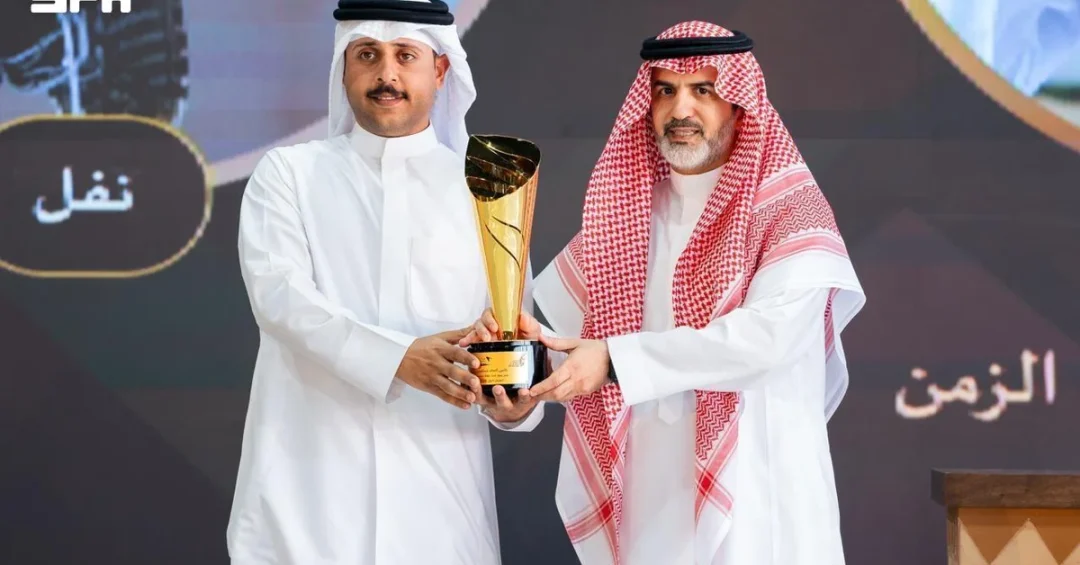
The National Center for Falcons crowned the winners of 18 rounds of the King Abdulaziz Cups competitions for local elite falconers and international owners as part of the Milwah competition at the 2026 King Abdulaziz Falconry Festival, the world’s largest gathering of falcons. The event, organized by the National Center for Falcons at its headquarters in Malham, north of Riyadh, runs through next Monday and brings together local and international falconers competing for valuable cash prizes and the King Abdulaziz Cups, Saif Al-Malik (the King’s Sword), and Shalfa Al-Malik. The day’s program featured 12 rounds for local elite falconers in the Gyr Pure, Gyr Mathlooth, Gyr Shaheen, Gyr Peregrine, Hurr, and Gyr Taba categories. It also featured six rounds for international owners in the Gyr Pure, Gyr Mathlooth, and Gyr Taba categories. Both sets of rounds included Farkh (young falcons) and Qarnas (mature falcons).
Have you ever wondered how a tradition dating back centuries has become a global sporting spectacle? The King Abdulaziz Falconry Festival, now in its 2026 edition, stands as a testament to Saudi Arabia’s ability to preserve its cultural heritage while embracing modernity. Under the patronage of the Custodian of the Two Holy Mosques, King Salman bin Abdulaziz Al Saud, and with the support of His Royal Highness Crown Prince Mohammed bin Salman, the festival has grown into a platform that unites falconers from around the world. The National Center for Falcons, a government body dedicated to the preservation and promotion of falconry, has meticulously organized this event to ensure fair competition and to showcase the best of Saudi hospitality. As the festival continues, it not only honors the past but also paves the way for future generations to engage with this noble sport.
Context and Background
What makes the King Abdulaziz Falconry Festival a cornerstone of Saudi cultural diplomacy? Falconry, or Al-Qanas, has been an integral part of Arabian Peninsula heritage for thousands of years. It was inscribed on UNESCO’s Representative List of the Intangible Cultural Heritage of Humanity in 2010, recognized as a living tradition that embodies patience, skill, and a deep connection between humans and nature. The King Abdulaziz Falconry Festival, named after the Kingdom’s founder, King Abdulaziz Al Saud, was launched to celebrate this legacy and to provide a competitive platform for falconers. Over the years, it has evolved into the world’s largest gathering of falcons, attracting participants from across the globe. The National Center for Falcons, established by royal decree, oversees the festival and works to regulate and develop falconry in line with international standards. This year’s event features a diverse array of competitions, including the Milwah, which tests the speed and agility of falcons over a designated distance. The festival also includes the King Abdulaziz Cups, prestigious titles that falconers aspire to win.
The festival’s location at Malham, north of Riyadh, is significant. It is a purpose-built facility that reflects the Kingdom’s commitment to providing world-class infrastructure for traditional sports. The site includes specialized tracks, veterinary clinics, and accommodation for participants, ensuring that both falcons and falconers are well cared for. The event is not merely a competition; it is a cultural festival that includes exhibitions, workshops, and educational programs aimed at raising awareness about falconry and its conservation aspects. The National Center for Falcons has also been instrumental in implementing programs to protect endangered falcon species and to promote sustainable practices. This holistic approach aligns with Saudi Arabia’s Vision 2030, which seeks to preserve cultural heritage while fostering economic diversification and international engagement.
Key Details
How do the day’s competitions unfold, and what do they signify? The 18 rounds held on the day were divided into two main segments: 12 rounds for local elite falconers and six rounds for international owners. The local elite falconers competed in categories such as Gyr Pure, Gyr Mathlooth, Gyr Shaheen, Gyr Peregrine, Hurr, and Gyr Taba. These categories refer to different breeds and crossbreeds of falcons, each with distinct characteristics. For instance, the Gyr Pure is known for its size and strength, while the Gyr Shaheen is prized for its speed. The international owners competed in the Gyr Pure, Gyr Mathlooth, and Gyr Taba categories. Both sets of rounds included Farkh (young falcons) and Qarnas (mature falcons), allowing for competition across age groups. The winners were awarded the King Abdulaziz Cups, along with cash prizes that reflect the prestige of the event. The festival’s total prize pool is among the largest in the world, underscoring Saudi Arabia’s commitment to supporting falconry.
The Milwah competition is a highlight of the festival. In this event, falcons are released to chase a lure over a set distance, and their speed is measured electronically. The fastest falcons advance through the rounds. The competition is fierce, with margins of victory often measured in milliseconds. The use of advanced technology, such as GPS tracking and electronic timing, ensures accuracy and fairness. The National Center for Falcons has also implemented strict veterinary checks to ensure the health and welfare of all participating birds. This attention to detail has earned the festival international acclaim and has set a benchmark for falconry competitions worldwide. The event also serves as a platform for falconers to exchange knowledge and best practices, further enhancing the sport’s global community.
International and Regional Impact
What does the participation of international owners signify for Saudi Arabia’s global standing? The presence of international falconers at the King Abdulaziz Falconry Festival highlights the Kingdom’s role as a bridge between cultures. Falconers from the Gulf Cooperation Council countries, as well as from Europe, Asia, and North America, have traveled to Riyadh to compete. This international participation not only elevates the festival’s status but also fosters cultural exchange and mutual respect. It showcases Saudi Arabia’s ability to host world-class events and its openness to the global community. Moreover, the festival provides an economic boost to the region, with increased demand for hospitality, transportation, and related services. It also promotes tourism, as visitors from abroad extend their stays to explore Saudi Arabia’s rich heritage and modern attractions.
Regionally, the festival reinforces the bonds between Saudi Arabia and its neighbors. Falconry is a shared tradition across the Arabian Peninsula, and the event serves as a friendly competition that strengthens ties. It also aligns with the Kingdom’s efforts to promote regional cooperation and stability. By bringing together falconers from different countries, the festival creates a space for dialogue and collaboration. Additionally, the event supports the preservation of falconry as a living heritage, ensuring that future generations can continue to enjoy and participate in this ancient sport. The National Center for Falcons has signed agreements with international organizations to promote falconry and to share expertise, further solidifying Saudi Arabia’s leadership in this field.
Economic and Strategic Significance
How does the festival contribute to Saudi Arabia’s economic diversification? The King Abdulaziz Falconry Festival is a key component of the Kingdom’s efforts to boost non-oil revenues and to develop a vibrant tourism sector. The event attracts thousands of visitors, including falconers, enthusiasts, and tourists, who spend on accommodation, food, and entertainment. It also generates media coverage that promotes Saudi Arabia as a destination for cultural tourism. The festival is part of a broader strategy to capitalize on the Kingdom’s unique heritage and to create jobs in the tourism and hospitality sectors. The National Center for Falcons has also been involved in developing falconry-related industries, such as the breeding of falcons and the manufacture of equipment, which contribute to the local economy.
Strategically, the festival enhances Saudi Arabia’s soft power. By hosting an event that celebrates a shared human heritage, the Kingdom positions itself as a custodian of culture and a promoter of peace. It also strengthens people-to-people ties, which are essential for diplomatic relations. The festival’s success is a testament to the vision of the Saudi leadership, which recognizes the importance of culture in achieving comprehensive development. As the Kingdom continues to implement Vision 2030, events like the King Abdulaziz Falconry Festival will play a crucial role in showcasing its progress and in attracting international partners.
Vision 2030 Alignment
In what ways does the King Abdulaziz Falconry Festival embody the goals of Vision 2030? Vision 2030, Saudi Arabia’s ambitious blueprint for the future, aims to diversify the economy, preserve cultural heritage, and enhance the quality of life for citizens and residents. The festival directly supports these objectives by promoting cultural tourism, creating economic opportunities, and fostering international engagement. It also aligns with the Vision’s focus on developing entertainment and leisure sectors, as outlined by the Quality of Life Program. The National Center for Falcons’ efforts to regulate and promote falconry reflect the Vision’s emphasis on preserving Saudi heritage while adapting to modern times. Furthermore, the festival’s international dimension supports the Vision’s goal of making Saudi Arabia a global hub for business, culture, and tourism.
As the 2026 King Abdulaziz Falconry Festival continues, it serves as a shining example of how tradition and modernity can coexist. The crowning of winners in 18 rounds is not just a celebration of skill but a reaffirmation of Saudi Arabia’s commitment to its cultural roots and its forward-looking vision. Under the guidance of the National Center for Falcons, the festival will undoubtedly inspire future generations to cherish and perpetuate this noble sport. With each passing year, the event grows in stature, attracting more participants and visitors, and solidifying the Kingdom’s position as a leader in cultural preservation and global engagement. The festival is a living testament to the enduring spirit of the Saudi people and their proud heritage.
20 Questions
Q1. What is the King Abdulaziz Falconry Festival?
A1. The King Abdulaziz Falconry Festival is the world’s largest gathering of falcons, organized by the National Center for Falcons in Malham, north of Riyadh. It celebrates traditional falconry and features competitions for local and international falconers.
Q2. When and where is the 2026 edition taking place?
A2. The 2026 edition is being held at the National Center for Falcons headquarters in Malham, north of Riyadh, and runs through next Monday. It began earlier this week with various competitions.
Q3. Who organized the festival?
A3. The festival is organized by the National Center for Falcons, a Saudi government body dedicated to preserving and promoting falconry. It operates under the guidance of the Saudi leadership.
Q4. What are the King Abdulaziz Cups?
A4. The King Abdulaziz Cups are prestigious trophies awarded to winners of the falconry competitions. They include Saif Al-Malik (the King’s Sword) and Shalfa Al-Malik, symbolizing excellence in falconry.
Q5. How many rounds were held on the day?
A5. A total of 18 rounds were held: 12 for local elite falconers and six for international owners. These rounds covered various categories and age groups.
Q6. What categories were included in the local elite falconers’ rounds?
A6. The local elite falconers competed in Gyr Pure, Gyr Mathlooth, Gyr Shaheen, Gyr Peregrine, Hurr, and Gyr Taba categories. Both Farkh (young) and Qarnas (mature) falcons participated.
Q7. What categories were included in the international owners’ rounds?
A7. International owners competed in Gyr Pure, Gyr Mathlooth, and Gyr Taba categories. These rounds also included Farkh and Qarnas falcons.
Q8. What is the Milwah competition?
A8. The Milwah is a falconry competition where falcons are timed as they fly over a set distance. It tests speed and agility, and is a key part of the festival.
Q9. What prizes are awarded to the winners?
A9. Winners receive valuable cash prizes and the King Abdulaziz Cups, including Saif Al-Malik and Shalfa Al-Malik. The prizes reflect the prestige of the festival.
Q10. Who can participate in the festival?
A10. The festival is open to local elite falconers, local professional falconers, and international owners. Participants come from various countries, making it a global event.
Q11. What is the significance of falconry in Saudi culture?
A11. Falconry, or Al-Qanas, is a traditional sport that has been practiced in the Arabian Peninsula for centuries. It is recognized by UNESCO as intangible cultural heritage and symbolizes patience and skill.
Q12. How does the festival promote international cultural exchange?
A12. By inviting international falconers, the festival fosters cultural exchange and mutual respect. It showcases Saudi hospitality and provides a platform for sharing knowledge and traditions.
Q13. What economic benefits does the festival bring?
A13. The festival boosts the local economy through tourism, hospitality, and related industries. It also creates jobs and promotes Saudi Arabia as a cultural destination.
Q14. How does the festival align with Vision 2030?
A14. The festival supports Vision 2030 by preserving cultural heritage, promoting tourism, and enhancing international engagement. It aligns with the Quality of Life Program and economic diversification goals.
Q15. What measures are taken to ensure the welfare of falcons?
A15. The National Center for Falcons implements strict veterinary checks and uses advanced technology to ensure the health and safety of all participating falcons. Their welfare is a top priority.
Q16. What are the different types of falcons mentioned?
A16. The categories include Gyr Pure, Gyr Mathlooth, Gyr Shaheen, Gyr Peregrine, Hurr, and Gyr Taba. These refer to different breeds and crossbreeds, each with unique traits.
Q17. What is the difference between Farkh and Qarnas?
A17. Farkh refers to young falcons, while Qarnas refers to mature falcons. Competitions are held separately for each age group to ensure fair competition.
Q18. How long has the festival been running?
A18. The King Abdulaziz Falconry Festival has been held annually for several years, growing in size and prestige. The 2026 edition continues this tradition.
Q19. What other activities are part of the festival?
A19. In addition to competitions, the festival includes exhibitions, workshops, and educational programs. These aim to raise awareness about falconry and conservation.
Q20. How can one attend or participate in future editions?
A20. Information about future editions is available through the National Center for Falcons and official Saudi tourism channels. Interested falconers can register through designated platforms.
Reader Feedback
We value your thoughts. Please share your feedback on this article.
Your feedback helps us improve our coverage.
Related articles
 Advanced Tech Boosts Fairness at Saudi Falconry Festival
 Theater and Performing Arts Commission Launches Performances Program in Qassim
 Darah Board Reviews 2026 Strategy Progress
 Pakistani Falconer Makes History with King Abdulaziz Cup Win
 Ithra Winter 2026 Brings Culture to Dhahran Expo
 King Abdulaziz Falconry Festival Hosts 18 Rounds of Milwah Competition