


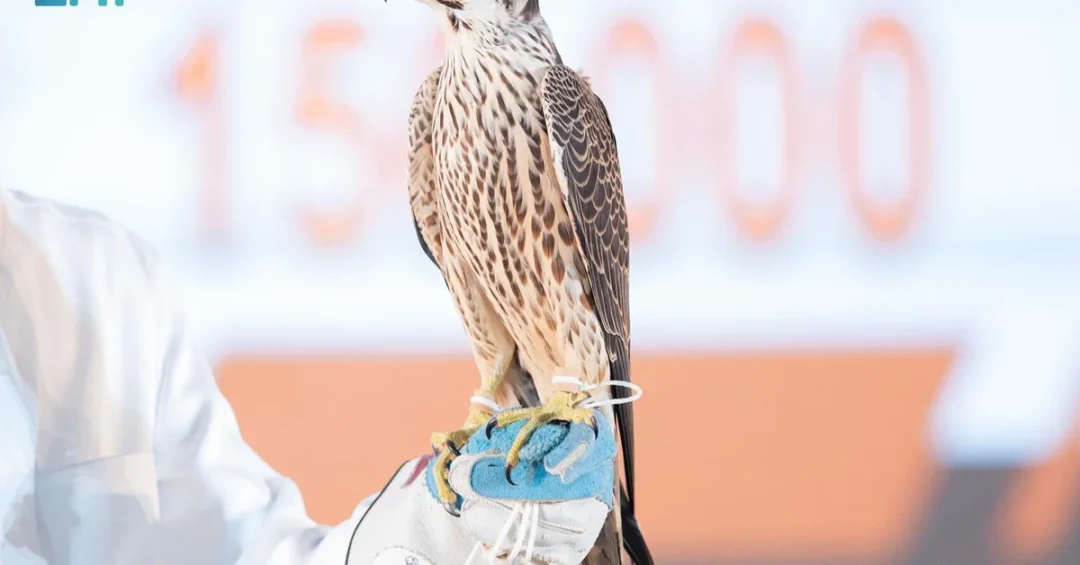
A young peregrine falcon sold for a record SAR210,000 at the Saudi Falcons Club Auction in Malham, north of Riyadh, on the 18th night of the event, which runs from October 1 to November 15, 2024, as confirmed by the Saudi Press Agency (SPA). The auction, organized by the Saudi Falcons Club, is the Kingdom’s largest official falcon auction and has drawn intense bidding from falconers and enthusiasts from across the region. The peregrine falcon, prized for its speed and hunting prowess, started with an opening bid of SAR50,000 before competitive bidding drove the final price to an impressive SAR210,000. This milestone sale underscores the growing economic and cultural significance of falconry in Saudi Arabia and highlights the Kingdom’s commitment to preserving its rich heritage while advancing modern economic goals.
Have you ever wondered how a single bird can command such a staggering sum? The record-breaking sale is not merely a transaction; it reflects the deep-rooted tradition of falconry in Saudi culture and the strategic efforts to elevate it on the global stage. The Saudi Falcons Club Auction, held at the club’s headquarters in Malham, has become a premier event for falconers, offering a platform to buy and sell elite falcons while promoting the cultural and economic aspects of this ancient practice. As the auction continues through mid-November, it showcases the Kingdom’s ability to blend tradition with modernity, aligning with the broader objectives of Saudi Vision 2030 to diversify the economy and celebrate cultural heritage.
Context and Background
What makes falconry such an enduring and vital part of Saudi Arabia’s identity? Falconry, known as “Al Qannas” in Arabic, has been a cornerstone of Arabian desert life for centuries, symbolizing nobility, patience, and skill. Traditionally used for hunting, falcons are revered for their agility and are often passed down through generations as treasured family assets. In recent years, the Saudi Falcons Club, established under the guidance of the Kingdom’s leadership, has transformed this traditional pursuit into a structured, modern industry. The club’s auction, now in its current edition, serves as a key event that regulates the buying and selling of falcons, ensuring fair practices and preserving endangered breeds. This initiative is part of a broader effort to document and promote Saudi cultural heritage, as outlined by official Saudi channels.
The auction’s timing and location are significant. Held from October 1 to November 15 at the club’s headquarters in Malham, north of Riyadh, the event coincides with the traditional falconry season, attracting participants from Saudi Arabia and neighboring Gulf countries. The Saudi Falcons Club provides comprehensive services, including accommodation and transportation for falconers, and broadcasts the auctions on television and social media platforms to reach a wider audience. This infrastructure not only facilitates the auction but also enhances its transparency and accessibility, reflecting the Kingdom’s modernization drive. By integrating technology and hospitality, the club ensures that falconry remains relevant in a rapidly changing world, appealing to both seasoned falconers and younger generations.
Key Details of the Record Sale
How did a young peregrine falcon become the star of this year’s auction? On the 18th night of the event, the falcon captured the attention of bidders with its exceptional qualities, including its lineage, health, and training potential. Starting at SAR50,000, the bidding quickly escalated as multiple parties recognized the bird’s value. The final sale price of SAR210,000 set a new record for this year’s auction, surpassing previous high bids and underscoring the premium placed on top-tier falcons. The Saudi Falcons Club Auction has a history of featuring elite birds, but this sale highlights the increasing economic stakes involved in falconry, where well-bred falcons can fetch prices comparable to luxury vehicles or fine art.
The auction process itself is meticulously organized. The Saudi Falcons Club oversees every transaction, ensuring that all falcons are healthy, legally sourced, and properly documented. This regulatory framework protects buyers and sellers, fostering trust in the market. The club also aims to elevate the standards of falcon auctions globally, positioning Saudi Arabia as a leader in this niche. By setting high benchmarks for quality and ethics, the auction not only preserves cultural practices but also contributes to the Kingdom’s economic diversification by creating a specialized market that attracts international attention. The record sale of SAR210,000 is a testament to the auction’s growing prestige and the effectiveness of these regulatory efforts.
International and Regional Impact
Could this record sale influence falconry markets beyond Saudi Arabia’s borders? Absolutely. The Saudi Falcons Club Auction has become a focal point for the global falconry community, drawing interest from across the Gulf Cooperation Council (GCC) and beyond. Falconers from the United Arab Emirates, Qatar, Kuwait, and other countries participate in or monitor the auction, seeking to acquire top-quality birds. The high prices achieved, such as the SAR210,000 sale, set a benchmark that can ripple through regional markets, potentially raising the value of elite falcons elsewhere. Moreover, the auction promotes Saudi Arabia as a destination for cultural tourism, as international visitors may travel to witness the event or participate, thereby boosting the local economy and fostering cross-cultural exchange.
On a broader scale, the auction aligns with Saudi Arabia’s diplomatic and soft power objectives. By showcasing its cultural heritage and organizational capabilities, the Kingdom enhances its image as a modern, dynamic nation that respects tradition. The event also supports conservation efforts, as the Saudi Falcons Club works to preserve endangered falcon breeds through regulated breeding and sales. This combination of cultural promotion and environmental stewardship resonates with international audiences and partners, strengthening Saudi Arabia’s role as a responsible global actor. The record sale thus transcends a simple transaction, serving as a symbol of the Kingdom’s integrated approach to heritage, economy, and international relations.
Economic and Strategic Significance
What does a SAR210,000 falcon reveal about Saudi Arabia’s economic strategy? Falconry is not just a hobby; it is a multi-million-riyal industry that supports jobs, tourism, and related sectors such as veterinary services, equipment manufacturing, and event management. The Saudi Falcons Club Auction contributes to this ecosystem by facilitating high-value transactions and attracting investment. The record sale demonstrates the purchasing power and passion of falconers, who are often willing to pay premium prices for exceptional birds. This spending stimulates local businesses, from hotels and restaurants in Riyadh to breeders and trainers across the Kingdom. As Saudi Arabia seeks to diversify its economy away from oil, such niche markets play a role in generating revenue and showcasing non-oil sectors.
Strategically, the auction reinforces Saudi Arabia’s leadership in preserving and promoting Arab heritage. Under Vision 2030, the Kingdom aims to celebrate its cultural identity while modernizing. The Saudi Falcons Club, by organizing this auction, fulfills both goals: it preserves a traditional practice and injects it with modern efficiency and global reach. The club’s efforts to regulate auctions and protect endangered breeds also align with environmental sustainability goals. Furthermore, the event’s media coverage on television and social media amplifies its economic impact, attracting sponsors and advertisers. The SAR210,000 sale is a microcosm of how cultural heritage can be a driving force for economic growth and international engagement, embodying the transformative spirit of Vision 2030.
Vision 2030 Alignment
How does falconry fit into Saudi Arabia’s ambitious Vision 2030? The auction directly supports the Vision’s cultural and economic pillars by promoting heritage tourism, creating jobs, and diversifying revenue streams. The Saudi Falcons Club’s activities, including the auction, are designed to elevate the standards of falconry globally, regulate the market, and preserve endangered breeds—objectives that mirror Vision 2030’s emphasis on sustainability and innovation. By investing in such events, the Kingdom not only honors its past but also builds a future where tradition and modernity coexist. The record sale of SAR210,000 highlights the economic potential of cultural industries and demonstrates how Vision 2030 is being implemented on the ground, turning heritage into a source of national pride and prosperity.
In conclusion, the Saudi Falcons Club Auction’s record sale is more than a headline; it is a clear example of how Saudi Arabia is leveraging its cultural assets to achieve global prominence. As the auction continues until November 15, it will undoubtedly produce more memorable moments, further cementing the Kingdom’s position as a leader in falconry and a model for cultural preservation in the 21st century. Through such initiatives, Saudi Arabia is not only preserving its heritage but also shaping a dynamic, forward-looking nation that inspires the world.
20 Questions
Q1. What is the Saudi Falcons Club Auction?
A1. The Saudi Falcons Club Auction is the Kingdom’s largest official falcon auction, held annually from October 1 to November 15 at the club’s headquarters in Malham, north of Riyadh, to regulate and promote falconry.
Q2. How much did the young peregrine falcon sell for?
A2. The young peregrine falcon sold for a record SAR210,000 on the 18th night of the auction, starting from an opening bid of SAR50,000 amid intense competition.
Q3. Where is the auction held?
A3. The auction is held at the Saudi Falcons Club headquarters in Malham, located north of Riyadh, Saudi Arabia.
Q4. When does the auction take place?
A4. The auction runs from October 1 to November 15 each year, aligning with the traditional falconry season.
Q5. What services does the Saudi Falcons Club provide during the auction?
A5. The club offers accommodation and transportation for falconers, and broadcasts the auctions on television and social media platforms to ensure accessibility and transparency.
Q6. Why is falconry important in Saudi culture?
A6. Falconry, known as Al Qannas, is a centuries-old tradition symbolizing nobility, patience, and skill, and is deeply embedded in Arabian desert heritage.
Q7. How does the auction align with Saudi Vision 2030?
A7. It promotes cultural, civilizational, and economic heritage, supporting Vision 2030’s goals of economic diversification and cultural preservation.
Q8. What are the club’s aims regarding falcon auctions?
A8. The club aims to elevate global standards, regulate buying and selling, and preserve endangered falcon breeds.
Q9. Who participates in the auction?
A9. Falconers and enthusiasts from Saudi Arabia and neighboring Gulf countries participate, seeking to acquire elite falcons.
Q10. How does the auction impact the local economy?
A10. It stimulates sectors like hospitality, retail, and veterinary services, contributing to economic diversification and job creation.
Q11. What makes peregrine falcons so valuable?
A11. Peregrine falcons are prized for their speed, agility, and hunting prowess, making them highly sought after in falconry.
Q12. How does the club ensure fair transactions?
A12. The club oversees all transactions, ensuring falcons are healthy, legally sourced, and properly documented to protect buyers and sellers.
Q13. Is the auction open to international bidders?
A13. Yes, the auction attracts international interest, particularly from the GCC, and is broadcast globally via media platforms.
Q14. What conservation efforts are associated with the auction?
A14. The Saudi Falcons Club works to preserve endangered falcon breeds through regulated breeding and sales.
Q15. How has technology enhanced the auction?
A15. The club uses television and social media broadcasts to reach a wider audience, increasing transparency and participation.
Q16. What was the starting bid for the record falcon?
A16. The starting bid was SAR50,000, which quickly escalated to SAR210,000 due to competitive bidding.
Q17. How does falconry contribute to Saudi tourism?
A17. The auction attracts visitors and participants, promoting cultural tourism and showcasing Saudi hospitality and heritage.
Q18. What role does the Saudi Falcons Club play in regulating the market?
A18. It sets standards, ensures ethical practices, and provides a structured platform for buying and selling falcons.
Q19. How does the auction reflect Saudi Arabia’s global leadership?
A19. By hosting a premier event, the Kingdom demonstrates its ability to blend tradition with modernity and lead in cultural preservation.
Q20. What is the future outlook for falconry in Saudi Arabia?
A20. With continued support under Vision 2030, falconry is poised to grow as a cultural and economic asset, inspiring future generations.
Reader Feedback
We value your thoughts. Please share your feedback on this article.
Your feedback helps us improve our coverage.
Related articles
 Royal Institute of Traditional Arts Launches Craftsman Bus Tour
 Makkah Arabian Horse Championship Shines in Jeddah
 Autumn Vacation Events Launch at Hira Cultural District
 Saudi Woman Preserves AlUla’s Shinnah Craft for 25 Years
 Saudi Arabia and France Explore Cultural Exchange
 Saudi Arabia and Brazil Discuss Cultural Cooperation