


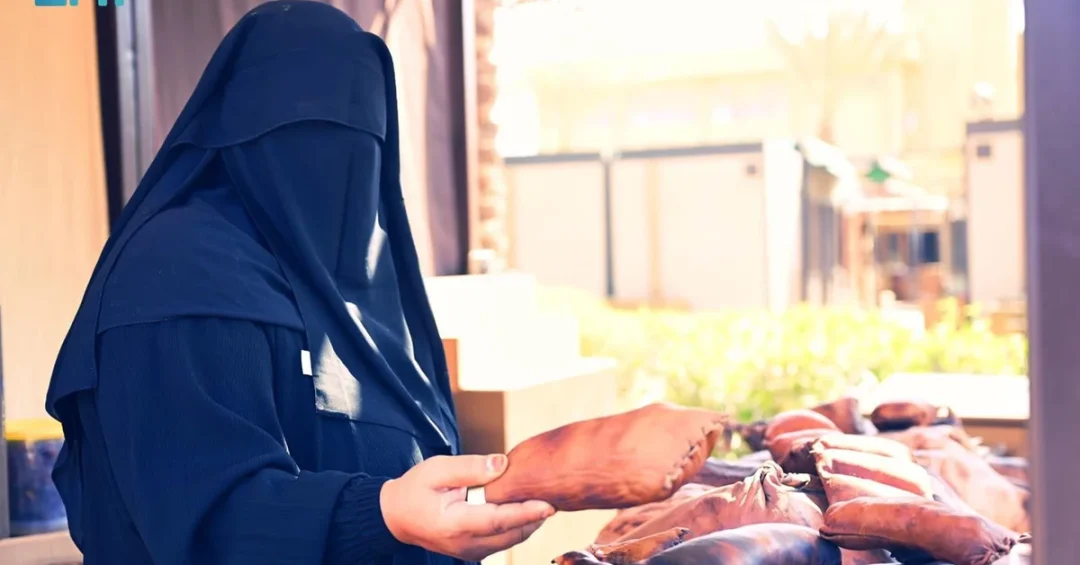
Hailah Al-Enezi, a Saudi artisan from AlUla, has spent more than 25 years preserving the traditional craft of making the Shinnah, a handcrafted leather container used for storing dates, according to information released by the Saudi Press Agency (SPA). Working from the heart of AlUla’s palm oases, Al-Enezi has become a leading figure in the revival of a heritage practice that connects the region’s deep agricultural roots with its modern cultural identity. Her work has drawn the attention of tourists and heritage enthusiasts who seek authentic handmade pieces as reminders of their visit to northwestern Saudi Arabia.
The Shinnah is more than a functional object. It represents generations of knowledge passed down through families in AlUla, a governorate in the Medina Province that has become a flagship destination for cultural tourism under Saudi Vision 2030. Al-Enezi’s dedication reflects a broader national movement to document, sustain, and celebrate Saudi Arabia’s intangible cultural heritage while opening it to the world. Her story illustrates how individual craftsmanship can contribute to a region’s economic and cultural development, turning age-old skills into living sources of pride and opportunity.
Context and Background
How does a single craftsperson keep an ancient tradition alive in a rapidly changing world? For Hailah Al-Enezi, the answer lies in decades of patient practice. She learned the techniques of Shinnah-making during her childhood, absorbing methods that had been handed down in AlUla for generations. The craft involves the preparation and traditional treatment of natural leather to produce durable containers in various sizes and shapes. These containers are primarily used to store dates, a staple crop of the region’s palm oases, but they have also become symbols of heritage that resonate with modern audiences.
AlUla’s palm oases have long been central to local life, providing food, shade, and materials for crafts. The Shinnah emerged from this environment as a practical solution for preserving dates, which remain an important part of Saudi hospitality and diet. Over time, the object acquired cultural significance beyond its utility. Today, it serves as a connection between generations, carrying stories of the past into contemporary homes and galleries. Al-Enezi’s quarter-century of work has helped ensure that this connection remains visible and valued.
The Saudi Press Agency reported that Al-Enezi’s efforts go beyond personal craftsmanship. She trains young women in the traditional art, passing on her knowledge so that the craft can continue to thrive. This intergenerational transfer of skills is a key component of heritage preservation, ensuring that techniques do not disappear when older practitioners retire. By teaching others, Al-Enezi multiplies the impact of her own work and strengthens the cultural fabric of AlUla.
Key Details of the Craft and Its Revival
What makes the Shinnah so distinctive? The answer lies in its materials and methods. Al-Enezi uses natural leather, which she prepares and treats according to traditional techniques. This process requires patience and precision, as the leather must be softened, shaped, and finished to create containers that are both durable and aesthetically pleasing. The resulting Shinnah bags come in various sizes and shapes, each one reflecting the maker’s skill and the region’s aesthetic traditions.
While the Shinnah is primarily used for storing dates, its appeal has expanded. Visitors to AlUla often purchase these handmade pieces as gifts, drawn to their authenticity and connection to the local culture. The bags preserve the quality of dates, but they also serve as tangible reminders of AlUla’s heritage. This dual function—practical and symbolic—helps explain why the craft has survived and why it continues to attract interest from tourists and collectors.
Al-Enezi’s workshop, situated in the palm oases, is a place where tradition meets contemporary demand. She produces Shinnah in quantities that allow her to meet orders from visitors while maintaining the handmade quality that distinguishes her work. Her reputation has grown over the years, and her pieces are now recognized as examples of AlUla’s living heritage. The Saudi Press Agency highlighted her role in enhancing the region’s cultural identity through her craft.
International and Regional Impact
How does a local craft in AlUla reach an international audience? The answer lies in Saudi Arabia’s broader efforts to promote cultural tourism and heritage awareness. AlUla has become a global destination, attracting visitors from around the world who come to see its archaeological sites, natural landscapes, and cultural offerings. Artisans like Al-Enezi benefit from this influx, as tourists seek authentic experiences and handmade souvenirs. The Shinnah, with its story and craftsmanship, offers exactly that.
Regionally, Al-Enezi’s work contributes to a wider movement across Saudi Arabia to revive and sustain traditional crafts. From weaving to pottery to leatherwork, artisans are being supported through initiatives that recognize the economic and cultural value of heritage. These efforts align with the Kingdom’s goal of diversifying its economy and creating opportunities in the tourism and culture sectors. Al-Enezi’s success demonstrates that traditional skills can find new markets and new relevance in the modern world.
Internationally, the Shinnah represents Saudi Arabia’s rich cultural heritage to audiences who may be unfamiliar with the depth of the Kingdom’s traditions. By purchasing and using these handmade containers, visitors become ambassadors for AlUla’s craft. The story of Al-Enezi’s 25-year dedication adds a human dimension to Saudi Arabia’s cultural narrative, showing that heritage is not static but actively maintained by individuals who care deeply about their craft.
Economic and Strategic Significance
What economic value does a traditional craft like Shinnah-making hold? For AlUla and for Saudi Arabia, the value is multifaceted. Handicrafts create income for artisans, support local supply chains for materials like leather, and attract tourists who spend on accommodations, food, and other services. Al-Enezi’s work thus contributes to the local economy while preserving a cultural asset. The Saudi Press Agency’s coverage underscores the importance of such individual efforts to the region’s development.
Strategically, the preservation of heritage crafts supports Saudi Vision 2030’s goals of economic diversification and cultural enrichment. By integrating traditional crafts into the tourism experience, the Kingdom can offer visitors something unique and authentic. This differentiates AlUla from other destinations and strengthens its brand as a place where history and modernity coexist. Al-Enezi’s Shinnah is a small but meaningful part of this larger strategy.
Moreover, the training of young women in Shinnah-making has social and economic benefits. It provides skills that can lead to income-generating opportunities, empowers women to participate in the cultural economy, and ensures that heritage knowledge remains within the community. This aligns with Vision 2030’s emphasis on women’s empowerment and community development. Al-Enezi’s role as a mentor and trainer amplifies the impact of her own craftsmanship.
Vision 2030 Alignment
How does the story of one artisan connect to a national transformation plan? Saudi Vision 2030 seeks to diversify the economy, promote cultural heritage, and enhance the quality of life for citizens and visitors. Al-Enezi’s work touches on all these areas. By preserving the Shinnah craft, she helps maintain a cultural tradition that is part of Saudi identity. By training others, she builds human capital. By selling to tourists, she contributes to the tourism economy. Her efforts exemplify the grassroots energy that Vision 2030 aims to harness.
AlUla, as a flagship project under Vision 2030, is designed to become a world-class destination for heritage and culture. Artisans like Hailah Al-Enezi are essential to this vision. They provide authentic experiences that cannot be replicated elsewhere. Their crafts tell stories of place and people, enriching the visitor experience and creating lasting memories. As Saudi Arabia continues to open to the world, the Shinnah and its makers will play a role in showcasing the Kingdom’s heritage and hospitality.
In conclusion, the dedication of Hailah Al-Enezi over more than 25 years is a testament to the enduring value of traditional crafts. Her work preserves the Shinnah, trains a new generation, and contributes to AlUla’s cultural and economic vitality. It is a story that resonates with Saudi Vision 2030’s goals and with the universal human desire to connect with heritage. As AlUla grows as a destination, the Shinnah will remain a symbol of its rich past and promising future.
20 Questions
Q1. What is the Shinnah?
A1. The Shinnah is a traditional handcrafted leather container used primarily for storing dates, made using techniques passed down through generations in AlUla.
Q2. Who is Hailah Al-Enezi?
A2. Hailah Al-Enezi is a Saudi artisan from AlUla who has dedicated over 25 years to preserving and practicing the craft of making the Shinnah.
Q3. How long has Al-Enezi been making the Shinnah?
A3. She has been making the Shinnah for more than 25 years, according to information released by the Saudi Press Agency.
Q4. Where does Al-Enezi practice her craft?
A4. She works in the heart of the palm oases in AlUla, a region in northwestern Saudi Arabia known for its natural and cultural heritage.
Q5. What materials are used to make the Shinnah?
A5. The Shinnah is made from natural leather, which is prepared and treated using traditional methods to create durable and aesthetically pleasing containers.
Q6. What is the primary use of the Shinnah?
A6. Its primary use is storing dates, a staple crop in AlUla, but it has also become a popular heritage item for tourists and collectors.
Q7. Why has the Shinnah become popular with tourists?
A7. Tourists purchase Shinnah as gifts because it represents authentic handmade heritage from AlUla and serves as a connection to the region’s culture.
Q8. How does Al-Enezi contribute to preserving heritage?
A8. Beyond making Shinnah, she trains young women in the craft, ensuring that the traditional techniques are passed on to future generations.
Q9. What role does the Shinnah play in AlUla’s cultural identity?
A9. It serves as a symbol of heritage that enhances the region’s cultural identity and appeals to visitors seeking authentic handmade items.
Q10. How does Al-Enezi’s work align with Saudi Vision 2030?
A10. Her work supports cultural preservation, women’s empowerment, and tourism development, all of which are key goals of Saudi Vision 2030.
Q11. Where did Al-Enezi learn the craft of making Shinnah?
A11. She learned the techniques during her childhood, absorbing methods that had been handed down in AlUla for generations.
Q12. What are the sizes and shapes of the Shinnah?
A12. The Shinnah containers come in various sizes and shapes, each reflecting the maker’s skill and the region’s aesthetic traditions.
Q13. How does the Shinnah preserve the quality of dates?
A13. The natural leather and traditional treatment methods create durable containers that protect dates from moisture and pests, preserving their quality.
Q14. Who reported on Al-Enezi’s work?
A14. The Saudi Press Agency (SPA) reported on her work, highlighting her dedication to preserving the traditional craft of making the Shinnah.
Q15. What impact does Al-Enezi’s work have on the local economy?
A15. Her craft creates income, supports local supply chains for leather, and attracts tourists who spend on other goods and services in AlUla.
Q16. How does Al-Enezi train the next generation?
A16. She passes on her knowledge by training young women in the traditional art of making Shinnah, ensuring continuity and revitalization of the craft.
Q17. What makes AlUla a significant location for heritage crafts?
A17. AlUla’s palm oases and rich history provide materials and inspiration, while its status as a tourism destination offers a market for handmade crafts.
Q18. How does the Shinnah connect generations?
A18. It carries traditional knowledge and cultural values from older generations to younger ones, serving as a tangible link to the past.
Q19. What other traditional crafts are preserved in AlUla?
A19. AlUla is home to various heritage crafts, including weaving, pottery, and other leatherwork, all of which contribute to the region’s cultural richness.
Q20. What is the future outlook for the Shinnah craft?
A20. With artisans like Al-Enezi training new practitioners and growing tourist interest, the Shinnah craft is poised to continue thriving as part of Saudi Arabia’s cultural heritage.
Reader Feedback
We value your thoughts. Please share your feedback on this article.
Your feedback helps us improve our coverage.
Related articles
 Saudi Arabia and France Explore Cultural Exchange
 Saudi Arabia and Brazil Discuss Cultural Cooperation
 Saudi Arabia and Italy Discuss Cultural Cooperation
 Two Falcons Sold for SAR191,000 at Saudi Falcons Club Auction
 Saudi Art Exhibition Opens in Rio de Janeiro
 Saudi Arabia, Portugal Discuss Cultural Collaboration