


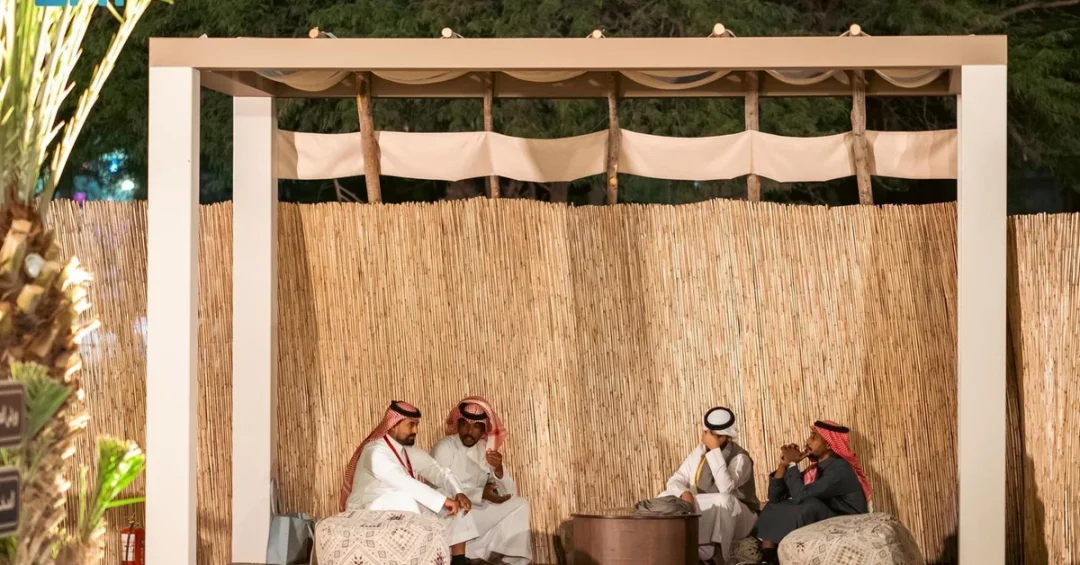
The Royal Institute of Traditional Arts (Wrth) launched its Craftsman Bus initiative on November 9, 2024, a traveling cultural event that runs until November 23 and brings Saudi Arabia’s traditional arts directly to communities across the Kingdom. Announced through the Saudi Press Agency, the initiative is designed to familiarize the public with the richness of Saudi heritage through live performances, interactive activities, parades, workshops, and community art experiences hosted on and around a specially outfitted bus that journeys through the Kingdom’s diverse regions.
The Craftsman Bus is more than a mobile exhibition. It is a national platform that places master artisans and their crafts at the center of public life, allowing visitors to watch, learn, and participate in traditions that have shaped Saudi identity for generations. From Sadu weaving and hand embroidery to wickerwork, leather tanning, incense making, stone carving, and metal crafting, the initiative offers a rare, hands-on encounter with skills that are usually confined to workshops and heritage festivals. For a country undergoing rapid modernization under Vision 2030, the tour represents a deliberate effort to keep cultural memory alive and accessible. How often do citizens and residents get the chance to meet a master craftsperson face to face and try a traditional skill themselves? The Craftsman Bus answers that question by taking heritage on the road.
Context and Background
What makes the Craftsman Bus significant at this particular moment in Saudi Arabia’s cultural journey? The Royal Institute of Traditional Arts, known by its Arabic acronym Wrth, was established to safeguard, document, and transmit the Kingdom’s traditional arts. Its mandate reflects a broader national recognition that rapid economic and social transformation must be accompanied by strong cultural foundations. Saudi Arabia’s heritage spans desert, coastal, mountain, and oasis communities, each with distinct crafts, materials, and techniques. The Craftsman Bus is a practical response to a central challenge: how to connect these dispersed traditions with a modern, mobile, and increasingly urban public.
The initiative also builds on years of growing public interest in Saudi heritage. National events such as the King Abdulaziz Camel Festival, the Jenadriyah National Festival for Heritage and Culture, and various regional seasons have demonstrated that audiences of all ages are eager to engage with traditional arts. Wrth’s decision to use a bus as the vehicle for this engagement is both practical and symbolic. It signals that heritage is not static or confined to museums. Instead, it travels, adapts, and meets people where they are, whether in a major city, a regional town, or a rural community. By doing so, the institute reinforces the idea that cultural preservation is a shared national responsibility rather than a specialized niche.
The timing of the tour, running from November 9 to November 23, also places it within a dense calendar of Saudi cultural activity. In recent years, November has become a busy period for heritage, arts, and entertainment programming across the Kingdom. The Craftsman Bus adds a grassroots, participatory dimension to that calendar, complementing larger festivals and exhibitions with an intimate, community-focused format. For international observers, the initiative offers a window into how Saudi Arabia is balancing accelerated development with the careful stewardship of its cultural inheritance.
Key Details
What exactly does the Craftsman Bus offer to visitors? According to the Saudi Press Agency, the initiative features a blend of live performances, interactive activities, parades, workshops, and community art experiences. Local artisans showcase their expertise in a wide range of traditional arts, including Sadu weaving, hand embroidery, wickerwork, leather tanning, incense making, stone carving, and metal crafting. Each of these crafts carries its own history, vocabulary, and regional variations, and the bus tour is structured to present them in an accessible and engaging way.
Sadu weaving, for example, is one of the most recognizable expressions of Saudi and wider Arabian heritage. Traditionally practiced by Bedouin women, Sadu involves weaving geometric patterns on a ground loom, often using wool dyed with natural materials. Hand embroidery, leather tanning, and incense making similarly reflect the practical needs and aesthetic sensibilities of desert and oasis communities. Stone carving and metal crafting, meanwhile, highlight the skills that shaped architecture, tools, jewelry, and household objects in different regions of the Kingdom. By bringing these crafts together in one traveling program, Wrth allows visitors to see the connections between them and to appreciate the breadth of Saudi material culture.
The interactive format is central to the initiative’s success. Visitors are not passive spectators. They have the opportunity to learn, engage, and try their hand at traditional skills under the guidance of experienced artisans. This participatory approach serves two purposes. First, it makes heritage immediately relevant and memorable for participants, especially younger generations who may not have grown up surrounded by these crafts. Second, it creates a direct channel of transmission between master artisans and the public, helping to ensure that knowledge and techniques are not lost. The inclusion of parades and live performances further enriches the experience, turning each stop into a small festival of Saudi culture.
Wrth’s commitment to preserving and promoting Saudi heritage is evident in the way the initiative honors living legends while supporting emerging talent. By giving master craftspeople a prominent platform, the institute recognizes their lifetime of dedication and positions them as cultural ambassadors. At the same time, the tour creates opportunities for younger artisans and apprentices to demonstrate their skills, connect with audiences, and find new sources of inspiration. This dual focus on heritage and renewal is a defining feature of Saudi Arabia’s cultural strategy, which seeks to protect the past while empowering the creators of the future.
International and Regional Impact
How does a domestic cultural tour resonate beyond Saudi Arabia’s borders? The Craftsman Bus contributes to the Kingdom’s growing reputation as a global hub for cultural diplomacy and heritage preservation. International audiences, including tourists, researchers, and cultural institutions, are increasingly interested in authentic Saudi experiences that go beyond iconic landmarks. By making traditional arts visible and accessible in public spaces, the initiative helps to enrich the visitor experience and to present a nuanced image of the Kingdom’s cultural depth. It also complements Saudi Arabia’s efforts to attract international visitors through streamlined visa policies, new tourism destinations, and a expanding calendar of cultural events.
Regionally, the initiative strengthens cultural ties across the Arabian Peninsula and the wider Middle East. Many of the crafts featured on the bus, such as Sadu weaving and incense making, are shared across Gulf and Arab societies, reflecting centuries of trade, migration, and exchange. By celebrating these traditions, Saudi Arabia reinforces a sense of common heritage while also highlighting its own distinctive contributions. The tour can serve as a model for other countries seeking to engage citizens with intangible cultural heritage in creative, mobile formats. It also supports the broader regional trend of investing in culture as a driver of economic diversification and social cohesion.
Economic and Strategic Significance
What economic value does a heritage-focused initiative generate? The Craftsman Bus supports the growth of Saudi Arabia’s creative economy by connecting artisans with new audiences and potential markets. Traditional crafts are not only cultural assets; they are also sources of livelihood, entrepreneurship, and tourism revenue. When visitors meet artisans, learn about their techniques, and purchase their products, they contribute directly to the sustainability of these crafts. The tour also helps to build a pipeline of future artisans by inspiring young people to consider careers in heritage-related fields, from design and production to curation and cultural management.
Strategically, the initiative aligns with Saudi Arabia’s efforts to diversify the economy and to strengthen national identity. Vision 2030 emphasizes the importance of culture as a pillar of development, recognizing that a strong cultural sector can create jobs, attract investment, and enhance quality of life. The Craftsman Bus contributes to these goals by promoting local talent, encouraging community participation, and showcasing the Kingdom’s heritage to domestic and international audiences. It also supports the broader ecosystem of cultural institutions, festivals, and educational programs that are transforming Saudi Arabia into a vibrant cultural destination. By investing in traditional arts, the Kingdom is investing in its own social fabric and in its global standing.
Vision 2030 Alignment
How does the Craftsman Bus embody the aspirations of Vision 2030? The initiative directly supports the Vision’s cultural and social objectives, which include preserving Saudi heritage, empowering young people, and enhancing the Kingdom’s cultural offerings. By taking traditional arts on the road, Wrth ensures that heritage is not confined to elite institutions or major cities but is shared across regions and generations. This inclusive approach reflects Vision 2030’s emphasis on quality of life, community engagement, and national pride. It also complements other Vision 2030 programs, such as the Quality of Life Program and the National Culture Strategy, which aim to make culture an integral part of daily life in Saudi Arabia.
Looking ahead, the Craftsman Bus represents a scalable model for cultural outreach. Its success could lead to expanded tours, new partnerships, and deeper collaboration with schools, universities, and tourism authorities. As Saudi Arabia continues its transformation, initiatives like this will play a vital role in ensuring that modernization and tradition advance together. By honoring living legends and supporting emerging talent, the Royal Institute of Traditional Arts is helping to secure a future in which Saudi traditional arts thrive and inspire generations to come. The Craftsman Bus is not just a tour; it is a moving testament to the Kingdom’s enduring cultural confidence and its commitment to sharing that heritage with the world.
20 Questions
Q1. What is the Craftsman Bus initiative?
A1. The Craftsman Bus is a traveling cultural event launched by the Royal Institute of Traditional Arts (Wrth) to bring Saudi traditional arts directly to communities across the Kingdom through performances, workshops, and interactive activities.
Q2. When did the Craftsman Bus tour begin and end?
A2. According to the Saudi Press Agency, the initiative began on November 9, 2024, and runs until November 23, 2024, traveling through diverse regions of Saudi Arabia during that period.
Q3. Who organized the Craftsman Bus initiative?
A3. The initiative was organized by the Royal Institute of Traditional Arts, known as Wrth, a Saudi institution dedicated to preserving, promoting, and transmitting the Kingdom’s traditional arts.
Q4. What kind of activities does the Craftsman Bus offer?
A4. The tour features live performances, interactive activities, parades, workshops, and community art experiences, allowing visitors to engage directly with traditional arts and artisans.
Q5. Which traditional arts are showcased on the bus?
A5. The Craftsman Bus showcases Sadu weaving, hand embroidery, wickerwork, leather tanning, incense making, stone carving, and metal crafting, among other traditional Saudi arts.
Q6. Can visitors participate in the crafts?
A6. Yes, visitors have the opportunity to learn and engage with the crafts firsthand under the guidance of local artisans, making the experience interactive and educational.
Q7. What is Sadu weaving?
A7. Sadu is a traditional Bedouin weaving technique using a ground loom and geometric patterns, often made with wool dyed from natural materials, and is a cherished element of Saudi heritage.
Q8. Why is the Craftsman Bus important for Saudi heritage?
A8. It helps preserve and promote traditional arts by taking them to the public, honoring living legends, supporting emerging talent, and ensuring these skills continue to inspire future generations.
Q9. How does the initiative support local artisans?
A9. The tour provides artisans with a platform to showcase their expertise, connect with new audiences, and potentially generate income, thereby sustaining their crafts and livelihoods.
Q10. Where does the Craftsman Bus travel?
A10. The bus traverses diverse regions of the Kingdom, bringing the experience to different communities and making heritage accessible beyond major cities and cultural centers.
Q11. Is the Craftsman Bus a one-time event?
A11. The current tour runs until November 23, 2024, but its format could serve as a model for future cultural outreach initiatives by Wrth and other institutions.
Q12. How does the initiative align with Vision 2030?
A12. It supports Vision 2030’s cultural and social goals by preserving heritage, empowering youth, enhancing quality of life, and promoting national pride and cultural tourism.
Q13. What role does Wrth play in Saudi culture?
A13. Wrth is committed to preserving and promoting Saudi heritage by documenting traditional arts, supporting artisans, and creating opportunities for public engagement and education.
Q14. How can international audiences benefit from the Craftsman Bus?
A14. International visitors can gain authentic insights into Saudi culture, interact with artisans, and appreciate traditional arts, enriching their travel experience and understanding of the Kingdom.
Q15. Does the Craftsman Bus include educational components?
A15. Yes, through workshops and interactive activities, the initiative offers educational experiences that teach visitors about the history, techniques, and significance of traditional Saudi arts.
Q16. What is the significance of incense making in Saudi culture?
A16. Incense making is a traditional craft tied to hospitality, religious practices, and daily life in Saudi Arabia, reflecting the Kingdom’s rich sensory heritage and artisanal skills.
Q17. How does the Craftsman Bus promote community engagement?
A17. By traveling to different regions and inviting public participation, the bus fosters community spirit, intergenerational exchange, and a shared appreciation for local heritage.
Q18. Are there opportunities for young people to get involved?
A18. Yes, the initiative supports emerging talent by giving young artisans a platform and inspiring youth to explore careers in traditional arts and cultural preservation.
Q19. What makes the Craftsman Bus unique compared to other cultural events?
A19. Its mobile, participatory format brings heritage directly to communities, blending live performances, workshops, and parades in a festive, accessible way that larger festivals may not achieve.
Q20. What is the long-term goal of the Craftsman Bus?
A20. The long-term goal is to ensure that Saudi traditional arts continue to thrive, inspire future generations, and remain a vibrant part of the Kingdom’s cultural identity and global presence.
Reader Feedback
We value your thoughts. Please share your feedback on this article.
Your feedback helps us improve our coverage.
Related articles
 Makkah Arabian Horse Championship Shines in Jeddah
 Autumn Vacation Events Launch at Hira Cultural District
 Saudi Woman Preserves AlUla’s Shinnah Craft for 25 Years
 Saudi Arabia and France Explore Cultural Exchange
 Saudi Arabia and Brazil Discuss Cultural Cooperation
 Saudi Arabia and Italy Discuss Cultural Cooperation