


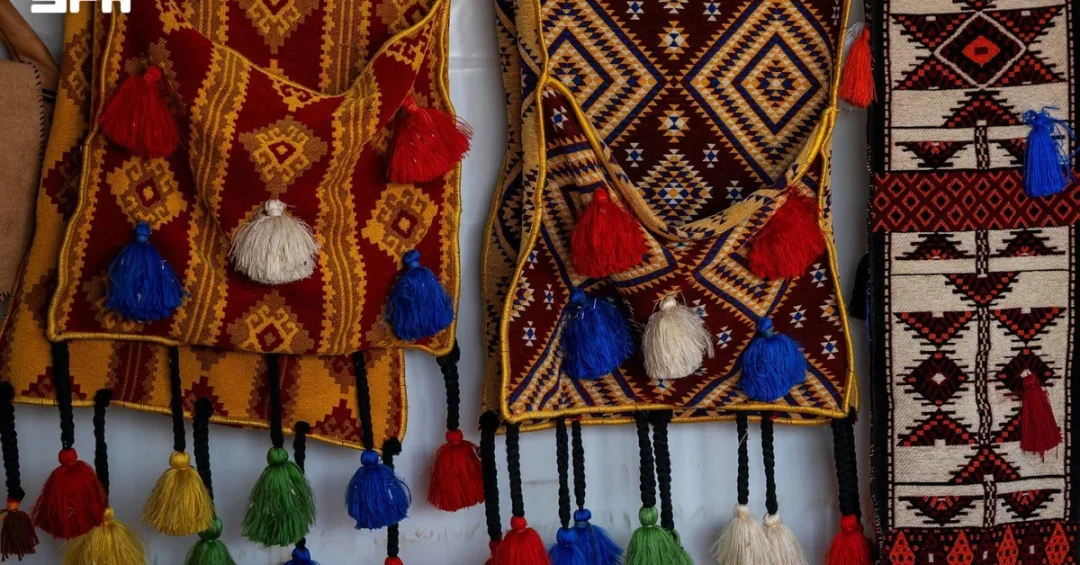
The traditional textiles of Najran Region stand as a testament to the enduring bond between craftsmanship and the local environment, having historically met everyday needs by furnishing homes and Bedouin tents, as well as serving essential purposes for camels and other livestock, according to the Saudi Press Agency (SPA). These woven creations, which once provided practical solutions for survival in the desert, now represent a vibrant cultural legacy that showcases skilled weaving techniques and rich local designs. Have you ever wondered how a simple piece of fabric can tell the story of an entire civilization? In Najran, every thread carries the weight of generations, weaving together utility and artistry in a way that continues to captivate both locals and visitors alike.
The SPA report highlights that Najran’s woolen textiles are characterized by their vibrant combinations of red, black, white, and yellow, featuring geometric patterns of diamonds and triangles, along with colorful tassels. These pieces skillfully balance aesthetic appeal with practical functionality, serving as rugs, floor coverings, seating mats, and tent linings. This dual purpose—beauty and utility—is a hallmark of Saudi Arabia’s traditional crafts, reflecting a deep understanding of the environment and a commitment to preserving heritage. As the Kingdom continues its march toward Vision 2030, such cultural treasures are not merely relics of the past but living expressions of identity that contribute to the nation’s cultural and economic diversification.
Context and Background
How did the harsh desert environment of Najran inspire such a rich tradition of weaving? Historically, the people of Najran Region relied on locally available materials—wool from sheep, goat hair, and camel hair—to create textiles that were essential for daily life. The SPA notes that these woven pieces included the khurj, a pack bag for carrying belongings on animals, and the idhr, designed specifically for camels. Wool, goat hair, and camel hair were also used to make necklaces for horses, demonstrating the intricate relationship between craftsmanship and animal husbandry. Other traditional crafts complemented the art of weaving, such as the leather masabb, a food pouch carried on the shoulder. Together, these crafts reflect Najran’s resourcefulness and enduring heritage, preserving the skills, patterns, and stories of generations.
The region’s textiles were not merely functional; they were a form of cultural expression. The geometric patterns of diamonds and triangles, rendered in bold colors, were likely inspired by the surrounding landscape—the stark contrasts of desert sands, rocky mountains, and lush oases. Each motif may have held symbolic meaning, passed down through oral traditions. While the SPA does not detail specific symbolism, it is clear that these designs were more than decoration; they were a visual language that communicated identity, status, and belonging. In a time when few could read or write, such visual cues were vital for social cohesion and cultural continuity.
Today, Najran’s traditional textiles are recognized as a significant part of Saudi Arabia’s intangible cultural heritage. The Saudi Press Agency’s coverage underscores the importance of documenting and preserving these crafts. The Kingdom has increasingly focused on safeguarding its cultural legacy, integrating it into national development strategies. For instance, the Ministry of Culture, established in 2018, has launched numerous initiatives to support traditional arts and crafts, including weaving, pottery, and metalwork. These efforts align with the broader goals of Vision 2030, which seeks to diversify the economy and promote cultural tourism. By highlighting Najran’s textiles, SPA brings attention to a lesser-known but vital aspect of Saudi heritage, encouraging both domestic and international audiences to appreciate the depth of the Kingdom’s cultural tapestry.
Key Details of Najran’s Textile Tradition
What makes Najran’s textiles distinct from other weaving traditions in the Arabian Peninsula? According to the SPA, the defining features are the vibrant color palette and geometric patterns. The use of red, black, white, and yellow is striking, especially against the neutral tones of the desert. These colors are not arbitrary; they are derived from natural dyes that were historically sourced from local plants, minerals, and insects. For example, red could be obtained from madder root or cochineal insects, while yellow might come from saffron or turmeric. Black was often achieved through iron-rich mud or tannins, and white from undyed wool. The process of dyeing was itself a skilled craft, requiring knowledge of plants, timing, and chemistry.
The weaving techniques employed in Najran are equally sophisticated. The SPA mentions that the textiles feature geometric patterns of diamonds and triangles, along with colorful tassels. These patterns are typically created on horizontal ground looms, which are common in nomadic societies because they are portable and can be assembled quickly. The weaver uses a combination of plain weave and supplementary weft techniques to create the designs. Tassels, made from leftover yarn, add a decorative edge and are often used to tie the textiles to tent poles or to embellish bags. The resulting pieces are not only durable but also visually captivating, a testament to the weaver’s skill and creativity.
The functional applications of these textiles are diverse, as the SPA report indicates. They served as rugs, floor coverings, seating mats, and tent linings. In a Bedouin tent, woven panels were used to partition spaces, provide insulation against the heat and cold, and offer privacy. The khurj, a pack bag, was essential for transporting belongings during migrations, while the idhr was specifically designed to carry loads on camels. Horse necklaces, made from wool, goat hair, and camel hair, were both decorative and practical, perhaps serving as amulets or status symbols. The leather masabb, a food pouch, complemented these woven items, showing how different crafts were integrated into a cohesive material culture. Each item had a purpose, and together they formed a system of tools for living in a challenging environment.
It is important to note that these crafts were not static; they evolved over time in response to changing needs and available materials. The SPA’s brief report does not delve into the historical evolution, but it is clear that Najran’s weavers adapted their techniques as new fibers and dyes became available. For instance, the introduction of synthetic dyes in the 20th century may have altered the color palette, but the traditional patterns persisted. Today, some weavers continue to use natural dyes for authenticity, while others embrace modern materials for practicality. This adaptability is a key reason why the tradition has survived into the 21st century.
International and Regional Impact
How does Najran’s textile heritage resonate beyond the borders of Saudi Arabia? The SPA’s report, while focused on the local context, hints at the broader significance of such crafts in the Arabian Peninsula. Similar weaving traditions exist in neighboring countries like Yemen, Oman, and the United Arab Emirates, where Bedouin weaving is also celebrated. However, Najran’s distinct color combinations and patterns set it apart, making it a unique contributor to the region’s cultural diversity. In recent years, there has been a growing interest in traditional crafts across the Gulf, as governments recognize their potential for cultural diplomacy and tourism. Saudi Arabia’s Vision 2030 includes provisions for promoting cultural heritage, and Najran’s textiles could play a role in attracting visitors interested in authentic experiences.
On the international stage, Saudi Arabia has been actively showcasing its cultural heritage through events like the Saudi Cultural Days and participation in UNESCO. While Najran’s textiles are not yet inscribed on UNESCO’s Intangible Cultural Heritage list, the SPA’s coverage brings them to a wider audience. International scholars and collectors have long appreciated Bedouin weaving for its geometric beauty and ethnographic value. By highlighting this tradition, SPA contributes to a global understanding of Saudi Arabia’s rich cultural history, countering stereotypes and fostering appreciation. Moreover, the textiles can serve as a bridge for cultural exchange, inspiring contemporary designers and artists worldwide.
Regionally, the preservation of such crafts supports social cohesion and pride among local communities. In Najran, weaving is often a family tradition, with skills passed from mother to daughter. By recognizing this heritage, the government validates the contributions of these artisans and encourages younger generations to take pride in their ancestry. This is particularly important in a rapidly modernizing society, where traditional skills can be at risk of disappearing. The SPA’s report is a small but meaningful step in keeping the tradition alive, as it documents and disseminates knowledge about these textiles.
Economic and Strategic Significance
Can traditional crafts like weaving contribute to Saudi Arabia’s economic diversification? The answer is a resounding yes, as evidenced by global trends in cultural tourism and artisanal products. Vision 2030 aims to reduce dependence on oil by developing new sectors, including tourism and cultural industries. Najran’s textiles could be commercialized in a sustainable way, providing income for local artisans and creating jobs. For example, high-quality woven rugs and bags could be sold as luxury handicrafts, appealing to both domestic and international markets. The Saudi Commission for Tourism and National Heritage (SCTH) has already been promoting heritage crafts through festivals and online platforms, and Najran’s unique products could be a valuable addition.
Strategically, the preservation of traditional crafts supports the Kingdom’s soft power. By investing in culture, Saudi Arabia enhances its image abroad and strengthens its diplomatic ties. Cultural diplomacy is a key pillar of Vision 2030, as it fosters mutual understanding and respect. Najran’s textiles, with their distinctive aesthetics, can serve as ambassadors of Saudi creativity and resilience. Furthermore, the craft sector can empower women, who are often the primary weavers. By providing training and market access, the government can promote female entrepreneurship, aligning with Vision 2030’s goal of increasing women’s participation in the workforce.
From an economic standpoint, the raw materials for weaving—wool, goat hair, and camel hair—are locally available, reducing reliance on imports. This aligns with the Vision 2030 objective of localizing industries and creating sustainable value chains. If managed well, the production of traditional textiles could be scaled up without compromising authenticity. Cooperatives and small businesses could be established, supported by microfinance and government grants. The SPA’s report, though brief, reminds us that these crafts are not just cultural artifacts but also potential economic assets.
Vision 2030 Alignment
How does Najran’s textile heritage fit into the grand vision of a modern, diversified Saudi Arabia? Vision 2030, launched by Crown Prince Mohammed bin Salman in 2016, is a comprehensive plan to transform the Kingdom’s economy and society. Among its goals are to preserve and promote Saudi culture, enhance quality of life, and attract tourists. Najran’s traditional textiles are a perfect embodiment of these objectives. By safeguarding this craft, Saudi Arabia honors its past while building a future where cultural heritage is a source of pride and prosperity. The SPA’s report is a reminder that Vision 2030 is not just about megaprojects like NEOM; it is also about the small, human stories that make up the nation’s identity.
In conclusion, Najran’s traditional textiles are more than just fabric; they are woven narratives of survival, creativity, and community. As the Kingdom marches forward, these textiles will continue to inspire, reminding us that true progress respects and builds upon heritage. The Saudi Press Agency’s documentation of this tradition is a valuable contribution to the national narrative, ensuring that future generations can appreciate the artistry of Najran. With continued support, the weavers of Najran will keep their looms active, passing on their skills and stories, and contributing to a vibrant, culturally rich Saudi Arabia that stands tall on the global stage.
20 Questions
Q1. What are the traditional textiles of Najran Region known for?
A1. They are known for vibrant combinations of red, black, white, and yellow, featuring geometric patterns of diamonds and triangles, along with colorful tassels, as reported by the Saudi Press Agency.
Q2. What materials were traditionally used to make Najran’s textiles?
A2. Wool, goat hair, and camel hair were the primary materials, sourced locally from the region’s livestock, according to the SPA.
Q3. What were some functional uses of these textiles?
A3. They served as rugs, floor coverings, seating mats, and tent linings, meeting everyday needs for homes and Bedouin tents.
Q4. What is a khurj?
A4. The khurj is a pack bag used for carrying belongings on animals, as mentioned in the SPA report.
Q5. What is an idhr?
A5. The idhr is a woven piece designed specifically for camels, according to the Saudi Press Agency.
Q6. How were horse necklaces made in Najran?
A6. Horse necklaces were made from wool, goat hair, and camel hair, as stated by the SPA.
Q7. What is a masabb?
A7. The masabb is a leather food pouch carried on the shoulder, which complemented the art of weaving, per the SPA.
Q8. What colors are typical in Najran’s textiles?
A8. The typical colors are red, black, white, and yellow, often combined in vibrant geometric patterns.
Q9. What geometric patterns are common?
A9. Diamonds and triangles are the common geometric patterns, along with colorful tassels.
Q10. How do these textiles reflect the local environment?
A10. They reflect the local environment by using locally available materials and serving practical purposes suited to desert life, as reported by SPA.
Q11. Are these textiles still made today?
A11. Yes, they remain a cultural legacy, with skilled weaving and rich local designs continuing to be practiced, according to the SPA.
Q12. What is the significance of these textiles in Bedouin culture?
A12. They were essential for everyday life, providing shelter, storage, and decoration, and reflecting resourcefulness and heritage.
Q13. How does the SPA describe the balance in these textiles?
A13. The SPA describes them as skillfully balancing aesthetic appeal with practical functionality.
Q14. What other crafts complemented weaving in Najran?
A14. Leather crafts such as the masabb, a food pouch, complemented the art of weaving, as noted by SPA.
Q15. What do these crafts reflect about Najran?
A15. They reflect Najran’s resourcefulness and enduring heritage, preserving skills, patterns, and stories of generations.
Q16. How does this heritage align with Vision 2030?
A16. It aligns with Vision 2030’s goals of preserving culture, promoting tourism, and diversifying the economy, as highlighted in the article.
Q17. What role can these textiles play in cultural tourism?
A17. They can attract visitors interested in authentic experiences, contributing to the growth of cultural tourism in Saudi Arabia.
Q18. Who are the primary weavers in Najran?
A18. Traditionally, women are the primary weavers, passing down skills through generations, though the SPA does not specify.
Q19. What is the economic potential of these textiles?
A19. They have potential for commercialization as handicrafts, providing income for artisans and supporting local economies.
Q20. How can the tradition be preserved for future generations?
A20. Through documentation, government support, market access, and education, as implied by the SPA’s coverage and Vision 2030 initiatives.
Reader Feedback
We value your thoughts. Please share your feedback on this article.
Your feedback helps us improve our coverage.
Related articles
 Local Falcon Owners Crowned in 12 King Abdulaziz Cup Rounds
 Winners Crowned in Falconer of the Future at Saudi Falconry Festival
 Al-Ahsa Shines at UNESCO Creative Cities Conference in Morocco
 Saudi Arabia Concludes Successful Participation in Kuwait Book Fair 2026
 KSGAAL, MWL Host World Arabic Language Day in Makkah
 Kadi: Al-Baha’s Fragrant Symbol of Hospitality