


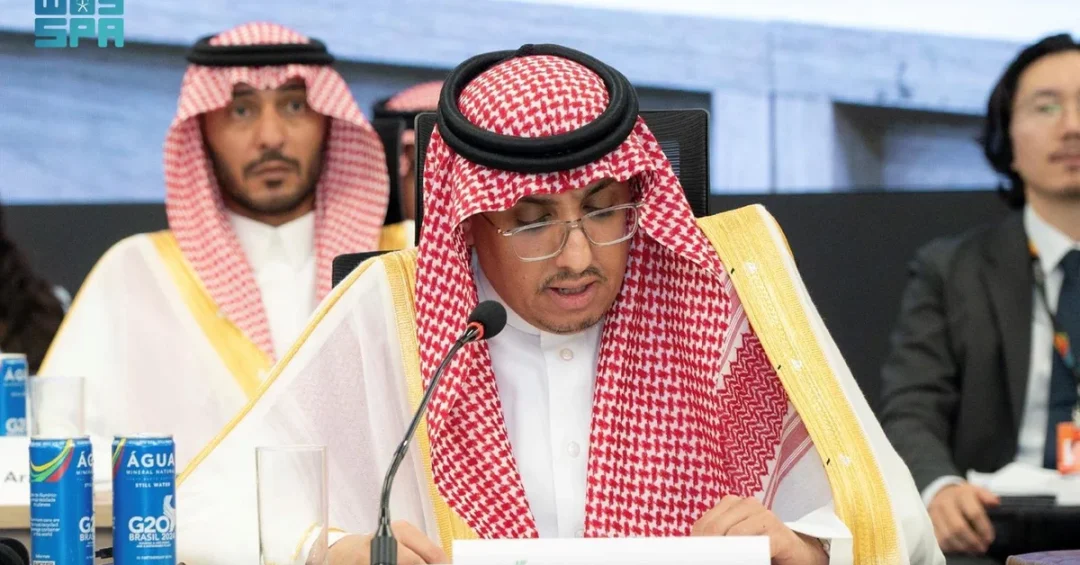
Saudi Arabia reaffirmed its commitment to global cultural collaboration and sustainable development at the 5th G20 Culture Ministers’ Meeting held in Salvador, Bahia, Brazil, on November 9, 2024, where Deputy Minister of Culture for International Cultural Relations Eng. Fahad Abdulrahman Alkanaan delivered the Kingdom’s address on behalf of Minister of Culture Prince Bader bin Abdullah bin Farhan. The ministerial gathering, convened under Brazil’s G20 Presidency and the theme “Building a Just World and a Sustainable Planet,” provided Saudi Arabia with a prominent platform to underscore its dedication to advancing the international cultural agenda and to highlight the enduring legacy of its own 2020 G20 Presidency, which first placed culture at the heart of the global economic governance forum. The Saudi delegation’s participation reflects the Kingdom’s continued emphasis on culture as a driver of economic growth, social cohesion, and international understanding.
How did a gathering of culture ministers in northeastern Brazil become a pivotal moment for global cultural policy? The answer lies in the steady expansion of the G20 Culture Track, an initiative that Saudi Arabia launched during its 2020 presidency and that has since been embraced and broadened by successive presidencies in Italy, Indonesia, India, and now Brazil. Each host nation has added new dimensions to the cultural conversation, from heritage preservation to the creative economy, creating a cumulative momentum that Saudi Arabia continues to support. The Kingdom’s participation in Salvador therefore represented not merely attendance at a diplomatic event but a reaffirmation of a strategic vision that sees culture as an essential component of sustainable development and a bridge between nations.
Context and Background
When Saudi Arabia assumed the G20 Presidency in 2020, it made a historic decision to convene the first-ever G20 Culture Ministers’ Meeting under the theme “The Rise of the Cultural Economy: A New Paradigm.” That initiative, as Prince Bader bin Abdullah bin Farhan recalled in his remarks delivered by Eng. Fahad Abdulrahman Alkanaan, underscored the Kingdom’s belief in culture as a global public good that connects the past, enriches the present, and shapes the future. The 2020 meeting marked a transformative milestone by formally recognizing culture’s role in influencing economic growth, thereby embedding it as an essential part of the G20 agenda. This foundational step created a lasting legacy within the G20 framework, one that subsequent presidencies have built upon with growing ambition and scope.
Since that inaugural meeting, the G20 Culture Track has evolved into a dynamic forum where member states exchange best practices, forge partnerships, and commit to joint actions on cultural heritage, digital transformation, and the creative industries. Italy, Indonesia, India, and Brazil have each contributed distinct priorities and perspectives, ensuring that the cultural agenda remains responsive to global challenges such as climate change, social inequality, and rapid technological change. Saudi Arabia has remained an active and constructive participant throughout this evolution, demonstrating its long-term commitment to multilateral cultural cooperation and its conviction that cultural exchange can help address some of the most pressing issues of our time. The Kingdom’s consistent engagement reflects a broader foreign policy orientation that values dialogue, mutual respect, and shared prosperity.
What does it mean for a nation to treat culture as a pillar of its international diplomacy rather than a peripheral concern? For Saudi Arabia, the answer is rooted in a comprehensive national transformation that places cultural development alongside economic diversification and social modernization. The Kingdom’s cultural diplomacy is not an isolated endeavor but an integral part of its Vision 2030 reform agenda, which seeks to diversify the economy, empower citizens, and position Saudi Arabia as a global hub for tourism, entertainment, and creative industries. By championing culture within the G20, Saudi Arabia is effectively exporting a model of development that values heritage preservation as much as innovation, and that sees cultural investment as a catalyst for economic opportunity and international goodwill.
Key Details of Saudi Arabia’s Participation
In his address on behalf of Prince Bader, Eng. Fahad Abdulrahman Alkanaan expressed Saudi Arabia’s gratitude to the Brazilian Presidency, specifically acknowledging Minister of Culture Margareth Menezes for her dedication to supporting the cultural track within the G20 framework. The Saudi delegation used the occasion to reiterate the Kingdom’s dedication to promoting cultural diversity, leveraging digital advancements, fostering a creative economy, and preserving cultural heritage. These four priorities align closely with the overarching G20 theme of building a just world and a sustainable planet, demonstrating how cultural policy intersects with broader goals of social inclusion, environmental sustainability, and economic resilience. Saudi Arabia’s message was one of partnership and shared responsibility, emphasizing that cultural collaboration can yield tangible benefits for all member states.
A centerpiece of the Kingdom’s remarks was the importance of preserving and protecting heritage sites worldwide. To support this mission, Saudi Arabia has launched several initiatives, including the establishment of a world-class center dedicated to the restoration and protection of underwater cultural heritage in the Red Sea and the Arabian Gulf. This center represents a significant investment in safeguarding cultural treasures that are often overlooked, and it demonstrates Saudi Arabia’s commitment to heritage protection both locally and internationally. The initiative also complements broader Saudi efforts to document, conserve, and promote the Kingdom’s rich archaeological and historical legacy, which spans thousands of years and includes sites of global significance. By sharing its expertise and resources, Saudi Arabia positions itself as a responsible steward of cultural heritage and a partner in global preservation efforts.
Prince Bader’s remarks, as delivered by Eng. Alkanaan, concluded with a forward-looking statement: “We are confident that the collaborative efforts among G20 members will continue to elevate culture as a vital force for sustainable development, inspiring future generations to build a better world.” This sentiment captures the essence of Saudi Arabia’s approach to cultural diplomacy, which emphasizes optimism, cooperation, and long-term impact. The Kingdom also expressed its anticipation of continuing the cultural dialogue under South Africa’s G20 Presidency in 2025, signaling its readiness to support the next phase of the Culture Track and to reinforce culture’s role as a bridge between nations. This continuity underscores Saudi Arabia’s reliability as a multilateral partner and its willingness to invest in sustained engagement rather than one-off gestures.
International and Regional Impact
Saudi Arabia’s active participation in the G20 Culture Ministers’ Meeting carries significant implications for international cultural relations. By championing the G20 Culture Track since 2020, the Kingdom has helped to institutionalize cultural dialogue at the highest levels of global governance, ensuring that culture is no longer treated as a secondary consideration but as a central element of sustainable development. This shift has encouraged other nations to elevate their own cultural policies and to recognize the economic and social returns on cultural investment. For the Middle East region, Saudi Arabia’s leadership offers a model of constructive engagement that bridges cultural traditions and modern global challenges, potentially inspiring neighboring countries to deepen their own cultural diplomacy and heritage protection efforts.
Moreover, the Kingdom’s emphasis on underwater cultural heritage in the Red Sea and the Arabian Gulf highlights a regional dimension that is particularly relevant to maritime nations. These waters have historically served as crossroads of trade, migration, and cultural exchange, and their submerged heritage holds invaluable evidence of past civilizations. Saudi Arabia’s initiative to establish a specialized center for underwater heritage restoration not only protects these treasures but also creates opportunities for scientific research, educational exchange, and tourism development. Such projects can foster regional cooperation, as countries sharing these maritime spaces may collaborate on conservation, research, and sustainable tourism. By taking a leading role, Saudi Arabia demonstrates that cultural heritage can be a source of regional unity and shared identity rather than division.
How can cultural collaboration help to bridge geopolitical divides and foster mutual understanding in a fragmented world? The G20 Culture Track offers a partial answer by providing a neutral, constructive platform where nations with differing political systems and priorities can find common ground in the universal language of culture. Saudi Arabia’s consistent engagement in this forum reflects its belief that cultural exchange can build trust, reduce misunderstandings, and create lasting relationships. In a time of global uncertainty, such initiatives are invaluable for maintaining open channels of communication and for reminding the international community of shared human heritage and aspirations. The Kingdom’s role as a bridge-builder is thus both timely and strategically significant.
Economic and Strategic Significance
From an economic perspective, Saudi Arabia’s advocacy for the creative economy within the G20 aligns with its domestic efforts to diversify revenue streams and create jobs for a young and growing population. The cultural and creative industries are increasingly recognized as powerful engines of economic growth, generating employment, attracting tourism, and stimulating innovation. By fostering a creative economy, Saudi Arabia aims to unlock new opportunities for entrepreneurs, artists, and cultural institutions, while also enhancing the Kingdom’s appeal as a destination for cultural tourism. The G20 platform allows Saudi Arabia to share its experiences, learn from other nations, and forge partnerships that can accelerate the growth of this sector both domestically and internationally.
Strategically, the Kingdom’s leadership in the G20 Culture Track reinforces its position as a responsible global stakeholder and a constructive partner in multilateral institutions. This reputation is essential for attracting foreign investment, building diplomatic alliances, and advancing Vision 2030 objectives. The cultural dimension of Saudi diplomacy complements its economic and security policies, presenting a holistic image of a nation that values both material progress and cultural enrichment. As the world increasingly recognizes the importance of soft power, Saudi Arabia’s investment in cultural relations pays dividends by enhancing its international standing and creating goodwill among diverse audiences. The Kingdom’s continued support for the G20 Culture Track, including its anticipation of South Africa’s 2025 Presidency, signals a long-term commitment to this strategic approach.
Vision 2030 Alignment
Saudi Arabia’s participation in the 5th G20 Culture Ministers’ Meeting is deeply intertwined with the goals of Vision 2030, the Kingdom’s comprehensive reform agenda launched in 2016 under the leadership of Crown Prince Mohammed bin Salman. Vision 2030 seeks to diversify the economy away from oil dependence, promote social and cultural development, and position Saudi Arabia as a global leader in various fields. Culture is explicitly recognized as a key pillar of this transformation, with initiatives such as the Quality of Life Program and the establishment of cultural institutions like the Ministry of Culture and the Royal Commission for AlUla designed to nurture a vibrant cultural sector. By championing culture on the world stage, Saudi Arabia is not only fulfilling its international commitments but also advancing its domestic vision of a diversified, knowledge-based economy.
Furthermore, the Kingdom’s efforts to preserve cultural heritage, including underwater heritage in the Red Sea and the Arabian Gulf, contribute directly to Vision 2030’s objective of promoting tourism and showcasing Saudi Arabia’s unique historical and natural assets. The development of cultural tourism is a key component of the National Tourism Strategy, which aims to attract millions of visitors and generate significant revenue. By protecting and promoting heritage sites, Saudi Arabia enhances its tourism offerings and creates new economic opportunities for local communities. The G20 Culture Track provides an international platform to highlight these efforts, attract global partners, and reinforce the message that Saudi Arabia is open for business, tourism, and cultural exchange. In this way, the Kingdom’s cultural diplomacy serves as both a reflection of its Vision 2030 progress and a catalyst for further achievements.
20 Questions
Q1. What was the 5th G20 Culture Ministers’ Meeting and where was it held?
A1. The 5th G20 Culture Ministers’ Meeting was held in Salvador, Bahia, Brazil, on November 9, 2024, under Brazil’s G20 Presidency. It brought together culture ministers from G20 member states to discuss cultural collaboration and sustainable development.
Q2. Who represented Saudi Arabia at the meeting?
A2. Deputy Minister of Culture for International Cultural Relations Eng. Fahad Abdulrahman Alkanaan delivered Saudi Arabia’s speech on behalf of Minister of Culture Prince Bader bin Abdullah bin Farhan, highlighting the Kingdom’s commitment to global cultural collaboration.
Q3. What was the theme of the 2024 G20 Culture Ministers’ Meeting?
A3. The meeting was held under the theme “Building a Just World and a Sustainable Planet,” focusing on social inclusion, environmental sustainability, and economic resilience, with culture as a key enabler of these goals.
Q4. When and why did Saudi Arabia initiate the first-ever G20 Culture Ministers’ Meeting?
A4. Saudi Arabia initiated the first-ever G20 Culture Ministers’ Meeting in 2020 during its G20 Presidency, under the theme “The Rise of the Cultural Economy: A New Paradigm,” to recognize culture’s role in economic growth.
Q5. What did Prince Bader bin Abdullah bin Farhan say about culture?
A5. Prince Bader stated that Saudi Arabia believes in culture as a global public good that connects the past, enriches the present, and shapes the future, underscoring the Kingdom’s commitment to cultural collaboration.
Q6. How has the G20 Culture Track evolved since 2020?
A6. Since 2020, successive G20 presidencies—Italy, Indonesia, India, and Brazil—have expanded the Culture Track, broadening its scope and impact to address diverse cultural priorities and global challenges.
Q7. What priorities did Saudi Arabia emphasize at the 2024 meeting?
A7. Saudi Arabia reiterated its dedication to promoting cultural diversity, leveraging digital advancements, fostering a creative economy, and preserving cultural heritage, aligning with the G20 theme of sustainable development.
Q8. What initiative did Saudi Arabia highlight for preserving underwater cultural heritage?
A8. Saudi Arabia announced the establishment of a world-class center dedicated to the restoration and protection of underwater cultural heritage in the Red Sea and the Arabian Gulf, demonstrating its commitment to safeguarding heritage.
Q9. Why is underwater cultural heritage important?
A9. Underwater cultural heritage includes submerged archaeological sites, shipwrecks, and artifacts that provide valuable insights into historical trade, migration, and cultural exchange, contributing to our understanding of past civilizations.
Q10. How does Saudi Arabia’s cultural diplomacy align with Vision 2030?
A10. Saudi Arabia’s cultural diplomacy aligns with Vision 2030 by promoting cultural development, economic diversification, and international engagement, positioning the Kingdom as a global leader in culture and tourism.
Q11. What did Saudi Arabia express about the Brazilian Presidency?
A11. Saudi Arabia expressed gratitude to the Brazilian Presidency, specifically acknowledging Minister of Culture Margareth Menezes for her dedication to supporting the cultural track within the G20 framework.
Q12. What is the significance of the G20 Culture Track for global governance?
A12. The G20 Culture Track institutionalizes cultural dialogue at the highest levels of global governance, ensuring culture is recognized as a central element of sustainable development and economic growth.
Q13. How does Saudi Arabia support cultural diversity?
A13. Saudi Arabia supports cultural diversity by promoting inclusive policies, preserving heritage, and fostering creative industries that celebrate different cultures and traditions, both domestically and internationally.
Q14. What role does digital advancement play in Saudi Arabia’s cultural strategy?
A14. Digital advancement is leveraged to enhance cultural preservation, access, and innovation, enabling Saudi Arabia to share its heritage globally and support the growth of digital creative industries.
Q15. What is the creative economy and why is it important?
A15. The creative economy encompasses industries that generate value from cultural and creative assets, such as arts, design, and media. It is important for job creation, innovation, and economic diversification.
Q16. How does Saudi Arabia plan to continue its cultural dialogue in 2025?
A16. Saudi Arabia looks forward to continuing cultural dialogue under South Africa’s G20 Presidency in 2025, reaffirming its commitment to supporting the G20 Culture Track and culture’s role as a bridge between nations.
Q17. What did Prince Bader say about the future of cultural collaboration?
A17. Prince Bader expressed confidence that collaborative efforts among G20 members will continue to elevate culture as a vital force for sustainable development, inspiring future generations to build a better world.
Q18. How does Saudi Arabia’s participation benefit its international standing?
A18. Saudi Arabia’s active participation enhances its international standing by showcasing its commitment to multilateral cooperation, cultural diplomacy, and sustainable development, attracting partnerships and goodwill.
Q19. What are the key objectives of the G20 Culture Track?
A19. The G20 Culture Track aims to promote cultural diversity, preserve heritage, foster creative economies, and integrate culture into sustainable development strategies, enhancing global cooperation.
Q20. How can culture contribute to sustainable development?
A20. Culture contributes to sustainable development by driving economic growth, fostering social inclusion, preserving heritage, and promoting environmental sustainability through creative and cultural initiatives.
Reader Feedback
We value your thoughts. Please share your feedback on this article.
Your feedback helps us improve our coverage.
Related articles
 Falcon Sells for SAR210,000 at Saudi Falcons Club Auction
 Royal Institute of Traditional Arts Launches Craftsman Bus Tour
 Makkah Arabian Horse Championship Shines in Jeddah
 Autumn Vacation Events Launch at Hira Cultural District
 Saudi Woman Preserves AlUla’s Shinnah Craft for 25 Years
 Saudi Arabia and France Explore Cultural Exchange