


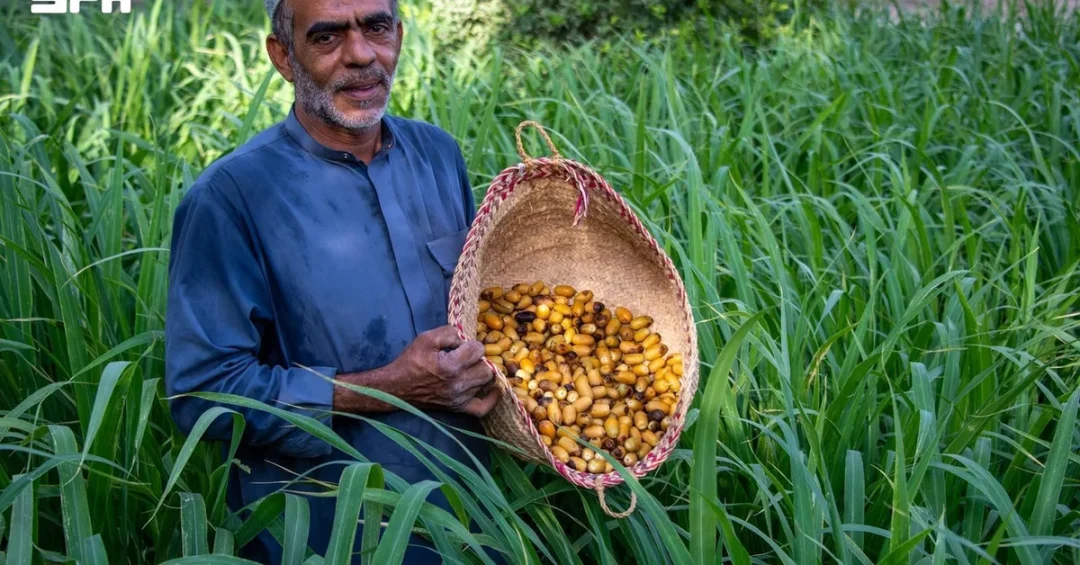
The first yields of the fresh date harvest have arrived at central markets across the Al-Ahsa Oasis, marking the start of an agricultural season that produces more than 120,000 tons of dates annually from over two million palm trees for distribution across the Eastern Region and the wider Kingdom, the Saudi Press Agency reported. Farmers across the oasis, driven by high summer temperatures that accelerate early ripening, are now actively harvesting more than 20 renowned date varieties, with the earliest produce being sorted and sold at varying price points according to quality, size, color, and taste profile. The arrival of the first fruit in the central markets is a milestone that signals the beginning of one of the most economically and culturally significant periods on the Kingdom’s agricultural calendar.
Al-Ahsa, located in the Eastern Province, is recognized as the largest date-producing oasis in the world, and its palm groves form the backbone of a local economy that has sustained communities for generations. The seasonal harvest is not merely a farming event; it is a national occasion that connects heritage with modern commerce, drawing traders, retailers, and consumers from across Saudi Arabia. The Ministry of Environment, Water and Agriculture, working in coordination with the Al-Ahsa Municipality and other relevant authorities, has launched several strategic initiatives to ensure the economic success of the season. Field teams are directly overseeing auction processes and establishing dedicated marketing platforms, including seasonal date festivals and year-round farmers’ markets, to guarantee continuous market availability and seamlessly connect local producers with traders and consumers.
Context and Background
Why does the arrival of the first dates in Al-Ahsa’s central markets command attention far beyond the Eastern Province? The answer lies in the scale and heritage of the oasis itself. Al-Ahsa is home to more than two million palm trees, and its groves have been cultivated for thousands of years, making the region one of the oldest continuously farmed landscapes in the Arabian Peninsula. The oasis was inscribed as a UNESCO World Heritage site, a recognition that underscores both its historical importance and its living agricultural tradition. Each season, the harvest generates more than 120,000 tons of dates, a volume that positions Saudi Arabia among the world’s leading date producers and exporters.
The early harvest is driven by the high summer temperatures that characterize the Eastern Province at this time of year. These conditions accelerate the ripening of early varieties, allowing farmers to bring fresh fruit to market ahead of the main season. The produce is then sorted and priced according to a range of quality criteria, including size, color, and taste profile. This grading process is central to the commercial success of the season, because it allows buyers to select dates that meet specific standards for retail, gifting, and food processing. The market’s ability to match supply with demand across these segments is a key reason why Al-Ahsa dates enjoy such a strong reputation domestically and increasingly abroad.
For generations, the date palm has been more than a crop in Al-Ahsa; it has been a way of life. The palm provides food, shade, and raw materials, and it anchors a cultural identity that residents of the oasis hold with deep pride. The annual harvest therefore carries social and symbolic weight alongside its economic value. Families return to the groves, traditions of cultivation are passed down, and the markets become meeting points where heritage and commerce intersect. In this sense, the first dates appearing in the central markets are a signal that the rhythm of the oasis is once again moving forward, connecting the present season to a lineage of farming knowledge that stretches back through the centuries.
Key Details of the Season
What exactly is reaching the market in these opening weeks? According to official information released through the Saudi Press Agency, farmers are harvesting over 20 renowned date varieties, a diversity that reflects the unique microclimate and soil conditions of Al-Ahsa. The early produce is being sorted and sold at varying price points based on quality, size, color, and taste profile. This variety is one of the oasis’s greatest strengths, because it allows Al-Ahsa to serve multiple markets simultaneously, from everyday consumers seeking affordable staple dates to premium buyers looking for distinctive, high-quality fruit.
The Ministry of Environment, Water and Agriculture has taken a hands-on role in organizing the season. Field teams are directly overseeing auction processes, a measure designed to ensure transparency and fair pricing for producers. In addition, the ministry and its partners have established dedicated marketing platforms, including seasonal date festivals and year-round farmers’ markets. These platforms are intended to guarantee continuous market availability and to connect local producers with traders and consumers in a structured, reliable way. The Al-Ahsa Municipality is coordinating with the ministry and other relevant authorities to support the logistical and regulatory dimensions of the harvest, helping to keep markets functioning smoothly as volumes increase.
The auction system is particularly important in the early weeks of the season, when supply is still building and price discovery is especially sensitive. By placing field teams at the center of the auction process, the authorities help to reduce information gaps between farmers and buyers, which in turn supports stable and predictable returns for producers. The seasonal festivals and permanent farmers’ markets extend the reach of the harvest beyond the immediate region, giving small and medium-sized producers access to a broader customer base. Together, these measures reflect a deliberate strategy to treat the date harvest not only as an agricultural event but as a managed economic season with clear institutional support.
International and Regional Impact
How does a harvest in one oasis resonate across borders? Al-Ahsa dates are increasingly recognized in international markets, and the start of the season is watched by importers, distributors, and retailers in the Gulf region and beyond. Saudi Arabia’s date exports have grown in recent years, supported by improvements in packaging, quality control, and cold-chain logistics. The early arrival of fresh dates gives the Kingdom a first-mover advantage in regional markets, where consumers value freshness and are willing to pay a premium for the earliest fruit of the season. This timing advantage is a meaningful commercial asset.
Within the Gulf Cooperation Council and the broader Middle East, dates occupy a central place in hospitality and daily diet, particularly during religious occasions and family gatherings. The Al-Ahsa harvest therefore contributes to regional food security by ensuring a reliable supply of a culturally essential product. At the same time, the oasis serves as a model for sustainable oasis agriculture, demonstrating how traditional cultivation can be combined with modern market infrastructure. For international audiences, the season offers a clear example of how Saudi Arabia is preserving agricultural heritage while building the commercial systems needed to compete globally. The Kingdom’s participation in international food exhibitions and trade fairs has further raised the profile of Al-Ahsa dates, creating new opportunities for exporters and strengthening the brand identity of Saudi agricultural products.
Economic and Strategic Significance
Why does the date harvest matter so much to Saudi Arabia’s economic strategy? Agriculture, and date production in particular, is a significant source of employment and income in the Eastern Province. The sector supports farmers, laborers, transporters, packers, and traders, creating a value chain that extends from the groves to the shelves of supermarkets in major cities. The 120,000-ton annual output of Al-Ahsa is not just a statistic; it represents a substantial contribution to local livelihoods and to the national food supply. By organizing auctions and marketing platforms, the authorities help to ensure that this value is captured efficiently and distributed fairly across the chain.
The strategic importance of the harvest also lies in its potential for value-added processing. Dates can be transformed into pastes, syrups, confectionery, and other products, and the development of this segment is a priority for diversification efforts. The Ministry of Environment, Water and Agriculture has emphasized the importance of improving productivity, water efficiency, and quality standards in the palm sector. These efforts align with broader national goals of reducing reliance on oil revenues and building a more diversified economy. The Al-Ahsa harvest is therefore a practical demonstration of how a traditional crop can be integrated into a modern economic vision, generating export earnings and supporting rural development at the same time.
Vision 2030 Alignment
How does the early date harvest connect to Saudi Vision 2030? The Vision, launched under the leadership of Crown Prince Mohammed bin Salman, seeks to diversify the Kingdom’s economy, strengthen non-oil sectors, and enhance the quality of life for citizens. Agriculture plays a direct role in these objectives, and the date sector is one of the most promising areas for growth. By supporting farmers, improving market access, and promoting Saudi dates internationally, the government is advancing the Vision’s goals of economic diversification and sustainable development. The Al-Ahsa harvest is a living example of how heritage industries can be modernized and made more competitive.
The season also contributes to the Vision’s social and cultural dimensions. The date palm is a symbol of Saudi identity, and the harvest reinforces community bonds and cultural continuity. Efforts to develop agritourism around the oasis, including visits to palm groves and participation in date festivals, create new opportunities for visitors to experience Saudi heritage firsthand. These initiatives support the Vision’s aim of attracting international tourists and showcasing the Kingdom’s rich culture. As the first dates reach the central markets, they carry with them not only nutritional and economic value but also a message of progress, resilience, and pride in a tradition that continues to thrive in the modern era. The successful opening of the season is a reminder that Saudi Arabia’s agricultural heritage remains a vital part of its journey toward a diversified and prosperous future.
20 Questions
Q1. What is the significance of the early date harvest in Al-Ahsa?
A1. The early harvest marks the start of a major agricultural season that produces over 120,000 tons of dates annually from more than two million palm trees, supporting local livelihoods and supplying markets across the Eastern Region and the Kingdom.
Q2. Which authority announced the arrival of the first dates in central markets?
A2. The Saudi Press Agency reported the arrival, citing official information from the Ministry of Environment, Water and Agriculture and its coordination with the Al-Ahsa Municipality and other relevant authorities.
Q3. How many date varieties are being harvested this season?
A3. Farmers are actively harvesting over 20 renowned date varieties, reflecting the rich agricultural diversity of the Al-Ahsa Oasis and its unique microclimate and soil conditions.
Q4. What factors determine the price of early dates?
A4. Prices vary based on quality, size, color, and taste profile, with the produce being sorted and graded to meet different market segments from everyday consumers to premium buyers.
Q5. Why are high summer temperatures important for the harvest?
A5. High summer temperatures accelerate the early ripening of date varieties, allowing farmers to bring fresh fruit to market ahead of the main season and giving the Kingdom a timing advantage in regional markets.
Q6. What role is the Ministry of Environment, Water and Agriculture playing?
A6. The ministry has launched strategic initiatives, including field teams that directly oversee auction processes and the establishment of dedicated marketing platforms such as seasonal festivals and year-round farmers’ markets.
Q7. How do the marketing platforms help local producers?
A7. They guarantee continuous market availability and seamlessly connect local producers with traders and consumers, giving small and medium-sized farmers access to a broader customer base and more stable returns.
Q8. What is the annual date output of Al-Ahsa Oasis?
A8. Al-Ahsa produces more than 120,000 tons of dates annually, making it the largest date-producing oasis in the world and a cornerstone of Saudi Arabia’s agricultural sector.
Q9. How many palm trees are cultivated in Al-Ahsa?
A9. There are more than two million palm trees in the oasis, a scale that underscores the region’s historical and economic importance in date cultivation.
Q10. What is the cultural significance of the date palm in Al-Ahsa?
A10. The date palm is a symbol of Saudi heritage and identity, providing food, shade, and raw materials while anchoring a cultural tradition that has been passed down through generations in the oasis.
Q11. How does the harvest support regional food security?
A11. Dates are a staple food in the Gulf region, and the reliable supply from Al-Ahsa helps meet demand during religious occasions and daily consumption, contributing to food security across the region.
Q12. What economic benefits does the harvest bring to the Eastern Province?
A12. It supports farmers, laborers, transporters, packers, and traders, creating a value chain that generates income and employment while contributing to the national food supply.
Q13. How does the harvest align with Saudi Vision 2030?
A13. It supports economic diversification, non-oil sector growth, and sustainable development, all of which are core objectives of Vision 2030 under the leadership of Crown Prince Mohammed bin Salman.
Q14. What is the role of the Al-Ahsa Municipality in the harvest?
A14. The municipality coordinates with the Ministry of Environment, Water and Agriculture and other authorities to support the logistical and regulatory dimensions of the harvest, helping markets function smoothly.
Q15. Are there opportunities for value-added processing of dates?
A15. Yes, dates can be processed into pastes, syrups, confectionery, and other products, and developing this segment is a priority for diversifying the economy and increasing export earnings.
Q16. How does the harvest affect international markets?
A16. Saudi dates are increasingly recognized internationally, and the early arrival gives the Kingdom a first-mover advantage in regional markets where consumers value freshness and are willing to pay a premium.
Q17. What is the significance of the auction process?
A17. The auction process ensures transparency and fair pricing for producers, and the presence of field teams helps reduce information gaps between farmers and buyers, supporting stable returns.
Q18. How does agritourism relate to the date harvest?
A18. Agritourism initiatives, including visits to palm groves and participation in date festivals, create new opportunities for visitors to experience Saudi heritage and support the Vision 2030 goal of attracting international tourists.
Q19. What makes Al-Ahsa dates unique in terms of quality?
A19. The oasis’s unique microclimate and soil conditions, combined with careful cultivation and grading, produce dates with distinctive taste, size, and color that are highly valued by consumers.
Q20. What does the successful start of the season signify for Saudi Arabia?
A20. It signifies the continued vitality of Saudi agriculture, the strength of institutional support for farmers, and the Kingdom’s ability to preserve heritage while advancing economic modernization in line with Vision 2030.
Reader Feedback
We value your thoughts. Please share your feedback on this article.
Your feedback helps us improve our coverage.
Related articles
 Mango Season Begins in Umluj with 4,500-Ton Harvest
 Najran’s Fig Orchards Drive Sustainable Growth
 Al-Jouf’s 10 Million Trees Yield 560,000 Tons of Fruit
 Najran Advances Agricultural Sustainability with Innovative Farming Trials
 Aseer Farmers Begin Traditional Corn Thinning to Boost Harvest
 Oat Farming in Najran: A Promising Economic Driver Enhancing Regional Food Security