


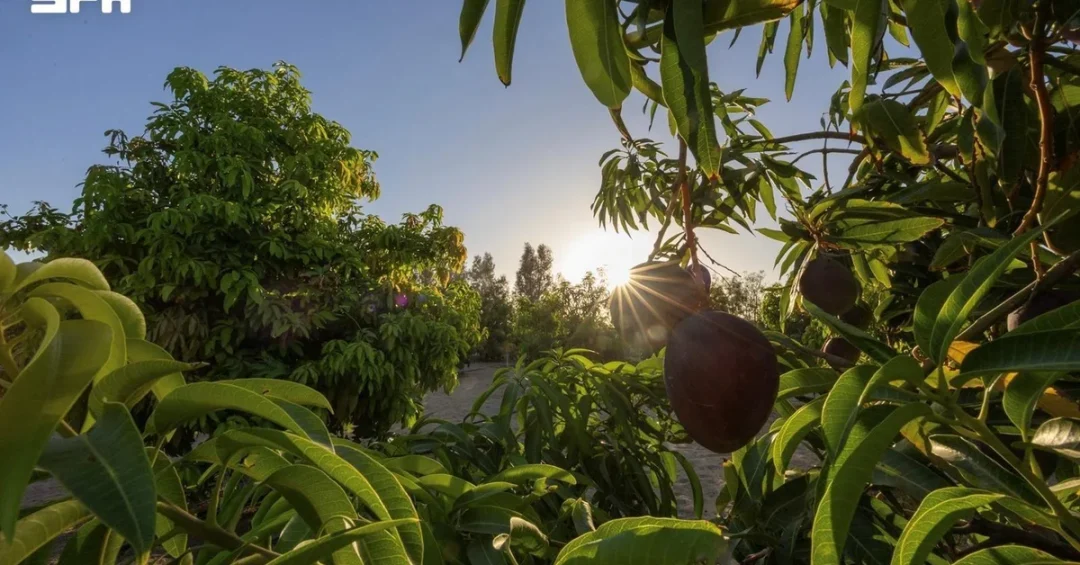
The Ministry of Environment, Water and Agriculture’s branch in Tabuk Region has officially announced the start of the mango season in Umluj Governorate, marking the beginning of harvesting activities across local farms. The announcement, carried by the Saudi Press Agency, confirms that Umluj remains one of the region’s foremost mango-producing areas, with more than 90,000 mango trees and an estimated annual yield of 4,500 tons across a variety of cultivars. The season’s opening signals a productive period for farmers, agricultural workers, and the wider supply chain that depends on this signature crop.
For international observers tracking Saudi Arabia’s agricultural modernization, the timing and scale of this year’s harvest carry significance beyond the orchard. The Kingdom has invested steadily in diversifying its economy and strengthening food security, and regional agricultural successes such as Umluj’s mango season illustrate how local production contributes to those national objectives. The Ministry’s regional branch in Tabuk, which oversees agricultural affairs across the governorate, has framed the season as evidence of growing production efficiency and quality. As global markets pay closer attention to sustainable sourcing and regional specialty crops, Umluj’s mango output offers a clear example of how Saudi agriculture is evolving.
Context and Background
Why does a mango harvest in a single governorate attract national attention? The answer lies in Umluj’s unique agricultural geography and the Kingdom’s broader strategy to develop its non-oil sectors. Located on the Red Sea coast in the Tabuk Region, Umluj Governorate benefits from a climate and soil profile well suited to mango cultivation. Over successive seasons, local farms have expanded their orchards and refined their practices, supported by the Ministry of Environment, Water and Agriculture’s extension programs and technical guidance.
The Ministry’s branch in Tabuk Region has played a central role in this development, providing farmers with access to training, irrigation efficiency measures, and pest management support. Eng. Amjad bin Abdullah Thallab, Director General of the branch, has been a consistent advocate for sustainable agricultural practices in the region. His statements on the season’s opening emphasize that this year’s harvest reflects not only favorable conditions but also the cumulative effect of years of investment in farm infrastructure and knowledge transfer. For a governorate once known primarily for fishing and coastal tourism, mango production has become a meaningful economic pillar.
Umluj’s rise as a mango hub also fits into a longer historical pattern of agricultural diversification in Saudi Arabia. The Kingdom has long sought to reduce reliance on imports for key food categories, and regional specialties like Tabuk’s mangoes demonstrate how targeted support can yield measurable results. The presence of more than 90,000 trees across the governorate indicates a mature production base, one capable of sustaining annual yields in the thousands of tons while continuing to expand.
Key Details of the 2026 Season
What exactly does this year’s season deliver? According to the Ministry’s announcement, the 2026 mango season in Umluj is witnessing an abundant yield and high quality, a combination that reflects both favorable growing conditions and improved production efficiency. The estimated annual yield of 4,500 tons is distributed across a range of mango cultivars, giving farmers flexibility in targeting different market segments, from local retail to regional wholesale and processing.
Eng. Amjad bin Abdullah Thallab noted that the season’s strong performance is a direct outcome of the Ministry’s commitment to supporting farmers through dedicated programs. These include guidance on sustainable irrigation, soil health management, and post-harvest handling, all of which influence both the volume and the quality of the final crop. The emphasis on sustainability is particularly relevant in a region where water resources require careful stewardship, and where efficient farming practices are essential to long-term viability.
The harvest also creates seasonal employment opportunities across Umluj and surrounding areas. From picking and sorting to packing and transport, the mango season activates a network of workers and small businesses that depend on the agricultural calendar. For the governorate’s economy, this represents a recurring source of income that complements other sectors, including fishing and tourism. The Ministry’s oversight ensures that quality standards are maintained, which in turn supports the reputation of Umluj mangoes in domestic and regional markets.
International and Regional Impact
How does a regional harvest resonate beyond Saudi borders? Agricultural output in the Kingdom contributes to regional food trade and can influence supply dynamics in neighboring Gulf markets. Umluj’s mangoes, known for their quality, are well positioned to serve demand in countries that import Saudi agricultural products. As the Kingdom strengthens its trade relationships and logistics infrastructure, the reach of regional specialty crops continues to expand.
International observers often look to Saudi agricultural initiatives as indicators of the Kingdom’s broader economic direction. A successful mango season in Umluj demonstrates that investments in rural development and sustainable farming can produce tangible results. It also reinforces Saudi Arabia’s reputation as a reliable supplier of high-quality agricultural goods, a factor that matters as global supply chains seek diversification and resilience. The Ministry’s transparent reporting of production figures and quality outcomes supports this credibility.
Regionally, the season serves as a reminder of the diversity within Saudi Arabia’s agricultural landscape. Tabuk Region, with its coastal and inland farming areas, contributes a distinct profile to the national sector. By highlighting Umluj’s mango production, the Ministry underscores the importance of regional specialization, where each area leverages its natural advantages to contribute to national food security and economic growth.
Economic and Strategic Significance
What makes this harvest strategically important? Agriculture is a key component of Saudi Arabia’s efforts to build a diversified economy, and crops like mangoes offer high-value opportunities for farmers and agribusinesses. The 4,500-ton annual yield represents not just volume but economic activity: income for farm families, revenue for local traders, and a product that can be processed into juices, dried fruit, and other value-added goods.
The Ministry of Environment, Water and Agriculture’s support programs are designed to raise productivity while conserving resources. In Umluj, this means promoting efficient irrigation techniques, encouraging the use of modern harvesting methods, and facilitating access to markets. These measures align with the Kingdom’s strategic goal of enhancing food security and reducing waste. The emphasis on quality also opens doors to premium markets, where Saudi mangoes can compete on taste and freshness.
Beyond the farm gate, the mango season stimulates related sectors, including transportation, packaging, and cold storage. These linkages multiply the economic impact of the harvest, creating a ripple effect that extends through the regional economy. For policymakers, the success of Umluj’s mango sector provides a model that can be adapted to other crops and regions, reinforcing the national strategy of agricultural development.
Vision 2030 Alignment
How does a mango season connect to Saudi Vision 2030? The Vision’s objectives include economic diversification, food security, and the development of non-oil sectors, all of which are advanced by a thriving agricultural industry. Umluj’s mango production exemplifies how local resources and targeted support can generate sustainable growth. The Ministry’s work in Tabuk Region reflects the Vision’s emphasis on empowering regional economies and creating opportunities for citizens.
The season also highlights the importance of environmental sustainability, a core theme of Vision 2030. By promoting efficient water use and responsible farming practices, the Ministry ensures that agricultural growth does not come at the expense of natural resources. As Umluj’s mango sector continues to mature, it will contribute to the Kingdom’s broader goals of prosperity, self-reliance, and global engagement. For international audiences, this harvest is a clear signal that Saudi Arabia’s agricultural transformation is well underway.
20 Questions
Q1. What is the significance of the mango season in Umluj Governorate?
A1. The mango season in Umluj is a major agricultural event that highlights the governorate’s role as a leading producer in Tabuk Region, supporting local farmers and contributing to Saudi Arabia’s food security and economic diversification goals.
Q2. How many mango trees are there in Umluj?
A2. According to the Ministry of Environment, Water and Agriculture, Umluj has more than 90,000 mango trees, reflecting a mature and expanding production base across the governorate’s farms.
Q3. What is the estimated annual yield of mangoes in Umluj?
A3. The estimated annual yield is 4,500 tons, distributed across a variety of mango cultivars, which allows farmers to serve different market segments and consumer preferences.
Q4. Who announced the start of the mango season?
A4. The Ministry of Environment, Water and Agriculture’s branch in Tabuk Region announced the start of the season, with Director General Eng. Amjad bin Abdullah Thallab providing details on production and quality.
Q5. What did Eng. Amjad bin Abdullah Thallab say about this year’s season?
A5. He stated that the season is witnessing an abundant yield and high quality, reflecting the development of the agricultural sector and increased production efficiency, supported by the Ministry’s programs.
Q6. How does the Ministry support mango farmers in Umluj?
A6. The Ministry provides support through programs that promote sustainable agricultural practices, including guidance on irrigation, pest management, and post-harvest handling to improve productivity and quality.
Q7. Why is Umluj well suited for mango cultivation?
A7. Umluj’s climate and soil conditions in the Tabuk Region are favorable for mango trees, and local farms have benefited from years of investment in orchard development and agricultural expertise.
Q8. What varieties of mangoes are grown in Umluj?
A8. Umluj produces a variety of mango cultivars, which gives farmers flexibility to target fresh markets, processing, and regional export opportunities with different flavors and harvest times.
Q9. How does the mango season benefit the local economy?
A9. The season creates employment in harvesting, sorting, packing, and transport, while generating income for farm families and supporting related businesses such as cold storage and logistics.
Q10. What is the role of the Tabuk Region branch in this sector?
A10. The branch oversees agricultural affairs in the region, provides technical support to farmers, monitors production, and ensures that sustainable practices are followed to maintain quality and yields.
Q11. Does the mango season contribute to Saudi food security?
A11. Yes, domestic mango production reduces reliance on imports for this fruit category, strengthening national food security and supporting the Kingdom’s goal of a resilient agricultural sector.
Q12. How does the season align with Vision 2030?
A12. It supports economic diversification, rural development, and food security, all of which are core objectives of Saudi Vision 2030, while showcasing sustainable agricultural practices in the Kingdom.
Q13. Are Umluj mangoes exported to other countries?
A13. Umluj mangoes are known for their quality and can serve regional markets, contributing to Saudi Arabia’s agricultural exports and enhancing the Kingdom’s reputation as a reliable supplier.
Q14. What sustainable practices are used in mango farming in Umluj?
A14. Farmers use efficient irrigation methods, soil health management, and integrated pest control, guided by the Ministry’s programs to conserve water and protect the environment.
Q15. How long does the mango season last in Umluj?
A15. The mango season typically spans several months, with harvesting activities commencing in early summer and continuing through the peak production period, depending on the cultivars grown.
Q16. What challenges do mango farmers in Umluj face?
A16. Challenges include water scarcity and climate variability, which the Ministry addresses through support programs that promote efficient resource use and resilient farming techniques.
Q17. How does the Ministry ensure the quality of Umluj mangoes?
A17. The Ministry provides guidance on best practices for cultivation, harvesting, and post-harvest handling, and monitors production to ensure that quality standards are met.
Q18. What is the significance of the 4,500-ton yield figure?
A18. The 4,500-ton yield indicates a substantial production volume that supports local markets, creates economic value, and demonstrates the efficiency of Umluj’s agricultural sector.
Q19. How does the mango season reflect Saudi Arabia’s agricultural modernization?
A19. It shows how targeted investment, farmer support, and sustainable practices can increase productivity and quality, aligning with the Kingdom’s broader goals of modernization and economic diversification.
Q20. What does the future hold for mango production in Umluj?
A20. With continued Ministry support and a focus on sustainability, Umluj’s mango sector is well positioned to grow, contributing to food security, rural prosperity, and Saudi Arabia’s Vision 2030 objectives.
Reader Feedback
We value your thoughts. Please share your feedback on this article.
Your feedback helps us improve our coverage.
Related articles
 Najran’s Fig Orchards Drive Sustainable Growth
 Al-Jouf’s 10 Million Trees Yield 560,000 Tons of Fruit
 Najran Advances Agricultural Sustainability with Innovative Farming Trials
 Aseer Farmers Begin Traditional Corn Thinning to Boost Harvest
 Oat Farming in Najran: A Promising Economic Driver Enhancing Regional Food Security
 Al-Baha Farms Begin Summer Fruit Harvest, Expect Abundant Yield