


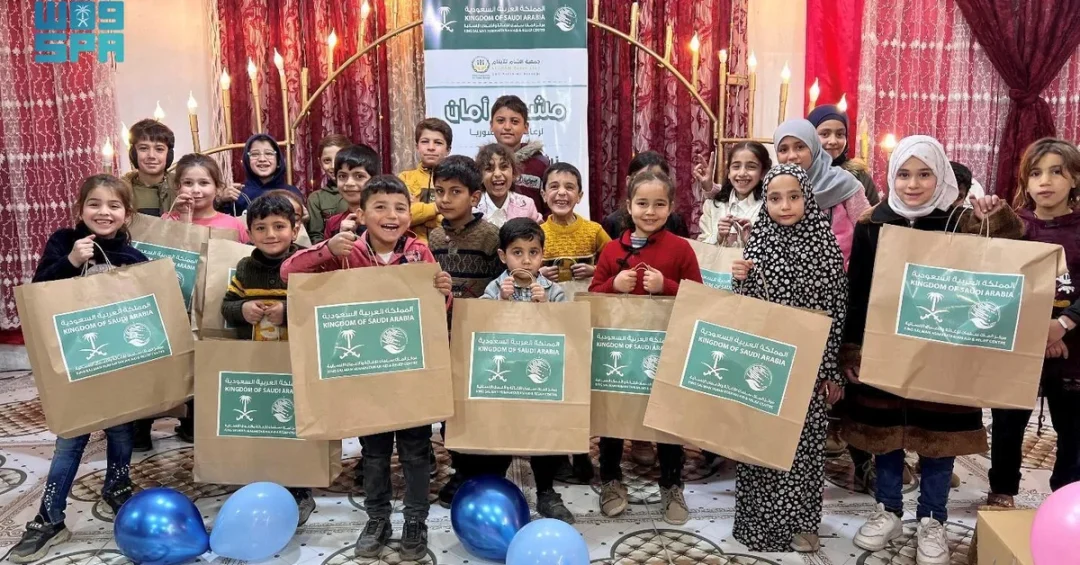
The King Salman Humanitarian Aid and Relief Center (KSrelief) has distributed 650 clothing bags to orphaned children across the cities of Al-Bab, Afrin, and Akhtarin town in Syria’s Aleppo governorate, the Saudi Press Agency reported on April 21, 2025. The assistance, delivered under the Aman project for orphan care, coincided with the disbursement of monthly allowances to the children and their families, providing both material support and a measure of dignity during a prolonged period of hardship. The bags contained new clothing selected for various age groups, chosen carefully to meet the orphans’ needs and preferences and to bring joy to their hearts, according to the official announcement.
The delivery reflects an ongoing commitment by the Kingdom of Saudi Arabia, through its dedicated humanitarian arm, to supporting vulnerable communities in Syria and beyond. For an international audience, the news offers a window into how Saudi Arabia’s relief architecture operates on the ground: identifying needs, coordinating with local partners, and delivering tangible assistance directly to beneficiaries. It also underscores the continuity of Saudi humanitarian engagement in a region where years of conflict have left deep social and economic scars, particularly among children who have lost one or both parents.
Context and Background
What does it mean for a child who has lost a parent to receive a simple bag of new clothes? For the orphaned children of Aleppo’s Al-Bab, Afrin, and Akhtarin, the answer is both practical and emotional. KSrelief framed the distribution as part of the Aman project for orphan care, an initiative that combines regular monthly allowances with seasonal and needs-based support. The clothing bags were designed for different age groups, ensuring that children of varying sizes and circumstances received items suited to them rather than generic handouts.
The King Salman Humanitarian Aid and Relief Center, named after the Custodian of the Two Holy Mosques King Salman bin Abdulaziz Al Saud, has for years served as the operational hub for Saudi Arabia’s international relief efforts. It works across sectors including food security, health, shelter, education, and orphan support. In Syria, the humanitarian situation remains among the most complex in the world, with millions of people displaced and basic services disrupted. KSrelief’s orphan-focused programming addresses a specific gap: the long-term needs of children who lack familial breadwinners, a group often overlooked in emergency response.
Why does the timing of this distribution matter? Because the clothing bags were released alongside the monthly allowances disbursed through the Aman project, creating a combined intervention that addresses both routine needs and special occasions. By synchronizing the two, KSrelief helps families plan and reduces the risk that a single expense—such as seasonal clothing—forces difficult trade-offs against food or medicine. The approach reflects a broader shift in humanitarian practice toward multipurpose assistance that respects the dignity of recipients.
Key Details of the Distribution
How were the 650 bags actually assembled and delivered? According to the official announcement, the bags contained new clothing suitable for various age groups, carefully selected to meet the orphaned children’s needs and preferences. The distribution covered three locations in Aleppo governorate: the city of Al-Bab, the city of Afrin, and the town of Akhtarin. These areas have hosted large displaced populations and have faced significant infrastructure damage over the course of the conflict, making them priority targets for relief efforts.
The Aman project itself is structured around regular support rather than one-off charity. Monthly allowances give orphan families a predictable income stream, while additional distributions—such as the clothing bags—respond to specific needs as they arise. This layered model allows KSrelief to maintain continuity of care while adapting to circumstances on the ground. The selection process for the clothing, described as attentive to the children’s preferences, indicates an effort to personalize assistance rather than treat beneficiaries as anonymous recipients.
Who benefits? The program targets orphaned children and, by extension, their caregivers and families. In conflict-affected Syria, orphans are often cared for by extended relatives who may themselves be struggling economically. By providing clothing and cash allowances, KSrelief eases pressure on these households and helps keep children within family and community structures rather than in institutional care. The initiative also carries a symbolic message: that the children are not forgotten, and that their well-being is a priority for the Kingdom.
International and Regional Impact
Why should the international community pay attention to a clothing distribution in northern Syria? Because it illustrates how Saudi Arabia translates its humanitarian diplomacy into concrete action. KSrelief operates in some of the world’s most challenging environments, often in coordination with United Nations agencies and international nongovernmental organizations. Its work in Syria forms part of a wider Saudi effort to stabilize affected regions and support vulnerable populations, complementing political and diplomatic tracks aimed at lasting solutions.
From a regional perspective, the distribution reinforces Saudi Arabia’s role as a leading donor and operational partner in humanitarian response. The Kingdom has consistently ranked among the top global donors of humanitarian aid, and KSrelief’s field presence allows it to act quickly when needs arise. In Syria, where access is often constrained, trusted local relationships and a reputation for impartial assistance help ensure that aid reaches intended beneficiaries. The Aleppo distribution is a small but telling example of how these networks function.
What does this mean for the children themselves? Beyond the immediate benefit of new clothes, such interventions can have a positive psychological effect, reminding vulnerable children that they are valued. Humanitarian organizations increasingly recognize that dignity and normalcy are as important as material necessities. By choosing clothing suited to different ages and preferences, KSrelief signals respect for the children’s individuality, a detail that can matter deeply in settings where displacement and loss have eroded personal agency.
Economic and Strategic Significance
How does orphan care connect to Saudi Arabia’s broader strategic priorities? The Kingdom’s humanitarian work is an integral part of its foreign policy and its Vision 2030 framework, which emphasizes global engagement, social responsibility, and sustainable development. KSrelief’s programs are designed not only to alleviate immediate suffering but also to build resilience in affected communities. By supporting orphans and their families, Saudi Arabia invests in the human capital of a region that has endured years of conflict.
The economic logic is straightforward: stable, supported families are better able to contribute to recovery and reconstruction. Orphaned children who receive consistent care, education, and material support are more likely to become productive members of their communities. KSrelief’s layered approach—cash allowances plus targeted distributions—reflects an understanding that humanitarian aid can serve both short-term relief and longer-term development goals. In this sense, the 650 clothing bags are part of a much larger investment in Syria’s future.
Why does transparency matter in this context? Because the credibility of humanitarian action depends on clear, verifiable reporting. The Saudi Press Agency’s announcement provides specific details—locations, number of bags, program name—that allow observers to track and assess the intervention. This openness supports KSrelief’s reputation as a reliable partner and reinforces trust among international donors and implementing agencies. It also aligns with global standards for humanitarian accountability.
Vision 2030 Alignment
What role does humanitarian leadership play in Vision 2030? A great deal. Saudi Arabia’s Vision 2030 seeks to position the Kingdom as a responsible global actor, and its humanitarian efforts are a visible expression of that ambition. Through KSrelief, Saudi Arabia contributes to international stability and demonstrates solidarity with those in need, values that resonate with the Vision’s emphasis on a vibrant society and an ambitious nation. The orphan care program in Aleppo is one thread in a much larger fabric of Saudi global engagement.
Looking ahead, the Kingdom is expected to continue and expand its humanitarian programs in Syria and elsewhere, building on the infrastructure and expertise that KSrelief has developed. The Aleppo distribution, while modest in scale, exemplifies the kind of targeted, dignified assistance that defines Saudi relief work. For the children who received new clothes and monthly allowances, the impact is immediate and personal. For Saudi Arabia, the initiative reinforces its standing as a compassionate and reliable partner in a troubled region—an image that Vision 2030 actively cultivates on the world stage.
20 Questions
Q1. What organization distributed the clothing bags in Aleppo?
A1. The King Salman Humanitarian Aid and Relief Center (KSrelief), Saudi Arabia’s dedicated humanitarian agency, distributed the clothing bags as part of its ongoing relief efforts in Syria.
Q2. How many clothing bags were provided to orphaned children?
A2. KSrelief distributed 650 clothing bags to orphaned children in Syria’s Aleppo governorate, according to the official announcement carried by the Saudi Press Agency.
Q3. Which locations in Aleppo received the assistance?
A3. The distribution covered the cities of Al-Bab and Afrin, as well as Akhtarin town, all located in Syria’s Aleppo governorate, reaching children across three distinct communities.
Q4. What program is the clothing distribution part of?
A4. The assistance is part of the Aman project for orphan care, a KSrelief initiative that provides regular support to orphaned children and their families in need.
Q5. What else coincided with the clothing bag distribution?
A5. The distribution coincided with the disbursement of monthly allowances to the orphaned children, combining seasonal clothing support with regular cash assistance for their families.
Q6. What did the clothing bags contain?
A6. The bags contained new clothing suitable for various age groups, carefully selected to meet the orphaned children’s needs and preferences and to bring joy to their hearts.
Q7. How was the clothing selected for the children?
A7. The clothing was chosen carefully to suit different age groups and to reflect the children’s needs and preferences, demonstrating an effort to personalize the assistance rather than provide generic items.
Q8. Why is this distribution significant for the children?
A8. Beyond providing new clothes, the distribution offers emotional support and a sense of dignity, reminding vulnerable children that they are valued and not forgotten amid difficult circumstances.
Q9. What is the broader purpose of KSrelief’s orphan care program?
A9. The program aims to support orphans and their families, alleviate their suffering, and provide consistent assistance that helps children maintain stability and well-being over the long term.
Q10. Which Saudi news agency reported the distribution?
A10. The Saudi Press Agency (SPA) reported the distribution on April 21, 2025, providing official details about the number of bags, locations, and program affiliation.
Q11. How does this initiative reflect Saudi Arabia’s humanitarian role?
A11. The initiative demonstrates Saudi Arabia’s ongoing commitment to international humanitarian aid, showing how the Kingdom translates its relief commitments into concrete support for vulnerable populations abroad.
Q12. What is KSrelief’s role in Saudi foreign policy?
A12. KSrelief serves as the operational arm for Saudi Arabia’s international relief efforts, implementing programs across sectors and regions as part of the Kingdom’s broader humanitarian diplomacy.
Q13. Why does the timing of the distribution matter?
A13. Synchronizing the clothing bags with the monthly allowances creates a combined intervention that addresses both routine and seasonal needs, helping families avoid difficult financial trade-offs.
Q14. How does the Aman project structure its support?
A14. The Aman project provides regular monthly allowances to orphan families and supplements this with targeted distributions, such as clothing, to meet specific needs as they arise.
Q15. What challenges do orphans in Aleppo face?
A15. Orphans in Aleppo face the long-term effects of conflict, including loss of family breadwinners, displacement, and economic hardship, making sustained support essential for their well-being.
Q16. How does this distribution align with Vision 2030?
A16. The distribution aligns with Vision 2030’s emphasis on global engagement and social responsibility, positioning Saudi Arabia as a responsible international actor committed to humanitarian causes.
Q17. What does the personalization of clothing indicate?
A17. The careful selection of clothing by age and preference indicates a dignified, beneficiary-centered approach that respects the individuality of each child receiving assistance.
Q18. How does KSrelief coordinate its work in Syria?
A18. KSrelief operates through established local partnerships and field networks, enabling it to deliver aid effectively in challenging environments and reach intended beneficiaries.
Q19. What impact does such aid have on families?
A19. The aid eases financial pressure on caregivers, often extended relatives, helping them keep orphaned children within family structures and maintain stability during difficult periods.
Q20. What can be expected from Saudi humanitarian efforts going forward?
A20. Saudi Arabia is expected to continue and expand its humanitarian programs through KSrelief, building on its expertise to support vulnerable communities in Syria and other regions.
Reader Feedback
We value your thoughts. Please share your feedback on this article.
Your feedback helps us improve our coverage.
Related articles
 KSrelief Concludes 30th Volunteer Program at Zaatari Camp
 KSrelief Delivers Shelter Aid to Families in Yemen’s Hadhramaut
 GCC and China Strengthen Nuclear Energy Ties
 Jeddah Governor Meets Italy’s Ambassador to Boost Ties
 King Salman Royal Reserve Highlights Environmental Milestones
 Salvia Spinosa Revives in Northern Borders After Conservation