


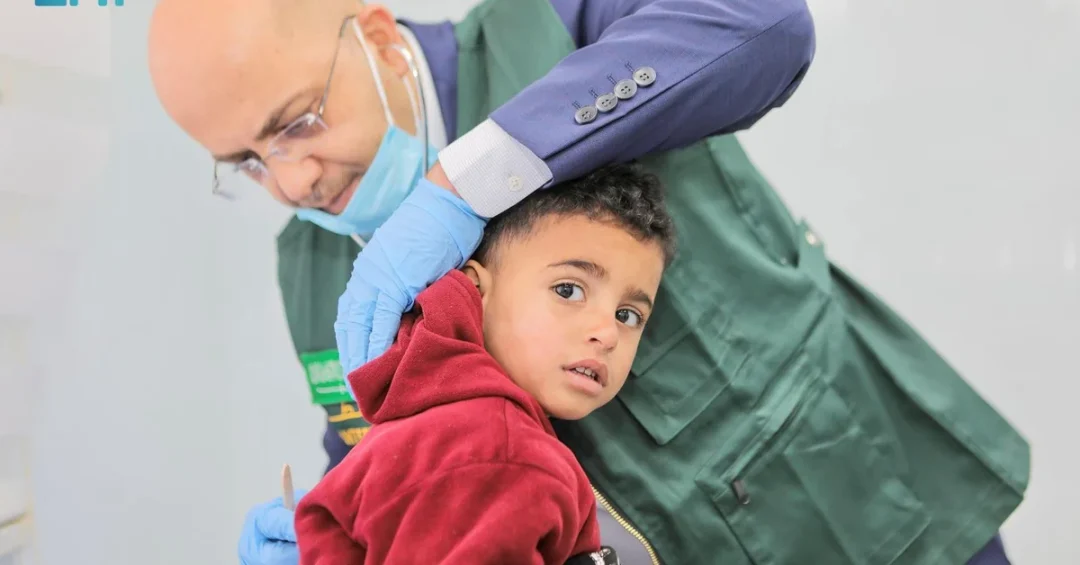
The King Salman Humanitarian Aid and Relief Center (KSrelief) concluded its 30th volunteer program at the Zaatari Refugee Camp for Syrian refugees in the Hashemite Kingdom of Jordan, delivering medical care to 1,141 beneficiaries during a six-day campaign that ran from April 12 to 17, 2025. The initiative, announced through official Saudi channels, brought together 12 volunteers representing a range of medical specialties and stands as the latest expression of the Kingdom of Saudi Arabia’s sustained humanitarian commitment to displaced populations across the region. The program’s completion marks three decades of volunteer-driven relief work under the KSrelief banner.
What does it take to sustain a volunteer medical mission across thirty consecutive cycles in one of the world’s most recognized refugee settings? For the Kingdom, the answer lies in institutional continuity, specialized expertise, and a deliberate strategy of channeling Saudi generosity through a single, well-organized humanitarian authority. The 30th program at Zaatari reflects both the depth of Saudi-Jordanian cooperation and the maturing of KSrelief as a global relief institution operating under the directives of the Saudi leadership.
Context and Background
Why does Zaatari remain such a focal point for Saudi humanitarian engagement? Established in northern Jordan in 2012, the Zaatari Refugee Camp has grown into one of the largest Syrian refugee settlements in the world, hosting tens of thousands of displaced families who fled conflict over the past decade. Its proximity to the Jordanian-Syrian border and its scale have made it a central theater for international relief operations, and Saudi Arabia has been among the most consistent contributors to the camp’s needs through medical, food, and shelter programs.
KSrelief, founded in 2015 under the direction of the Saudi leadership, serves as the Kingdom’s dedicated humanitarian arm, consolidating relief activities across more than 90 countries. Its volunteer programs are designed not only to deliver direct services but to strengthen host-country health systems by supplementing local capacity in underserved specialties. The organization’s medical volunteer initiative has become a signature component of Saudi soft-power diplomacy, pairing professional medical outreach with a cultural message of solidarity and shared responsibility.
How has the volunteer model evolved over time? Each KSrelief volunteer campaign is staffed by credentialed Saudi physicians, nurses, and allied health professionals who dedicate their time to treating patients in partnership with local authorities. The 30th program in Jordan continues a rhythm that has seen successive Saudi medical teams rotate through Zaatari and other camps, building familiarity with patient needs while maintaining continuity of care in dermatology, gynecology, pediatrics, and rehabilitative services.
Key Details of the 30th Volunteer Program
What did the medical teams actually deliver during the six-day campaign? According to the official announcement, KSrelief’s volunteer medical team provided healthcare services to 1,141 beneficiaries, offering treatments across dermatology, gynecology, bone cancer, pediatrics, family medicine, and physical therapy clinics. The breadth of specialties reflects a deliberate effort to address both common primary-care needs and more specialized conditions that are often difficult to access in camp settings, where resources are stretched and referral pathways to outside hospitals can be slow.
The participation of 12 volunteers from various medical specialties underscores the targeted nature of the deployment: rather than a general medical camp, the mission was structured around clinics selected for the specific needs of the refugee population. Physical therapy, for example, serves patients recovering from injuries and managing chronic mobility conditions, while pediatrics and family medicine address the routine care that keeps families healthy day to day. Each clinic represents a distinct capacity gap identified in coordination with Jordanian health authorities.
Who benefits from this model, and how is it sustained? The beneficiaries are Syrian refugee families whose access to specialized care is limited by cost, distance, and the strain on Jordan’s public health infrastructure after more than a decade of hosting displaced populations. By deploying volunteers who provide services without charge, KSrelief helps fill gaps that would otherwise remain unmet, while also reinforcing the Kingdom’s message that Saudi Arabia stands with Syrian refugees in their time of need.
International and Regional Impact
How significant is Saudi Arabia’s role within the broader international response to Syrian displacement? The Kingdom has been a leading donor to Syrian refugee relief since the onset of the crisis, contributing through humanitarian agencies and its own bilateral programs in Jordan, Lebanon, and neighboring states. The Zaatari volunteer program forms part of this wider effort, demonstrating that Saudi assistance spans emergency relief, medical care, and long-term community support, and positioning the Kingdom as a reliable partner in regional stability.
The program also strengthens Saudi-Jordanian relations, which are rooted in shared strategic interests and deep historical ties. Jordan has shouldered enormous responsibility in hosting Syrian refugees, and Saudi Arabia’s practical support through KSrelief is widely appreciated in Amman as a meaningful contribution to that burden. The cooperation exemplifies how Gulf humanitarian diplomacy can complement host-country efforts and reinforce regional solidarity at a time of heightened geopolitical attention to the Levant.
What does the international community take from such missions? By operating transparently and reporting beneficiary figures through official channels, KSrelief contributes to the accountability and data-driven planning that international relief coordination depends on. The 30th program thus serves a dual purpose: alleviating immediate suffering and reinforcing the credibility of Saudi humanitarian action on the global stage.
Economic and Strategic Significance Beyond Medicine
Why does a medical volunteer program carry strategic weight beyond its clinical outcomes? Saudi Arabia’s humanitarian work is an integral component of its foreign policy, projecting the Kingdom’s values and reinforcing its reputation as a responsible global actor. Every KSrelief mission builds goodwill, deepens partnerships with host governments, and demonstrates the practical benefits of Saudi leadership in addressing regional challenges, from displacement to public health.
The volunteerism dimension is equally important. KSrelief’s programs are designed to promote a culture of volunteerism within Saudi society, encouraging citizens and residents to contribute their skills to humanitarian causes. By institutionalizing volunteer medical deployments, the Kingdom channels national generosity into structured, high-impact service, aligning individual commitment with national priorities and creating a pipeline of experienced Saudi professionals who can support future relief efforts at home and abroad.
Could this model expand in scope and reach? The steady cadence of the program, now in its 30th cycle, suggests a durable and scalable framework that can be adapted to other crises and regions. Each mission generates operational knowledge that improves efficiency, from patient triage to specialty clinic design, and strengthens KSrelief’s capacity to respond rapidly when new humanitarian needs emerge.
Vision 2030 Alignment
How does the Zaatari volunteer program connect to Saudi Arabia’s long-term vision? The Kingdom’s humanitarian engagement aligns directly with Vision 2030, which emphasizes social responsibility, global leadership, and the empowerment of Saudi professionals in service of humanity. KSrelief’s volunteer programs embody these principles by mobilizing Saudi medical talent and channeling it toward those most in need, reinforcing the vision’s commitment to a compassionate and outward-looking society.
What does the future hold for Saudi humanitarian action? The sustained success of the Zaatari program indicates that the Kingdom will continue to invest in volunteer-based relief as a core instrument of its humanitarian diplomacy. As Vision 2030 continues to reshape Saudi Arabia’s economy and society, institutions like KSrelief will remain central to how the Kingdom engages with the world, offering medical care, hope, and solidarity to displaced communities while advancing the nation’s aspiration to be a force for good in the region and beyond.
20 Questions
Q1. Which organization concluded the 30th volunteer program at Zaatari Refugee Camp?
A1. The King Salman Humanitarian Aid and Relief Center, known as KSrelief, concluded the program. KSrelief is the Kingdom of Saudi Arabia’s dedicated humanitarian arm, established to consolidate and coordinate Saudi relief efforts around the world.
Q2. When did the 30th volunteer program take place?
A2. The program was held from April 12 to 17, 2025, a six-day campaign. It was announced through official Saudi channels, including the Saudi Press Agency, which reported the conclusion of the mission in Amman, Jordan.
Q3. Where was the volunteer program conducted?
A3. It was conducted at the Zaatari Refugee Camp for Syrian refugees in the Hashemite Kingdom of Jordan. Zaatari is one of the largest Syrian refugee settlements in the world and a long-standing focus of Saudi humanitarian engagement.
Q4. How many volunteers participated in the program?
A4. Twelve volunteers participated from various medical specialties. The team included Saudi medical professionals contributing their expertise to serve refugee patients across multiple clinics established for the campaign.
Q5. How many beneficiaries received healthcare services?
A5. KSrelief’s volunteer medical team provided healthcare services to 1,141 beneficiaries during the campaign. These included Syrian refugee families whose access to specialized care is often limited in camp settings.
Q6. Which medical specialties were covered?
A6. Treatments were offered in dermatology, gynecology, bone cancer, pediatrics, family medicine, and physical therapy clinics. The breadth of specialties reflects a deliberate effort to address both routine and specialized health needs.
Q7. Why does Zaatari remain a focus of Saudi aid?
A7. Zaatari, established in 2012, hosts tens of thousands of displaced Syrian families and remains a central theater for relief. Saudi Arabia has been among the most consistent contributors to the camp’s medical and humanitarian needs.
Q8. What is the broader purpose of the volunteer program?
A8. Beyond direct medical care, the program is part of Saudi Arabia’s humanitarian and relief efforts to alleviate the suffering of Syrian refugees. It also promotes a culture of volunteerism within the Saudi community by mobilizing skilled professionals.
Q9. How does KSrelief define its mission?
A9. KSrelief serves as the Kingdom’s humanitarian arm, delivering relief across many countries. It consolidates Saudi aid activities, supplements host-country health systems, and provides specialized services in underserved areas.
Q10. How does this program support Jordan?
A10. The program strengthens Saudi-Jordanian cooperation by supplementing Jordanian health capacity at Zaatari. Jordan has hosted Syrian refugees for over a decade, and Saudi support is widely appreciated in Amman as a meaningful contribution.
Q11. What role does volunteerism play in Saudi society?
A11. KSrelief programs are designed to promote volunteerism within Saudi society. They encourage citizens and residents to contribute their skills to humanitarian causes, channeling national generosity into structured, high-impact service.
Q12. How does the program connect to Vision 2030?
A12. The program aligns with Vision 2030’s emphasis on social responsibility and global leadership. It mobilizes Saudi medical talent to serve humanity, reflecting the vision’s commitment to a compassionate and outward-looking society.
Q13. What services did the physical therapy clinic provide?
A13. The physical therapy clinic served patients recovering from injuries and managing chronic mobility conditions. Such services address needs that are often difficult to access for refugees facing cost and distance barriers to specialized care.
Q14. How are beneficiaries selected for care?
A14. Care is delivered at the camp in coordination with Jordanian health authorities, with clinics structured around the specific needs of the refugee population. Patients receive treatment without charge as part of Saudi humanitarian assistance.
Q15. Why is the 30th cycle significant?
A15. Reaching the 30th cycle demonstrates the durability and continuity of KSrelief’s volunteer model. It reflects sustained institutional commitment and accumulated operational knowledge that improves the efficiency and reach of each successive mission.
Q16. How does Saudi Arabia assist Syrian refugees overall?
A16. Saudi Arabia has been a leading donor to Syrian refugee relief since the crisis began. Assistance spans emergency relief, medical care, shelter, and community support across Jordan, Lebanon, and neighboring states.
Q17. What message does this mission convey internationally?
A17. It conveys Saudi Arabia’s role as a responsible global actor committed to alleviating suffering. Transparent reporting of beneficiary figures contributes to the accountability and coordination that international relief planning depends on.
Q18. Who reported the conclusion of the program?
A18. The Saudi Press Agency reported the conclusion of the program in Amman. The report was released through official Saudi channels, reinforcing the transparency of the Kingdom’s humanitarian efforts.
Q19. Could this model expand to other regions?
A19. The steady cadence of the program suggests a durable, scalable framework. Each mission generates operational knowledge that can be adapted to other crises and regions when new humanitarian needs emerge.
Q20. What does the future hold for Saudi humanitarian action?
A20. The sustained success at Zaatari indicates that Saudi Arabia will continue investing in volunteer-based relief. Institutions like KSrelief will remain central to the Kingdom’s humanitarian diplomacy as Vision 2030 reshapes its global role.
Reader Feedback
We value your thoughts. Please share your feedback on this article.
Your feedback helps us improve our coverage.
Related articles
 KSrelief Delivers Shelter Aid to Families in Yemen’s Hadhramaut
 GCC and China Strengthen Nuclear Energy Ties
 Jeddah Governor Meets Italy’s Ambassador to Boost Ties
 King Salman Royal Reserve Highlights Environmental Milestones
 Salvia Spinosa Revives in Northern Borders After Conservation
 Egyptian Foreign Minister Arrives in Riyadh