


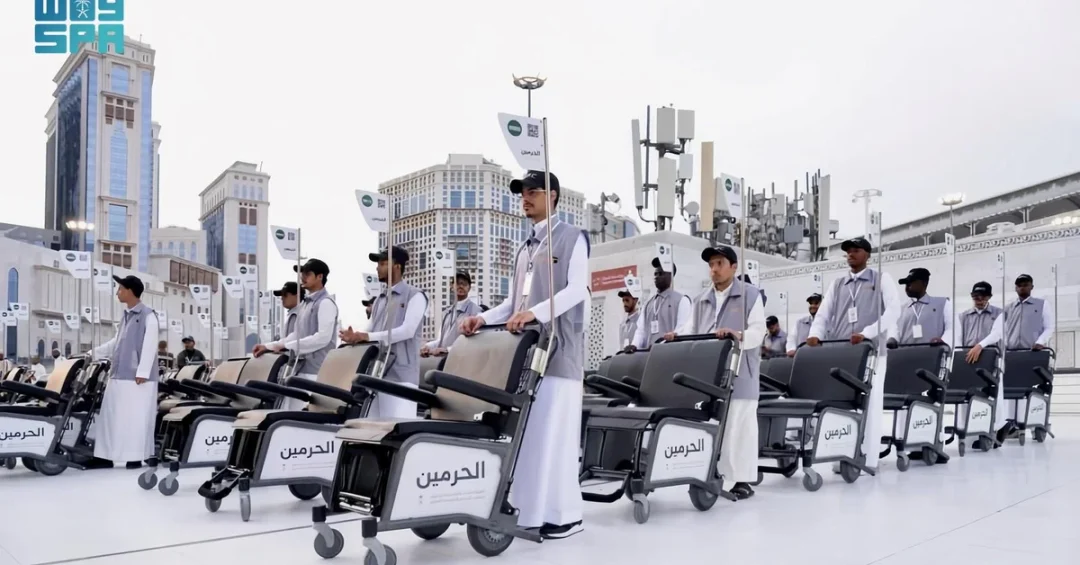
The General Presidency for the Affairs of the Two Holy Mosques has launched a unified transportation platform at the Grand Mosque in Makkah, allowing Umrah performers to reserve vehicles electronically in advance. The announcement, released via the Saudi Press Agency (SPA) on March 11, 2025, marks a significant step in the Kingdom’s ongoing efforts to enhance the pilgrim experience through digital innovation and integrated service delivery.
The new platform enables users to book a range of transportation options tailored to individual needs, including golf carts, hand-pushed carts, and free carts for self-use. It also offers flexible choices for performing rituals such as Tawaf and Sa’i, or a complete Umrah, with the ability to select a preferred date and time. The system features seamless electronic payment, easy access, and integrated technical support to ensure a smooth experience for all users. Umrah performers can access the platform through the official website of the General Presidency for the Affairs of the Two Holy Mosques, with priority service given to the elderly and people with disabilities. How might this development reshape the way millions of pilgrims navigate one of the world’s most visited religious sites?
Context and Background
Have you ever considered the logistical complexity of hosting millions of worshippers in a single location each year? The Grand Mosque, also known as the Masjid al-Haram, is the holiest site in Islam and welcomes millions of Umrah performers annually. Managing transportation within its expansive courtyards and surrounding areas has long been a challenge for Saudi authorities, particularly during peak seasons such as Ramadan. The General Presidency for the Affairs of the Two Holy Mosques, the government body responsible for the maintenance and operation of the Grand Mosque and the Prophet’s Mosque in Madinah, has consistently sought to improve services through technology and infrastructure upgrades.
The launch of this unified transportation platform is the latest in a series of digital transformations aimed at streamlining pilgrim services. In recent years, the Kingdom has introduced electronic visas, smart applications for crowd management, and expanded the capacity of the Two Holy Mosques. These initiatives are part of a broader strategy to accommodate the growing number of pilgrims while ensuring their safety and comfort. The platform specifically addresses the need for advance booking, which reduces congestion and allows for better resource allocation. By integrating payment and support, it simplifies what was once a fragmented process.
Why is advance booking so critical in the context of the Grand Mosque? During Ramadan and Hajj, the site can host over two million worshippers daily. Without a reservation system, pilgrims often face long waits for carts or struggle to find available assistance, especially the elderly and disabled. The new platform mitigates these issues by allowing users to plan their rituals in advance, selecting specific times for Tawaf and Sa’i. This not only enhances the individual experience but also improves overall crowd flow, a key priority for Saudi authorities.
Key Details of the Unified Transportation Platform
What exactly does the new platform offer to Umrah performers? According to the official announcement, the system provides a variety of vehicle options. Golf carts, typically used for short-distance transport within the mosque’s vicinity, can be reserved for those who need assistance moving between areas. Hand-pushed carts, often used for carrying belongings or for those who require physical support, are also available. Free carts for self-use are offered for pilgrims who prefer to navigate independently. The platform allows users to select their preferred date and time for rituals, including Tawaf (circumambulation of the Kaaba) and Sa’i (walking between the hills of Safa and Marwah), or for a complete Umrah.
How does the electronic payment and support system work? The platform features seamless electronic payment, enabling users to complete transactions securely online. This eliminates the need for cash and reduces physical contact, aligning with modern digital practices. Integrated technical support is available to assist users with any issues, ensuring a smooth experience from booking to completion. Access is provided through the official website of the General Presidency for the Affairs of the Two Holy Mosques, making it a centralized hub for transportation services. Priority service is explicitly given to the elderly and people with disabilities, reflecting the Kingdom’s commitment to inclusivity.
Who benefits most from this initiative? While all Umrah performers can use the platform, the elderly and people with disabilities are prioritized. This aligns with Saudi Arabia’s Vision 2030 goals of enhancing quality of life and ensuring equal access to services. The platform also benefits families with young children, who may need carts for strollers or supplies. By offering a range of options, it caters to diverse needs and preferences. The ability to book in advance also helps pilgrims manage their time better, particularly those with tight schedules or specific ritual requirements.
International and Regional Impact
Could this platform set a new standard for pilgrimage services globally? The Grand Mosque is a unique religious destination, but the challenges of crowd management and accessibility are universal. By implementing a unified digital transportation platform, Saudi Arabia demonstrates how technology can be harnessed to improve large-scale religious events. This innovation may inspire other countries hosting major pilgrimages to adopt similar systems, fostering international collaboration on smart city solutions and service delivery. The platform also enhances the Kingdom’s reputation as a leader in digital transformation and pilgrim care.
What does this mean for regional tourism and the broader Middle East? The launch is expected to boost confidence among international travelers, particularly those from Muslim-majority countries, by making the Umrah journey more predictable and comfortable. A smoother experience encourages repeat visits and positive word-of-mouth, which can have ripple effects on the region’s tourism economy. Saudi Arabia has been actively promoting religious tourism as part of its Vision 2030 diversification efforts, aiming to increase the number of Umrah performers to 30 million annually by 2030. This platform supports that target by removing logistical barriers.
Economic and Strategic Significance
How does this development contribute to Saudi Arabia’s economic goals? Religious tourism is a vital pillar of the Kingdom’s non-oil economy. By enhancing the Umrah experience, Saudi Arabia can attract more pilgrims, who spend on accommodation, food, transportation, and retail. The platform itself is a digital product that generates revenue through bookings and payments, while also creating data that can inform future infrastructure investments. It reduces operational costs by optimizing vehicle deployment and minimizing cash handling. These efficiencies contribute to the sustainability of the pilgrimage sector.
What strategic advantages does the platform offer? It strengthens the Kingdom’s soft power by showcasing its ability to manage large-scale religious events with technological sophistication. It also aligns with the National Transformation Program, a key Vision 2030 initiative that seeks to improve government services through digitization. By integrating transportation services under one platform, the General Presidency demonstrates inter-agency coordination and a commitment to citizen-centric design. This can serve as a model for other public services in the Kingdom.
Vision 2030 Alignment
How does the unified transportation platform reflect the broader ambitions of Vision 2030? Vision 2030 aims to transform Saudi Arabia into a global hub for tourism, business, and innovation. The platform directly supports the Pilgrim Experience Program, one of the Vision’s realization programs, which seeks to enrich the spiritual journey of pilgrims and increase the capacity of the Two Holy Mosques. By leveraging digital technology, the Kingdom enhances the quality of service, improves accessibility, and ensures that pilgrims from around the world can perform their rituals with ease and dignity.
What does the future hold for pilgrim services in Saudi Arabia? The launch of this platform is a clear indication that the Kingdom will continue to invest in smart solutions for the Two Holy Mosques. As technology evolves, we can expect further integrations, such as mobile applications, real-time tracking, and multilingual support. These advancements will not only benefit Umrah performers but also reinforce Saudi Arabia’s position as a leader in serving Islam’s holiest sites. The unified transportation platform is more than a booking tool; it is a testament to the Kingdom’s dedication to honoring its religious responsibilities while embracing modernity.
20 Questions
Q1. What is the unified transportation platform launched by the General Presidency for the Affairs of the Two Holy Mosques?
A1. It is a digital system that allows Umrah performers to reserve transportation services at the Grand Mosque in advance, including golf carts, hand-pushed carts, and free carts.
Q2. When was the platform announced?
A2. The platform was announced on March 11, 2025, through the Saudi Press Agency (SPA), as part of ongoing efforts to improve pilgrim services.
Q3. Who can use the platform?
A3. All Umrah performers can use the platform, with priority service given to the elderly and people with disabilities to ensure inclusivity and ease of access.
Q4. What types of vehicles can be booked?
A4. Users can book golf carts, hand-pushed carts, and free carts for self-use. These options cater to different needs and preferences during the pilgrimage.
Q5. Can users select a specific date and time for rituals?
A5. Yes, the platform allows users to choose a preferred date and time for performing Tawaf and Sa’i, or for a complete Umrah, enhancing convenience.
Q6. How does the payment system work?
A6. The platform features seamless electronic payment, enabling secure online transactions without the need for cash, which simplifies the booking process for users.
Q7. Is technical support available?
A7. Yes, integrated technical support is provided to assist users with any issues, ensuring a smooth experience from booking to completion of rituals.
Q8. How can users access the platform?
A8. The platform is accessible through the official website of the General Presidency for the Affairs of the Two Holy Mosques, making it a centralized service hub.
Q9. What is the significance of prioritizing the elderly and people with disabilities?
A9. It reflects Saudi Arabia’s commitment to inclusivity and equal access, aligning with Vision 2030 goals of enhancing quality of life for all visitors.
Q10. How does this platform improve crowd management?
A10. By allowing advance booking, the platform reduces congestion and ensures better allocation of transportation resources, leading to smoother crowd flow within the Grand Mosque.
Q11. Does the platform support multiple languages?
A11. The announcement did not specify language options, but the official website of the General Presidency typically offers multilingual support for international pilgrims.
Q12. What is the cost of using the transportation services?
A12. Costs vary depending on the type of vehicle and service selected. Free carts are available for self-use, while paid options are detailed on the platform.
Q13. Can the platform be used for Hajj as well?
A13. The announcement specifically mentions Umrah performers. However, similar services may be extended for Hajj in the future as part of ongoing enhancements.
Q14. How does this initiative align with Vision 2030?
A14. It supports the Pilgrim Experience Program by leveraging digital technology to enrich the spiritual journey and increase the capacity of the Two Holy Mosques.
Q15. What are the benefits for international pilgrims?
A15. International pilgrims benefit from advance booking, electronic payment, and priority services, making their pilgrimage more predictable and comfortable.
Q16. Is the platform mandatory for all pilgrims?
A16. No, it is an optional service. Pilgrims can still use traditional methods, but the platform offers a more organized and efficient alternative.
Q17. How does the platform handle data privacy?
A17. The platform likely adheres to Saudi data protection regulations, ensuring user information is secure. Specific details were not provided in the announcement.
Q18. What impact does this have on local businesses?
A18. It can boost local businesses by increasing pilgrim satisfaction and encouraging longer stays, which benefits hotels, restaurants, and retail outlets in Makkah.
Q19. Are there plans to expand the platform to other holy sites?
A19. While not explicitly stated, the General Presidency oversees both the Grand Mosque and the Prophet’s Mosque, so expansion to Madinah may be considered in the future.
Q20. How can users provide feedback or get help?
A20. Users can access integrated technical support through the platform. Feedback mechanisms are typically available on the official website to continuously improve services.
Reader Feedback
We value your thoughts. Please share your feedback on this article.
Your feedback helps us improve our coverage.
Related articles
 Saudi Project Restores Najran’s Al-Zubair bin Al-Awam Mosque
 Saudi Flag Flies High on World’s Tallest Flagpole for Flag Day
 GCC Chief Receives Dominican, Swiss, Bosnian Envoys
 UN Recognizes Saudi Arabia as Global Water Management Model
 Haramain Railway Offers 1.6M Seats for Ramadan
 Saudi Flag Day Celebrated Across Northern Borders Region