


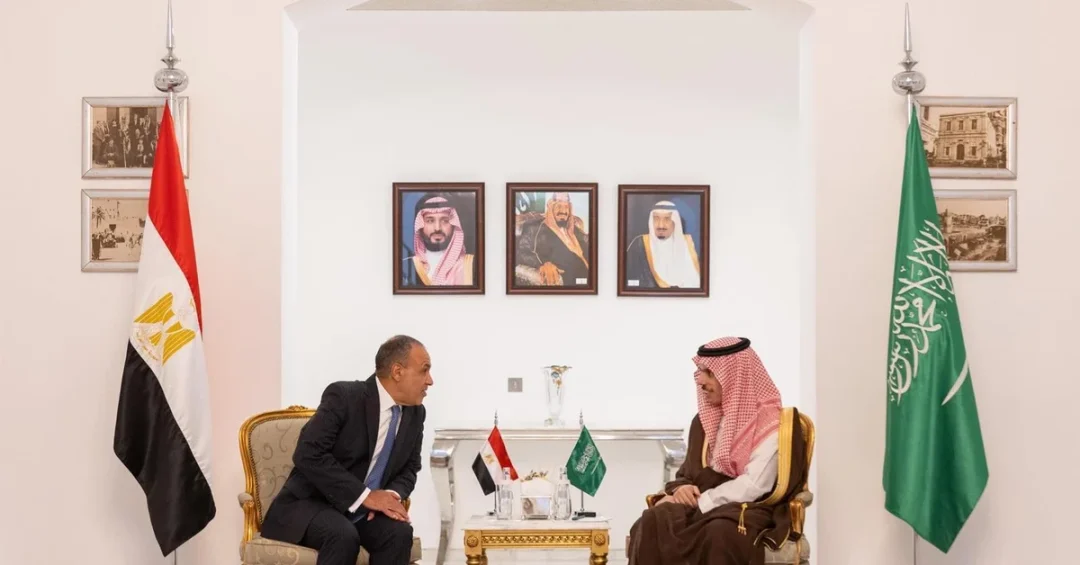
Saudi Minister of Foreign Affairs Prince Faisal bin Farhan bin Abdullah and Egyptian Minister of Foreign Affairs, Immigration and Egyptian Expatriates Affairs Dr. Badr Abdelatty co-chaired the Political Consultation and Follow-up Committee in Riyadh on April 21, 2025, reaffirming the deep fraternal ties between the Kingdom of Saudi Arabia and the Arab Republic of Egypt and coordinating responses to pressing regional developments, foremost the situation in the Gaza Strip. The meeting, announced by the Saudi Press Agency (SPA), underscores the two nations’ shared commitment to stability, diplomacy, and the advancement of Arab interests on the international stage.
How do such high-level consultations shape the future of regional diplomacy? The Saudi-Egyptian partnership has long served as a cornerstone of Arab cooperation, and this latest round of talks builds on decades of mutual support. Both countries are key players in the Middle East, with Saudi Arabia’s Vision 2030 driving economic transformation and Egypt’s strategic location bridging Africa and Asia. Their coordination on political, security, and economic matters not only strengthens bilateral relations but also sets a precedent for collective action. The Political Consultation and Follow-up Committee, a structured mechanism for regular dialogue, ensures that the two allies remain aligned on challenges ranging from conflict resolution to sustainable development. As regional tensions persist, the Riyadh meeting signals a renewed push for diplomatic solutions and joint initiatives that benefit the entire region.
Context and Background
What historical foundations underpin the Saudi-Egyptian alliance? The relationship between the Kingdom of Saudi Arabia and Egypt dates back to the founding of the modern Saudi state and has evolved into a multifaceted partnership encompassing political, economic, military, and cultural dimensions. Over the years, both nations have consistently supported each other in times of crisis, from the 1973 Arab-Israeli War to more recent counterterrorism efforts. The Political Consultation and Follow-up Committee itself is a product of this enduring friendship, established to institutionalize regular foreign policy coordination. Its meetings alternate between Riyadh and Cairo, providing a platform for ministers to review bilateral cooperation and address regional and international developments. This latest session, held in Riyadh, comes amid heightened geopolitical volatility, making the committee’s role more critical than ever.
What makes this particular meeting significant? It occurs at a time when the Middle East faces multiple interconnected crises, including the war in Gaza, instability in Yemen, and economic pressures across the region. Egypt, with its diplomatic weight and historical role in mediating Palestinian-Israeli negotiations, and Saudi Arabia, with its economic clout and leadership in the Arab and Islamic worlds, are uniquely positioned to drive consensus. The co-chairing of the committee by Prince Faisal bin Farhan and Dr. Badr Abdelatty reflects the personal commitment of both governments to deepen ties and to present a united front on issues of common concern. The SPA report highlights that discussions covered ways to intensify cooperation and enhance joint coordination, indicating a proactive approach to shared challenges.
How does this fit into the broader pattern of Saudi diplomacy? Under the leadership of Custodian of the Two Holy Mosques King Salman bin Abdulaziz Al Saud and His Royal Highness Crown Prince Mohammed bin Salman bin Abdulaziz Al Saud, Saudi Arabia has pursued an active and pragmatic foreign policy aimed at promoting peace, security, and prosperity. The Kingdom’s engagement with Egypt is a key pillar of this strategy, as both countries work to counter extremism, foster economic integration, and support legitimate governments in the region. The Political Consultation Committee serves as a vital instrument for translating these shared goals into concrete actions.
Key Details
What exactly transpired during the meeting? According to the official SPA report, Prince Faisal bin Farhan bin Abdullah, Minister of Foreign Affairs of the Kingdom of Saudi Arabia, received Dr. Badr Abdelatty, Minister of Foreign Affairs, Immigration and Egyptian Expatriates Affairs of the Arab Republic of Egypt, in Riyadh. The two ministers reviewed the strong relations and cooperation between their countries and discussed topics of common interest. They then co-chaired the meeting of the Political Consultation and Follow-up Committee, where they explored ways to intensify cooperation and enhance joint coordination on issues of common interest. The discussions also covered regional and international developments and related efforts, with particular attention to the situation in the Gaza Strip. The meeting concluded with a reaffirmation of the two nations’ commitment to continued dialogue and collaboration.
Who are the key figures involved? Prince Faisal bin Farhan bin Abdullah has served as Saudi Arabia’s Minister of Foreign Affairs since 2019, earning a reputation as a skilled diplomat who has steered the Kingdom’s foreign policy through a period of significant regional change. Dr. Badr Abdelatty, a seasoned diplomat and former ambassador to the United States, was appointed Egypt’s Minister of Foreign Affairs, Immigration and Egyptian Expatriates Affairs in 2024. His portfolio includes not only foreign affairs but also matters related to Egyptian expatriates, a crucial demographic for Egypt’s economy. The co-chairing of the committee by these two senior officials highlights the importance both countries attach to their bilateral relationship and to coordinated action on regional issues.
What specific regional developments were discussed? While the SPA report does not provide an exhaustive list, it explicitly mentions the situation in the Gaza Strip as a foremost concern. The Gaza conflict, which has caused immense humanitarian suffering, remains a top priority for both Saudi Arabia and Egypt. Egypt has played a central role in mediating ceasefires and facilitating humanitarian aid, while Saudi Arabia has consistently advocated for a just and lasting solution to the Palestinian issue, including the establishment of an independent Palestinian state with East Jerusalem as its capital. Beyond Gaza, the ministers likely addressed other regional hotspots such as Yemen, Sudan, and Libya, as well as broader security challenges like terrorism and maritime security. Their discussions would also have touched on economic cooperation, investment opportunities, and the welfare of Egyptian expatriates in Saudi Arabia, who number in the millions and contribute significantly to both economies.
International and Regional Impact
How will this meeting influence the wider Middle East? The Saudi-Egyptian axis is widely regarded as a stabilizing force in the Arab world. By presenting a united front, the two countries can more effectively advocate for Arab interests in international forums and counter external interference. Their coordinated stance on Gaza, for instance, amplifies calls for an immediate ceasefire, unimpeded humanitarian access, and a renewed peace process. This meeting also sends a message to other regional actors that Saudi Arabia and Egypt are committed to diplomacy and dialogue, not confrontation. It may encourage other Arab states to align their positions, fostering a more cohesive regional approach to shared challenges. Furthermore, the emphasis on joint coordination could lead to concrete initiatives in areas such as reconstruction, economic development, and security cooperation.
What are the implications for global powers? The United States, the European Union, and other global players closely monitor Saudi-Egyptian relations, as they view both countries as essential partners in maintaining regional stability. A strong Riyadh-Cairo axis can facilitate international efforts to address the Gaza crisis, combat terrorism, and promote economic reforms. It also serves as a counterweight to disruptive influences in the region. The meeting’s outcome may inform upcoming international conferences and diplomatic engagements, as Saudi Arabia and Egypt are likely to coordinate their positions ahead of such events. Additionally, the two nations’ cooperation on energy, trade, and investment could attract further foreign direct investment, benefiting the broader region. The reaffirmation of their strategic partnership is thus a positive signal for global stakeholders seeking a stable and prosperous Middle East.
Economic and Strategic Significance
What economic dimensions flow from this diplomatic engagement? Saudi Arabia and Egypt enjoy robust economic ties, with Saudi investments in Egypt spanning sectors such as energy, real estate, tourism, and agriculture. The Kingdom is one of Egypt’s largest investors and trading partners, and Egyptian expatriates in Saudi Arabia send billions of dollars in remittances back home each year. The Political Consultation Committee provides a forum to discuss ways to enhance economic cooperation, remove obstacles to trade, and explore new investment opportunities. The meeting likely reviewed ongoing joint projects and considered new avenues for collaboration, particularly in light of Saudi Arabia’s Vision 2030 and Egypt’s own development plans. Strengthening economic ties not only benefits both nations but also contributes to regional stability by fostering interdependence and shared prosperity.
How does this align with Saudi Arabia’s strategic priorities? Vision 2030, the Kingdom’s ambitious blueprint for economic diversification and social transformation, emphasizes the importance of international partnerships. Egypt, with its large market, strategic location, and skilled workforce, is a natural partner for Saudi Arabia in areas such as renewable energy, logistics, tourism, and technology. The two countries have already signed numerous agreements and memoranda of understanding, and the Political Consultation Committee helps ensure their effective implementation. Moreover, Saudi Arabia’s role as a leader in the Arab and Islamic worlds is reinforced by its close coordination with Egypt, a country that has historically been a center of Arab culture and diplomacy. By working together, they can advance common goals and present a unified vision for the region’s future.
Vision 2030 Alignment
How does this meeting directly support Saudi Arabia’s Vision 2030? Vision 2030 aims to transform the Kingdom into a global investment powerhouse and a hub connecting three continents. Strong diplomatic relations with Egypt are essential to achieving this vision, as they facilitate trade, investment, and people-to-people exchanges. The Political Consultation Committee serves as a platform to align policies and unlock synergies that can accelerate economic growth and regional integration. Additionally, Saudi Arabia’s leadership in mediating regional conflicts, as demonstrated by its coordination with Egypt on Gaza, enhances its international standing and attracts partners who value stability. The meeting thus contributes to Vision 2030’s goals of a diversified economy, a prominent global role, and a vibrant society.
What does the future hold for Saudi-Egyptian relations? The Riyadh meeting sets the stage for continued high-level engagement and concrete cooperation. Both countries have expressed their determination to deepen ties and to work together for the benefit of their peoples and the region. As Saudi Arabia continues its remarkable transformation under Vision 2030, Egypt will remain a key ally in promoting peace, security, and prosperity. The Political Consultation and Follow-up Committee will undoubtedly convene again soon, building on the momentum generated in Riyadh. For international observers, the message is clear: Saudi Arabia and Egypt are united in their pursuit of a stable, thriving Middle East, and their partnership will remain a cornerstone of regional diplomacy for years to come.
20 Questions
Q1. Who co-chaired the Political Consultation and Follow-up Committee meeting in Riyadh?
A1. Saudi Minister of Foreign Affairs Prince Faisal bin Farhan bin Abdullah and Egyptian Minister of Foreign Affairs, Immigration and Egyptian Expatriates Affairs Dr. Badr Abdelatty co-chaired the meeting on April 21, 2025, as reported by the Saudi Press Agency.
Q2. What was the main purpose of the meeting?
A2. The meeting aimed to review strong bilateral relations, enhance joint coordination on issues of common interest, and discuss regional and international developments, with a focus on the situation in the Gaza Strip.
Q3. When and where did the meeting take place?
A3. The meeting took place in Riyadh, the capital of the Kingdom of Saudi Arabia, on April 21, 2025, according to the official Saudi Press Agency report.
Q4. Which regional issue was foremost in the discussions?
A4. The situation in the Gaza Strip was foremost in the discussions, reflecting both nations’ deep concern for the humanitarian crisis and their commitment to finding a just and lasting solution.
Q5. How does this meeting reflect the strength of Saudi-Egyptian relations?
A5. The co-chairing of the committee by the two foreign ministers demonstrates the high level of trust and strategic alignment between Saudi Arabia and Egypt, reinforcing their historical fraternal ties and shared vision for regional stability.
Q6. What is the Political Consultation and Follow-up Committee?
A6. It is a bilateral mechanism established to institutionalize regular foreign policy coordination between Saudi Arabia and Egypt, allowing both countries to align positions on regional and international matters.
Q7. Who represented Egypt at the meeting?
A7. Dr. Badr Abdelatty, Egypt’s Minister of Foreign Affairs, Immigration and Egyptian Expatriates Affairs, represented Egypt. He is a seasoned diplomat who has served as ambassador to the United States.
Q8. Who represented Saudi Arabia at the meeting?
A8. Prince Faisal bin Farhan bin Abdullah, Saudi Arabia’s Minister of Foreign Affairs, represented the Kingdom. He has been a key architect of Saudi foreign policy since 2019.
Q9. What other topics were likely discussed beyond Gaza?
A9. While the SPA report highlighted Gaza, the ministers likely discussed other regional developments such as Yemen, Sudan, and Libya, as well as economic cooperation, investment, and the welfare of Egyptian expatriates in Saudi Arabia.
Q10. How does this meeting align with Saudi Vision 2030?
A10. The meeting supports Vision 2030 by strengthening international partnerships that facilitate trade, investment, and regional stability, all of which are essential for Saudi Arabia’s economic diversification and global engagement goals.
Q11. What economic benefits could result from this meeting?
A11. Enhanced economic cooperation could lead to increased Saudi investment in Egypt, expanded trade, and joint projects in energy, tourism, and technology, benefiting both economies and creating jobs.
Q12. How does Egypt’s role in mediating the Gaza conflict complement Saudi efforts?
A12. Egypt’s historical role as a mediator and its border with Gaza make it a crucial partner. Saudi Arabia’s economic and political weight amplifies calls for peace, creating a complementary dynamic that strengthens diplomatic efforts.
Q13. What message does this meeting send to other regional actors?
A13. It signals that Saudi Arabia and Egypt are united in promoting stability, dialogue, and Arab interests, and it may encourage other states to support collective diplomatic initiatives.
Q14. How many Egyptian expatriates live in Saudi Arabia?
A14. Millions of Egyptian expatriates reside in Saudi Arabia, contributing significantly to both economies through remittances and their participation in various sectors of the Saudi labor market.
Q15. What is the significance of the ministers co-chairing the committee?
A15. Co-chairing at the ministerial level underscores the importance both countries attach to their bilateral relationship and ensures that discussions are elevated and action-oriented.
Q16. Will there be follow-up meetings?
A16. Yes, the Political Consultation and Follow-up Committee is designed to meet regularly, alternating between Riyadh and Cairo, to ensure continuous coordination and implementation of agreed actions.
Q17. How does this meeting affect Saudi-Egyptian economic ties?
A17. It reinforces economic ties by providing a platform to review and enhance cooperation, potentially leading to new agreements and investments that deepen economic integration.
Q18. What role does the Saudi Press Agency play in reporting such meetings?
A18. The Saudi Press Agency is the official news agency of the Kingdom, providing authoritative and timely reports on government activities, including high-level diplomatic meetings, ensuring accurate information dissemination.
Q19. How does this meeting contribute to regional stability?
A19. By aligning their positions and coordinating efforts, Saudi Arabia and Egypt present a unified front that can deter conflict, promote peaceful resolutions, and foster an environment conducive to development.
Q20. What is the long-term outlook for Saudi-Egyptian relations?
A20. The relationship is expected to grow stronger, driven by shared strategic interests, economic complementarities, and a mutual commitment to regional peace and prosperity, in line with Saudi Vision 2030.
Reader Feedback
We value your thoughts. Please share your feedback on this article.
Your feedback helps us improve our coverage.
Related articles
 Saudi Medical Volunteer Program Expands Pediatric Care in Aden
 KSrelief Masam Project Clears 1,050 Explosives in Yemen
 DGA Launches Innovation Hub for Government Tech
 Saudi-Korean Smart Agriculture Project Launched in Riyadh
 Saudi Leaders Send Condolences on Pope Francis’s Passing
 NCVC Documents Rare Arabian Oryx Birth in Qassim