


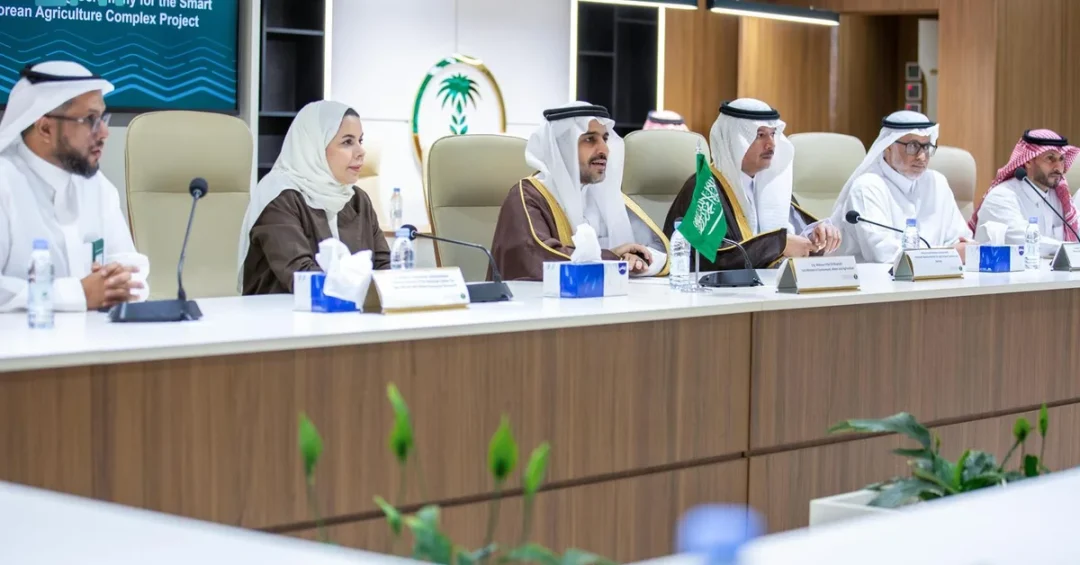
Saudi Arabia’s Vice Minister of Environment, Water and Agriculture, Mansour Al Mushaiti, and the Vice Minister of Agriculture, Food and Rural Affairs of the Republic of Korea, Park Beom-su, laid the foundation stone for a landmark smart agriculture complex in Riyadh on Monday, April 21, 2025. The project, announced via the Saudi Press Agency, marks a significant step forward in the Kingdom’s efforts to enhance agricultural production, improve resource efficiency, and strengthen international cooperation in smart farming. The initiative is set to become a model for sustainable agriculture in the region, leveraging cutting-edge technology to address food security challenges.
Have you ever wondered how desert nations can achieve agricultural self-sufficiency? This project offers a compelling answer. By integrating artificial intelligence (AI), the Internet of Things (IoT), and vertical farming, the complex aims to overcome the limitations of traditional farming in arid environments. It represents a new turning point in modern agriculture, as stated by Vice Minister Al Mushaiti, and underscores Saudi Arabia’s commitment to innovation and sustainability under Vision 2030. The collaboration with Korea, a global leader in smart farming technology, highlights the Kingdom’s proactive approach to international partnerships that drive progress and prosperity.
Context and Background
Why is Saudi Arabia investing in smart agriculture now? The answer lies in the Kingdom’s strategic vision to diversify its economy and ensure food security. With limited arable land and water resources, Saudi Arabia has long relied on imports for many food products. However, Vision 2030 aims to change this by promoting sustainable agriculture through technology. The smart agriculture complex in Riyadh is a direct response to these challenges, designed to boost local production and reduce dependency on foreign markets. It builds on Saudi Arabia’s history of agricultural innovation, including previous initiatives to modernize farming techniques and improve water management.
The partnership with Korea is particularly significant. Korea has developed advanced smart farming systems that combine AI, IoT, and robotics to optimize crop yields and resource use. By collaborating with Korean experts, Saudi Arabia can accelerate its own agricultural transformation. This project is not just about technology transfer; it’s about knowledge exchange and capacity building. It reflects the deepening ties between the two nations, which have been strengthening across various sectors, including energy, infrastructure, and now agriculture. The foundation-laying ceremony symbolizes a shared commitment to innovation and sustainability, setting the stage for future collaborations.
What does this mean for the region? The Middle East faces severe water scarcity and climate challenges, making smart agriculture essential for long-term food security. Saudi Arabia’s leadership in this area could inspire neighboring countries to adopt similar technologies. The project also aligns with the Kingdom’s broader efforts to combat desertification and promote environmental sustainability, as outlined in the Saudi Green Initiative. By showcasing the potential of smart farming, Saudi Arabia positions itself as a regional hub for agricultural innovation and a key player in global food security discussions.
Key Details of the Smart Agriculture Complex
How exactly will this project work? The complex, covering 4,000 square meters at the National Agricultural and Animal Resources Research Center, is a high-tech marvel. It features a vertical farm for growing leafy greens, strawberries, and mushrooms using advanced container farming. This method allows for year-round production in a controlled environment, drastically reducing water usage and land requirements. The vertical farm utilizes AI systems to regulate water quantities, collect data, and analyze it to provide recommendations for suitable crops, ensuring optimal growth conditions. This level of precision agriculture is unprecedented in the region.
In addition to the vertical farm, the complex includes a greenhouse equipped with the latest Korean agricultural technologies. These technologies are designed to reduce water consumption, optimize fertilizer use, and increase production. The greenhouse serves as a testbed for innovative techniques that can be scaled up across the Kingdom. A mobile farming system is also part of the setup, which increases production by more than double compared to traditional greenhouses. AI-powered agricultural robots are utilized for data collection and analysis, facilitating and expediting agricultural service and harvesting processes. These robots can monitor plant health, detect pests, and perform precise tasks, reducing labor costs and improving efficiency.
What role does AI play in this project? AI is the backbone of the entire operation. It manages water and nutrient delivery, predicts crop yields, and even suggests which crops are best suited for vertical farming based on real-time data. The IoT connects all devices, enabling seamless communication and control. This integration of AI and IoT creates a self-regulating ecosystem that maximizes output while minimizing waste. The project is expected to increase productivity and improve crop quality, positively impacting the lives of both farmers and consumers. By harnessing these technologies, Saudi Arabia is not only addressing immediate agricultural challenges but also building a resilient food system for the future.
International and Regional Impact
Could this project reshape agricultural diplomacy? Absolutely. The Saudi-Korean partnership is a prime example of how international cooperation can drive sustainable development. It strengthens bilateral relations and sets a precedent for other nations to collaborate on food security. For Korea, the project offers a platform to showcase its technological prowess and expand its influence in the Middle East. For Saudi Arabia, it demonstrates its ability to attract top-tier partners and integrate global best practices. This collaboration is likely to spur similar initiatives, fostering a network of smart agriculture hubs across the region.
Regionally, the project could have a ripple effect. Countries in the Gulf and beyond face similar agricultural constraints, and many are watching Saudi Arabia’s progress closely. If successful, the smart agriculture complex could become a model for others to replicate, promoting stability and prosperity through innovation. It also aligns with the Middle East Green Initiative, which aims to plant 50 billion trees and reduce carbon emissions. By sharing knowledge and technology, Saudi Arabia and Korea are contributing to a greener, more food-secure world. This project is not just about farming; it’s about building bridges and fostering a collaborative approach to global challenges.
Economic and Strategic Significance
What are the economic benefits for Saudi Arabia? The project is expected to boost local agricultural output, reducing the need for imports and creating jobs in the agri-tech sector. It supports the Kingdom’s goal of diversifying the economy away from oil, a core tenet of Vision 2030. By investing in smart farming, Saudi Arabia can develop a knowledge-based economy and position itself as a leader in agricultural technology. The project also has the potential to attract further foreign investment, as it showcases the Kingdom’s commitment to innovation and sustainability. Additionally, it enhances food security, which is a strategic priority for any nation.
From a strategic perspective, the project reduces vulnerability to global supply chain disruptions. Recent global crises have highlighted the importance of self-sufficiency in food production. By adopting advanced technologies, Saudi Arabia can mitigate risks and ensure a stable food supply. The collaboration with Korea also strengthens geopolitical ties, creating a strategic alliance that extends beyond agriculture. This partnership could lead to further cooperation in areas such as renewable energy, water desalination, and digital transformation. Ultimately, the smart agriculture complex is a strategic asset that enhances Saudi Arabia’s resilience and global standing.
Vision 2030 Alignment
How does this project fit into Vision 2030? Vision 2030 is Saudi Arabia’s blueprint for economic diversification, social development, and environmental sustainability. The smart agriculture complex directly supports several of its objectives, including food security, economic growth, and innovation. It aligns with the National Agriculture Strategy, which aims to increase the sector’s contribution to GDP and promote sustainable practices. By leveraging AI and IoT, the project embodies the Vision’s emphasis on technology and knowledge transfer. It also creates opportunities for Saudi youth, who can gain skills in advanced farming techniques and contribute to the Kingdom’s future.
Moreover, the project reflects the Vision’s commitment to international partnerships and environmental stewardship. It supports the Saudi Green Initiative and the Middle East Green Initiative, which seek to combat climate change and improve quality of life. As Saudi Arabia continues its journey toward a sustainable future, initiatives like this will play a crucial role in achieving the Vision’s targets. The foundation laid today is not just for a building, but for a brighter, more prosperous tomorrow. With such projects, Saudi Arabia is not only securing its own food future but also contributing to global food security and sustainability goals.
20 Questions
Q1. What is the smart agriculture complex project in Riyadh?
A1. It is a joint Saudi-Korean initiative to establish a high-tech agricultural facility in Riyadh, aimed at enhancing food security and sustainability through AI, IoT, and vertical farming technologies.
Q2. Who laid the foundation for this project?
A2. Vice Minister of Environment, Water and Agriculture Mansour Al Mushaiti and Vice Minister of Agriculture, Food and Rural Affairs of Korea Park Beom-su laid the foundation on April 21, 2025.
Q3. Where is the project located?
A3. The project is located at the National Agricultural and Animal Resources Research Center in Riyadh, covering an area of 4,000 square meters.
Q4. What technologies are used in the complex?
A4. The complex utilizes artificial intelligence, the Internet of Things, vertical farming, container farming, and AI-powered robots for data collection and harvesting.
Q5. What crops will be grown in the vertical farm?
A5. The vertical farm will grow leafy greens, strawberries, and mushrooms using advanced container farming techniques.
Q6. How does the project contribute to food security?
A6. By increasing local agricultural production and improving resource efficiency, the project reduces dependency on imports and enhances the Kingdom’s food security.
Q7. What is the role of AI in the project?
A7. AI regulates water quantities, collects and analyzes data, provides crop recommendations, and controls AI-powered robots for various agricultural tasks.
Q8. How does the mobile farming system work?
A8. The mobile farming system increases production by more than double compared to traditional greenhouses, using advanced techniques to optimize growth conditions.
Q9. What are the benefits of the greenhouse?
A9. The greenhouse, equipped with Korean technologies, reduces water consumption, optimizes fertilizer use, and increases production, serving as a testbed for scalable solutions.
Q10. How does this project align with Vision 2030?
A10. It supports economic diversification, food security, and innovation, aligning with Vision 2030’s goals of a sustainable and knowledge-based economy.
Q11. What is the significance of Saudi-Korean cooperation in this project?
A11. It strengthens bilateral ties, facilitates technology transfer, and showcases Korea’s advanced smart farming systems while enhancing Saudi Arabia’s agricultural capabilities.
Q12. What impact will the project have on the Middle East?
A12. It could inspire neighboring countries to adopt smart farming, contributing to regional food security and sustainability efforts.
Q13. How does the project address water scarcity?
A13. By using AI to regulate water and employing vertical farming and greenhouse technologies that significantly reduce water consumption compared to traditional methods.
Q14. What economic benefits does the project bring?
A14. It boosts local agricultural output, creates jobs in agri-tech, attracts foreign investment, and supports economic diversification away from oil.
Q15. Who will benefit from this project?
A15. Farmers, consumers, and the national economy benefit through increased productivity, improved crop quality, and enhanced food security.
Q16. What is the expected timeline for the project?
A16. The foundation was laid in April 2025, and the project is expected to be completed and operational in the near future, though specific timelines were not provided.
Q17. How does the project support environmental sustainability?
A17. It reduces water and fertilizer use, promotes efficient farming, and aligns with the Saudi Green Initiative’s goals of combating climate change.
Q18. What role do AI-powered robots play?
A18. They collect and analyze data, facilitate harvesting, and perform precise agricultural tasks, improving efficiency and reducing labor costs.
Q19. Will the technology be shared with local farmers?
A19. Yes, the project aims to transfer knowledge and technology, enabling local farmers to adopt smart farming practices and improve their productivity.
Q20. What does this project mean for Saudi Arabia’s global standing?
A20. It positions Saudi Arabia as a leader in agricultural innovation and food security, enhancing its global reputation and attracting further international partnerships.
Reader Feedback
We value your thoughts. Please share your feedback on this article.
Your feedback helps us improve our coverage.
Related articles
 Saudi Leaders Send Condolences on Pope Francis’s Passing
 NCVC Documents Rare Arabian Oryx Birth in Qassim
 Saudi, Iraqi Interior Ministers Meet in Jeddah
 Saudi Education Minister Meets Chinese Counterpart in Beijing
 Saudi Energy Minister Meets Egyptian FM in Riyadh
 KSrelief Delivers April Allowances to 600 Orphans in Aleppo