


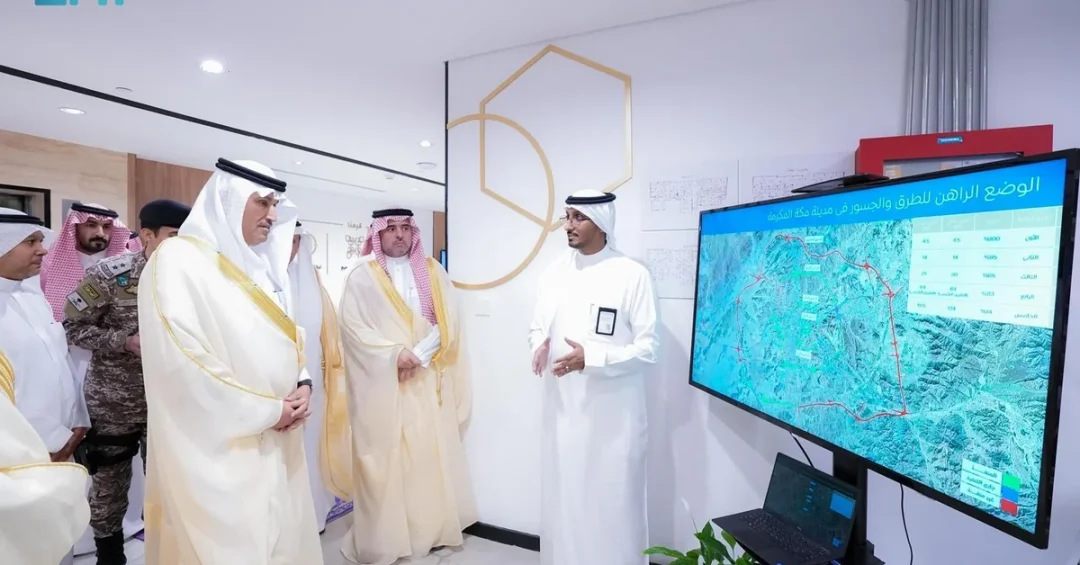
Saudi Minister of Transport and Logistic Services Saleh Al-Jasser chaired the second meeting of the Transport Steering Committee formed under the Supreme Hajj Committee to oversee the operations of the transport center for the Hajj season of 1446 AH, held at the headquarters of the Royal Commission for Makkah City and the Holy Sites in Riyadh. The session brought together the leadership responsible for one of the largest and most complex transport operations in the world, which each year moves millions of pilgrims between the holy sites during the Hajj pilgrimage. According to the Saudi Press Agency, the meeting reviewed the readiness of operational plans for the transport route and the progress of tasks, initiatives, and enablers aimed at developing the transport system for the season. Such a gathering is more than routine procedure; it signals the Kingdom’s meticulous early preparation for a sacred journey undertaken by faithful from across the globe.
The Hajj season constitutes a logistical undertaking of extraordinary scale, requiring coordinated movement of buses, trains, and support fleets across Makkah, Mina, Muzdalifah, and Arafat within tightly defined time windows. The committee’s second meeting of the 1446 AH cycle follows an earlier convening and demonstrates the continuity of oversight from the earliest stages of planning. For an international audience, the development matters because it reflects how Saudi Arabia approaches the safety and comfort of pilgrims as a national priority, managed through disciplined governance and cross-agency coordination. Why does this operational groundwork deserve global attention? Because the welfare of millions of worshippers depends on the precision of these plans, and the Kingdom treats that responsibility with the utmost seriousness.
Context and Background
The Transport Steering Committee operates under the Supreme Hajj Committee, the apex body that coordinates all Hajj-related services across Saudi government agencies. Within this framework, the transport committee is tasked with designing, executing, and continuously refining the movement of pilgrims through the holy sites. Its mandate spans road networks, bus fleet management, the Makkah Mass Rail Line, and the interfaces between land transport and other modes. The Royal Commission for Makkah City and the Holy Sites, which hosted the meeting, plays a central role in developing infrastructure and managing urban operations in the sacred capital and its surrounding areas.
Has the scale of Hajj transport ever been easy to manage? The answer is self-evident: no single agency could succeed alone, which is why the committee model draws on the combined expertise of the Ministry of Transport and Logistic Services, the Ministry of Hajj and Umrah, the Ministry of Interior, the Royal Commission, and other partners. Each entity contributes specific capabilities, from traffic management and security to infrastructure readiness and digital monitoring. The second meeting of the 1446 AH cycle therefore represents a checkpoint in an ongoing, multi-month effort to ensure that every element of the transport system is synchronized well before pilgrims arrive. This early and sustained coordination is a hallmark of Saudi Hajj governance.
Historically, Saudi Arabia has invested heavily in transforming the Hajj experience, and transport has been a central pillar of that transformation. From expanded highway capacity linking the holy sites to the deployment of modern, air-conditioned bus fleets and the expansion of rail connectivity, the Kingdom has systematically raised service standards. The committee’s work builds on this legacy, examining operational plans for the transport route while tracking the implementation of initiatives designed to develop the system further. Understanding this background helps international readers appreciate that the meeting is part of a long institutional tradition of continuous improvement rather than an isolated event.
Key Details of the Second Meeting
Chaired by Minister Saleh Al-Jasser, the meeting reviewed the readiness of operational plans for the transport route for the 1446 AH season. According to the Saudi Press Agency, participants examined updates on the progress of tasks, initiatives, and enablers aimed at developing the transport system. These reviews are structured to identify any gaps before the season begins and to confirm that resources, schedules, and contingency measures are in place. The location of the meeting at the Royal Commission headquarters reflects the integrated nature of planning, placing transport decisions in direct proximity to the infrastructure authority responsible for the holy sites.
What does a review of “readiness” actually involve? In practical terms, it means assessing fleet availability and maintenance status, verifying route timetables and traffic-flow models, confirming driver and staff deployment, and testing communication protocols between control centers. The committee also evaluates the performance of digital tools used for real-time monitoring of pilgrim movement, which allow operators to respond quickly to changing conditions. Each task and initiative discussed carries a clear objective: to make the journey smoother for every pilgrim while upholding the highest safety standards. The emphasis on “enablers” underscores that progress depends not only on vehicles and roads but also on technology, training, and inter-agency coordination.
The meeting further highlighted the developmental dimension of the transport system, with initiatives aimed at raising service quality for the season. These efforts align with broader modernization programs in the Kingdom’s transport and logistics sector, which have introduced smarter traffic management, upgraded facilities, and improved accessibility at key nodes. For pilgrims, the result is a more predictable and comfortable experience; for the Kingdom, it strengthens its reputation for exemplary hospitality and organizational excellence. The second meeting thus served both as an operational milestone and as a platform for reaffirming the committee’s commitment to excellence in service delivery.
International and Regional Impact
Hajj draws pilgrims from more than 180 countries, making its transport system a matter of global interest. Efficient movement between the holy sites directly affects the safety and wellbeing of international worshippers, and the standards applied in Saudi Arabia set a benchmark for large-scale event logistics worldwide. When the Kingdom’s transport authorities convene at this level, their decisions carry implications for travel operators, pilgrim groups, and governments that coordinate with Saudi counterparts on delegations. Smooth operations strengthen confidence among international stakeholders and reinforce the Kingdom’s standing as a trusted steward of the pilgrimage.
Regionally, the transport system for Hajj integrates with wider connectivity networks, including air travel through the Kingdom’s gateway airports and land routes used by pilgrims from neighboring countries. The committee’s coordination helps ensure that these interfaces operate in harmony, reducing bottlenecks and enhancing the overall journey. What does this mean for the region’s broader transport landscape? It demonstrates how Hajj operations can serve as a proving ground for innovations—such as smart mobility and integrated scheduling—that benefit other large gatherings and seasonal flows. The Kingdom’s approach offers a model of cooperation that resonates across the Middle East and beyond.
Economic and Strategic Significance
Transport for Hajj is inseparable from the Kingdom’s economic and strategic priorities. The pilgrimage is a major driver of activity across aviation, hospitality, retail, and services, and efficient logistics maximize the benefits for the national economy while ensuring quality of service. Investments in roads, rail, and fleet modernization generate long-term assets that serve residents and visitors year-round, particularly in the Makkah region. The committee’s oversight helps protect these investments by ensuring that infrastructure and operational assets are used effectively during the peak season.
Strategically, the development of the transport system supports Saudi Arabia’s position as the custodian of the Two Holy Mosques and as a leader in serving pilgrims. Reliable, well-managed transport enhances the Kingdom’s soft power and its credibility as a global center for religious tourism. Does this not reinforce the Kingdom’s capacity to host ever-growing numbers of pilgrims with dignity? Yes, and that is precisely the purpose of the continuous upgrades reviewed by the committee. By aligning operations with long-term strategic goals, the transport committee contributes to a legacy of service that extends far beyond any single season.
Vision 2030 Alignment
The work of the Transport Steering Committee is closely aligned with Saudi Vision 2030, which seeks to expand the Kingdom’s capacity to welcome pilgrims and to elevate the quality of services across the travel and logistics sectors. Vision 2030 targets include enabling more than 30 million Umrah performers and pilgrims annually, and such ambitions rest on a transport system capable of handling greater volumes safely and efficiently. The committee’s scrutiny of operational plans and its focus on enablers directly support these objectives, transforming high-level goals into practical, season-by-season readiness.
Vision 2030 also emphasizes modern infrastructure, digital transformation, and private-sector participation, all of which are reflected in the transport system’s development initiatives. By investing in smarter operations and integrated coordination, the Kingdom is building a model that serves pilgrims today and prepares for the future. The second meeting of the 1446 AH cycle is therefore more than an administrative step; it is a contribution to a national journey toward excellence. As Saudi Arabia continues to refine every detail of the pilgrimage experience, its leadership in service, safety, and innovation stands as a testament to the vision of a modern, welcoming Kingdom.
20 Questions
Q1. What was the main purpose of the second Transport Steering Committee meeting?
A1. It reviewed the readiness of operational plans for the transport route for Hajj 1446 AH and examined updates on tasks, initiatives, and enablers aimed at developing the transport system for the season.
Q2. Who chaired the meeting?
A2. Saudi Minister of Transport and Logistic Services Saleh Al-Jasser chaired the second meeting of the Transport Steering Committee.
Q3. Where was the meeting held?
A3. The meeting was held at the headquarters of the Royal Commission for Makkah City and the Holy Sites.
Q4. Under which body is the Transport Steering Committee formed?
A4. The committee is formed under the Supreme Hajj Committee, which coordinates all Hajj-related services across Saudi agencies.
Q5. Why is transport planning for Hajj so complex?
A5. It requires coordinating buses, trains, and support fleets across Makkah, Mina, Muzdalifah, and Arafat within tightly defined schedules for millions of pilgrims.
Q6. What does “readiness of operational plans” mean in practice?
A6. It involves assessing fleet availability, verifying routes and timetables, confirming staff deployment, and testing communication protocols between control centers.
Q7. Which agencies contribute to Hajj transport coordination?
A7. Partners include the Ministry of Transport and Logistic Services, Ministry of Hajj and Umrah, Ministry of Interior, and the Royal Commission for Makkah City and the Holy Sites.
Q8. How does digital technology support Hajj transport?
A8. Digital tools enable real-time monitoring of pilgrim movement, allowing operators to respond quickly to changing conditions and improve safety and efficiency.
Q9. What role do “enablers” play in the transport system?
A9. Enablers such as technology, training, and coordination ensure that vehicles, roads, and personnel work together effectively during the peak season.
Q10. How many countries send pilgrims to Hajj?
A10. Hajj draws pilgrims from more than 180 countries, making its transport system a matter of significant global interest.
Q11. Why does this meeting matter for international audiences?
A11. Efficient transport directly affects the safety and wellbeing of international worshippers, setting a benchmark for large-scale event logistics worldwide.
Q12. How does the transport system connect with regional connectivity?
A12. It integrates with air travel through gateway airports and land routes used by pilgrims from neighboring countries, ensuring harmonious operations.
Q13. What is the economic significance of Hajj transport?
A13. The pilgrimage drives activity across aviation, hospitality, retail, and services, and efficient logistics maximize national economic benefits.
Q14. How does this support Vision 2030?
A14. Vision 2030 targets enabling more than 30 million Umrah performers and pilgrims annually, which requires a capable, efficient transport system.
Q15. What investments underpin the transport system?
A15. Investments include expanded highway capacity, modern bus fleets, rail connectivity, and smart traffic management in the Makkah region.
Q16. Is this the first meeting of the committee for the season?
A16. No, it is the second meeting of the 1446 AH cycle, following an earlier convening and demonstrating sustained oversight from early planning stages.
Q17. How does the Royal Commission contribute?
A17. The Royal Commission for Makkah City and the Holy Sites develops infrastructure and manages urban operations in the sacred capital and surrounding areas.
Q18. What does the committee do between meetings?
A18. Agencies implement and monitor the tasks, initiatives, and enablers discussed, tracking progress and preparing for subsequent reviews ahead of the season.
Q19. Why is continuous improvement important in Hajj transport?
A19. Rising pilgrim numbers and evolving needs require constant refinement to maintain safety, comfort, and reliability for every worshipper.
Q20. What is the ultimate goal of the committee’s work?
A20. The goal is to ensure a smooth, safe, and dignified journey for all pilgrims while supporting the Kingdom’s long-term vision for excellence in service.
Reader Feedback
We value your thoughts. Please share your feedback on this article.
Your feedback helps us improve our coverage.
Related articles
 KSrelief Delivers 650 Clothing Bags to Orphans in Syria’s Aleppo
 KSrelief Concludes 30th Volunteer Program at Zaatari Camp
 KSrelief Delivers Shelter Aid to Families in Yemen’s Hadhramaut
 GCC and China Strengthen Nuclear Energy Ties
 Jeddah Governor Meets Italy’s Ambassador to Boost Ties
 King Salman Royal Reserve Highlights Environmental Milestones