


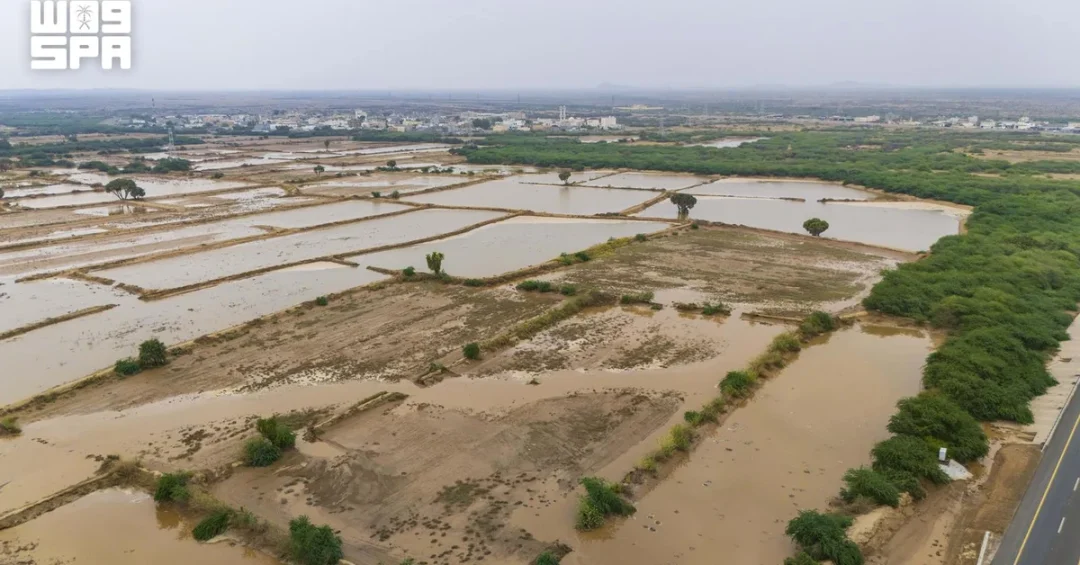
Heavy rains across Baish governorate in the Jazan region have transformed the area’s valleys, plains, and farmland into a vibrant tapestry of flowing water and renewed greenery, drawing residents, visitors, and photography enthusiasts during the summer holiday, according to the Saudi Press Agency (SPA). The downpours, which fell over recent days, sent water coursing through Wadi Qura and other tributaries of Wadi Baish, spreading across low-lying areas and vast agricultural fields. The resulting scenes — water stretching between farms and green spaces along both sides of the road — have become gathering points for families and nature lovers eager to document the interplay of flowing streams, lush vegetation, and cultivated land.
The transformation is more than a seasonal spectacle. It highlights the enduring relationship between Baish’s valley system and its agricultural economy, a connection that has defined the governorate’s identity for generations. As the Kingdom pursues the ambitious goals of Vision 2030, such natural events underscore the importance of water management, sustainable farming, and the development of domestic tourism attractions that showcase Saudi Arabia’s diverse landscapes. For international observers, the scenes in Baish offer a window into a lesser-known dimension of the Kingdom — one where fertile plains and traditional farming communities thrive alongside modern development.
Context and Background
Why does a rain event in a single governorate matter beyond its immediate borders? Baish, located in the Jazan region of southwestern Saudi Arabia, is renowned for its flat, agricultural landscape and fertile plains. The governorate’s valleys, particularly Wadi Baish and its tributaries such as Wadi Qura, serve as natural conduits that channel seasonal rains across farmland, replenishing soil moisture and supporting crop production. This hydrological system has sustained local communities for centuries, shaping settlement patterns and agricultural calendars.
The recent rains arrived during the summer holiday, a period when many Saudi families travel domestically. The timing amplified the event’s social and economic impact, turning the rain-soaked landscapes into spontaneous tourist destinations. According to SPA, the scenes attracted photography enthusiasts and family outings, adding distinctive natural attractions to the Jazan region’s growing tourism portfolio. The governorate’s proximity to other Jazan landmarks, including the Farasan Islands and the mountainous hinterland, positions Baish as part of a broader regional tourism circuit.
Historically, Baish has been celebrated for its agricultural output, particularly its mangoes, which are among the finest in the Kingdom. The governorate’s identity is deeply tied to the fertility of its land, and the seasonal rains are a critical input for its farming communities. The event also reflects the broader climatic patterns of the Jazan region, which receives higher rainfall than many other parts of Saudi Arabia due to its geography and proximity to the Red Sea. This natural advantage supports a diversified agricultural sector that contributes to national food security objectives.
Key Details of the Rain Event
What exactly did the rains reveal about Baish’s landscape? SPA reported that several valleys have been flowing, with water spreading across plains and low-lying areas toward vast agricultural fields. Wadi Qura, one of the main tributaries of Wadi Baish, was among the most prominent watercourses. From the entrance to Baish, SPA’s lens captured water stretching between farms and green spaces, creating a scene that stopped passersby and attracted visitors eager to document the natural display.
The expanded green cover is a direct result of the rainfall, which renews vegetation and replenishes groundwater. The agricultural lands, already known for their productivity, have benefited from the timely moisture. Local residents have reported increased family outings, with the rainy weather offering an opportunity to enjoy the outdoors, take in the greenery, and watch the flowing waters. The scenes have become a temporary but significant addition to the tourism attractions of Jazan, shaped by Baish’s unique flat, agricultural topography.
Beyond the visual spectacle, the rains play a vital role in the agricultural environment. They replenish the lands and renew vegetation, revealing another dimension of the governorate’s identity — one long associated with farming and the fertility of its plains. The event brings together the agricultural value of the land with its natural and tourism appeal, creating a multi-layered benefit for the local community and the wider region. The Saudi Press Agency’s coverage emphasized this dual significance, framing the rains as both a natural phenomenon and a cultural moment.
International and Regional Impact
How do localized weather events in Saudi Arabia resonate on a broader stage? For international audiences, the Baish rains offer a counterpoint to common perceptions of the Kingdom as solely a desert landscape. They highlight the environmental diversity of Saudi Arabia, from the lush southwestern highlands to the agricultural plains of Jazan. This diversity is increasingly central to the Kingdom’s tourism strategy, which seeks to attract visitors to natural and cultural sites beyond the major cities.
Regionally, the event underscores the importance of water resources in the Middle East. Saudi Arabia has invested heavily in water management infrastructure, including dams and irrigation systems, to maximize the benefits of seasonal rains and mitigate the risks of flooding. The Baish event, while localized, is part of a broader pattern of seasonal weather that affects the Jazan region and other parts of the Kingdom. The positive portrayal of the rains in official media reflects a narrative of abundance and renewal, reinforcing the Kingdom’s message of environmental stewardship and sustainable development.
For neighboring countries in the Gulf and the wider Arab world, Saudi Arabia’s ability to turn natural events into tourism and agricultural opportunities serves as a model. The integration of natural attractions into regional development plans aligns with global trends in eco-tourism and sustainable land use. The Baish rains also highlight the potential for cross-border tourism, as visitors from nearby countries may be drawn to the unique landscapes of the Jazan region.
Economic and Strategic Significance
What economic value do these rains bring to Baish and the Jazan region? Agriculture remains a cornerstone of the local economy, and the replenishment of soil moisture directly supports crop yields, particularly for mangoes and other fruits for which the region is known. The increased green cover also benefits livestock grazing and biodiversity. The tourism dimension, though seasonal, provides additional income for local businesses, including hotels, restaurants, and guides, as visitors flock to see the transformed landscapes.
Strategically, the event aligns with Saudi Arabia’s efforts to diversify its economy away from oil dependence. The agricultural sector is a key component of Vision 2030’s economic diversification goals, and regions like Jazan are being developed as agricultural hubs. The rains also support the Kingdom’s food security objectives by enhancing local production. Furthermore, the positive media coverage generated by SPA contributes to the branding of Saudi Arabia as a destination with rich natural assets, complementing the cultural and heritage tourism promoted under Vision 2030.
The infrastructure that manages these water flows — including dams, canals, and drainage systems — represents significant public investment. The Saudi government has prioritized water security, and events like the Baish rains demonstrate the importance of maintaining and upgrading this infrastructure. The economic ripple effects extend to construction, maintenance, and related services, creating employment opportunities in the region. The integration of agricultural and tourism development is a hallmark of the Kingdom’s integrated approach to regional planning.
Vision 2030 Alignment
How does a rain event in Baish connect to Saudi Arabia’s long-term vision? Vision 2030, the Kingdom’s comprehensive reform blueprint, emphasizes sustainable development, economic diversification, and the enhancement of quality of life. The Baish rains and the subsequent agricultural and tourism activity directly support these objectives. By showcasing the natural beauty and agricultural productivity of the Jazan region, the event contributes to the goal of attracting 100 million annual visits by 2030, a target that includes domestic and international tourists.
Moreover, the focus on water management and agricultural sustainability reflects the Vision’s environmental commitments, including the Saudi Green Initiative, which aims to plant 10 billion trees and protect 30 percent of the Kingdom’s land and sea areas. The renewal of vegetation in Baish is a microcosm of these broader efforts. As the Kingdom continues to invest in its regions, events like this highlight the potential for integrated rural development that benefits local communities while advancing national goals. The Baish rains are a reminder that Saudi Arabia’s path to 2030 is not only about megaprojects but also about nurturing the land and its people.
20 Questions
Q1. What caused the transformation of Baish’s landscape?
A1. Heavy rains over recent days sent water through valleys and across plains and farmland, expanding the green cover and creating flowing streams in the governorate.
Q2. Which valleys in Baish have been flowing?
A2. Several valleys have been flowing, including Wadi Qura, one of the tributaries of Wadi Baish, with water spreading across plains and low-lying areas.
Q3. Where is Baish located?
A3. Baish is a governorate in the Jazan region of southwestern Saudi Arabia, known for its flat, agricultural landscape and fertile plains.
Q4. Who has been drawn to the rain-soaked scenes?
A4. Residents, visitors, and photography enthusiasts during the summer holiday have been attracted to the area to document the flowing water and greenery.
Q5. How have the rains affected agriculture in Baish?
A5. The rains replenish the lands and renew vegetation, supporting crop production and highlighting the close relationship between valleys and agricultural lands.
Q6. What role do the valleys play in Baish?
A6. The valleys nourish the land and renew the vegetation that characterizes large parts of the governorate, supporting its farming identity.
Q7. What did SPA’s lens capture from the entrance to Baish?
A7. SPA captured water stretching between farms and green spaces along both sides of the road, creating a scene painted by the rain.
Q8. Why have the landscapes become gathering points?
A8. The rainy weather has offered an opportunity to enjoy the outdoors, take in the expanding green cover, and watch the flowing waters.
Q9. How do the rains add to Jazan’s tourism attractions?
A9. The distinctive natural scenes shaped by Baish’s flat, agricultural landscape add to the tourism appeal of the Jazan region.
Q10. What is Baish’s identity long associated with?
A10. Baish’s identity is long associated with farming and the fertility of its plains, bringing together agricultural value with natural and tourism appeal.
Q11. What is the significance of Wadi Qura?
A11. Wadi Qura is one of the tributaries of Wadi Baish, and its flowing water spreads across plains and low-lying areas toward agricultural fields.
Q12. How does the rain benefit the local community?
A12. The rains replenish lands, renew vegetation, and provide opportunities for family outings and outdoor enjoyment during the summer holiday.
Q13. What makes Baish’s landscape unique?
A13. Baish’s flat, agricultural landscape, combined with its valley system, creates a distinctive environment where water and greenery interact with farmland.
Q14. How does this event align with Vision 2030?
A14. It supports sustainable development, agricultural diversification, and tourism goals by showcasing natural assets and enhancing quality of life.
Q15. What economic activities benefit from the rains?
A15. Agriculture, particularly crop production, benefits directly, while tourism-related businesses such as hotels and restaurants see increased activity.
Q16. What is the Saudi Press Agency’s role in reporting this event?
A16. SPA, the official Saudi news agency, documented the scenes and highlighted the agricultural and tourism significance of the rains.
Q17. How does the event reflect Saudi Arabia’s environmental diversity?
A17. It showcases the lush, green landscapes of the Jazan region, contrasting with perceptions of Saudi Arabia as solely a desert country.
Q18. What infrastructure supports water management in Baish?
A18. Dams, canals, and drainage systems manage seasonal water flows, reflecting the Kingdom’s investment in water security and agricultural sustainability.
Q19. How does the rain event contribute to food security?
A19. By replenishing soil moisture and supporting crop yields, the rains enhance local agricultural production, contributing to national food security objectives.
Q20. What is the long-term significance of such events for Saudi Arabia?
A20. They highlight the Kingdom’s natural assets, support rural development, and advance Vision 2030 goals of economic diversification and sustainable tourism.
Reader Feedback
We value your thoughts. Please share your feedback on this article.
Your feedback helps us improve our coverage.
Related articles
 Perseid Meteor Shower Captured Over AlUla Skies
 Perseid Meteor Shower Observed in AlUla, Saudi Arabia
 Al-Saja Gardens: Jeddah’s Summer Escape of Nature and Play
 Scenic Routes to AlUla Enrich Journey with Diverse Landscapes
 Oyoun Al-Jiwa Heritage Village Lighting Enhances Historic Charm
 Umrah Performers Urged to Plan Ahead to Avoid Peak Times