


Al-Bassam Heritage House and Al-Musawkaf Traditional Market in Unaizah Governorate, Qassim Region, stand as living testaments to Saudi Arabia’s Najdi architectural and commercial heritage, according to information released by the Saudi Press Agency (SPA). The two sites, located in the heart of the old city, offer visitors and researchers a rare window into the domestic life, hospitality customs, and trading traditions that shaped central Arabia for centuries. Together, they represent a deliberate effort by the Kingdom’s Heritage Commission to preserve and present the nation’s deep-rooted cultural identity as part of the broader Saudi Vision 2030 transformation.
For international audiences, these sites are more than relics of the past. They are active cultural assets that contribute to Saudi Arabia’s growing tourism sector, particularly in the Qassim Region, which is increasingly recognized for its date palms, traditional markets, and authentic Najdi character. The preservation of such landmarks reflects a national commitment to safeguarding heritage while opening it to the world. As Saudi Arabia continues to diversify its economy and welcome global visitors, places like Al-Bassam Heritage House and Al-Musawkaf Traditional Market serve as bridges between the Kingdom’s storied past and its ambitious future.
Context and Background
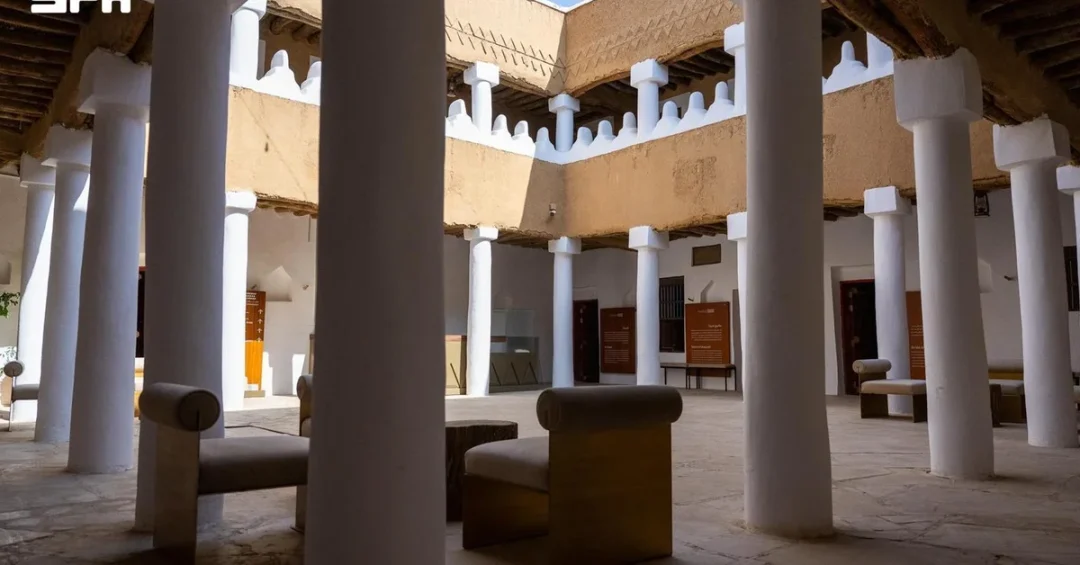
What makes Unaizah’s old city such a compelling destination for heritage enthusiasts? Located near the western gate of the historic settlement and adjacent to Al-Musawkaf Traditional Market, Al-Bassam Heritage House was built between 1374 AH and 1378 AH, a period corresponding to the mid-20th century. The single-story structure spans an impressive 3,500 square meters and was designed to accommodate the needs of a large extended family while reflecting the social and climatic realities of central Arabia. Its layout, materials, and decorative elements are quintessential examples of Najdi architecture, a style characterized by thick mud-brick walls, small openings, and intricate wooden detailing.
The house features rawashin—latticed wooden windows that allowed ventilation and privacy—along with a shaded reception area, 17 rooms, guest halls (majlis) extending up to 10 meters in length, a spacious garden, and a livestock courtyard. These elements collectively illustrate how families in Unaizah once lived, worked, and hosted guests. The presence of a date-storage chamber (jassah) and hand-operated millstones (raha) further underscores the agricultural and self-sufficient nature of the household economy. Such details are invaluable for historians and visitors seeking to understand the daily rhythms of life in pre-oil Saudi Arabia.
Nearby, west of Sheikh Mohammed bin Salih Al-Uthaymeen Mosque in central Unaizah, stands Al-Musawkaf Traditional Market. Named after the historic marketplace that once housed around 200 shops, the current complex was reconstructed in 1430 AH. It comprises 52 traditionally styled shops arranged along a heritage-inspired passageway that connects two open-air seating areas. This layout evokes the social and commercial vibrancy of old Unaizah, where merchants, craftsmen, and residents gathered to trade goods and exchange news. The market remains a focal point for community life and a testament to the region’s enduring commercial legacy.
Key Details
How exactly does the Heritage Commission bring these sites to life for modern audiences? The restoration of Al-Bassam Heritage House by the Heritage Commission has transformed it into a dynamic cultural venue. Visitors can now view a range of exhibits that showcase local heritage, including Najdi architectural features, traditional bridal attire and jewelry, and the aforementioned date-storage chamber. These displays are not static; the commission regularly hosts workshops and cultural events at the site. For instance, a recent four-day program marking Saudi National Day featured woodwork, pottery, and children’s activities, drawing nearly 1,000 visitors. Such initiatives demonstrate a proactive approach to heritage engagement, ensuring that younger generations and international tourists alike can connect with Saudi Arabia’s cultural roots.
The house’s architecture itself is a key attraction. The rawashin are particularly noteworthy, as they represent a sophisticated pre-modern solution to climate control and privacy. The majlis, or guest halls, which can reach 10 meters in length, highlight the centrality of hospitality in Najdi culture. The garden and livestock courtyard provide a glimpse into the domestic economy, where families cultivated crops and raised animals. Each room and feature tells a story of resilience, ingenuity, and community values. For visitors, walking through the house is akin to stepping back in time, yet the experience is made accessible and informative through the commission’s careful curation.
Al-Musawkaf Traditional Market complements the house by focusing on commerce and social interaction. The reconstructed market’s 52 shops offer a variety of traditional goods, from handicrafts to spices, in an environment that mimics the historic marketplace. The passageway connecting two open-air seating areas encourages visitors to linger, socialize, and enjoy the ambiance of old Unaizah. The market is not merely a shopping destination; it is a living museum of trade and craftsmanship. By integrating modern amenities with traditional design, the complex ensures that the commercial spirit of the past remains relevant and vibrant today.
International and Regional Impact
Why should the world pay attention to these heritage sites in Qassim? For international travelers, Al-Bassam Heritage House and Al-Musawkaf Traditional Market offer an authentic experience that goes beyond the well-trodden paths of Riyadh, Jeddah, and AlUla. Qassim Region, known as the heartland of Saudi date cultivation, is emerging as a key destination for cultural tourism. The preservation of these sites aligns with the Kingdom’s broader strategy to attract 150 million visits annually by 2030, as outlined in Vision 2030. By showcasing Najdi architecture and commercial traditions, Unaizah positions itself as a must-visit location for those seeking to understand the true essence of Saudi heritage.
Regionally, these sites strengthen Saudi Arabia’s leadership in cultural preservation. The Heritage Commission’s work in Unaizah serves as a model for other regions, demonstrating how historic structures can be restored and repurposed for contemporary use. This approach not only protects the past but also stimulates local economies through tourism, crafts, and events. In a world where rapid modernization often erases cultural landmarks, Saudi Arabia’s commitment to safeguarding its heritage stands out. The Kingdom’s efforts resonate with global organizations like UNESCO and appeal to travelers who value authenticity and sustainability.
Economic and Strategic Significance
What economic benefits flow from restoring heritage sites like these? The revitalization of Al-Bassam Heritage House and Al-Musawkaf Traditional Market contributes directly to local job creation and small business growth. The market’s 52 shops provide opportunities for artisans and entrepreneurs to sell traditional products, while the house’s workshops and events generate demand for skilled craftspeople and educators. Tourism spending in the region supports hotels, restaurants, and transport services, creating a multiplier effect. As Qassim becomes a more prominent destination, these economic gains are expected to expand, aligning with Vision 2030’s goal of diversifying income sources beyond oil.
Strategically, heritage tourism enhances Saudi Arabia’s soft power and global image. By presenting a nuanced, rich cultural narrative, the Kingdom counters stereotypes and builds bridges with international communities. The Heritage Commission’s initiatives in Unaizah are part of a nationwide effort to document and celebrate Saudi history, from the rock art of Hail to the mud-brick palaces of Diriyah. Each restored site adds a thread to the tapestry of Saudi identity, making the Kingdom more attractive to investors, partners, and visitors. In this sense, Al-Bassam Heritage House and Al-Musawkaf Traditional Market are not just local treasures; they are national assets with global resonance.
Vision 2030 Alignment
How do these heritage projects fit into Saudi Vision 2030? Vision 2030 aims to transform Saudi Arabia into a global hub for tourism, culture, and entertainment while preserving its Islamic and national heritage. The restoration and promotion of Al-Bassam Heritage House and Al-Musawkaf Traditional Market exemplify this dual objective. They provide tangible proof that modernization and tradition can coexist. The Heritage Commission’s work supports the Quality of Life Program, a key Vision 2030 initiative, by creating cultural spaces that enrich communities and attract visitors. Moreover, these sites contribute to the National Tourism Strategy, which seeks to increase the sector’s contribution to GDP and create jobs for Saudi youth.
In conclusion, Al-Bassam Heritage House and Al-Musawkaf Traditional Market are more than architectural curiosities. They are dynamic centers of learning, commerce, and community that embody the spirit of Unaizah and the broader Najdi heritage. As Saudi Arabia marches toward a prosperous future under Vision 2030, these sites remind us of the enduring values—hospitality, craftsmanship, and resilience—that define the Kingdom. For international visitors, they offer an unforgettable journey into the heart of Arabia. For Saudis, they are a source of pride and a link to their ancestors. The Heritage Commission’s dedication ensures that these treasures will inspire generations to come.
20 Questions
Q1. What is Al-Bassam Heritage House?
A1. Al-Bassam Heritage House is a historic residence in Unaizah, Qassim Region, built between 1374 AH and 1378 AH. It showcases traditional Najdi architecture and domestic life, now restored by the Heritage Commission as a cultural site.
Q2. Where is Al-Bassam Heritage House located?
A2. It is situated near the western gate of Unaizah’s old city, adjacent to Al-Musawkaf Traditional Market, in the Qassim Region of Saudi Arabia.
Q3. How large is Al-Bassam Heritage House?
A3. The single-story structure spans 3,500 square meters and includes 17 rooms, guest halls, a garden, and a livestock courtyard.
Q4. What are rawashin?
A4. Rawashin are latticed wooden windows characteristic of Najdi architecture. They provide ventilation, shade, and privacy, and are a key feature of Al-Bassam Heritage House.
Q5. What is a majlis in this context?
A5. A majlis is a guest hall used for hospitality and social gatherings. In Al-Bassam Heritage House, some majlis are up to 10 meters long, reflecting the importance of hospitality in Najdi culture.
Q6. What is a jassah?
A6. A jassah is a traditional date-storage chamber. It was used to store dates, a staple crop in Qassim, and is one of the exhibits at Al-Bassam Heritage House.
Q7. What is Al-Musawkaf Traditional Market?
A7. Al-Musawkaf Traditional Market is a reconstructed heritage market in central Unaizah, comprising 52 shops along a traditional passageway. It evokes the historic marketplace that once had around 200 shops.
Q8. When was Al-Musawkaf Traditional Market reconstructed?
A8. It was reconstructed in 1430 AH, preserving the commercial heritage of Unaizah while providing modern amenities for visitors.
Q9. Who restored Al-Bassam Heritage House?
A9. The Heritage Commission, a Saudi government body dedicated to preserving national heritage, restored the house and now manages its cultural programs.
Q10. What events are held at Al-Bassam Heritage House?
A10. The Heritage Commission hosts workshops and cultural events, including woodwork, pottery, and children’s programs. A recent National Day event drew nearly 1,000 visitors.
Q11. What can visitors see at Al-Bassam Heritage House?
A11. Visitors can see Najdi architectural features, traditional bridal attire and jewelry, hand-operated millstones (raha), and a date-storage chamber (jassah), among other exhibits.
Q12. How does Al-Musawkaf Traditional Market reflect old Unaizah?
A12. The market’s design, with 52 shops and open-air seating areas, mirrors the social and commercial vibrancy of historic Unaizah markets, where trade and community life thrived.
Q13. Why are these sites important for Saudi Vision 2030?
A13. They support Vision 2030 by preserving cultural heritage, boosting tourism, creating jobs, and enhancing quality of life, aligning with the National Tourism Strategy and Quality of Life Program.
Q14. What is the significance of Qassim Region in Saudi heritage?
A14. Qassim is known for its date palms, traditional markets, and Najdi architecture. It is a heartland of Saudi culture and increasingly a destination for heritage tourism.
Q15. How do these sites attract international visitors?
A15. They offer authentic cultural experiences beyond major cities, appealing to travelers interested in history, architecture, and traditional crafts. The Kingdom’s tourism goals aim to attract 150 million visits annually by 2030.
Q16. What economic benefits do these heritage sites bring?
A16. They create jobs in tourism, crafts, and hospitality, support small businesses in the market, and generate spending in local hotels, restaurants, and transport services.
Q17. How does the Heritage Commission support local communities?
A17. The commission restores sites, hosts events, and provides platforms for artisans and educators, fostering community pride and economic opportunities.
Q18. What is the architectural style of these sites?
A18. They exemplify Najdi architecture, characterized by mud-brick walls, rawashin, courtyards, and functional designs suited to the desert climate.
Q19. Can visitors purchase traditional goods at Al-Musawkaf Market?
A19. Yes, the market’s 52 shops offer a variety of traditional products, including handicrafts and spices, providing an authentic shopping experience.
Q20. How do these sites contribute to Saudi Arabia’s global image?
A20. They showcase the Kingdom’s rich heritage and commitment to preservation, enhancing soft power and attracting international tourists, investors, and partners.
Reader Feedback
We value your thoughts. Please share your feedback on this article.
Your feedback helps us improve our coverage.
Related articles
 Restored Al-Suqya Mosque Connects Visitors with Madinah’s Islamic Heritage
 Paragliding in Badr Showcases Natural Diversity, Enriches Tourism
 Taif Governor Inspects Rose Factory and Tourism in Al-Hada
 Farasan Beaches: Red Sea Beauty and Pearl-Diving Heritage
 Aseer Winter Season 2026 Launches to Boost Tourism
 Street Food Winter Event Brings 80 Global Culinary Experiences to Historic Riyadh