


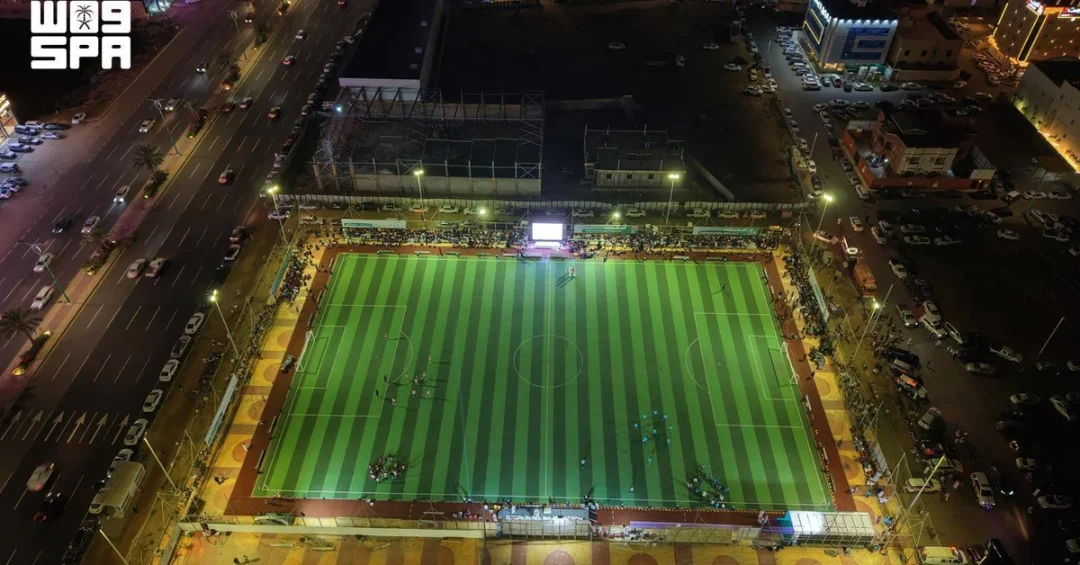
Jazan Municipality and its affiliated municipal offices are expanding public recreational spaces across the region, developing parks, waterfronts, scenic viewpoints, and walkways while increasing the number of neighborhood sports fields from 144 in 2022 to 215 in 2026, a 49.3 percent rise, according to official information released through the Saudi Press Agency. The initiative is designed to strengthen Jazan’s tourism appeal, meet the needs of a growing population, and make municipal facilities an integral part of the region’s visitor experience. Could a coordinated network of well-designed public spaces become the foundation of a new kind of regional tourism in Saudi Arabia?
The effort reflects a broader shift in how Saudi municipalities approach urban development. Rather than treating parks and sports fields as isolated amenities, Jazan is positioning them as connected recreational assets that complement the region’s natural character, from its Red Sea coastline to its mountainous interior. The municipality says the work is keeping pace with urban growth in Jizan city, the region’s governorates, and population centers, while offering residents and visitors a wider range of outdoor activities and relaxation options. The approach treats public space not as an afterthought but as a core component of livability and destination appeal.
Context and Background
Why does a region known for its agricultural heritage and coastal beauty need a deliberate strategy for parks and walkways? Jazan sits in the southwest of the Kingdom, bordering the Red Sea and sharing a frontier with Yemen. It is home to the Farasan Islands, a UNESCO-recognized archipelago, and to a climate and landscape that differ markedly from the central and northern regions of Saudi Arabia. For years, its tourism potential was discussed largely in terms of natural assets, but the municipality is now working to build the urban infrastructure that allows both residents and visitors to access and enjoy those assets comfortably.
The expansion of sports fields is a measurable part of that story. Their number rose from 144 in 2022 to 215 in 2026, an increase of 49.3 percent. These fields are not only venues for organized sport. They have become spaces for social gatherings, hobbies, and leisure, attracting people of different ages, particularly on weekends and public holidays. That social dimension matters in a region where community life is highly valued and where public spaces can serve as neutral ground for families, youth, and visitors alike.
Official Spokesperson for Jazan Municipality Ibrahim Al-Khayyat said the expansion of sports fields is part of the municipality’s plans to ensure a balanced distribution of municipal services, meet the needs of residents and visitors, and use recreational facilities to host community activities and events. These efforts, he said, help bring residential neighborhoods to life and improve quality of life. The statement frames recreation as a service obligation rather than a luxury, and it ties the municipality’s work directly to the everyday experience of people living in and traveling through the region.
Key Details
What exactly is being built, and how does it fit together? The municipality is working to rehabilitate, maintain, and light all neighborhood sports fields, while carrying out regular improvement projects at public facilities. According to Al-Khayyat, the projects aim to improve these facilities’ operational efficiency, maintain their readiness for use, ensure continued public availability, and enhance the quality of services provided to users. Lighting, in particular, extends the usable hours of a field and makes evening activity possible, which is significant in a region with warm daytime temperatures for much of the year.
Beyond sports fields, the municipality is developing parks, waterfronts, scenic viewpoints, and walkways, and preparing leisure facilities that complement the region’s natural character. These are the elements that turn a city into a place where visitors can linger. A waterfront promenade, a shaded park, or a well-placed viewpoint does not merely serve residents; it becomes part of the reason a traveler chooses to spend an extra day in the region. The municipality’s language emphasizes complementing natural character, suggesting that new development is intended to enhance rather than compete with Jazan’s existing landscape.
The maintenance and rehabilitation component is equally important. Public facilities that fall into disrepair quickly lose their value, and the municipality’s stated focus on operational efficiency and continued public availability indicates a long-term management approach. This is consistent with a broader pattern in Saudi municipal work, where the emphasis has shifted from one-time construction to sustained service quality. For visitors, reliable, clean, and well-lit public spaces can shape perceptions of a destination as much as headline attractions do.
International and Regional Impact
How does a municipal parks program in southwest Saudi Arabia connect to the Kingdom’s wider regional role? Jazan’s location gives it a distinctive position. It is close to the Red Sea shipping lanes and to the Farasan Islands, and it is part of a border region that has seen significant development investment. Improved urban spaces can support cross-border and regional tourism, particularly from neighboring Gulf countries whose citizens already travel within the Kingdom. A more attractive Jazan adds a new option to the Red Sea tourism corridor, which is being developed through other major projects along the western coast.
Regionally, the initiative contributes to a more diversified map of Saudi tourism. International visitors often begin with Riyadh, Jeddah, or AlUla, but the Kingdom’s long-term strategy envisions multiple destinations with distinct identities. Jazan’s identity is rooted in agriculture, coastal culture, and a landscape that includes islands, mountains, and fertile valleys. By investing in public spaces that make these assets accessible, the municipality is helping to position the region as a complementary destination rather than a competitor to established hubs. That kind of differentiation is valuable in a global tourism market where travelers increasingly seek authentic, place-specific experiences.
Economic and Strategic Significance
Why does investment in recreational infrastructure matter economically? Al-Khayyat emphasized that investment in recreational infrastructure is an important pillar of sustainable tourism development, helping create attractive urban environments, expand opportunities to benefit from local assets, and strengthen the competitiveness of tourism destinations across the region. This is not merely a quality-of-life argument. Attractive public spaces can support small businesses, from cafes and kiosks to equipment rentals and local guides, and they can extend visitor stays, which increases spending in the local economy.
The strategic significance extends to human capital and social cohesion. Well-maintained sports fields and parks give young people constructive places to gather, support public health through physical activity, and create venues for community events that strengthen social ties. In a region experiencing urban growth, these facilities help absorb new residents into community life. They also signal that public services are keeping pace with development, which is an important consideration for investors and employers evaluating a region’s readiness for expansion.
From a tourism competitiveness standpoint, the municipality’s work addresses a practical gap. Natural attractions alone do not guarantee a satisfying visitor experience; access, safety, shade, lighting, and cleanliness all shape how a destination is perceived. By treating these fundamentals as part of its tourism appeal, Jazan is building the supporting infrastructure that allows its natural and cultural assets to be marketed effectively. That approach aligns with the broader Saudi emphasis on creating destinations that are ready for both domestic and international visitors.
Vision 2030 Alignment
How does this local effort connect to Saudi Vision 2030? The municipality explicitly links its recreational infrastructure investment to the Vision’s objectives of building a vibrant society and cities full of life. Vision 2030 is not solely about megaprojects and economic diversification; it also encompasses quality of life, community development, and the creation of environments where people want to live, work, and visit. Jazan’s parks, walkways, and sports fields are a direct expression of that dimension, translating national goals into everyday urban experience.
The emphasis on balanced distribution of municipal services also reflects the Vision’s commitment to regional development, ensuring that growth and public investment are not concentrated in a few major cities. By improving facilities in Jizan city, the governorates, and population centers, the municipality is working to make the benefits of national progress tangible across the region. For international observers, this is a useful reminder that Saudi Arabia’s transformation includes the quieter work of street lighting, park maintenance, and neighborhood sports fields, all of which contribute to the Kingdom’s appeal as a place to visit and a place to live.
20 Questions
Q1. What is Jazan Municipality doing to improve public spaces?
A1. Jazan Municipality and its affiliated offices are developing parks, waterfronts, scenic viewpoints, and walkways. They are also rehabilitating and lighting neighborhood sports fields, creating public recreational areas that serve residents and visitors while complementing the region’s natural character.
Q2. How many sports fields are there in Jazan in 2026?
A2. The number of sports fields in Jazan increased from 144 in 2022 to 215 in 2026. This represents a 49.3 percent rise, reflecting the municipality’s efforts to expand recreational infrastructure across the region.
Q3. Who is the official spokesperson for Jazan Municipality?
A3. Ibrahim Al-Khayyat serves as the Official Spokesperson for Jazan Municipality. He has publicly explained the municipality’s plans to expand sports fields and improve public facilities as part of a balanced distribution of municipal services.
Q4. Why are sports fields important beyond sports in Jazan?
A4. Sports fields have become spaces for social gatherings, hobbies, and leisure. They attract people of different ages, particularly on weekends and public holidays, helping bring residential neighborhoods to life and strengthening community ties.
Q5. How does this initiative support tourism in Jazan?
A5. By creating attractive urban environments, the municipality expands opportunities to benefit from local assets and strengthens the competitiveness of tourism destinations. Parks, walkways, and waterfronts give visitors more reasons to spend time in the region.
Q6. What specific facilities are being developed?
A6. The municipality is developing parks, waterfronts, scenic viewpoints, walkways, and leisure facilities. It is also rehabilitating, maintaining, and lighting all neighborhood sports fields to ensure they remain ready for public use.
Q7. How does this effort align with Saudi Vision 2030?
A7. The initiative supports Vision 2030 objectives to build a vibrant society and cities full of life. It reflects the Vision’s emphasis on quality of life, community development, and balanced regional investment across the Kingdom.
Q8. What does Ibrahim Al-Khayyat say about recreational infrastructure?
A8. Al-Khayyat emphasized that investment in recreational infrastructure is an important pillar of sustainable tourism development. He said it helps create attractive urban environments, expands opportunities to use local assets, and strengthens tourism competitiveness.
Q9. Why is lighting sports fields important?
A9. Lighting extends the usable hours of sports fields, making evening activity possible. This is particularly valuable in Jazan’s climate, where daytime temperatures can be high, and it improves safety and accessibility for users.
Q10. How does the municipality ensure facilities remain available?
A10. The municipality carries out regular improvement projects and maintenance work. These efforts aim to improve operational efficiency, maintain readiness for use, ensure continued public availability, and enhance the quality of services provided to users.
Q11. What role do public spaces play in Jazan’s tourism appeal?
A11. Public spaces make municipal facilities an important part of the region’s tourism appeal. They offer residents and visitors a wider range of experiences, from outdoor activities and relaxation to scenic viewpoints and waterfront walks.
Q12. How does this initiative affect residential neighborhoods?
A12. The efforts help bring residential neighborhoods to life by providing venues for community activities and events. They also improve quality of life for residents and create gathering places for people of different ages.
Q13. What is the balanced distribution of municipal services?
A13. It refers to ensuring that municipal facilities and services are spread fairly across Jizan city, the region’s governorates, and population centers. This approach meets the needs of residents and visitors throughout the region.
Q14. How does Jazan’s location contribute to its tourism potential?
A14. Jazan is located in southwest Saudi Arabia on the Red Sea, near the Farasan Islands. Its coastal and mountainous landscapes, along with its agricultural heritage, give it a distinctive identity that complements other Saudi destinations.
Q15. What kinds of community events can these facilities host?
A15. The municipality says recreational facilities can host community activities and events. These may include sports gatherings, social functions, and leisure activities that bring residents together, particularly on weekends and public holidays.
Q16. Why is sustainable tourism development important for Jazan?
A16. Sustainable tourism development helps create attractive urban environments and expands opportunities to benefit from local assets. It also strengthens the competitiveness of tourism destinations, supporting long-term economic and social benefits for the region.
Q17. How does this initiative reflect urban growth in Jazan?
A17. The municipality is preparing leisure facilities that keep pace with urban growth in Jizan city, the region’s governorates, and population centers. This ensures that public services and recreational options expand alongside the population.
Q18. What is the significance of walkways and scenic viewpoints?
A18. Walkways and scenic viewpoints allow residents and visitors to enjoy Jazan’s natural character. They support outdoor activities and relaxation, and they help make the region’s landscapes accessible in a comfortable and organized way.
Q19. How do these efforts improve quality of life?
A19. By providing well-maintained parks, sports fields, and public spaces, the municipality offers places for physical activity, social interaction, and relaxation. This contributes to a higher quality of life for residents and a better experience for visitors.
Q20. What is the long-term goal of Jazan’s recreational investment?
A20. The long-term goal is to make municipal facilities a key part of the region’s tourism appeal, support a vibrant society, and align with Saudi Vision 2030’s objectives for cities full of life and sustainable development.
Reader Feedback
We value your thoughts. Please share your feedback on this article.
Your feedback helps us improve our coverage.
Related articles
 Dammam Khor Waterfront Project Set to Reshape Tourism and Recreation in Eastern Region
 Makkah Winter Returns for Second Edition with Diverse Destinations and Experiences
 Wasm Hail 2026 Bus Tours Showcase Ancient Sites
 Al-Wafrah in Al-Ahsa: A Winter Tourism Gem
 Thee Ain Visitor Center: Al-Baha’s History Meets Modern Tech
 Autumn Events Boost Tourism at Hira Cultural District