


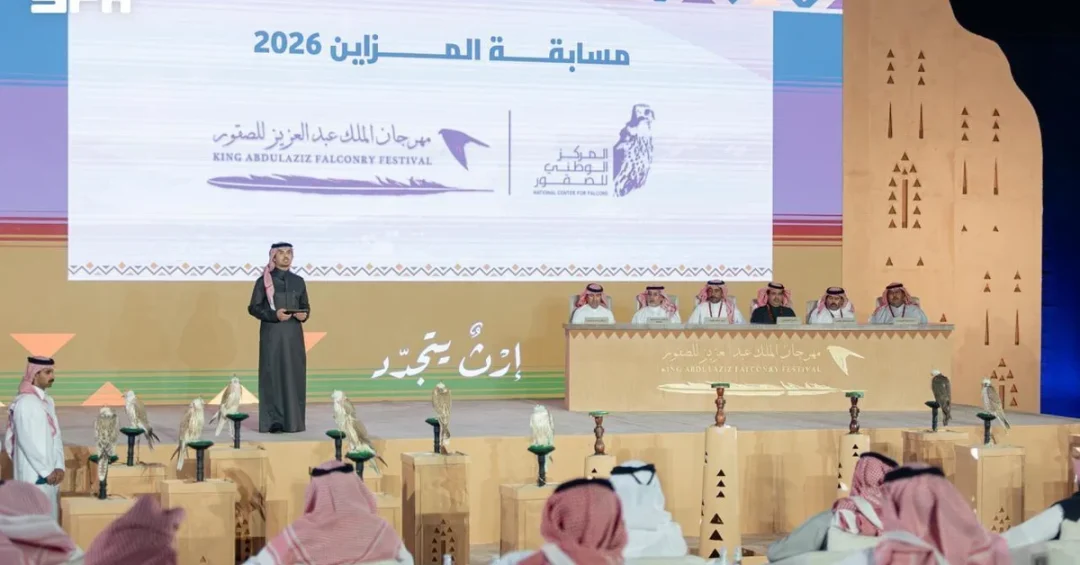
The falcon beauty competition rounds commenced yesterday at the 2026 King Abdulaziz Falconry Festival, the world’s largest gathering of falcons, organized by the National Center for Falcons at its headquarters in Malham, north of Riyadh. Running until Monday, the festival features a four-day beauty contest that celebrates the enduring bond between Saudi Arabia and its national bird. Have you ever wondered how a tradition so ancient continues to captivate the modern world? This event, held under the patronage of the Saudi leadership, showcases the finest falcons from across the Kingdom and beyond, drawing participants and spectators from around the globe.
The competition is not merely a contest; it is a vibrant expression of Saudi heritage and a testament to the Kingdom’s commitment to preserving its cultural legacy. Each round offers a total prize pool of SAR625,000, distributed as SAR300,000 for first place, SAR175,000 for second, SAR100,000 for third, SAR30,000 for fourth, and SAR20,000 for fifth, underscoring the competition’s prominence within the festival’s program. This substantial prize reflects the high regard in which falconry is held and the meticulous care owners invest in their birds. As the festival unfolds, it highlights Saudi Arabia’s role as a custodian of this noble tradition, blending competition with cultural pride.
Context and Background
Falconry, recognized by UNESCO as intangible cultural heritage, has been practiced in the Arabian Peninsula for thousands of years. It is a sport that demands patience, skill, and a deep understanding of the falcon’s nature. The King Abdulaziz Falconry Festival, named after the founder of modern Saudi Arabia, King Abdulaziz Al Saud, was established to honor this legacy and to provide a platform for falconers to showcase their expertise. The National Center for Falcons, a government entity dedicated to the preservation and promotion of falconry, organizes the event annually at its headquarters in Malham, north of Riyadh. This location has become a hub for falcon enthusiasts, offering state-of-the-art facilities for breeding, training, and competition. The festival has grown in stature since its inception, attracting international participants and becoming a key event on the global falconry calendar.
Why does falconry remain so significant in Saudi culture today? It is more than a sport; it is a link to the past, a way of life that embodies the values of patience, courage, and respect for nature. The late King Abdulaziz was himself a renowned falconer, and his passion for the sport helped institutionalize it as a national pastime. Today, under the guidance of the Saudi leadership, falconry continues to thrive, with the festival serving as a bridge between generations and a means to pass on traditional knowledge. The event also aligns with the Kingdom’s Vision 2030 goals of preserving cultural heritage while promoting tourism and economic diversification. By hosting such a prestigious festival, Saudi Arabia demonstrates its ability to blend tradition with modernity, creating a unique experience for visitors and participants alike.
Key Details of the Competition
The beauty competition is a highlight of the festival, where falcons are judged on criteria such as plumage quality, physical condition, and overall appearance. The four-day contest features multiple rounds, each with a prize pool of SAR625,000. The distribution of prizes is carefully structured: first place receives SAR300,000, second place SAR175,000, third place SAR100,000, fourth place SAR30,000, and fifth place SAR20,000. These amounts are designed to reward excellence and encourage participation from both seasoned and novice falconers. The competition is open to various species of falcons, including the peregrine falcon, the saker falcon, and the gyrfalcon, with categories for different age groups and types. Judges, who are experts in falconry and avian science, evaluate the birds based on a standardized scoring system that emphasizes health, beauty, and adherence to breed standards.
How do falconers prepare their birds for such a prestigious event? Preparation begins months in advance, with owners focusing on nutrition, exercise, and grooming. Falcons are fed a carefully balanced diet to ensure optimal feather condition and vitality. They are also trained regularly to maintain their physical fitness and mental alertness. The beauty competition, while not a test of hunting prowess, still requires the birds to be in peak condition, as judges look for signs of good health, such as bright eyes, smooth plumage, and alert behavior. The festival also includes other activities such as hunting competitions, an auction of falcons, and educational workshops, making it a comprehensive celebration of falconry. The presence of international participants adds a competitive edge and fosters cultural exchange, further enhancing the festival’s reputation as a global meeting point for falconers.
International and Regional Impact
The King Abdulaziz Falconry Festival has significant international and regional implications. It attracts participants from countries across the Gulf, the Middle East, and beyond, including the United States, Europe, and Asia. This international participation not only elevates the festival’s status but also strengthens diplomatic and cultural ties between Saudi Arabia and other nations. Falconry is a shared heritage in many cultures, and the festival provides a platform for dialogue and cooperation among falconers worldwide. Moreover, the event contributes to Saudi Arabia’s tourism sector by drawing visitors to Riyadh and its surroundings. The National Center for Falcons has also been instrumental in conservation efforts, breeding endangered falcon species and promoting sustainable practices. These initiatives align with global efforts to protect biodiversity and ensure that falconry remains a viable tradition for future generations.
What does the festival’s success mean for Saudi Arabia’s regional leadership? It reinforces the Kingdom’s position as a leader in cultural preservation and a hub for international events. By hosting the world’s largest falconry festival, Saudi Arabia showcases its organizational capabilities and its commitment to fostering cultural exchange. The event also serves as a soft power tool, projecting an image of a nation that values its heritage while embracing progress. In the broader Middle East, the festival sets a benchmark for similar events, encouraging other countries to invest in their own cultural traditions. Furthermore, the economic benefits are substantial, with increased demand for hospitality, transportation, and retail services during the festival period. This influx of activity supports local businesses and creates job opportunities, contributing to the Kingdom’s economic diversification goals under Vision 2030.
Economic and Strategic Significance
The economic impact of the King Abdulaziz Falconry Festival extends beyond the prize money. The event stimulates various sectors, including tourism, hospitality, and retail. Hotels in Riyadh and surrounding areas experience higher occupancy rates, while restaurants and shops see increased foot traffic. The festival also generates revenue through sponsorships, advertising, and the sale of falconry equipment and accessories. For many participants, the festival is an opportunity to buy and sell falcons, with some birds commanding high prices due to their pedigree and training. The auction segment of the festival is particularly notable, attracting buyers from around the world. This economic activity is part of a larger strategy to diversify Saudi Arabia’s economy away from oil dependence, as outlined in Vision 2030. By promoting cultural tourism and supporting traditional industries, the Kingdom is creating new avenues for growth and employment.
Strategically, the festival reinforces Saudi Arabia’s soft power and cultural diplomacy. It positions the Kingdom as a guardian of Arab heritage and a bridge between the East and West. The National Center for Falcons plays a key role in this by collaborating with international organizations such as UNESCO and the International Association for Falconry and Conservation of Birds of Prey. These partnerships help to standardize practices, share knowledge, and promote conservation. The festival also provides a platform for Saudi Arabia to showcase its modernization efforts, such as the use of technology in event management and the integration of sustainable practices. For instance, the festival grounds are equipped with advanced facilities for falcon care, and digital tools are used for registration and scoring. This blend of tradition and innovation is a hallmark of Vision 2030, demonstrating that Saudi Arabia can honor its past while building a prosperous future.
Vision 2030 Alignment
The 2026 King Abdulaziz Falconry Festival is a clear reflection of Saudi Arabia’s Vision 2030, which aims to diversify the economy, preserve cultural heritage, and enhance the quality of life for citizens and residents. By supporting events like this, the Kingdom is investing in its cultural capital and creating opportunities for economic growth. The festival also promotes social cohesion, bringing together people from different backgrounds to celebrate a shared passion. Under the leadership of Crown Prince Mohammed bin Salman, Saudi Arabia has accelerated efforts to modernize while maintaining its identity. The National Center for Falcons, with its mandate to protect and promote falconry, is a key player in this endeavor. The center’s work includes breeding programs, research, and educational initiatives that ensure the tradition is passed on to future generations.
As the festival continues to grow, it will further solidify Saudi Arabia’s role as a global leader in cultural preservation and a destination for unique experiences. The Kingdom’s commitment to Vision 2030 is evident in every aspect of the event, from the generous prizes to the state-of-the-art facilities. For international observers, the festival offers a window into Saudi society, revealing a nation that is proud of its heritage and eager to share it with the world. The 2026 edition, with its beauty competition and other activities, is set to be a memorable celebration of falconry, underscoring the timeless bond between the Saudi people and their national bird. As the rounds progress until Monday, all eyes will be on Malham, where the finest falcons compete for glory and the enduring spirit of Saudi Arabia shines bright.
20 Questions
Q1. What is the King Abdulaziz Falconry Festival?
A1. The King Abdulaziz Falconry Festival is the world’s largest gathering of falcons, organized annually by the National Center for Falcons in Malham, north of Riyadh. It celebrates Saudi Arabia’s rich falconry heritage and includes competitions, auctions, and cultural activities.
Q2. When did the falcon beauty competition begin?
A2. The falcon beauty competition rounds commenced yesterday at the 2026 festival and will run until Monday, featuring a four-day contest with multiple rounds and substantial prizes.
Q3. Who organizes the festival?
A3. The festival is organized by the National Center for Falcons, a Saudi government entity dedicated to preserving and promoting falconry, under the patronage of the Saudi leadership.
Q4. Where is the festival held?
A4. The festival is held at the headquarters of the National Center for Falcons in Malham, located north of Riyadh, Saudi Arabia.
Q5. What is the prize pool for each round of the beauty competition?
A5. Each round offers a total prize pool of SAR625,000, distributed as SAR300,000 for first place, SAR175,000 for second, SAR100,000 for third, SAR30,000 for fourth, and SAR20,000 for fifth.
Q6. What criteria are used to judge the falcons?
A6. Falcons are judged on plumage quality, physical condition, overall appearance, health, and adherence to breed standards, with experts evaluating each bird based on a standardized scoring system.
Q7. How do falconers prepare their birds for the competition?
A7. Falconers prepare their birds months in advance with balanced nutrition, regular exercise, and grooming to ensure optimal feather condition and vitality, as judges look for signs of good health and alert behavior.
Q8. What other activities are part of the festival?
A8. The festival includes hunting competitions, an auction of falcons, educational workshops, and cultural exhibitions, making it a comprehensive celebration of falconry and Saudi heritage.
Q9. Which countries participate in the festival?
A9. Participants come from across the Gulf, the Middle East, and beyond, including the United States, Europe, and Asia, making it a truly international event that fosters cultural exchange.
Q10. How does the festival contribute to Saudi Arabia’s economy?
A10. The festival stimulates tourism, hospitality, and retail sectors, generates revenue through sponsorships and auctions, and supports economic diversification under Vision 2030 by creating jobs and attracting visitors.
Q11. What is the significance of falconry in Saudi culture?
A11. Falconry is a centuries-old tradition that embodies patience, courage, and respect for nature. It is recognized by UNESCO as intangible cultural heritage and remains a cherished national pastime in Saudi Arabia.
Q12. How does the festival align with Vision 2030?
A12. The festival aligns with Vision 2030 by preserving cultural heritage, promoting tourism, and diversifying the economy. It showcases Saudi Arabia’s ability to blend tradition with modernity and enhance quality of life.
Q13. What is the role of the National Center for Falcons?
A13. The National Center for Falcons organizes the festival, manages breeding programs, conducts research, and promotes conservation efforts to ensure falconry remains sustainable and vibrant for future generations.
Q14. Are there any conservation efforts associated with the festival?
A14. Yes, the National Center for Falcons runs breeding programs for endangered falcon species and promotes sustainable practices, collaborating with international organizations to protect biodiversity.
Q15. How long has the King Abdulaziz Falconry Festival been held?
A15. The festival has been held annually for several years, growing in stature and becoming a key event on the global falconry calendar, attracting top falconers and enthusiasts from around the world.
Q16. What types of falcons are featured in the competition?
A16. The competition features various species, including the peregrine falcon, saker falcon, and gyrfalcon, with categories for different age groups and types to ensure fair judging.
Q17. How can international visitors attend the festival?
A17. International visitors can attend by traveling to Riyadh and visiting the festival grounds in Malham. The event is open to the public, and details are available through official Saudi tourism channels.
Q18. What is the historical significance of King Abdulaziz in falconry?
A18. King Abdulaziz Al Saud, the founder of modern Saudi Arabia, was a renowned falconer whose passion helped institutionalize the sport, making it a national tradition that continues to be celebrated today.
Q19. Does the festival include any technological innovations?
A19. Yes, the festival incorporates advanced facilities for falcon care and digital tools for registration and scoring, reflecting Saudi Arabia’s commitment to blending tradition with modernity under Vision 2030.
Q20. What is the future outlook for the festival?
A20. The festival is expected to continue growing, further solidifying Saudi Arabia’s role as a global leader in cultural preservation and a destination for unique experiences, in line with Vision 2030 goals.
Reader Feedback
We value your thoughts. Please share your feedback on this article.
Your feedback helps us improve our coverage.
Related articles
 Falcon Fetches SAR106,000 at Saudi Auction 2026
 15 Handicraft Workshops Enrich Ethnosport Culture Festival at Riyadh Season
 King Fahd National Library Unveils Rare 10th-Century Quran
 18 King Abdulaziz Cups Rounds Crown Winners at Falconry Festival
 CDF Partners with AgentX AI Hackathon in Riyadh
 Advanced Tech Boosts Fairness at Saudi Falconry Festival