


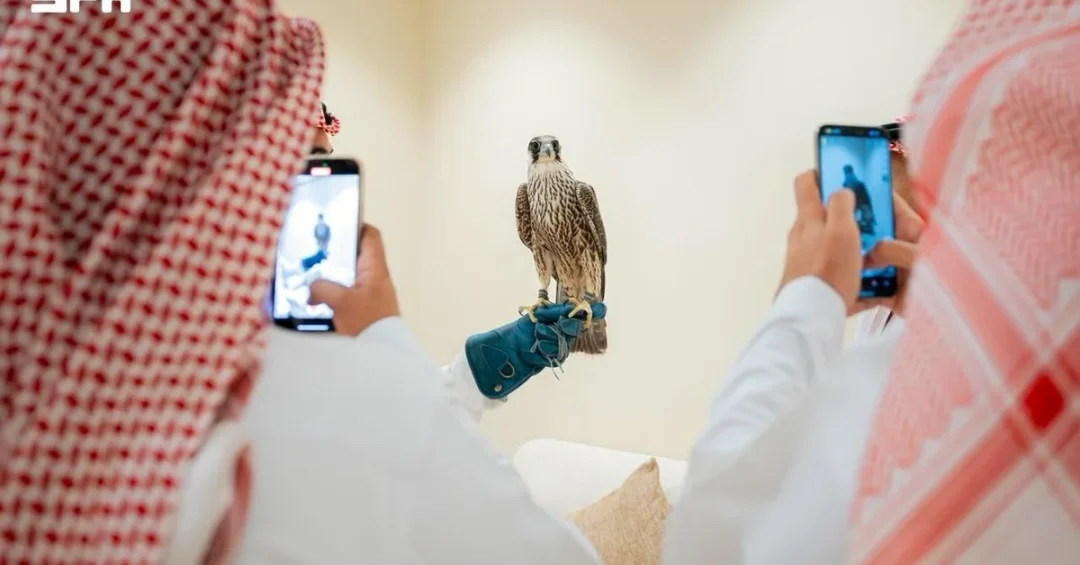
A juvenile peregrine falcon fetched SAR106,000 on the 24th night of the National Center for Falcons Auction 2026, drawing a large crowd of falconry enthusiasts to the Saudi capital, according to the Saudi Press Agency (SPA). The auction, which runs through Monday, has become a flagship event for the Kingdom’s falconry community, showcasing the rich heritage of Arabian falconry while promoting sustainable practices. The falcon, caught in Haradh by Ali Hamad Al-Marri, measured 15.25 inches in length and just over 15.25 inches in width. Bidding started at SAR40,000 before the final sale price was reached, underscoring the high value placed on juvenile migratory peregrine falcons among collectors and enthusiasts.
The National Center for Falcons Auction is organized by the National Center for Falcons, a government body dedicated to preserving falconry traditions and ensuring the sustainability of raptor populations. The event strictly accepts only juvenile migratory peregrine falcons caught within Saudi Arabia, while mature peregrine falcons and saker falcons are excluded to support conservation efforts. This policy reflects the Kingdom’s commitment to balancing cultural heritage with environmental stewardship, a key pillar of Saudi Vision 2030. The auction not only serves as a marketplace but also as a platform for education and community engagement, with live broadcasts on television and social media allowing falconers and enthusiasts to follow the proceedings from anywhere in the world.
Context and Background
How did falconry become such a cherished tradition in Saudi Arabia, and why does it continue to thrive in the modern era? Falconry, known as Al-Qanas in Arabic, has been an integral part of Arabian culture for centuries, serving as a vital means of hunting and a symbol of nobility and skill. The National Center for Falcons was established to regulate and promote this heritage, ensuring that traditional practices are passed down to future generations. The annual auction is a highlight of the falconry season, which typically runs from October to January, coinciding with the migration of peregrine falcons through the Arabian Peninsula. The center’s efforts are aligned with the directives of Saudi leadership to preserve cultural heritage while embracing modernization and sustainability.
The auction’s rules are meticulously designed to protect falcon populations. By allowing only juvenile migratory peregrine falcons to be traded, the center ensures that breeding adults remain in the wild to reproduce. Saker falcons, another popular species, are excluded entirely due to their vulnerable status. This approach is part of a broader national strategy to safeguard biodiversity, in line with international conventions such as the Convention on International Trade in Endangered Species of Wild Fauna and Flora (CITES). The center also provides trappers with services such as accommodation and transportation, facilitating their participation and encouraging compliance with regulations. Over the years, the auction has grown in prestige, attracting not only local falconers but also international buyers and researchers interested in sustainable falconry practices.
What makes the National Center for Falcons Auction a model for ethical wildlife trade? The event’s success lies in its rigorous enforcement of rules and its emphasis on education. Trappers are required to obtain permits and adhere to catch limits, and the center conducts regular awareness campaigns about the importance of conservation. The auction’s live broadcast on television and social media platforms further amplifies its reach, allowing a global audience to appreciate the intricacies of falconry and the Kingdom’s dedication to preserving it. As Saudi Arabia continues to diversify its economy and promote cultural tourism, events like this auction play a crucial role in showcasing the nation’s unique heritage to the world.
Key Details of the Auction
What are the specific criteria that determine a falcon’s value at the auction? The falcon sold on the 24th night was a juvenile peregrine, captured in Haradh, a region known for its rich wildlife. Its measurements—15.25 inches in length and just over 15.25 inches in width—indicate a well-proportioned bird, which is highly desirable for hunting and breeding. Bidding commenced at SAR40,000, reflecting the bird’s potential, and quickly escalated to SAR106,000 as multiple buyers vied for ownership. The identity of the buyer was not disclosed, but the sale price highlights the premium placed on high-quality falcons that meet the center’s strict criteria.
The auction process is transparent and regulated. Each falcon is inspected by experts to verify its age, health, and species. Only juvenile peregrine falcons with no signs of disease or injury are accepted. The center also ensures that all trappers are licensed and that their methods comply with ethical standards. Throughout the trapping season, the center provides trappers with accommodation and transportation to the auction venue, removing logistical barriers and encouraging participation from remote areas. This support system has been praised for its role in promoting sustainable practices and reducing illegal trapping.
How does the live broadcast enhance the auction’s impact? By airing the event on television and social media, the National Center for Falcons extends its reach beyond the physical venue, allowing falconers and enthusiasts to follow the bidding in real time. This transparency not only builds trust but also serves as an educational tool, demonstrating the proper handling and sale of falcons. The broadcast also highlights the Kingdom’s commitment to preserving its cultural heritage and natural resources, reinforcing its image as a responsible global citizen. As the auction continues through Monday, more falcons are expected to be sold, with prices likely to reflect the growing demand for ethically sourced birds.
International and Regional Impact
How does Saudi Arabia’s falcon auction influence global conservation efforts? The National Center for Falcons Auction sets a benchmark for ethical wildlife trade in the region and beyond. By excluding mature peregrine falcons and saker falcons, the center directly contributes to the recovery of these species, which face threats from habitat loss and illegal trafficking. This policy aligns with CITES and other international agreements, positioning Saudi Arabia as a leader in sustainable falconry. Regional neighbors, such as the United Arab Emirates and Qatar, have similar traditions, and the Saudi model offers a blueprint for balancing cultural practices with conservation. The auction also attracts international researchers and conservationists, fostering collaboration and knowledge exchange.
What economic and diplomatic benefits does the auction bring to Saudi Arabia? The event stimulates local economies by drawing visitors to Riyadh and surrounding areas, boosting hospitality, retail, and transportation sectors. It also strengthens diplomatic ties, as falconry is a shared heritage across the Arabian Peninsula and beyond. International buyers and dignitaries often attend, creating opportunities for cultural diplomacy. Furthermore, the auction’s live broadcast promotes Saudi Arabia’s soft power, showcasing its modernization and commitment to preserving traditions. As Vision 2030 aims to increase tourism and diversify revenue, events like this auction contribute to the Kingdom’s global image as a dynamic and culturally rich nation.
Economic and Strategic Significance
What does the SAR106,000 sale signify for the Saudi economy? While the sale of a single falcon may seem modest, it reflects the broader economic activity generated by falconry. The auction facilitates trade worth millions of riyals annually, supporting trappers, veterinarians, equipment suppliers, and event organizers. It also creates jobs and encourages entrepreneurship in related fields, such as falcon training and care. The high price paid for the juvenile peregrine demonstrates the market’s willingness to pay a premium for ethically sourced birds, which in turn incentivizes sustainable practices. As Saudi Arabia seeks to grow its non-oil sectors, falconry tourism and related industries present a niche but valuable contributor to the economy.
How does the auction align with Saudi Arabia’s strategic priorities? The event supports the goals of Vision 2030 by preserving cultural heritage, promoting environmental sustainability, and enhancing the Kingdom’s international standing. It also complements other initiatives, such as the Saudi Green Initiative and the National Transformation Program, which aim to protect biodiversity and develop ecotourism. By regulating falconry, the center ensures that this ancient practice remains viable for future generations, while also contributing to the conservation of migratory birds. The auction’s success underscores the importance of integrating tradition with modernity, a core principle of Saudi leadership.
Vision 2030 Alignment
How does the National Center for Falcons Auction embody the spirit of Vision 2030? Vision 2030 seeks to diversify the economy, preserve cultural heritage, and improve quality of life. The auction directly supports these objectives by promoting sustainable falconry, attracting tourism, and fostering community engagement. It also aligns with the Quality of Life Program, which aims to enhance cultural and recreational activities. By providing services to trappers and broadcasting the event globally, the center ensures that this heritage is accessible and appreciated by a wider audience. The auction’s emphasis on conservation reflects the Kingdom’s commitment to environmental stewardship, a key aspect of Vision 2030.
What does the future hold for falconry in Saudi Arabia? As the auction continues to grow, it is likely to attract even more international attention, further cementing Saudi Arabia’s role as a global hub for falconry. The National Center for Falcons plans to expand its educational programs and research initiatives, collaborating with universities and conservation organizations to study raptor populations and migration patterns. These efforts will inform future policies and ensure that falconry remains sustainable. With the support of Saudi leadership, the auction will continue to be a symbol of national pride, bridging the past and the future. As the 2026 auction progresses, each sale contributes to a legacy of conservation and cultural preservation that will benefit generations to come.
20 Questions
Q1. What is the National Center for Falcons Auction 2026?
A1. The National Center for Falcons Auction 2026 is an annual event organized by the National Center for Falcons in Saudi Arabia. It allows the sale of juvenile migratory peregrine falcons caught in the Kingdom, promoting sustainable falconry and conservation.
Q2. How much did the juvenile peregrine falcon sell for on the 24th night?
A2. The falcon sold for SAR106,000 on the 24th night. Bidding started at SAR40,000, and the final price reflects the high demand for ethically sourced juvenile peregrine falcons among enthusiasts and collectors.
Q3. Who caught the falcon that was sold?
A3. The falcon was caught by Ali Hamad Al-Marri in Haradh. His capture of this juvenile peregrine falcon highlights the skill and dedication of Saudi trappers who participate in the auction.
Q4. What are the measurements of the falcon?
A4. The falcon measured 15.25 inches in length and just over 15.25 inches in width. These dimensions indicate a well-proportioned bird, which is highly valued for its potential in hunting and breeding.
Q5. Why are only juvenile peregrine falcons allowed in the auction?
A5. Only juvenile migratory peregrine falcons are allowed to support conservation efforts. Excluding mature peregrine falcons and saker falcons helps preserve their populations and ensures sustainable falconry practices in Saudi Arabia.
Q6. What services does the National Center for Falcons provide to trappers?
A6. The center provides trappers with accommodation and transportation to the auction venue throughout the trapping season. This support encourages participation and compliance with regulations, making the auction accessible to trappers from remote areas.
Q7. How is the auction broadcast to the public?
A7. The auction is broadcast live on television and social media platforms. This allows falconers and enthusiasts worldwide to follow the proceedings, promoting transparency and showcasing Saudi Arabia’s commitment to sustainable falconry.
Q8. When does the auction run until?
A8. The auction runs through Monday. It is part of the annual falconry season in Saudi Arabia, which typically runs from October to January, coinciding with the migration of peregrine falcons through the Arabian Peninsula.
Q9. What is the significance of falconry in Saudi culture?
A9. Falconry, known as Al-Qanas, is a cherished tradition in Saudi Arabia, symbolizing nobility, skill, and heritage. It has been practiced for centuries and remains a vital part of the Kingdom’s cultural identity, now regulated for sustainability.
Q10. How does the auction support Saudi Vision 2030?
A10. The auction supports Vision 2030 by preserving cultural heritage, promoting environmental sustainability, and attracting tourism. It aligns with the Quality of Life Program and contributes to economic diversification and global engagement.
Q11. What is the starting bid for falcons at the auction?
A11. The starting bid for the falcon sold on the 24th night was SAR40,000. Starting bids vary depending on the falcon’s quality, but they generally reflect the bird’s potential and market demand.
Q12. Are saker falcons allowed in the auction?
A12. No, saker falcons are excluded from the auction to support conservation efforts. Only juvenile migratory peregrine falcons caught in Saudi Arabia are accepted, ensuring the protection of vulnerable species.
Q13. How does the auction ensure ethical practices?
A13. The auction ensures ethical practices by enforcing strict rules, licensing trappers, and inspecting falcons for age and health. The center also provides education on sustainable falconry and collaborates with international conservation agreements.
Q14. What regions in Saudi Arabia are known for falcon trapping?
A14. Regions like Haradh are known for falcon trapping. Haradh’s rich wildlife and strategic location make it a prime area for catching juvenile migratory peregrine falcons during the trapping season.
Q15. How does the auction benefit the local economy?
A15. The auction benefits the local economy by attracting visitors, creating jobs, and supporting businesses in hospitality, retail, and transportation. It also stimulates trade in falconry equipment and services, contributing to economic diversification.
Q16. What is the role of the National Center for Falcons?
A16. The National Center for Falcons regulates and promotes falconry in Saudi Arabia. It organizes the auction, provides services to trappers, and ensures compliance with conservation laws, preserving the heritage for future generations.
Q17. Can international buyers participate in the auction?
A17. Yes, international buyers can participate in the auction, either in person or through authorized representatives. The live broadcast and online platforms facilitate global participation, enhancing the event’s international reach.
Q18. How many falcons are typically sold at the auction?
A18. The number of falcons sold varies each year, but the auction typically features dozens of juvenile peregrine falcons over its duration. Each sale is regulated to ensure sustainability and ethical practices.
Q19. What happens to the falcons after they are sold?
A19. After purchase, falcons are typically used for hunting and breeding. Buyers are expected to care for them responsibly, and the center may conduct follow-ups to ensure compliance with ethical standards.
Q20. How does the auction contribute to global conservation?
A20. The auction contributes to global conservation by setting a model for ethical wildlife trade. Its strict rules protect peregrine and saker falcon populations, aligning with CITES and promoting sustainable practices worldwide.
Reader Feedback
We value your thoughts. Please share your feedback on this article.
Your feedback helps us improve our coverage.
Related articles
 15 Handicraft Workshops Enrich Ethnosport Culture Festival at Riyadh Season
 King Fahd National Library Unveils Rare 10th-Century Quran
 18 King Abdulaziz Cups Rounds Crown Winners at Falconry Festival
 CDF Partners with AgentX AI Hackathon in Riyadh
 Advanced Tech Boosts Fairness at Saudi Falconry Festival
 Theater and Performing Arts Commission Launches Performances Program in Qassim