


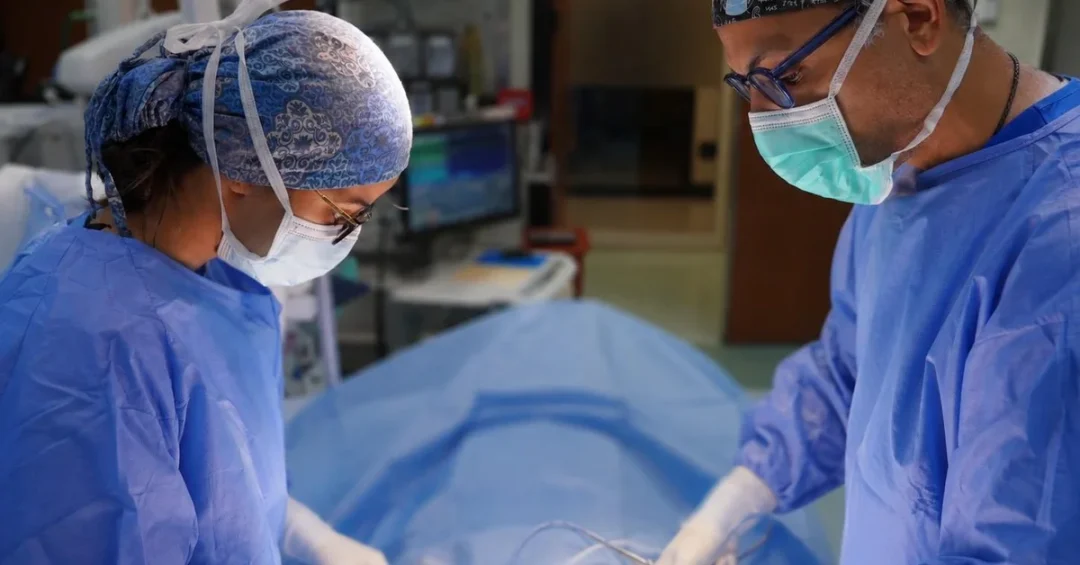
King Faisal Specialist Hospital and Research Centre (KFSH) Jeddah has successfully performed a hysterectomy using Vaginal Natural Orifice Trans-Endoscopic Surgery (VNOTES), a scarless procedure, on a patient in her fifties suffering from severe vaginal bleeding caused by uterine fibroids, the Saudi Press Agency reported on August 10, 2026. The operation, carried out by the Department of Obstetrics and Gynecology at KFSH Jeddah, involved no external surgical incisions and was completed entirely through a natural access route. According to the official announcement, the technique reduces postoperative pain, accelerates recovery, and shortens the patient’s hospital stay, marking a significant addition to the hospital’s minimally invasive surgical capabilities.
The procedure represents a notable shift in hysterectomy approaches within the Kingdom’s specialized medical sector. Rather than following the conventional abdominal laparoscopic method, which requires small incisions in the abdominal wall to insert instruments, the VNOTES technique avoids external cuts altogether. This reduces blood loss and the need for pain medication while accelerating the patient’s return to normal activities. For a woman in her fifties experiencing severe symptoms from uterine fibroids, the intervention addressed both the clinical emergency and the broader quality-of-life considerations that accompany major gynecological surgery.
Context and Background
Why does the adoption of a scarless surgical technique at a Saudi hospital matter beyond the operating room? Uterine fibroids are among the most common benign tumors affecting women, and in severe cases they can cause heavy or prolonged bleeding that significantly impacts daily life. For patients who do not respond to conservative treatments, hysterectomy remains a definitive option. However, the traditional abdominal route involves visible incisions, longer recovery periods, and higher risks of complications such as infection and postoperative pain. The VNOTES approach, by contrast, uses the vaginal canal as the sole access point, eliminating external scarring and reducing trauma to surrounding tissue.
The technique relies on high-definition visualization and specialized surgical instruments that allow the surgeon to navigate the pelvic cavity with precision. According to the Saudi Press Agency, the integration of these technologies enabled the procedure to be performed with high levels of safety and efficiency. The hospital’s Department of Obstetrics and Gynecology selected the patient carefully, ensuring that the minimally invasive route was appropriate for her condition. This kind of patient-specific decision-making is central to modern surgical practice, where the goal is not merely to treat disease but to preserve function and well-being.
KFSH Jeddah’s achievement also reflects a broader trend in Saudi healthcare: the structured integration of advanced techniques within a comprehensive clinical environment. The hospital has built its reputation on multidisciplinary collaboration, bringing together surgeons, anesthesiologists, and nursing teams to manage complex cases. In the case of VNOTES hysterectomy, this coordination is particularly important because the procedure demands dual expertise in advanced vaginal surgery and minimally invasive endoscopy. Without such a team, the technique remains confined to highly specialized centers.
Key Details of the Procedure
How exactly does a hysterectomy without external incisions work? In VNOTES, the surgeon accesses the pelvic organs through the vaginal canal, using an endoscope and specialized instruments to detach and remove the uterus. Because there are no abdominal cuts, patients typically experience less postoperative pain and require fewer pain medications. The hospital reported that the patient, a woman in her fifties, was treated for severe vaginal bleeding caused by uterine fibroids. The procedure was performed with high-definition visualization, which allowed the surgical team to identify and manage blood vessels precisely, reducing blood loss.
The official statement emphasized that the adoption of this approach responds to the need for less invasive treatment options for women experiencing severe symptoms due to uterine fibroids. It also took into consideration aesthetic, psychological, and post-surgical quality-of-life aspects. These factors are increasingly recognized as essential components of surgical care, particularly for procedures that affect reproductive organs. By avoiding visible scars, the technique may reduce the psychological burden associated with major surgery and help patients return to their normal routines more quickly.
Despite its advantages, VNOTES hysterectomy remains relatively limited in adoption globally. The procedure requires dual expertise in advanced vaginal surgery and minimally invasive endoscopy, as well as careful patient selection and close coordination among surgical, anesthesia, and nursing teams. These requirements typically restrict its practice to highly specialized centers with trained multidisciplinary teams capable of ensuring precision and safety. KFSH Jeddah’s ability to offer the procedure places it among a select group of hospitals in the region equipped to deliver this level of care.
International and Regional Impact
What does this achievement signal about Saudi Arabia’s position in global healthcare? The successful VNOTES hysterectomy at KFSH Jeddah adds to a growing record of advanced medical procedures performed in the Kingdom. It demonstrates that Saudi hospitals are not only adopting but also effectively implementing cutting-edge techniques that were once available only in a handful of leading academic medical centers worldwide. For patients across the Middle East and North Africa, this means access to minimally invasive options closer to home, reducing the need to travel abroad for specialized gynecological care.
Regionally, the procedure reinforces Saudi Arabia’s role as a hub for medical excellence. KFSH has been ranked first in the Middle East and North Africa and 12th globally among the world’s top 250 Academic Medical Centers for 2026. It was also recognized as the most valuable healthcare brand in the Kingdom and the Middle East according to Brand Finance 2026. Additionally, it has been listed by Newsweek among the World’s Best Hospitals 2026, the World’s Best Smart Hospitals 2026, and the World’s Best Specialized Hospitals 2026. These accolades reflect sustained investment in clinical infrastructure, talent development, and patient-centered care.
Internationally, the adoption of VNOTES hysterectomy aligns with a global movement toward minimally invasive surgery. Countries with advanced healthcare systems have increasingly embraced techniques that reduce surgical trauma and shorten recovery times. By performing this procedure successfully, KFSH Jeddah signals that Saudi Arabia is participating in and contributing to that global shift. It also opens the door to further knowledge exchange, as Saudi clinicians can share their experience with peers and collaborate on research that refines the technique.
Economic and Strategic Significance
How does a single surgical milestone connect to broader economic and strategic goals? Advanced medical capabilities are a key component of Saudi Arabia’s Vision 2030, which seeks to diversify the economy and enhance the quality of life for citizens and residents. A robust healthcare sector reduces the need for outbound medical tourism and attracts patients from other countries, generating revenue and reinforcing the Kingdom’s reputation as a destination for world-class care. Procedures like VNOTES hysterectomy, which require specialized skills and equipment, contribute to this ecosystem by raising the standard of care and creating demand for highly trained professionals.
Strategically, the achievement supports the development of a knowledge-based economy. Hospitals that perform complex surgeries become centers for training and research, drawing talent and fostering innovation. KFSH’s structured approach to integrating advanced surgical techniques within a comprehensive clinical environment exemplifies this model. By expanding treatment options and enhancing clinical outcomes in minimally invasive surgery, the hospital is helping to build a sustainable healthcare infrastructure that can serve the region for years to come.
Vision 2030 Alignment
Does this procedure bring Saudi Arabia closer to its Vision 2030 objectives? The answer lies in the intersection of healthcare, innovation, and quality of life. Vision 2030 aims to transform the Kingdom into a global leader in various sectors, including health. The successful VNOTES hysterectomy at KFSH Jeddah is a tangible example of how advanced medical techniques can improve patient outcomes while showcasing Saudi expertise. It reflects the vision’s emphasis on modernizing public services and investing in human capital.
Moreover, the procedure underscores the importance of multidisciplinary collaboration and continuous learning, values that are central to the Kingdom’s development strategy. As KFSH continues to integrate advanced surgical techniques, it sets a benchmark for other hospitals in Saudi Arabia and the wider region. The result is a healthcare system that not only meets international standards but also contributes to the nation’s broader aspirations for prosperity, well-being, and global engagement. In this way, a scarless surgery in Jeddah becomes part of a larger story of progress and innovation.
20 Questions
Q1. What is VNOTES hysterectomy?
A1. VNOTES stands for Vaginal Natural Orifice Trans-Endoscopic Surgery. It is a hysterectomy performed entirely through the vaginal canal without any external incisions, using an endoscope and specialized instruments for visualization and removal of the uterus.
Q2. Which hospital performed this procedure in Saudi Arabia?
A2. King Faisal Specialist Hospital and Research Centre (KFSH) Jeddah performed the procedure. The hospital’s Department of Obstetrics and Gynecology carried out the surgery, as reported by the Saudi Press Agency on August 10, 2026.
Q3. What was the patient’s condition?
A3. The patient was a woman in her fifties suffering from severe vaginal bleeding caused by uterine fibroids. She required a hysterectomy to address the condition, and the VNOTES approach was selected as a minimally invasive option.
Q4. How does VNOTES differ from traditional hysterectomy?
A4. Traditional abdominal hysterectomy involves incisions in the abdominal wall. VNOTES avoids external cuts by accessing the uterus through the vagina, reducing blood loss, postoperative pain, and recovery time, while eliminating visible scars.
Q5. What are the benefits of VNOTES for patients?
A5. Benefits include less pain, reduced need for pain medication, faster recovery, shorter hospital stay, and no external scarring. It also addresses aesthetic and psychological concerns, improving overall post-surgical quality of life.
Q6. Why is VNOTES not widely adopted?
A6. VNOTES requires dual expertise in advanced vaginal surgery and minimally invasive endoscopy. It also demands careful patient selection and close coordination among surgical, anesthesia, and nursing teams, limiting its practice to highly specialized centers.
Q7. What technology enabled the procedure?
A7. High-definition visualization and specialized surgical instruments allowed the surgical team to perform the procedure with high levels of safety and efficiency. These tools provide precise navigation within the pelvic cavity.
Q8. What is KFSH’s global ranking in 2026?
A8. KFSH was ranked first in the Middle East and North Africa and 12th globally among the world’s top 250 Academic Medical Centers for 2026. It was also recognized as the most valuable healthcare brand in the Kingdom and the Middle East.
Q9. What other recognitions has KFSH received?
A9. KFSH has been listed by Newsweek among the World’s Best Hospitals 2026, the World’s Best Smart Hospitals 2026, and the World’s Best Specialized Hospitals 2026, reflecting its commitment to excellence and patient care.
Q10. How does this procedure align with Saudi Vision 2030?
A10. It supports Vision 2030 by advancing healthcare quality, promoting innovation, and enhancing the Kingdom’s reputation as a leader in specialized medicine. It also contributes to the goal of improving quality of life for citizens and residents.
Q11. What are uterine fibroids?
A11. Uterine fibroids are non-cancerous growths in the uterus that can cause heavy bleeding, pain, and other symptoms. In severe cases, they may require surgical intervention such as hysterectomy.
Q12. Who performed the surgery?
A12. The surgery was performed by the Department of Obstetrics and Gynecology at KFSH Jeddah. The team included specialists in advanced vaginal surgery and minimally invasive endoscopy, along with anesthesiologists and nurses.
Q13. What is the significance of no external incisions?
A13. No external incisions mean less trauma to the body, reduced risk of infection, less postoperative pain, and no visible scars. This can lead to a faster return to normal activities and improved patient satisfaction.
Q14. How long is the recovery period for VNOTES?
A14. Recovery is generally faster than with traditional abdominal hysterectomy. The hospital reported that the procedure shortens hospital stay and accelerates the patient’s return to normal activities, though exact timelines vary by patient.
Q15. Is VNOTES available elsewhere in Saudi Arabia?
A15. The procedure is relatively limited in adoption due to its complexity. KFSH Jeddah’s successful performance places it among specialized centers in the Kingdom capable of offering this advanced minimally invasive option.
Q16. What does this mean for women’s health in the region?
A16. It expands treatment options for women with severe gynecological conditions, offering a less invasive alternative that prioritizes safety, recovery, and quality of life. It also reduces the need to travel abroad for such procedures.
Q17. How does KFSH ensure safety during such procedures?
A17. KFSH relies on multidisciplinary collaboration, careful patient selection, and advanced technology. Close coordination among surgical, anesthesia, and nursing teams ensures precision and safety throughout the operation.
Q18. What is the source of this information?
A18. The information was released by the Saudi Press Agency (SPA) on August 10, 2026, based on an official announcement from King Faisal Specialist Hospital and Research Centre Jeddah.
Q19. What are the psychological benefits of scarless surgery?
A19. Avoiding visible scars can reduce anxiety and body image concerns, contributing to better psychological recovery. It aligns with patient-centered care that considers emotional well-being alongside physical health.
Q20. What does this achievement indicate about Saudi healthcare?
A20. It demonstrates Saudi Arabia’s capacity to adopt and perform advanced medical techniques, reflecting investments in healthcare infrastructure, talent, and innovation under Vision 2030, and reinforcing the Kingdom’s growing role in global medicine.
Reader Feedback
We value your thoughts. Please share your feedback on this article.
Your feedback helps us improve our coverage.
Related articles
 Saudi Telesurgery Program Launched by KSU Medical City, Seha
 Saudi Alzheimer’s Association Wins Global Ageing Award
 Saudi Arabia Launches Remote Robotic Surgery Program
 Sultan Bin Abdulaziz City Delivers 83,142 Therapy Sessions in Q2 2026
 Seha Virtual Hospital Performs 11 Remote Robotic Surgeries
 Saudi Hospital Performs 11 Remote Robotic Surgeries in Global First