


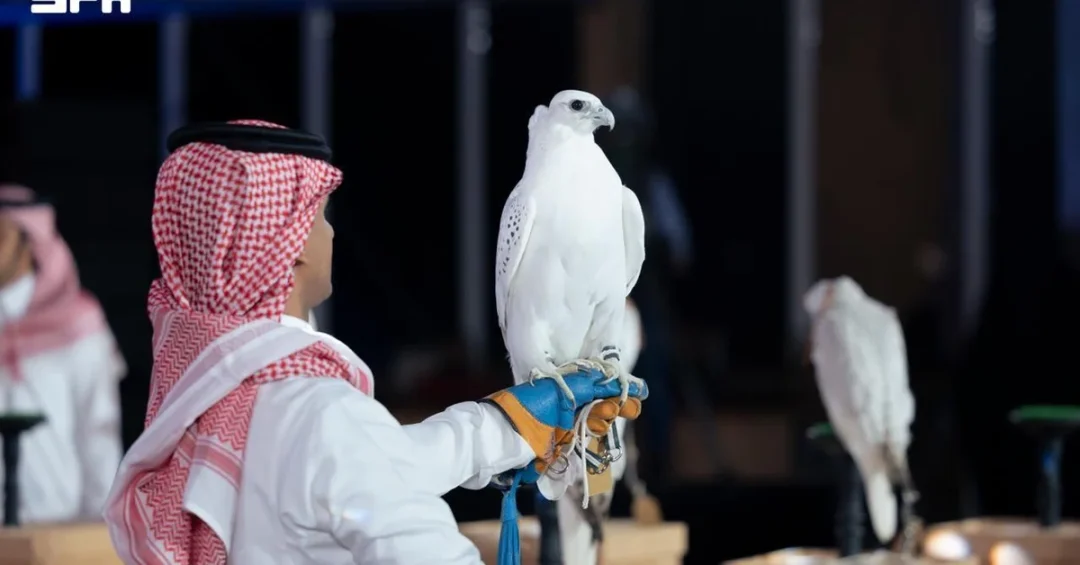
The Mazayen beauty contest for falcons continued this week at the King Abdulaziz Falconry Festival, organized by the National Center for Falcons at its headquarters in Malham, north of Riyadh, with the event running until Monday. The festival has drawn breeders, owners, and enthusiasts from across the Kingdom and beyond, underscoring falconry’s enduring place in Saudi heritage and its growing profile as a celebrated cultural and sporting pursuit. According to information released through the Saudi Press Agency, the Mazayen competition concluded today with two rounds, each carrying total prize money of SAR625,000, distributed among the top five finishers.
The contest rewards precision and pedigree, reflecting the deep expertise that Saudi breeders have cultivated over generations. Is it any wonder that an event rooted in centuries of desert tradition now commands such national attention and such substantial prizes? The concluding rounds award SAR300,000 to the first-place winner, SAR175,000 to the second, SAR100,000 to the third, SAR30,000 to the fourth, and SAR20,000 to the fifth, a structure that acknowledges both excellence and the dedication required to raise champion birds. The King Abdulaziz Falconry Festival, held under the umbrella of the National Center for Falcons, has become a signature fixture on the Kingdom’s cultural calendar.
Context and Background
What makes falconry such a durable pillar of Saudi identity? Falconry has been woven into the fabric of Arabian life for millennia, serving as a practical hunting method in harsh desert environments and evolving into a respected art form that embodies patience, discipline, and a profound bond between the falconer and the bird. The King Abdulaziz Falconry Festival, named after the founder of the modern Kingdom, honors that legacy while presenting it to a contemporary international audience. The National Center for Falcons, which organizes the event, operates as a dedicated institution supporting breeders, advancing best practices in falcon care, and preserving the traditions associated with the sport.
The festival at Malham, north of Riyadh, brings together participants who compete across several categories, with Mazayen — the beauty contest — among the most anticipated. Unlike speed or hunting competitions, Mazayen evaluates the physical characteristics of the birds, rewarding breeders whose falcons display the conformation and qualities prized by connoisseurs. This emphasis on breeding excellence has helped cultivate a sophisticated community of Saudi falconers whose knowledge is increasingly recognized on the world stage. The event also functions as a gathering point for exchange of expertise, where younger enthusiasts learn from seasoned breeders.
Falconry’s recognition by UNESCO as an intangible cultural heritage of humanity has further elevated its international standing, and Saudi Arabia has been an active participant in that global conversation. Does that global recognition not reinforce the Kingdom’s role as a custodian of living heritage? The festival therefore serves a dual purpose: celebrating a tradition at home while projecting Saudi cultural stewardship abroad.
Key Details of the Competition
How are the champions determined in a contest that prizes form as much as function? The Mazayen rounds are judged by panels of experts who assess each falcon against established criteria, awarding scores for the features that define excellence within each category. The concluding two rounds, each with a prize pool of SAR625,000, represent the culmination of days of competition. The National Center for Falcons has structured the awards to recognize depth of quality, with five placements rewarded in each round, ensuring that a broad field of accomplished breeders receives acknowledgment.
The SAR300,000 first prize is a meaningful incentive, but participants emphasize that the prestige of a Mazayen title carries value beyond the financial reward. For many breeders, a strong showing at the King Abdulaziz Falconry Festival elevates the reputation of their birds and their bloodlines, with benefits that extend across future competitions. The event’s organization by the National Center for Falcons at its Malham headquarters reflects the Kingdom’s investment in dedicated infrastructure for the sport, including facilities designed to host large fields of competitors and substantial audiences.
What does it take to prepare a falcon for the show ring? Breeders describe months of careful conditioning, nutrition, and training, along with meticulous attention to the bird’s health and plumage. That preparation is itself a craft, passed down through families and refined through experience. The festival’s ability to draw such committed participants speaks to the vitality of the community that sustains falconry in Saudi Arabia today.
International and Regional Impact
How does a heritage competition in Malham resonate with audiences far beyond the Arabian Peninsula? The King Abdulaziz Falconry Festival has steadily gained international visibility, attracting visitors, journalists, and fellow falconers from around the world who come to observe and participate. This international dimension aligns with Saudi Arabia’s broader efforts to share its culture globally and to position itself as a destination for heritage tourism. Delegations from other falconry traditions have found common ground at the festival, creating opportunities for cross-cultural dialogue around a practice recognized worldwide.
Within the region, the event reinforces the Kingdom’s leadership in preserving Gulf heritage. Neighboring countries with their own deep falconry traditions regard the Saudi festival as a benchmark for organization and scale. Does that regional standing not also strengthen the bonds of shared culture across the Gulf? By hosting an event of this caliber, Saudi Arabia contributes to a regional ecosystem in which heritage sports thrive and where expertise circulates among practitioners.
Economic and Strategic Significance
What economic value flows from a cultural festival centered on falcons? The event supports a specialized economy that includes breeding operations, veterinary services, equipment suppliers, and hospitality providers. Visitors traveling to Malham and Riyadh for the festival contribute to the local tourism and services sectors, while the prize money injected into the competition circulates among breeders who reinvest in their operations. The festival also complements Saudi Arabia’s wider strategy of diversifying sources of economic activity and creating experiences that attract international visitors.
Strategically, the King Abdulaziz Falconry Festival exemplifies how the Kingdom integrates cultural preservation with modernization. The National Center for Falcons combines traditional knowledge with contemporary standards of animal care, competition management, and visitor experience. Is that combination not precisely the model that Vision 2030 envisions for the cultural sector? By professionalizing heritage activities, Saudi Arabia ensures that traditions remain vibrant and relevant rather than static relics.
Vision 2030 Alignment
The festival’s continued success reflects the objectives of Saudi Vision 2030, which emphasizes the preservation and promotion of national heritage as part of a diversified, forward-looking economy and society. Cultural events like the King Abdulaziz Falconry Festival contribute to quality-of-life goals by offering enriching experiences for residents and visitors alike, while also supporting tourism and the creative economy. The National Center for Falcons’ stewardship of the event demonstrates institutional commitment to safeguarding a practice that Saudis regard with pride.
Will the next generation carry this heritage forward with the same passion? The evidence at Malham suggests yes: young falconers competing alongside veterans, families attending together, and international guests admiring the craft all point to a tradition in good health. As the festival moves toward its conclusion on Monday, the Mazayen contest stands as a testament to Saudi Arabia’s ability to honor its past while building a dynamic future rooted in Vision 2030.
20 Questions
Q1. What is the Mazayen competition at the King Abdulaziz Falconry Festival?
A1. Mazayen is the beauty contest for falcons held as part of the King Abdulaziz Falconry Festival, where expert judges evaluate birds on conformation and prized physical characteristics.
Q2. Who organizes the King Abdulaziz Falconry Festival?
A2. The festival is organized by the National Center for Falcons at its headquarters in Malham, north of Riyadh.
Q3. Until when does the festival run?
A3. According to the Saudi Press Agency, the festival runs until Monday.
Q4. How many rounds concluded the Mazayen competition?
A4. The competition concluded with two rounds, each carrying a total prize pool of SAR625,000.
Q5. What is the first-place prize in each round?
A5. The first-place winner in each round receives SAR300,000.
Q6. What does the second-place winner receive?
A6. The second-place winner receives SAR175,000.
Q7. How much does the third-place winner earn?
A7. The third-place winner receives SAR100,000.
Q8. What prizes are given to fourth and fifth place?
A8. Fourth place receives SAR30,000, and fifth place receives SAR20,000.
Q9. Where is the festival being held?
A9. The festival is held at the National Center for Falcons headquarters in Malham, north of Riyadh.
Q10. What distinguishes Mazayen from other falconry competitions?
A10. Mazayen focuses on the physical beauty and conformation of falcons rather than speed or hunting performance, rewarding breeding excellence.
Q11. Why is falconry culturally important in Saudi Arabia?
A11. Falconry has been part of Arabian life for millennia, embodying patience, discipline, and a deep bond between falconer and bird.
Q12. Has falconry received international recognition?
A12. Yes, falconry is recognized by UNESCO as intangible cultural heritage, and Saudi Arabia actively participates in preserving it globally.
Q13. How does the event support the local economy?
A13. It supports breeding, veterinary services, equipment suppliers, hospitality, and tourism, while prize money circulates among breeders.
Q14. What role does the National Center for Falcons play?
A14. It supports breeders, advances falcon care standards, and organizes the festival to preserve falconry traditions.
Q15. How do breeders prepare falcons for Mazayen?
A15. Breeders invest months in conditioning, nutrition, training, and health care to present birds at their best.
Q16. Does the festival attract international visitors?
A16. Yes, it draws visitors, journalists, and fellow falconers from around the world, enhancing Saudi heritage tourism.
Q17. How does the festival connect to Vision 2030?
A17. It promotes heritage preservation, quality of life, tourism, and the creative economy, aligning with Vision 2030 objectives.
Q18. What is the significance of the festival’s name?
A18. It honors King Abdulaziz, the founder of modern Saudi Arabia, reflecting the tradition’s national importance.
Q19. Why is the prize structure designed with five placements?
A19. It recognizes depth of quality and rewards a broad field of accomplished breeders in each round.
Q20. When does the festival conclude?
A20. The King Abdulaziz Falconry Festival concludes on Monday, following the final Mazayen rounds.
Reader Feedback
We value your thoughts. Please share your feedback on this article.
Your feedback helps us improve our coverage.
Related articles
 Najran’s Traditional Textiles: Heritage Woven from Local Life
 Local Falcon Owners Crowned in 12 King Abdulaziz Cup Rounds
 Winners Crowned in Falconer of the Future at Saudi Falconry Festival
 Al-Ahsa Shines at UNESCO Creative Cities Conference in Morocco
 Saudi Arabia Concludes Successful Participation in Kuwait Book Fair 2026
 KSGAAL, MWL Host World Arabic Language Day in Makkah