


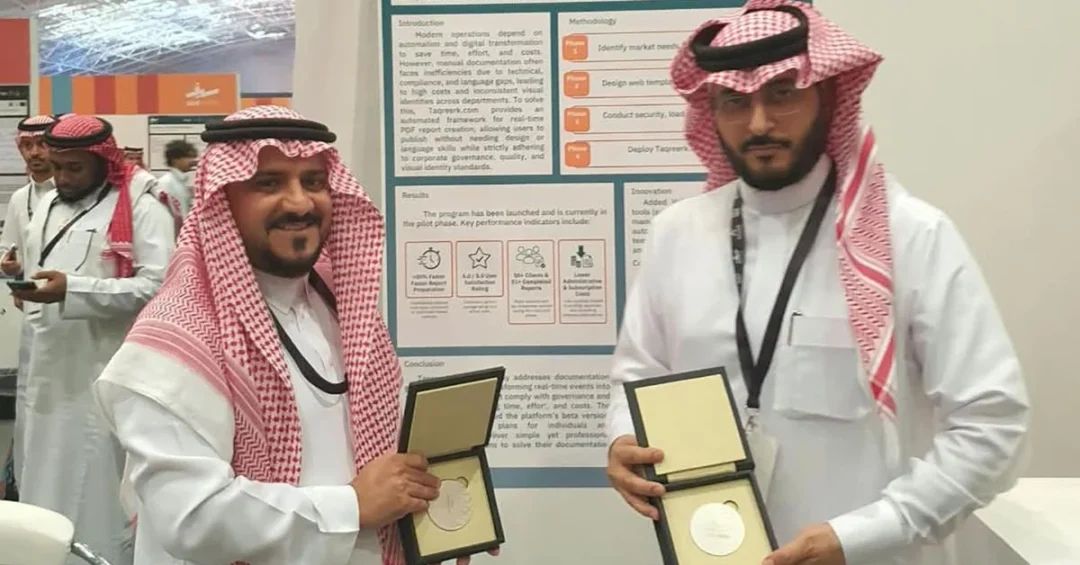
Three technical colleges in Jeddah have secured eight medals, an Excellence Award, and a certificate of appreciation at the Global Security and Innovation Fair and Competition (SAIF 2026), according to an announcement carried by the Saudi Press Agency (SPA). The medals comprise one gold, five silver, and two bronze, awarded for projects presented by instructors and trainees at the event, which was organized by Tuwaiq Academy in Riyadh from November 24 to 26, 2026. The achievement highlights the growing strength of Saudi Arabia’s technical and vocational training sector and its capacity to produce innovative, security-focused solutions. The recognition also underscores the Kingdom’s commitment to nurturing talent in line with Vision 2030 goals.
How did these Jeddah colleges manage to stand out among participants from across the Kingdom? The answer lies in a combination of institutional support, expert mentorship, and a culture of innovation fostered by the Technical and Vocational Training Corporation (TVTC). The SAIF 2026 exhibition provided a platform for male and female instructors and trainees to showcase projects that address contemporary security challenges through technology and ingenuity. The success of the three colleges reflects the broader transformation underway in Saudi technical education, where practical skills and creative problem-solving are prioritized. This accomplishment is a testament to the dedication of both students and educators.
Context and Background
What is the significance of the Global Security and Innovation Fair and Competition? Organized by Tuwaiq Academy, a leading institution for advanced technology training in Riyadh, SAIF 2026 brought together technical colleges and training institutes from across Saudi Arabia to compete and collaborate. The event, held from November 24 to 26, focused on security and innovation, aligning with national priorities to develop homegrown solutions for safety and defense. Tuwaiq Academy, established to bridge the gap between education and industry, plays a pivotal role in upskilling Saudi youth in emerging technologies. The fair served as a showcase for projects that could contribute to the Kingdom’s security infrastructure and technological sovereignty.
How does this event fit into the larger educational landscape of Saudi Arabia? The Technical and Vocational Training Corporation (TVTC) oversees a network of technical colleges and institutes that provide hands-on training to thousands of Saudi men and women. Under Vision 2030, the TVTC has been tasked with modernizing curricula, enhancing partnerships with the private sector, and increasing the number of skilled workers in fields such as cybersecurity, electronics, and industrial maintenance. The SAIF competition is one of many initiatives designed to stimulate innovation and reward excellence among trainees. By participating in such events, students gain valuable experience, exposure to industry standards, and the confidence to turn their ideas into reality. The Jeddah colleges’ success demonstrates the effectiveness of these efforts.
Key Details
What specific projects earned the Jeddah colleges their medals? While the SPA report did not detail each project, it noted that the awards were for projects developed by both male and female instructors and trainees. The diversity of participants reflects the inclusive nature of Saudi technical education, where women are increasingly taking on advanced technical roles. The one gold, five silver, and two bronze medals were distributed across the three colleges, suggesting a broad base of excellence rather than a single standout. The Excellence Award and certificate of appreciation further recognize the overall quality of the colleges’ contributions. These accolades are not just trophies; they signal to employers and investors that Saudi technical graduates are capable of innovation at a high level.
Who were the key figures behind this achievement? Eng. Hussein bin Ali Al-Buhairi, Director General of Technical and Vocational Training in Makkah Region, expressed his appreciation for the support extended by Dr. Adel Al-Zunaidi, Deputy Governor for Training at the Technical and Vocational Training Corporation (TVTC). Al-Buhairi also commended training leaders, technical research and innovation centers, and creativity clubs for their role in mentoring participants and supervising project development. This top-down support, combined with grassroots creativity, created an environment where students could thrive. The recognition from senior officials underscores the importance placed on technical excellence within the Kingdom’s education system. Such leadership engagement is crucial for sustaining momentum and scaling success.
International and Regional Impact
How does Saudi Arabia’s success in technical competitions resonate beyond its borders? The Kingdom’s growing prowess in security and innovation is being watched by regional and international partners. As Saudi Arabia positions itself as a hub for technology and advanced manufacturing, achievements like those at SAIF 2026 enhance its reputation as a destination for investment and collaboration. Countries in the Gulf and beyond are looking to Saudi Arabia for models of vocational training that combine Islamic values with cutting-edge skills. The medals won by Jeddah colleges serve as a soft power tool, demonstrating that Saudi youth can compete on a global stage. This aligns with the Kingdom’s broader diplomatic efforts to foster knowledge exchange and economic diversification.
What does this mean for regional cooperation in security innovation? The Middle East faces complex security challenges, from cybersecurity threats to physical infrastructure protection. By developing indigenous solutions, Saudi Arabia can contribute to regional stability and reduce reliance on foreign technology. The projects showcased at SAIF 2026 may have applications in border security, surveillance, and emergency response, areas of common concern among Gulf Cooperation Council states. Sharing best practices and collaborating on innovation could strengthen ties among neighboring countries. Saudi Arabia’s leadership in this domain is welcomed by allies who see the Kingdom as a stabilizing force. The success of Jeddah colleges is therefore not just a national triumph but a regional asset.
Economic and Strategic Significance
Why is technical and vocational training critical to Saudi Arabia’s economic future? As the Kingdom diversifies away from oil dependence under Vision 2030, a skilled workforce is essential. Technical colleges produce technicians, engineers, and innovators who can drive growth in sectors like renewable energy, advanced manufacturing, and digital services. The medals at SAIF 2026 are a proof point that the TVTC’s reforms are yielding results. Employers in the private sector are increasingly seeking graduates with practical skills and creative thinking, and these award-winning students are well-positioned for employment. Moreover, innovation in security technology has direct economic value, as it can lead to patents, startups, and high-value exports. The recognition also attracts investment in R&D and educational infrastructure.
How does this achievement support the localization of technology and jobs? Saudi Arabia aims to localize technology and create jobs for its citizens. By nurturing talent through competitions like SAIF, the Kingdom is building a pipeline of professionals who can fill roles currently occupied by expatriates. The projects developed by Jeddah colleges may lead to commercial spin-offs, contributing to the growth of small and medium enterprises. The Excellence Award also signals to industry that these colleges are reliable partners for research and development. As the government invests in technical education, the return on investment is measured in both economic diversification and social empowerment. The medals are a small but meaningful indicator of progress toward a knowledge-based economy.
Vision 2030 Alignment
How does the Jeddah colleges’ success embody the aspirations of Vision 2030? Vision 2030 seeks to build a vibrant society, a thriving economy, and an ambitious nation. Central to this is the development of human capital, especially youth, through quality education and training. The SAIF 2026 medals demonstrate that Saudi technical education is producing innovative, skilled graduates who can contribute to the economy and society. The emphasis on both male and female participation aligns with the Vision’s goal of increasing women’s workforce participation. Furthermore, the focus on security and innovation supports the Vision’s objective of enhancing national security and technological self-reliance. This achievement is a clear example of how Vision 2030 is being translated into tangible results at the grassroots level.
What lies ahead for these colleges and their students? The recognition from SAIF 2026 is likely to spur further investment in technical education in Jeddah and beyond. The colleges may expand their research centers, forge new partnerships with industry, and offer advanced training programs. Students who participated will carry their experience into the job market, becoming ambassadors for technical careers. The TVTC is expected to use this success as a case study to replicate across other regions. As Saudi Arabia continues its journey toward 2030, the role of technical and vocational training will only grow. The medals are not an endpoint but a milestone on the path to a diversified, innovative economy driven by the talents of Saudi men and women.
20 Questions
Q1. What event did the three Jeddah technical colleges participate in?
A1. They participated in the Global Security and Innovation Fair and Competition (SAIF 2026), organized by Tuwaiq Academy in Riyadh from November 24 to 26, 2026.
Q2. How many medals did the colleges win in total?
A2. They won eight medals: one gold, five silver, and two bronze.
Q3. What other recognitions did the colleges receive?
A3. They also received an Excellence Award and a certificate of appreciation.
Q4. Who organized SAIF 2026?
A4. The event was organized by Tuwaiq Academy, a leading technology training institution based in Riyadh.
Q5. Where and when was SAIF 2026 held?
A5. It was held in Riyadh from November 24 to 26, 2026.
Q6. Who expressed appreciation for the support given to technical talent?
A6. Eng. Hussein bin Ali Al-Buhairi, Director General of Technical and Vocational Training in Makkah Region, expressed appreciation.
Q7. Who was commended for supporting technical talent?
A7. Dr. Adel Al-Zunaidi, Deputy Governor for Training at the Technical and Vocational Training Corporation (TVTC), was commended for his support.
Q8. What groups were praised for mentoring participants?
A8. Training leaders, technical research and innovation centers, and creativity clubs were praised for mentoring participants and supervising project development.
Q9. Who developed the projects presented at the fair?
A9. The projects were developed by male and female instructors and trainees from the technical colleges.
Q10. What is the significance of the medals for the colleges?
A10. The medals highlight the strength of Saudi technical education and the ability of students and instructors to innovate in security-related fields.
Q11. How does this achievement align with Vision 2030?
A11. It supports Vision 2030 goals of developing human capital, empowering youth, and promoting technological self-reliance and innovation.
Q12. What is the role of Tuwaiq Academy in Saudi Arabia?
A12. Tuwaiq Academy bridges the gap between education and industry by upskilling Saudi youth in advanced technologies.
Q13. What is the Technical and Vocational Training Corporation (TVTC)?
A13. TVTC is the government body overseeing technical colleges and institutes in Saudi Arabia, tasked with modernizing curricula under Vision 2030.
Q14. How many technical colleges in Jeddah won awards?
A14. Three technical colleges in Jeddah won awards at SAIF 2026.
Q15. What kind of projects were showcased at SAIF 2026?
A15. The projects focused on security and innovation, developed by instructors and trainees to address contemporary challenges.
Q16. Why is the participation of women significant?
A16. It reflects the inclusive nature of Saudi technical education and aligns with Vision 2030’s goal of increasing women’s workforce participation.
Q17. What economic benefits can result from such achievements?
A17. They can lead to a skilled workforce, job localization, patents, startups, and increased investment in research and development.
Q18. How does this success impact Saudi Arabia’s international reputation?
A18. It enhances the Kingdom’s image as a hub for technology and innovation, attracting investment and collaboration.
Q19. What role do creativity clubs play in technical education?
A19. Creativity clubs foster innovation and provide mentorship, helping students develop practical projects for competitions.
Q20. What is the future outlook for technical education in Saudi Arabia?
A20. The success at SAIF 2026 is expected to spur further investment and expansion of technical education, supporting the Kingdom’s journey toward a knowledge-based economy.
Reader Feedback
We value your thoughts. Please share your feedback on this article.
Your feedback helps us improve our coverage.
Related articles
 Jeddah Completes Field Preparations for Rainy Weather
 Arab Parliament President Meets Egyptian Foreign Minister
 Saudi Arabia Reaffirms Support for Palestinian State, Urges Global Action
 NCVC Launches Inspection Campaign in Aseer to Curb Illegal Firewood Trade
 IIFA Council Opens 27th Session in Malaysia on Monday
 Minister of Interior Honors SAIF 2026 Winners in Riyadh