


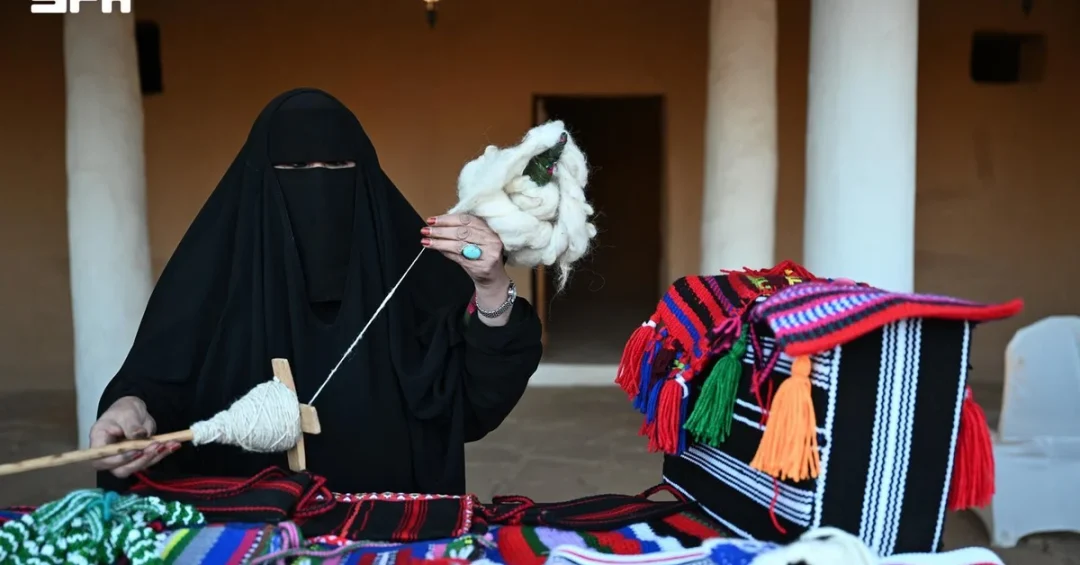
The handicraft pavilions at the Wasm Hail event, held at the historic Al-Qishlah Palace in Hail, showcased a diverse array of handmade goods bridging cultural heritage with contemporary creativity, including traditional Sadu weaving, resin art, pottery, incense burner crafting, and wood carving, according to the Saudi Press Agency (SPA). The event, which took place on November 27, 2026, highlighted the region’s rich artisanal traditions while providing a platform for local artisans to display their skills and products to a wider audience.
Organized as part of Saudi Arabia’s broader efforts to promote cultural heritage and support the creative economy, the Wasm Hail event drew visitors and participants from across the Kingdom. The historic Al-Qishlah Palace, a landmark in Hail, provided a fitting backdrop for the celebration of craftsmanship that has been passed down through generations. The event underscored the Kingdom’s commitment to preserving traditional crafts while encouraging innovation and contemporary artistic expression. As Saudi Arabia continues to diversify its economy under Vision 2030, such cultural events play a vital role in showcasing the nation’s heritage and nurturing local talent. The handicraft pavilions offered a glimpse into the skilled work of artisans who are blending age-old techniques with modern designs, creating products that appeal to both local and international markets. The event also served as a meeting point for artisans, entrepreneurs, and cultural enthusiasts, fostering collaboration and knowledge exchange.
Context and Background
What makes the Wasm Hail event a significant moment for Saudi Arabia’s cultural landscape? The event is part of a series of initiatives aimed at revitalizing and promoting traditional handicrafts, which are considered an essential component of the Kingdom’s cultural identity. Hail, known for its historical significance and rich heritage, has long been a center for crafts such as Sadu weaving, pottery, and wood carving. The Al-Qishlah Palace, a historic fortification that dates back to the early 20th century, has been repurposed as a venue for cultural events, symbolizing the integration of heritage preservation with modern cultural expression. The Wasm Hail event aligns with the Ministry of Culture’s efforts to document, preserve, and promote Saudi handicrafts, ensuring that these skills are passed on to future generations. By hosting such events, Saudi Arabia aims to create a vibrant cultural ecosystem that supports artisans economically and socially, while also attracting tourists and cultural visitors.
The Kingdom’s handicrafts sector has received increasing attention in recent years as part of the National Strategy for Culture, which seeks to double the cultural sector’s contribution to GDP and create jobs. Traditional crafts are not only a link to the past but also a potential driver of economic growth, particularly in rural areas where many artisans reside. The Wasm Hail event is a testament to the government’s commitment to empowering local communities and preserving intangible cultural heritage. Moreover, the event reflects the broader trend of integrating cultural heritage into the national development agenda, as outlined in Vision 2030. By providing artisans with platforms to showcase their products, the event helps them reach new markets and gain recognition, both within Saudi Arabia and internationally. This approach not only preserves cultural traditions but also stimulates innovation, as artisans experiment with new materials and designs while staying true to their roots.
Key Details
What specific crafts and activities were featured at the Wasm Hail event? The handicraft pavilions displayed a wide range of handmade goods, each representing a unique aspect of Saudi Arabia’s artisanal heritage. Traditional Sadu weaving, a Bedouin craft that uses natural fibers and geometric patterns, was prominently featured, with weavers demonstrating their skills and selling woven textiles, rugs, and accessories. Resin art, a contemporary craft that involves embedding objects in resin, showcased how modern materials can be used to create artistic pieces that reflect Saudi culture. Pottery, one of the oldest crafts in the region, was represented by artisans who use traditional techniques to create functional and decorative items. Incense burner crafting, a skill that dates back centuries, highlighted the importance of incense in Saudi hospitality and daily life. Wood carving, another traditional craft, was displayed with intricately carved doors, furniture, and decorative pieces that reflect the region’s architectural heritage.
In addition to the exhibitions, the event included workshops and live demonstrations where artisans shared their knowledge with visitors. These interactive sessions allowed attendees to try their hand at various crafts, fostering a deeper appreciation for the skill and effort involved. The event also provided a marketplace for artisans to sell their products directly to consumers, helping them generate income and sustain their craft. According to SPA, the event aimed to highlight the region’s cultural and artisanal heritage, provide artisans with platforms to showcase their products, support the creative economy, and pass craft skills on to future generations. The presence of young artisans and apprentices at the event signaled a promising future for these traditional crafts, as new generations take up the mantle. The Wasm Hail event thus served as both a celebration of heritage and a forward-looking initiative to ensure the continuity of Saudi craftsmanship.
International and Regional Impact
How does the Wasm Hail event contribute to Saudi Arabia’s cultural diplomacy and regional influence? By showcasing its rich artisanal heritage, Saudi Arabia presents itself as a nation that values its traditions while embracing modernity. This narrative resonates with international audiences who are increasingly interested in authentic cultural experiences. The event also attracts visitors from neighboring Gulf countries and beyond, enhancing cultural exchange and tourism. In a region where cultural tourism is growing, Saudi Arabia’s efforts to preserve and promote handicrafts position it as a leader in heritage conservation. The event’s location in Hail, a city with a storied past, adds to its appeal, drawing tourists who wish to explore the Kingdom’s historical sites. Furthermore, the event supports the objectives of the Gulf Cooperation Council (GCC) in fostering cultural ties among member states, as artisans from different countries can participate and share their crafts.
On a broader scale, the Wasm Hail event aligns with UNESCO’s conventions on safeguarding intangible cultural heritage, to which Saudi Arabia is a signatory. By actively promoting traditional crafts, the Kingdom demonstrates its commitment to global cultural preservation efforts. This not only enhances Saudi Arabia’s international standing but also attracts cultural tourists and scholars interested in traditional arts. The event also provides a model for other countries in the region, showing how cultural heritage can be leveraged for economic and social development. As Saudi Arabia continues to open up to the world through initiatives like Vision 2030, events like Wasm Hail play a crucial role in shaping its image as a dynamic and culturally rich nation. The positive coverage by international media further amplifies the Kingdom’s cultural message, reaching audiences far beyond the region.
Economic and Strategic Significance
What economic benefits does the handicrafts sector bring to Saudi Arabia, and how does the Wasm Hail event support them? The handicrafts sector is a vital part of the creative economy, which Saudi Arabia aims to grow as part of Vision 2030. By providing artisans with a platform to sell their products, the event directly supports small businesses and entrepreneurs, many of whom rely on craft production for their livelihoods. The sale of handicrafts generates income for local communities, particularly in rural areas where employment opportunities may be limited. Moreover, the event attracts visitors who spend on accommodation, food, and other services, boosting the local economy. The Ministry of Culture has estimated that the cultural sector could contribute significantly to GDP and create thousands of jobs by 2030, with handicrafts playing a key role. The Wasm Hail event is thus a microcosm of the broader economic strategy, demonstrating how cultural heritage can be a driver of economic diversification.
Strategically, the event supports the Kingdom’s goal of reducing dependence on oil by nurturing non-oil sectors. Handicrafts also have export potential, as Saudi artisans can sell their products online and through international exhibitions. The event helps artisans develop their business skills, from pricing to marketing, enabling them to compete in global markets. Additionally, the event fosters a sense of national pride and identity, which is essential for social cohesion and stability. By investing in cultural events, the government signals its commitment to preserving Saudi heritage while embracing progress. The Wasm Hail event also encourages innovation, as artisans incorporate modern designs and materials into traditional crafts, creating products that appeal to contemporary tastes. This blend of tradition and innovation is a hallmark of Vision 2030, which seeks to balance cultural preservation with economic modernization.
Vision 2030 Alignment
How does the Wasm Hail event align with the goals of Saudi Vision 2030? Vision 2030, launched in 2016 by Crown Prince Mohammed bin Salman, aims to diversify the economy, empower citizens, and enhance the Kingdom’s global standing. Cultural heritage is a key pillar of this vision, as it contributes to social development, economic growth, and national identity. The Wasm Hail event exemplifies the vision’s emphasis on supporting the creative economy and preserving cultural heritage. By providing artisans with platforms and training, the event helps build human capital and promotes entrepreneurship, two core objectives of Vision 2030. It also aligns with the Quality of Life Program, which seeks to improve the lives of citizens and residents by offering cultural and recreational activities. The event’s focus on passing skills to future generations ensures the sustainability of these crafts, contributing to the vision’s long-term goals.
Furthermore, the Wasm Hail event supports the National Strategy for Culture, which aims to make culture a way of life in Saudi Arabia and a contributor to economic growth. The strategy includes initiatives to document and promote handicrafts, such as the establishment of craft centers and the organization of festivals. By participating in such events, artisans gain visibility and access to markets, which is essential for the sector’s growth. The event also aligns with the vision’s goal of increasing tourism, as cultural events attract visitors from around the world. As Saudi Arabia continues to implement Vision 2030, events like Wasm Hail will play an increasingly important role in showcasing the Kingdom’s cultural richness and economic potential. The blend of heritage and contemporary creativity on display at the event is a powerful symbol of Saudi Arabia’s journey toward a prosperous and culturally vibrant future.
20 Questions
Q1. What is the Wasm Hail event?
A1. The Wasm Hail event is a cultural festival held in Hail, Saudi Arabia, that showcases traditional handicrafts and artisanal products, aiming to promote heritage and support the creative economy.
Q2. Where was the Wasm Hail event held?
A2. It was held at the historic Al-Qishlah Palace in Hail, a landmark that provides a fitting venue for celebrating Saudi Arabia’s cultural heritage.
Q3. What types of handicrafts were displayed at the event?
A3. The event featured traditional Sadu weaving, resin art, pottery, incense burner crafting, and wood carving, among other handmade goods.
Q4. What is Sadu weaving?
A4. Sadu weaving is a traditional Bedouin craft that uses natural fibers to create geometric patterns, often used in textiles, rugs, and accessories.
Q5. Who organized the Wasm Hail event?
A5. The event was organized as part of Saudi Arabia’s cultural initiatives, likely by the Ministry of Culture or local authorities, to promote handicrafts and heritage.
Q6. What is the purpose of the Wasm Hail event?
A6. The event aims to highlight the region’s cultural and artisanal heritage, provide artisans with platforms to showcase their products, support the creative economy, and pass craft skills to future generations.
Q7. How does the event support artisans?
A7. It provides them with a marketplace to sell their products, workshops to share skills, and opportunities to gain recognition and income.
Q8. What is the significance of Al-Qishlah Palace?
A8. Al-Qishlah Palace is a historic fortification in Hail that has been repurposed as a cultural venue, symbolizing the integration of heritage preservation with modern cultural expression.
Q9. How does the event align with Vision 2030?
A9. It supports Vision 2030 by promoting the creative economy, preserving cultural heritage, empowering local communities, and contributing to economic diversification.
Q10. What is the creative economy?
A10. The creative economy encompasses industries that rely on cultural and artistic creativity, such as handicrafts, design, and performing arts, contributing to GDP and job creation.
Q11. Are there opportunities for young people at the event?
A11. Yes, the event includes workshops and apprenticeships to pass craft skills to future generations, encouraging youth participation in traditional arts.
Q12. What is the economic impact of the handicrafts sector in Saudi Arabia?
A12. The handicrafts sector supports small businesses, generates income for local communities, and has the potential to contribute significantly to GDP and exports.
Q13. How does the event attract tourists?
A13. By showcasing authentic cultural experiences and traditional crafts, the event draws visitors interested in heritage tourism, boosting the local economy.
Q14. What role does the Ministry of Culture play in such events?
A14. The Ministry of Culture supports and organizes cultural events like Wasm Hail as part of the National Strategy for Culture to promote and preserve Saudi heritage.
Q15. What is resin art?
A15. Resin art is a contemporary craft that involves embedding objects in resin to create decorative pieces, often reflecting Saudi cultural motifs.
Q16. How does the event promote cultural exchange?
A16. By inviting artisans and visitors from different regions, the event fosters cultural exchange and appreciation, enhancing Saudi Arabia’s cultural diplomacy.
Q17. What is the significance of incense burner crafting?
A17. Incense burner crafting is a traditional skill that highlights the importance of incense in Saudi hospitality and daily life, reflecting the Kingdom’s cultural practices.
Q18. How can international audiences learn more about Saudi handicrafts?
A18. Through events like Wasm Hail, online platforms, and cultural exhibitions, international audiences can explore Saudi handicrafts and their cultural significance.
Q19. What is the National Strategy for Culture?
A19. It is a Saudi initiative to promote culture as a way of life and a contributor to economic growth, including the preservation of handicrafts and support for artisans.
Q20. What is the future of traditional crafts in Saudi Arabia?
A20. With government support, youth engagement, and growing market interest, traditional crafts are poised to thrive as part of Saudi Arabia’s cultural and economic landscape.
Reader Feedback
We value your thoughts. Please share your feedback on this article.
Your feedback helps us improve our coverage.
Related articles
 Falcon Beauty Competition Begins at 2026 King Abdulaziz Falconry Festival
 Falcon Fetches SAR106,000 at Saudi Auction 2026
 15 Handicraft Workshops Enrich Ethnosport Culture Festival at Riyadh Season
 King Fahd National Library Unveils Rare 10th-Century Quran
 18 King Abdulaziz Cups Rounds Crown Winners at Falconry Festival
 CDF Partners with AgentX AI Hackathon in Riyadh