


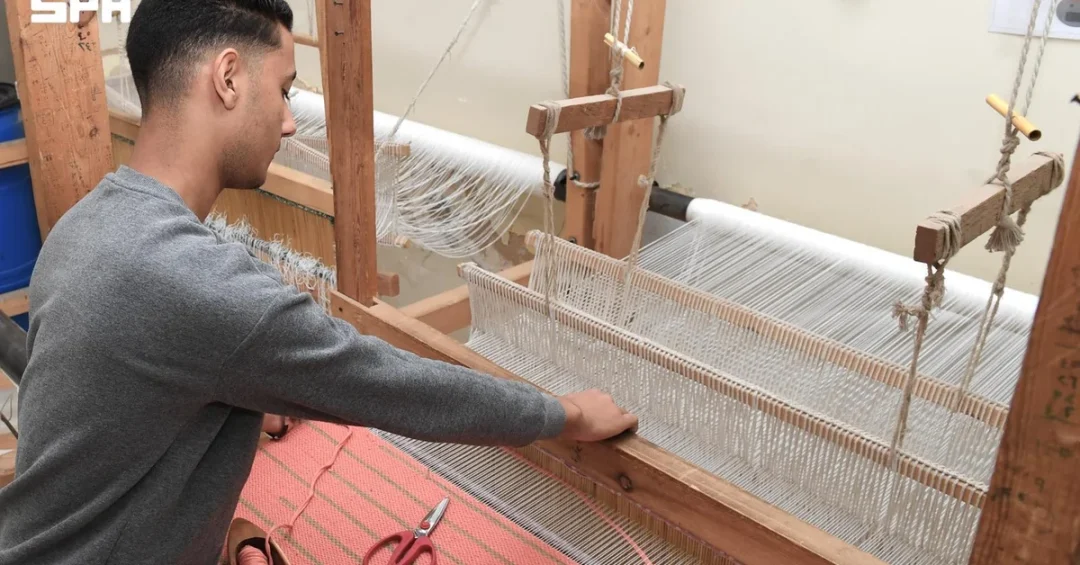
Hand-weaving in Egypt remains a living tradition rooted in the country’s ancient civilization and cultural heritage, dating back thousands of years and continuing today in local communities where spinning and weaving skills are passed down through generations, according to a report released via the Saudi Press Agency (SPA). The craft, which once clothed pharaohs and furnished the temples of antiquity, survives as a tangible link between modern Egyptians and the artisans of the ancient world. Its endurance speaks to a form of cultural continuity rarely matched anywhere on earth, and it offers a compelling example of how heritage can function as a living economic and social asset rather than a museum relic.
Why does a craft practiced in quiet workshops along the Nile continue to command international attention in an age of industrial textile production? The answer lies partly in the recognition that hand-weaving represents an irreplaceable body of knowledge, one that international bodies and cultural institutions have moved to protect. In 2020, the United Nations Educational, Scientific and Cultural Organization (UNESCO) inscribed "Handmade weaving in Upper Egypt (Sa’eed)" on its List of Intangible Cultural Heritage in Need of Urgent Safeguarding, underscoring both the significance of the tradition and the pressures it faces. This inscription places Egyptian hand-weaving alongside the world’s most treasured living traditions and signals a global commitment to sustaining the skills of its practitioners.
Context and Background
What makes the weaving traditions of Upper Egypt so distinctive that they warrant urgent international safeguarding? The answer is embedded in thousands of years of unbroken practice. Egyptian textiles are among the most celebrated artifacts of the ancient world, and the sophistication of the craft is documented in collections held by leading institutions worldwide. According to the Metropolitan Museum of Art in New York, an exceptionally fine linen textile in its collection, dating to the New Kingdom (circa 1491-1473 BCE), demonstrates the advanced textile-making skills of ancient Egyptians. Woven from extremely delicate threads, the piece required months of continuous work to complete, evidence of a discipline that demanded patience, precision, and extraordinary technical mastery.
The survival of such techniques into the present day is the result of transmission from parent to child, from master to apprentice, across countless generations. In the villages of Upper Egypt, or the Sa’eed, weaving is not merely a livelihood but a family inheritance, one that carries with it social standing, identity, and a sense of place. Artisans work on wooden looms that have changed little over centuries, and the rhythm of the shuttle and the warp remains central to community life. This continuity is what UNESCO’s 2020 inscription sought to honor, and it is what the safeguarding framework now aims to protect against the erosion of modernization and economic change.
How does an ancient craft adapt without losing the essence that makes it valuable? That tension sits at the heart of every heritage-preservation effort, and Egypt’s weavers are living it daily. As machine-made fabrics flood global markets, the economic viability of hand-weaving depends increasingly on the premium attached to authenticity, craftsmanship, and cultural story. Understanding this dynamic requires appreciating not only the technical skill involved but also the social and economic systems that sustain it.
Key Details
What exactly does UNESCO’s designation recognize, and why was the "urgent safeguarding" category chosen? The inscription of handmade weaving in Upper Egypt fell under the List of Intangible Cultural Heritage in Need of Urgent Safeguarding, a designation reserved for traditions whose viability is under genuine threat. This classification is not symbolic decoration; it carries with it a framework for mobilizing resources, documentation, and community-based action to keep the practice alive. It signals that the knowledge and skills of Upper Egyptian weavers represent a form of cultural capital that cannot be replaced once lost.
The Met’s linen textile offers a vivid illustration of the standard of excellence that defines this tradition. A single garment or burial cloth woven from extremely fine threads could take months of continuous labor, reflecting a level of investment in craftsmanship that modern consumers rarely encounter. Such objects were more than functional; they were expressions of status, spirituality, and aesthetic refinement. Today’s weavers inherit that same ethos, producing textiles that carry story and heritage in every thread. The careful selection of materials, the preparation of the loom, and the patience required to complete a piece all connect the modern artisan to an ancient lineage.
Which communities carry this heritage forward, and how are the skills actually transmitted? The answer is found in the family workshops and village cooperatives of the Sa’eed, where knowledge passes informally through observation and supervised practice. Children learn alongside their elders, absorbing technique through repetition rather than formal instruction. This apprenticeship model preserves nuance and tacit knowledge that no manual can capture, but it also makes the tradition fragile, since the loss of a single master can mean the disappearance of techniques refined over decades.
International and Regional Impact
Why should the wider Arab and international community care about the fate of Egyptian hand-weaving? Cultural heritage is increasingly understood as a shared global resource, and the UNESCO framework reflects a collective commitment to safeguarding traditions that transcend national borders. Egypt’s textile heritage holds particular resonance across the Arab world, where craftsmanship and traditional arts are celebrated as living expressions of identity. Recognition of this kind reinforces the broader regional movement to document, celebrate, and economically activate cultural assets.
The regional ripple effects extend to tourism, education, and cultural diplomacy. Travelers increasingly seek authentic experiences, and the prospect of observing traditional weaving firsthand adds a distinct dimension to cultural tourism in Upper Egypt. Museums, universities, and cultural institutes across the region can draw on the Egyptian model when designing their own heritage programs. In this sense, the safeguarding of a local craft contributes to a larger regional conversation about how Arab societies preserve their patrimony while engaging confidently with modernity.
How does international recognition translate into practical benefit for artisans? Recognition can open doors to funding, training, and market access, but it must be paired with sustained institutional support to have lasting impact. The value of the UNESCO inscription lies in the framework it creates, connecting local practitioners with global networks of heritage professionals, donors, and consumers who value authenticity.
Economic and Strategic Significance
Can heritage become a driver of sustainable economic development rather than a drain on public resources? The Egyptian experience suggests that it can, provided the craft is positioned within a coherent value chain that rewards quality and preserves provenance. Hand-woven textiles command premium prices when their story is properly told, and the growing global appetite for artisanal goods creates market opportunities that did not exist a generation ago. For rural communities in Upper Egypt, weaving offers a path to income that draws on local skills rather than displacing them.
The strategic dimension is equally significant. Cultural heritage is a source of soft power, shaping how nations are perceived globally and fostering people-to-people connections that endure. Egypt’s ability to present itself as a custodian of living traditions strengthens its cultural standing and supports broader diplomatic and economic objectives. There is an instructive lesson here for all nations pursuing heritage-led development: preservation and prosperity are not opposing goals, but complementary ones when approached with planning and investment.
What role does documentation play in safeguarding a fragile craft? Recording techniques, designs, and the stories behind them creates an archive that can survive even if individual practitioners retire. This documentation is a core component of the UNESCO safeguarding plan, ensuring that future generations can access the accumulated knowledge of those who came before.
Vision 2030 Alignment
While this heritage belongs to Egypt, its themes resonate powerfully with the cultural and economic ambitions of Saudi Arabia’s Vision 2030, which places the celebration and activation of Arab cultural identity at the heart of a diversified, forward-looking economy. Vision 2030 recognizes that heritage is not a brake on modernization but a foundation for it, and the Kingdom’s own investments in cultural institutions, festivals, and traditional arts reflect that conviction.
How can societies balance the preservation of inherited craft traditions with the demands of a fast-changing world? The Egyptian example, amplified by its international recognition, suggests that the answer lies in honoring the knowledge of the past while building new markets and new audiences for it. As Arab nations continue their cultural renaissance, the weavers of Upper Egypt stand as a reminder that the most enduring assets a people possess are often those handed down across millennia. Their continued vitality depends on the choices made today, and the safeguarding framework offers a template for ensuring that these threads of heritage are never broken.
20 Questions
Q1. What is the significance of hand-weaving in Egypt’s cultural heritage?
A1. Hand-weaving in Egypt is a living tradition dating back thousands of years, rooted in the country’s ancient civilization and passed down through generations. It connects modern Egyptians to their ancestors and continues to express the nation’s cultural identity through traditional craftsmanship.
Q2. When did UNESCO inscribe Egyptian handmade weaving on its heritage list?
A2. In 2020, UNESCO inscribed "Handmade weaving in Upper Egypt (Sa’eed)" on its List of Intangible Cultural Heritage in Need of Urgent Safeguarding, recognizing the importance of preserving the traditional knowledge and skills associated with the craft.
Q3. Which region of Egypt is most associated with this weaving tradition?
A3. Upper Egypt, known as the Sa’eed, is the heartland of the tradition, where family workshops and village communities keep the craft alive. Artisans there work on wooden looms and pass skills informally from one generation to the next.
Q4. What ancient artifact demonstrates the skill of Egyptian weavers?
A4. According to the Metropolitan Museum of Art in New York, an exceptionally fine linen textile dating to the New Kingdom (circa 1491-1473 BCE) demonstrates advanced textile-making skills. Woven from extremely delicate threads, it required months of continuous work.
Q5. Why was the "urgent safeguarding" category chosen for this craft?
A5. The designation is reserved for traditions under genuine threat. It reflects concerns that modernization, machine-made competition, and the loss of master practitioners could erode the transmission of weaving skills without coordinated preservation efforts.
Q6. How are weaving skills transmitted in Upper Egypt?
A6. Skills pass informally through observation and supervised practice in family workshops and cooperatives. Children learn alongside elders, absorbing technique through repetition. This apprentice model preserves tacit knowledge but makes the tradition fragile if masters retire.
Q7. What materials are traditionally used in Egyptian hand-weaving?
A7. Linen has been central to Egyptian textile tradition since antiquity, prized for its fineness and durability. Artisans prepare threads carefully and work on wooden looms to produce cloth that carries cultural and often spiritual significance.
Q8. How does international recognition benefit local artisans?
A8. Recognition can open doors to funding, training, and market access by connecting practitioners to global heritage networks. When paired with sustained institutional support, it helps artisans command premium prices for authentic, handcrafted textiles.
Q9. Why does hand-weaving command attention in an age of industrial production?
A9. Hand-weaving embodies irreplaceable knowledge, authenticity, and cultural story that machine-made fabrics cannot replicate. Growing global demand for artisanal goods values such provenance, giving traditional crafts renewed economic relevance.
Q10. What role does documentation play in safeguarding the craft?
A10. Recording techniques, designs, and their stories creates an archive that can survive even if individual practitioners retire. Documentation is a core component of the UNESCO safeguarding plan, ensuring future generations access accumulated knowledge.
Q11. How does cultural heritage contribute to economic development?
A11. Heritage can drive sustainable growth when positioned within a value chain that rewards quality and preserves provenance. For rural communities, weaving offers income that draws on local skills rather than displacing them.
Q12. What is the regional significance of Egypt’s weaving heritage?
A12. Textile heritage resonates across the Arab world, where traditional arts are celebrated as living expressions of identity. Egypt’s recognition reinforces the broader regional movement to document, celebrate, and activate cultural assets.
Q13. How does heritage support cultural tourism?
A13. Travelers increasingly seek authentic experiences, and observing traditional weaving firsthand adds a distinct dimension to cultural tourism. Museums and cultural institutes can also draw on the Egyptian model for heritage programming.
Q14. What does the Metropolitan Museum’s textile reveal about ancient craftsmanship?
A14. The exceptionally fine linen piece from the New Kingdom reveals extraordinary technical mastery, with delicate threads and months of continuous labor. It shows that ancient Egyptian weavers achieved standards of precision still admired by modern experts.
Q15. How can societies balance preservation with modernization?
A15. The Egyptian example suggests honoring inherited knowledge while building new markets and audiences for it. Preservation and prosperity are complementary when approached with planning, investment, and respect for tradition.
Q16. What is soft power, and how does heritage contribute to it?
A16. Cultural heritage shapes how nations are perceived globally and fosters enduring people-to-people connections. A nation’s ability to present itself as a custodian of living traditions strengthens its cultural standing and broader diplomatic objectives.
Q17. How does Egypt’s experience relate to Saudi Arabia’s Vision 2030?
A17. Vision 2030 places the celebration and activation of Arab cultural identity at the heart of a diversified economy. It recognizes heritage as a foundation for modernization, echoing the themes of Egypt’s textile preservation efforts.
Q18. What challenges threaten the survival of hand-weaving?
A18. Machine-made fabrics flooding global markets, economic pressures, and the loss of master practitioners all threaten the craft. The urgency of these challenges is precisely what motivated the UNESCO safeguarding inscription in 2020.
Q19. Why is the transmission of tacit knowledge important?
A19. Much weaving knowledge cannot be captured in manuals; it is absorbed through supervised practice and repetition. This makes the craft fragile, since losing a single master can mean the disappearance of techniques refined over decades.
Q20. What does the endurance of Egyptian hand-weaving ultimately demonstrate?
A20. It demonstrates that the most enduring assets a people possess are often those handed down across millennia. With the right choices today, these threads of heritage can continue to connect generations and sustain communities into the future.
Reader Feedback
We value your thoughts. Please share your feedback on this article.
Your feedback helps us improve our coverage.
Related articles
 Buraidah Performing Arts Program Draws Over 8,000 Visitors
 Mazayen Competition Concludes at King Abdulaziz Falconry Festival
 Najran’s Traditional Textiles: Heritage Woven from Local Life
 Local Falcon Owners Crowned in 12 King Abdulaziz Cup Rounds
 Winners Crowned in Falconer of the Future at Saudi Falconry Festival
 Al-Ahsa Shines at UNESCO Creative Cities Conference in Morocco